


More news on this day
Tanzania’s tourism industry is preparing for a fresh wave of international visitors as Air Tanzania advances plans for a future direct service from London while new and upgraded airports on the ground create additional gateways into the country’s wildlife reserves and coastal destinations.
Get the latest news straight to your inbox!
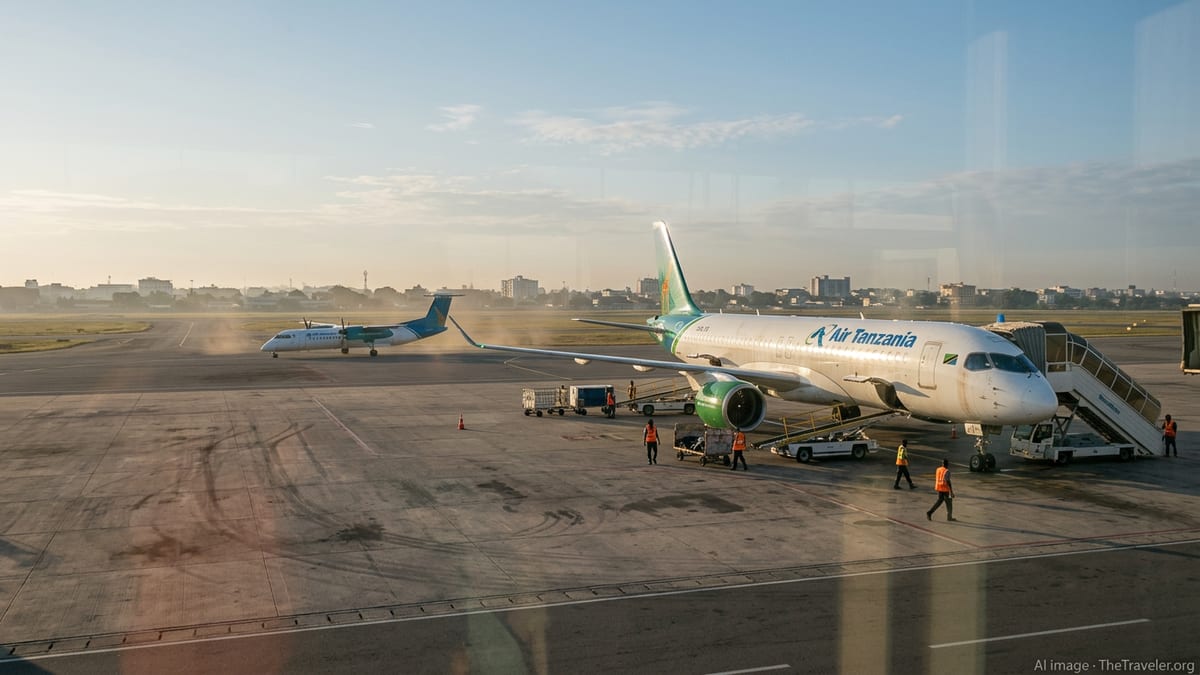
New UK Link Poised to Strengthen Long-Haul Access
Publicly available aviation and tourism coverage indicates that Air Tanzania has included London among its planned long-haul destinations, with the United Kingdom capital featuring alongside new African and Middle Eastern routes in the carrier’s current expansion roadmap. The prospective service would re-establish a direct air link between Tanzania and one of its most important European source markets, several years after regularly scheduled non-stop flights between the two countries disappeared.
Industry reports suggest that the national airline is evaluating options for a non-stop or one-stop service between Dar es Salaam and a London airport, likely targeting connections that can funnel UK and wider European visitors directly into Tanzania’s safari circuits and Indian Ocean coastline. While a specific launch date and final schedule have not yet been formally loaded in public timetables, the decision to name London as an upcoming destination signals a clear strategic intention to reconnect Tanzania with one of Europe’s busiest aviation hubs.
Travel analysts note that UK visitors currently rely on a mix of European and Gulf hubs to reach Tanzania, using carriers such as KLM, Lufthansa, Qatar Airways and Emirates for onward links to Dar es Salaam, Kilimanjaro and Zanzibar. A direct Air Tanzania option would shorten journey times and reduce the need for multiple transfers, a factor that often influences travelers choosing between East African safari destinations.
For Tanzania’s tourism authorities, restoring a branded national-carrier presence in London is widely viewed as a way to raise the country’s visibility in a highly competitive safari and beach market, positioning its parks and islands alongside established African destinations that already enjoy direct UK connectivity.
Domestic Gateways Expand With New Sumbawanga Airport
At the same time that long-haul ambitions focus on London, Tanzania is adding new infrastructure at home that could reshape visitor flows inside the country. Recent aviation industry updates report that the newly built Sumbawanga Airport, in the western Rukwa Region, has opened for commercial operations, with Air Tanzania operating the inaugural service using a Dash 8 turboprop.
The facility provides a modern gateway to a part of Tanzania that has historically seen little international tourism despite its natural and cultural attractions. Improved air access is expected to make it easier for domestic travelers, business visitors and eventually foreign tourists to reach the southern and western safari circuits without lengthy road journeys or complex multi-stop itineraries.
Tourism planners point out that the opening of new regional airports supports a broader strategy to decongest popular northern parks such as Serengeti and Ngorongoro by encouraging travelers to explore less-visited reserves. As routes mature and occupancy grows, tour operators may begin stitching Sumbawanga and other emerging airstrips into multi-park itineraries that begin or end in Dar es Salaam.
For Air Tanzania, adding such domestic points strengthens feeder traffic into any future London service. Passengers originating in smaller cities could connect through Dar es Salaam onto an intercontinental flight, turning the national carrier into a more credible one-stop option for long-haul journeys.
Regional Network Growth Supports Long-Haul Strategy
Air Tanzania’s London ambitions come on the heels of rapid regional expansion. In recent months the airline has introduced new links between Dar es Salaam, Lagos and Accra and announced additional services to destinations such as Cape Town and the Seychelles, reinforcing its presence across West, Southern and Indian Ocean Africa.
This growth pattern reflects a hub-building strategy in which Dar es Salaam is positioned as a connecting point for travelers moving between different parts of the continent, as well as an entry port for long-haul visitors arriving from Asia and Europe. New city pairs shorten travel times that previously required connections through multiple African or Gulf hubs, making Tanzania more central to intra-African itineraries.
Tourism specialists observe that these regional additions already benefit Tanzania’s leisure sector by placing the country within easier reach of high-spend markets in West and Southern Africa. A direct London service would extend that logic to Europe, allowing passengers from secondary European cities to route through the UK and onto Tanzania with a single airline.
By layering regional and long-haul routes, Air Tanzania is also aiming to support meetings, incentives, conferences and exhibitions, a segment that often demands predictable schedules and through-ticketing. Improved connectivity increases the viability of Dar es Salaam and Arusha as hosts for regional events that combine business programs with post-conference safaris.
Implications for Tour Operators and UK Travelers
For UK-based tour operators, a direct Air Tanzania route would provide new flexibility in packaging safaris and beach stays. Many existing itineraries rely on regional partners and indirect connections, which can introduce complexity and higher costs. Being able to book clients on a through-ticket from London to Dar es Salaam or Kilimanjaro on the national airline could simplify logistics and allow for more competitive pricing.
Travel advisors indicate that British travelers, especially first-time safari goers and families, often prioritize straightforward routing when choosing between East African destinations. The possibility of a non-stop or same-plane service would place Tanzania on a more even footing with countries that already enjoy direct links from the UK, particularly for visitors weighing the relative ease of reaching Kenya, South Africa or Namibia.
On the ground, new domestic gateways such as Sumbawanga, combined with expanded frequencies to Kilimanjaro, Zanzibar and safari airstrips, create more options for tailored itineraries that avoid backtracking. As schedules solidify, operators may start offering open-jaw trips that arrive via one airport and depart from another, encouraging longer stays and wider regional exploration.
Observers caution that the pace of route development still depends on aircraft availability, regulatory clearances and broader economic conditions. However, the alignment of London plans with ongoing domestic and regional investments suggests that Tanzania is actively positioning itself for a new phase of tourism growth, centered on more direct and diversified air access for visitors from the UK and beyond.