


Landing or departing from Tel Aviv and not sure whether you need Terminal 1 or Terminal 3 at Ben Gurion Airport? You are not alone. Even frequent flyers occasionally show up at the wrong building, then scramble for the shuttle with suitcases in tow. This guide breaks down, in practical terms, how each terminal works, who uses it, and how to navigate between them so you can arrive at the right door the first time.
Get the latest updates straight to your inbox!
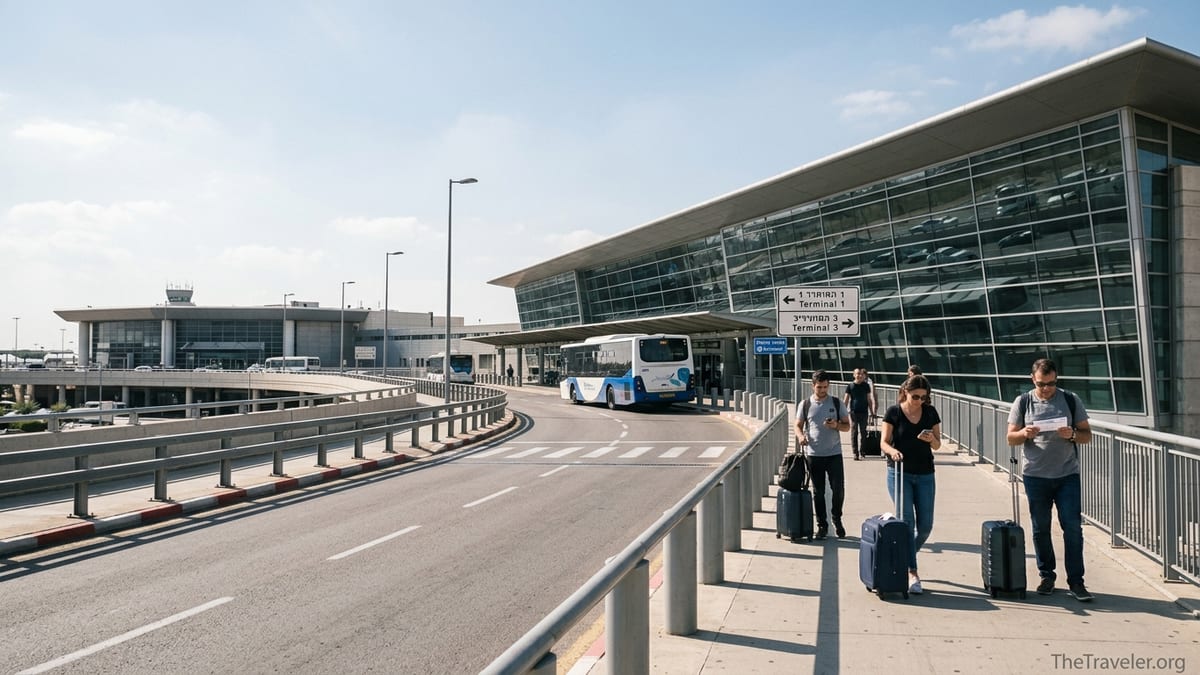
Terminal 1 vs Terminal 3: The Big Picture
Ben Gurion Airport has two passenger terminals in regular use, and they serve different types of flights. Terminal 3 is the main hub for almost all full-service international flights. This is where you will fly with airlines such as El Al, United, Delta, Lufthansa, Emirates, flydubai and most European and North American carriers. It is also where the airport’s train station is located, under the arrivals hall on the lower level.
Terminal 1 is smaller and serves primarily low-cost international and domestic-style flights, especially short-haul services to nearby destinations and to Ramon Airport near Eilat. On a typical day, you might see Arkia and Israir flights to Ramon, plus selected European low-cost carriers that are assigned Terminal 1 when it is operating for low-cost traffic. Because allocations can change, airlines sometimes move between Terminal 1 and Terminal 3 seasonally or in response to security conditions.
For most first-time visitors arriving from overseas with a through ticket, Terminal 3 is the default. Terminal 1 is far more likely if you are on a point-to-point low-cost ticket or an internal Israeli hop, for example Tel Aviv to Eilat on Arkia. The most reliable way to confirm is to check your airline confirmation and then cross-check the flight information for your date of travel on the Israel Airports Authority website or your carrier’s app shortly before departure, since terminal assignments occasionally shift.
One very practical rule of thumb: if your flight number belongs to a major network carrier or a long-haul widebody aircraft, expect Terminal 3; if you are flying a budget carrier or a short domestic leg booked separately, double-check for Terminal 1. This simple check can prevent a wrong-terminal detour that easily costs 20–40 minutes.
Which Terminal For Your Airline and Ticket Type
Terminal 3 handles the bulk of international traffic. Examples include El Al services from New York, Los Angeles, London and Paris; United and Delta flights from major US hubs; European carriers such as Lufthansa, Air France, British Airways, SWISS and Turkish Airlines; and Gulf carriers connecting via Dubai or other regional hubs. If you booked your ticket through one of these traditional airlines or through a global alliance such as Star Alliance or SkyTeam, your departure and arrival will almost certainly be in Terminal 3.
Terminal 1 is associated with lower-cost and regional operations. For example, Arkia and Israir often use Terminal 1 for their frequent services to Ramon Airport near Eilat, with multiple departures spread throughout the day. When low-cost European airlines operate to Tel Aviv on a standard schedule, they are typically funneled through Terminal 1 for departures, with dedicated security and check-in zones that can handle quick turnaround times and bus boarding to remote stands.
Codeshare tickets can cause confusion because a flight might carry an El Al or other full-service code but be operated by a partner airline that has slightly different terminal arrangements. In practice, the operating carrier and the slot allocated by the airport determine the terminal, not the code on your ticket. This is why checking the airport’s live departures and arrivals board the day before you fly is helpful, especially if you booked your ticket through a third-party online travel agency.
For domestic-style itineraries, such as a Tel Aviv to Ramon leg tagged onto an international ticket, your international sector will still use Terminal 3, while the domestic sector to or from Ramon is commonly routed through Terminal 1. In that scenario, you may have to transfer between terminals on arrival or before departure, so building a cushion of at least 2–3 hours between flights is prudent if you are on separate tickets.
International, Low-Cost and Domestic Flights in Practice
From a traveler’s perspective, “international” versus “domestic” at Ben Gurion is less about passport control and more about how the airport operationally groups flights. International flights, almost all handled via Terminal 3, include regular immigration and customs procedures. When you land from New York or London, you will disembark into Terminal 3, pass through passport control, collect checked luggage from the large baggage hall, and then pass customs into the arrivals area with ground transport, car rentals and train access.
Low-cost international flights handled at Terminal 1 follow a slightly different pattern. For example, if you depart on a low-cost carrier from Terminal 1, you will typically complete the full security, check-in and passport control process within Terminal 1. Boarding is often via buses to aircraft parked on remote stands, which can add 10–15 minutes of transit time from gate to plane. Returning passengers on those airlines often arrive in Terminal 3 even if they departed from Terminal 1, so you should always check your arrival terminal separately from your departure terminal.
Flights between Ben Gurion and Ramon Airport near Eilat, operated by carriers such as Arkia and Israir, blur the line between “domestic” and “international-style” procedures. These flights usually depart from Terminal 1 and are treated as internal Israeli routes, but security is still stringent, and passengers need to arrive in advance, often at least 60–90 minutes before departure. In practice, the experience is closer to a short regional international flight in Europe than a casual domestic hop in a large country like the United States.
A common real-world situation is a traveler landing at Terminal 3 from Europe on a full-service airline in the morning, then catching an Arkia flight to Ramon in the early afternoon. That traveler will clear passport control and customs in Terminal 3, then exit the secure zone, follow signs to the internal shuttle stop and transfer to Terminal 1 for check-in to the Ramon leg. Understanding this pattern in advance avoids stressful last-minute dashes between terminals.
Moving Between Terminal 1 and Terminal 3
The two terminals are on the same airport campus but are not connected by a pedestrian walkway. Walking between them with luggage is impractical. Instead, the airport runs a free internal shuttle bus linking Terminal 1, Terminal 3 and long-term parking areas. The shuttle operates around the clock, with frequency aligned to flight schedules. In busy periods, you can expect a shuttle every few minutes; at quieter times late at night, the wait may be longer, but the service is designed to cover both early departures and late arrivals.
At Terminal 3, the shuttle stop is located on the ground level near the public exits, close to the long-term parking bus stops. Signage in Hebrew and English points to “Shuttle to Terminal 1.” Passengers exiting baggage claim can follow the “Ground Transportation” signs and then look for shuttle icons. At Terminal 1, shuttle buses stop directly outside the departures and arrivals area, which is much more compact than Terminal 3. The ride between terminals usually takes 10–15 minutes, but you should always allow extra time in case of traffic within the airport roads or queues when boarding.
Many travelers first encounter the shuttle when they arrive at the wrong terminal. For example, a visitor on a low-cost airline might be dropped by a taxi at Terminal 3, only to discover from the departure screens that the flight leaves from Terminal 1. The typical sequence is to head back outside, locate the shuttle stop, and ride over to Terminal 1, adding 30 minutes or more to the schedule. To avoid this, it is wise to confirm your exact terminal with your airline the day before and to tell your taxi or rideshare driver “Terminal 1” or “Terminal 3” specifically instead of just saying “the airport.”
If you have a tight self-made connection between a Terminal 3 international arrival and a Terminal 1 low-cost departure, factor the shuttle into your minimum connection time. Between passport control queues, baggage claim, customs and the 10–15 minute shuttle ride, even a seemingly generous two-hour gap can become tight if your inbound flight is delayed. When booking separate tickets that involve a terminal change, many seasoned travelers prefer a 3–4 hour buffer in Tel Aviv to reduce stress.
Train Access, Baggage Claim and Exits
Israel Railways operates a station directly under Terminal 3, providing fast connections to Tel Aviv, Jerusalem and other cities. The station sits on the lower level beneath the arrivals hall. After clearing customs, passengers can follow “Train” signs down to the platforms. Trains typically run at regular intervals throughout the day, with more frequent service at peak times, and remain one of the most efficient ways to reach central Tel Aviv or Jerusalem without dealing with highway traffic.
This layout makes Terminal 3 the natural choice if you plan to continue your journey by train immediately after landing. For example, a traveler arriving from New York in the late afternoon might clear immigration, collect luggage in Terminal 3, then roll a suitcase directly to the train for a 15–25 minute ride into Tel Aviv HaHagana or Tel Aviv Savidor Center. Similarly, passengers heading to Jerusalem can board the high-speed service that typically reaches the city in around half an hour. From Terminal 1, you will need to take the shuttle to Terminal 3 first if you want to use the train.
Baggage claim procedures differ slightly between the terminals but follow the same basic pattern. At Terminal 3, the baggage hall is large, with multiple carousels serving simultaneous widebody arrivals. After passport control, electronic screens list flight numbers and carousel assignments. Customs control is immediately beyond the baggage area, and once you pass through, you enter the main arrivals level with exits to taxis, shuttles, private pick-ups, car rentals and the elevator and escalator down to the train station.
Terminal 1’s baggage claim is smaller and handles fewer flights at a time. For a passenger arriving from Ramon or a nearby international destination on a low-cost airline, bags are usually delivered fairly quickly due to the smaller aircraft and lower passenger volume. Once you collect your luggage and step outside, you will find the shuttle stop for Terminal 3, taxi stands and private car pick-up areas in close proximity. If your onward journey relies on trains or long-distance buses that depart from near Terminal 3, budget an extra 20–30 minutes from the moment your bags appear at Terminal 1’s carousel to standing on the train platform or outside the main bus stops near Terminal 3.
Ground Transport and Getting Into Tel Aviv
Most long-distance public transport is effectively anchored to Terminal 3. The railway station is there, and many intercity buses and shared taxis (sheruts) pick up from the vicinity of Terminal 3’s arrivals area. For example, travelers heading directly to Jerusalem or Haifa will often choose a shared minibus that departs from outside Terminal 3, especially late at night or when train schedules are reduced. Taxis to Tel Aviv, Jerusalem and other cities line up outside both terminals, but the more extensive public transport options cluster around Terminal 3.
From Terminal 3, taking the train to Tel Aviv can be both faster and cheaper than a taxi, especially during rush hour. A typical journey from the airport station to central Tel Aviv might cost only a fraction of a taxi fare and avoids highway congestion. Trains are also convenient for travelers heading north or south along Israel’s coastal corridor. If you land at Terminal 1, you can still take advantage of these services by first using the free shuttle to reach Terminal 3, then switching to rail or bus.
For passengers renting a car, major international and local rental brands usually base their counters and vehicle pick-up points around Terminal 3. Some provide courtesy shuttles from both terminals to nearby parking lots where the cars are stored. If your flight operates from Terminal 1 but you have pre-booked a rental car expecting to arrive at Terminal 3, check your confirmation email carefully. In many cases, you will still retrieve your vehicle near Terminal 3, so you may need the internal shuttle even if your airline uses Terminal 1.
Late-night and early-morning arrivals deserve special planning. Train frequencies may be reduced or suspended at certain hours, and some intercity bus routes do not run overnight. In these cases, taxis and app-based ride services become the default choice. Knowing in advance which terminal you arrive at and where you will find your preferred transport option helps you avoid wandering between terminals in the middle of the night, especially if you are tired from a long-haul flight.
Avoiding and Fixing Wrong-Terminal Mistakes
Wrong-terminal mistakes at Ben Gurion are common but avoidable. The most frequent scenario is a traveler who sees “Tel Aviv Ben Gurion (TLV)” on a low-cost airline ticket and assumes that all flights depart from the main building, Terminal 3. They arrive, line up at the wrong check-in island, and only realize their error when an agent checks the flight list and points them to Terminal 1. Recovering from this mistake typically involves retracing steps to the arrivals curb, finding the internal shuttle and making a tense ride across the airfield roads.
The simplest prevention strategy is to treat the terminal as a critical detail, just like the flight time. A day or two before departure, visit your airline’s “Manage My Booking” page or app and confirm whether your flight is labeled Terminal 1 or Terminal 3. Then, cross-check on the airport’s online departures board close to departure day. When ordering a taxi, booking an airport transfer, or telling friends where to drop you off, specify the correct terminal number out loud. In Tel Aviv, many drivers are used to asking “One or Three?” but you should still be ready with a clear answer.
If you do find yourself at the wrong terminal, staying calm and acting quickly is the key. Head outside, follow signage to the internal shuttle stop and board the next bus to the correct terminal. Inform your airline via app or information desk if your time window becomes tight; in some cases, they may be able to pre-alert the check-in team or suggest a later flight. This is especially relevant for short-haul low-cost flights where check-in often closes earlier than for long-haul services, sometimes 45–60 minutes before departure.
Travelers connecting on separate tickets are at the highest risk. For example, a backpacker might land at Terminal 3 on a long-haul flight from North America, then hold a separate low-cost ticket departing from Terminal 1 less than two hours later. A minor delay on the first flight, a long queue at passport control or a slow baggage carousel can wipe out that cushion. When planning such itineraries, consider overnighting in Tel Aviv or booking a later low-cost departure instead of trying to push a tight same-day transfer between terminals.
FAQ
Q1. How do I know if my flight uses Terminal 1 or Terminal 3 at Ben Gurion?
Your airline confirmation or app should list the terminal number, and you can cross-check on the airport’s live flight information the day before you travel.
Q2. Can I walk between Terminal 1 and Terminal 3?
No. The terminals are on the same campus but not set up for pedestrian access with luggage, so you should use the free internal shuttle bus.
Q3. Where is the train station at Ben Gurion Airport?
The Israel Railways station is located under Terminal 3, beneath the arrivals hall on the lower level, with escalators and elevators from the main arrivals area.
Q4. I land at Terminal 1. How do I catch a train to Tel Aviv?
After baggage claim, exit Terminal 1, take the free shuttle bus to Terminal 3, then follow signs down to the train station under the Terminal 3 arrivals hall.
Q5. Do low-cost airlines always use Terminal 1?
Often, but not always. Terminal assignments can change with schedules and operational needs, so you should verify your specific flight before you leave for the airport.
Q6. Are domestic flights within Israel treated differently at security?
Security is still thorough, but domestic-style flights such as Tel Aviv to Ramon often use Terminal 1 and feel more like short regional trips than long-haul departures.
Q7. What if I arrive at the wrong terminal for my departure?
Go immediately to the internal shuttle stop, ride to the correct terminal and then head straight to your airline’s check-in area. Allow at least 30 extra minutes for this.
Q8. Is baggage claim faster in Terminal 1 or Terminal 3?
Terminal 1 usually handles smaller aircraft and fewer passengers, so baggage can arrive more quickly, while Terminal 3 has more carousels but larger widebody flights.
Q9. Are taxis available at both terminals?
Yes. Licensed taxis line up outside the arrivals areas of both Terminal 1 and Terminal 3, with fixed procedures for queuing and dispatch.
Q10. I am connecting from an international flight to Eilat. How much time should I allow?
If your Eilat flight uses Terminal 1, many travelers aim for a 3–4 hour gap to cover immigration, baggage, customs and the shuttle between terminals.