


Landing at Tel Aviv’s Ben Gurion Airport (TLV) is the beginning of most trips to Israel, whether you are heading straight to the beach in Tel Aviv, the Old City of Jerusalem, or farther afield. For first-time visitors, the mix of intense security, Hebrew signage, and unfamiliar transport systems can feel overwhelming. This guide walks you through what to expect step by step, from clearing passport control to getting cash, buying a SIM card, and choosing the best way into Tel Aviv or Jerusalem.
Get the latest updates straight to your inbox!
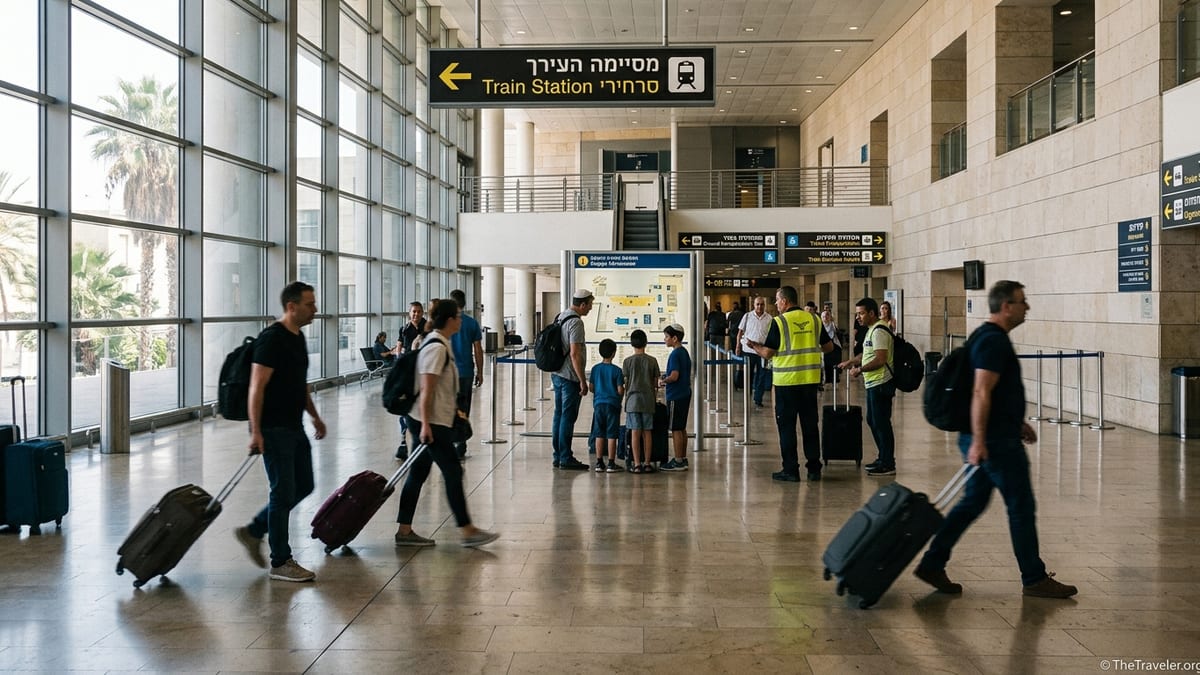
Understanding Ben Gurion Airport: Layout, Terminals and First Steps
Ben Gurion is Israel’s main international gateway, located roughly midway between Tel Aviv and Jerusalem. Almost all international passengers arrive through Terminal 3, a modern building with a long concourse, central “Rotunda” shopping hall and a ground-level train station underneath. Terminal 1 usually serves certain low-cost and domestic flights, but even budget airlines often handle arrivals and most departures from Terminal 3, so as a first-timer you should assume you will use Terminal 3 unless your ticket clearly specifies otherwise.
After your plane parks, you will walk or take a short shuttle or jet bridge into the arrivals concourse. Follow the yellow “Passport Control” signs in English, Hebrew and Arabic. Before queues, you pass automated kiosks where many travelers use e-gates to scan passports and receive an entry slip. Israel does not stamp most foreign passports now; instead you receive a small blue paper with your details and visa status. Keep this slip with your passport since hotels and car rentals routinely ask to see it.
Once through passport control, you descend to the baggage claim hall. Carousels are clearly numbered and displayed on electronic boards. Ben Gurion’s baggage delivery is relatively efficient, but at peak times it can still take 20 to 40 minutes for bags to appear. While you wait, you will see ATMs, toilets and basic services around the hall. Customs is usually a simple walk-through “Green Channel” unless your bags are selected for inspection. When you pass the sliding doors into the public arrivals hall, you have officially entered Israel and can start sorting phones, money and transport.
Security at Ben Gurion: What to Expect Without Panic
Ben Gurion is widely known for strict security, but most of this affects departing passengers more than arrivals. When you arrive, the main checks are done before you see them, through advanced baggage and border control systems. That said, you may encounter questioning by border officers, especially if you have visas or stamps from certain Middle Eastern countries, or if your travel plans are vague. Prepare clear, honest answers about where you are staying, how long you are staying and what you plan to do.
When you eventually depart Israel, security becomes more visible. Before check-in, you may be interviewed by airline security staff who ask about who packed your bags, where you have been in the country and whether anyone gave you items to carry. Your luggage passes through sophisticated screening processes, and you will go through metal detectors and X-ray machines similar to other airports. Unlike many airports, Ben Gurion often allows liquids through security for departing flights, but you must still comply with your airline’s or destination country’s rules, such as the 100 milliliter liquid limit for flights connecting in Europe or North America. Because procedures can evolve, allow at least three hours before departure, and more in holiday seasons.
For most travelers, security is thorough but professional. A common real-world scenario: an American tourist with stamps from Lebanon or Morocco might be asked to step aside for extra questions or a manual bag search, adding 20 to 40 minutes. As long as you stay calm, answer politely and avoid jokes about security, the process is usually manageable. Build time into your schedule, especially if you are connecting to a same-day flight onward from Tel Aviv or arriving late at night and planning an early departure a few days later.
Money, SIM Cards and Practical Arrivals Essentials
The arrivals hall of Terminal 3 is where you can immediately sort out connectivity and cash. Several ATMs from major Israeli banks are located along the walls; they usually accept foreign Visa, Mastercard and many debit cards. Exchange counters exist but typically offer less favorable rates than ATMs or city exchange shops. As of mid-2026, many visitors find that taking out a modest amount of Israeli shekels at the airport, such as 200–400 ILS, is enough for small expenses, while most taxis, trains, restaurants and stores accept credit cards, including contactless payments.
For mobile service, you will see stands and small shops selling Israeli SIM cards in the arrivals hall, particularly from providers such as 019 Mobile and resellers offering packages on local networks like Partner, Cellcom and Pelephone. A typical short-stay package might include around 50 to 100 GB of data plus local calls for 7 to 30 days. Prices at the airport can be noticeably higher than buying online in advance or in city shops. For example, a package that costs the equivalent of 25 to 30 US dollars online might be 40 to 50 US dollars at an arrivals kiosk, with the added benefit of instant activation by staff who will insert and configure the SIM for you.
If your phone supports eSIM, consider purchasing an eSIM from an international provider before you fly. That way, you land with data already working, can use ride-hailing apps immediately, and decide later whether you really need a local physical SIM. Travelers who arrive on late-night flights, such as after midnight, sometimes find that not all SIM kiosks are open. In that situation, using your home carrier’s roaming for a few hours or relying on airport Wi-Fi until you reach your accommodation can bridge the gap.
Trains, Buses and Taxis into Tel Aviv
Ben Gurion’s train station sits directly below Terminal 3 on Level G. After exiting customs into the arrivals hall, follow the “Trains” signs down several escalators or elevators. The station is on the main Israel Railways line, with frequent trains to Tel Aviv’s major stations such as Tel Aviv HaHagana, HaShalom (for the Azrieli Center and business district) and Savidor Center. The ride to central Tel Aviv typically takes around 15 to 20 minutes and costs in the region of 11 to 15 shekels one way, depending on destination and time, making it one of the fastest and most economical options.
Tickets can be bought from machines in English using cash or card. You can either buy a simple paper ticket for that ride or load credit or a pass onto a Rav Kav smart card. Trains usually run from early morning until late at night, but nighttime service is limited and on Friday evening and much of Saturday train service often stops or runs on a reduced Shabbat schedule. A concrete example: a traveler arriving at 10:00 on a Tuesday can expect at least two trains per hour into Tel Aviv, while someone landing at 01:00 on a Saturday night might need to rely on taxis or special night buses instead.
Official taxis line up immediately outside the arrivals hall. There is a dispatcher desk where you can confirm approximate fares before getting in. Taxis are metered, and drivers are required to use the meter rather than quoting flat prices. To central Tel Aviv, expect a fare that can range roughly from 120 to 180 shekels depending on time of day, traffic, luggage supplements and night or weekend surcharges. That might be around 35 to 50 US dollars for a 25 to 40 minute ride. Shared shuttle taxis known locally as “sherut” sometimes operate to Tel Aviv and other cities; they wait until full and charge per person, which can make them cheaper than a private taxi if you are traveling solo.
Buses from the airport to Tel Aviv are less straightforward for a first-timer, often involving a short shuttle or walk to a nearby bus stop on Highway 40 and using a Rav Kav card or app rather than cash on board. In practice, many visitors opt for the train or taxi on arrival and only begin navigating buses once they are settled in the city. If your Tel Aviv accommodation is near the seafront or smaller neighborhoods like Florentin or Neve Tzedek, a common combination is the train to Tel Aviv HaHagana or Savidor Center followed by a short taxi or rideshare ride to your hotel, costing significantly less than a direct taxi from the airport.
Getting to Jerusalem and Beyond from Ben Gurion
Ben Gurion is also the main gateway to Jerusalem. The fastest way is the high-speed train line that runs between Terminal 3 and Jerusalem Yitzhak Navon station, located next to the city’s central bus station. Trains typically take about 25 to 35 minutes, underground for much of the route, and cost only slightly more than the Tel Aviv train, still well under the equivalent of 10 US dollars. This makes the train an excellent option for solo travelers and couples, especially during daylight and standard hours when trains run every 30 minutes or so.
Once in Jerusalem, you can transfer to the light rail outside Navon station or catch a taxi to your final destination in neighborhoods such as the Old City, the German Colony or East Jerusalem. For example, a traveler arriving at Ben Gurion at 15:00, catching the 16:00 train and arriving in Jerusalem by about 16:30 could be at a hotel near the Old City by around 17:00, depending on traffic. This is often quicker and cheaper than a direct taxi from the airport to Jerusalem, which can cost several hundred shekels.
Shared taxis to Jerusalem, also called “sherut Yerushalayim,” are a long-standing alternative. They typically gather outside the arrivals exit, clearly signposted. Each minibus takes around 10 passengers and departs when full, dropping people off at their hotels or addresses in central and West Jerusalem. The per-person fare is more than the train but less than a private taxi, and the service runs more hours, including many times when trains are not operating, such as on Friday nights or early Saturday mornings. Travelers arriving with large suitcases, mobility concerns or unfamiliarity with Hebrew sometimes find the sherut more comfortable than navigating trains and local transfers.
For destinations beyond the big two cities, such as Haifa in the north or Beersheba in the south, the train from the airport connects directly to the national rail network. Many visitors heading to coastal towns like Herzliya or Netanya take the airport train to a Tel Aviv station, then change to a northbound train. If you are renting a car for a Galilee road trip, most major car rental agencies have desks at the airport, but some also offer better rates for pick-up from city branches. In that case, taking the train into Tel Aviv and collecting your car the next morning can save money and avoid driving while jet-lagged.
Public Transport Basics: Rav Kav, Apps and Payments
To use most buses, light rail and some train products in Israel, you will encounter the Rav Kav system, a reusable contactless smart card for public transportation. You can buy an anonymous Rav Kav card at machines or service points in the airport, at train stations, or at major bus terminals. The card itself costs a small fee, and you then load stored value or passes onto it. For instance, a traveler staying a week mainly in Tel Aviv might load about 100 to 150 shekels of credit to cover multiple bus rides, light rail trips and local trains.
However, Rav Kav is not the only option. Israel Railways ticket machines at Ben Gurion allow you to purchase simple one-off paper tickets to Tel Aviv or Jerusalem without a Rav Kav, which is often easiest for a first arrival. In the cities, several apps, including Moovit and Israel’s own transit apps, allow payment directly by scanning QR codes on buses or validating digital passes, similar to mobile transit in many European capitals. To use these, you typically need mobile data and a debit or credit card that supports online payments.
In practice, a common pattern for new visitors is to buy a paper ticket for the first train ride from the airport, get to Tel Aviv or Jerusalem, then visit a staffed Rav Kav point at a central station to set up a card or simply continue using digital payment apps. Cash is rarely accepted on urban buses in Tel Aviv and Jerusalem any more, so it is important not to board assuming you can hand the driver coins. If you find yourself without a valid card or app, consider taking a short taxi or walking rather than risking an unpaid ride.
Arrivals Experience: Timing, Jet Lag and First Impressions
Clearing Ben Gurion as a first-timer can be quick or slow depending on your flight time and background. At off-peak times, such as mid-afternoon midweek, some travelers report moving from plane door to arrivals hall in as little as 25 to 40 minutes. During busy holiday periods like Passover, Rosh Hashanah or major Christian pilgrimage seasons, queues at passport control and baggage can stretch the process to 90 minutes or more. Build this into your planning if you are booking onward trains, tours or activities on the day you arrive.
The airport is fully air conditioned, bright and modern, but you may notice queues at toilets and SIM booths after several long-haul flights land at once. If you are arriving from North America in the late afternoon or evening, consider having a small snack in your carry-on, as queues at ATMs, money changers and taxi stands can delay you getting to a proper meal in Tel Aviv. Families with children often find it easier if one adult heads to buy train tickets or a SIM while the other waits with luggage in the arrivals area.
Outside the terminal, the climate can be a shock, especially from October to April when weather changes quickly, or in peak summer when heat and humidity are high. The taxi rank is partly covered but can still feel hot in August. If you are heading straight to Jerusalem’s higher elevation, pack a light layer in your hand luggage even if Tel Aviv feels warm. The first glimpse from the train windows, whether passing the urban sprawl of Tel Aviv or the hills rising toward Jerusalem, gives you a sense of how compact the country is and how close the main cities are to each other.
First-Time Tips for a Smooth Israel Arrival
Several practical habits can make your first arrival at Ben Gurion significantly smoother. Before you fly, print or save offline confirmations for your hotel, return flight and any pre-booked tours. Israeli border officers sometimes ask for proof of where you are staying, and having it on your phone or on paper prevents you from hunting through email with patchy airport Wi-Fi. If you are visiting politically sensitive sites or planning day trips into the West Bank, have clear explanations of your itinerary and avoid carrying items that could be misunderstood at security, such as drones without permits.
Dressing neutrally at the airport can also help. While there is no dress code, visibly political slogans on shirts, stickers or badges can attract more questions from security. Carry any prescription medicines in original packaging with a printed prescription. Keep power banks, cameras and electronics in your hand luggage where you can easily remove them if asked. English is widely spoken by airport staff, especially younger employees, but having key addresses written in Hebrew as well can help when you are taking a taxi to lesser-known neighborhoods.
New arrivals often underestimate how tired they will feel after long flights and security formalities. If you land in the evening, consider booking your first night in Tel Aviv or Jerusalem near a main transport hub, such as close to Tel Aviv HaShalom station or Jerusalem’s central bus station, rather than in a charming but hard-to-reach side street. That way, your first transfer from the airport is simple, and you can move to a boutique hotel or guesthouse the next day after you have slept and become familiar with local transit.
The Takeaway
Ben Gurion Airport can look intimidating on paper, with its reputation for tight security and a web of trains, buses and shuttles. On the ground, most first-time visitors find it modern, efficient and manageable, provided they arrive with realistic expectations and a basic plan. Knowing that you can take a direct train into Tel Aviv in around 20 minutes, or ride high-speed rail to Jerusalem in roughly half an hour, removes much of the anxiety about how you will reach your hotel after landing.
If you budget extra time for possible questions at passport control, choose a simple transport option for your first journey, and postpone complicated errands such as buying special passes or SIM upgrades until after you have slept, your first hours in Israel will feel far more relaxed. From the moment you walk into the light-filled arrivals hall and see the mix of pilgrims, business travelers and backpackers, you will realize that millions of people pass through Ben Gurion every year without incident. With the right preparation and the practical examples in this guide, you can move through TLV confidently and start focusing on the experiences that brought you to Israel in the first place.
FAQ
Q1: How long does it usually take to get through Ben Gurion Airport on arrival?
Most travelers clear passport control, baggage and customs in 45 to 75 minutes, though it can be as quick as 25 minutes at off-peak times and longer during major holidays.
Q2: Is the train from Ben Gurion Airport to Tel Aviv easy for first-time visitors?
Yes. The station is directly under Terminal 3, signs are in English, and machines sell simple point-to-point tickets to main Tel Aviv stations with rides around 15 to 20 minutes.
Q3: How much does a taxi from Ben Gurion Airport to central Tel Aviv cost?
Official metered taxis typically cost roughly 120 to 180 shekels to central Tel Aviv, depending on traffic, night or weekend surcharges and luggage supplements.
Q4: What is the best way to get from Ben Gurion Airport to Jerusalem?
The high-speed train to Jerusalem Yitzhak Navon station is usually fastest and cheapest, taking about 25 to 35 minutes, with easy connections to taxis and light rail.
Q5: Can I buy a SIM card at Ben Gurion Airport, and is it expensive?
Yes, there are SIM and mobile stands in the arrivals hall. Packages are convenient but often cost more than similar plans bought online or in city shops.
Q6: Do I need a Rav Kav card as soon as I land?
No. For your first airport train ride you can buy a simple paper ticket. A Rav Kav or transport app becomes more useful once you start using buses and light rail in the cities.
Q7: How strict is security at Ben Gurion for arriving passengers?
Security is thorough but mostly in the background for arrivals. Some travelers may face extra questions, especially with certain passport stamps, but most pass through without issues.
Q8: Is it safe to arrive late at night and take public transport from the airport?
Yes, the airport itself is secure, but late at night train and bus options are limited. Many late arrivals choose official taxis or shared shuttles instead.
Q9: Can I use credit cards easily at Ben Gurion Airport and in Tel Aviv?
Yes. Most airport services, trains, taxis and city businesses accept major credit and debit cards, including contactless payments. Carry some shekels for small purchases.
Q10: Will my passport be stamped when I enter Israel at Ben Gurion?
In most cases Israel does not stamp foreign passports. Instead you receive a small printed entry slip that you should keep with your passport for the duration of your stay.