


Thailand offers a large, diversified economy and a long track record of welcoming foreign capital and expatriate professionals. At the same time, it has one of the most turbulent political histories in Asia, with recurring coups, constitutional rewrites, and sharp ideological divides. For expats and investors, understanding how today’s political configuration affects personal security, business continuity, and long term predictability is critical to any relocation or deployment decision.
Historical Patterns of Political Instability
Thailand has experienced frequent extra constitutional interventions since becoming a constitutional monarchy in 1932, including multiple successful military coups. The most recent coups in 2006 and 2014 removed elected governments and led to extended periods of military or military backed rule. Financial markets have historically reacted with short term volatility; for example, equity and currency markets fell sharply around the 2006 coup before partially stabilizing as investors assessed that the intervention would not immediately disrupt business operations.
These repeated shocks have created a political environment where the possibility of abrupt changes in government cannot be dismissed, even in periods of apparent calm. Academic assessments of the 2006 and 2014 coups emphasize that while both were relatively peaceful compared with some global benchmarks, they nevertheless weakened institutional trust and contributed to long running uncertainty about the rules of political competition and the durability of elected administrations.
International governance indicators reflect this volatility. On the World Bank’s Political Stability and Absence of Violence index, Thailand scores below many regional peers and is classified as having relatively weak stability, although there has been some modest improvement from the most acute crisis years. Analysts note that Thailand’s overall position is one of “intermittent instability” rather than outright state fragility; everyday life and business operations typically continue during political disputes, but the systemic risk of sudden rule changes remains structurally elevated.
For relocation planning, the historical pattern suggests that expats and investors should not assume linear political progress or uninterrupted policy continuity. Instead, it is prudent to treat Thailand as a market with episodic political shocks that can temporarily affect sentiment, regulatory priorities, and decision making timelines.
Post 2023 Election Landscape and Institutional Tensions
The general election in May 2023 produced a strong mandate for the reformist Move Forward Party, which won the largest number of seats in the lower house. However, the party was unable to form a government because the military appointed Senate, empowered by the 2017 constitution to co select the prime minister, declined to support its leader. A Pheu Thai led coalition eventually took office, reflecting a compromise between elected forces and entrenched conservative interests.
This episode highlighted the enduring weight of unelected institutions in Thailand’s political architecture. Analysts have emphasized that the Senate’s role, legacy of the 2014 coup period, allowed conservative and military aligned actors to veto an electoral outcome without openly overruling the vote itself. For investors and expats, the signal is that electoral results alone are not a reliable predictor of policy direction; the interaction between parliament, courts, the military, and the monarchy centered establishment remains decisive.
In 2024, the Constitutional Court ruled that Move Forward’s effort to reform the strict lese majeste law violated the constitution, on the grounds that it threatened the monarchy’s status. Subsequent legal proceedings culminated in the party’s dissolution and political bans for its leaders in 2024, despite its electoral victory the year before. Business groups in Thailand acknowledged that the dissolution weighed on confidence among some Western investors, who view repeated judicial interventions against popular reform parties as a sign of constrained political pluralism.
From a relocation perspective, the post 2023 configuration points to a hybrid system in which electoral competition exists but is bounded by red lines enforced through constitutional and judicial mechanisms. Policy shifts that challenge core establishment interests face high obstacles and may trigger unpredictable legal or institutional responses, even if they command broad public support.
Current Government Dynamics and Forward Risks
As of early 2026, Thailand is again operating under a civilian led coalition government, but the political field remains fragmented. Pheu Thai’s electoral setbacks in the February 2026 election, and the rise of successor progressive formations to Move Forward, underscore that the electorate continues to be highly competitive and polarized between conservative, populist, and reformist blocs. At the same time, conservative and military linked parties retain substantial influence within coalition arithmetic and key state agencies.
The transition from a fully military appointed Senate to a new elected style upper house, completed in 2024, has not fully resolved tensions. The 200 new senators are largely aligned with conservative or centrist parties, and analysts argue that the chamber could still constrain ambitious reform agendas emerging from the lower house. Political bargaining between the two chambers is likely to remain intense, especially on legislation touching institutional reforms, decentralization, or changes to security and monarchy related laws.
Country risk assessments from major institutions describe Thailand’s medium term political outlook as characterized by elevated but contained risk. There is no immediate expectation of a return to open armed conflict or a collapse of central authority. However, the probability of renewed mass protests, judicial dissolutions of parties, or hard bargaining over constitutional amendments is viewed as material over the next five years. For foreign capital, this environment often translates to sporadic delays in regulatory processes, shifting priorities for sectoral reforms, and potential turnover in economic leadership after coalition reshuffles.
Expats and corporate assignees should anticipate possible changes in senior staffing of ministries, state enterprises, and regulatory bodies following elections, court decisions, or intra coalition negotiations. While core business enabling laws typically remain intact, implementation pace and enforcement focus can move in cycles aligned with the political calendar.
Rule of Law, Lese Majeste, and Expression Risks
One of the most distinctive political risk features in Thailand is the rigorous enforcement of laws governing speech about the monarchy, especially the criminal code provision widely known as lese majeste. Penalties under this provision can reach up to 15 years imprisonment per count. Since the youth led protest wave that began in 2020, the number of cases has risen significantly, with rights monitoring groups documenting several hundred prosecutions for alleged royal defamation and related offenses.
Recent cases illustrate the seriousness of enforcement. In 2024, a northern court handed down what is reported as a record multi decade sentence to an activist convicted on numerous counts of online royal defamation. In 2025, a U.S. academic was detained pending trial on charges related to comments allegedly insulting the monarchy. Appeals courts have in some instances upheld convictions of elected lawmakers for speeches made at political rallies. At the same time, there have been high profile acquittals and occasional royal pardons, underscoring the discretionary and politically sensitive nature of the system.
For expats, the key risk signal is that standards of permissible political speech, particularly regarding the monarchy and some aspects of national security, are far narrower than in many Western democracies. Content posted on social media, participation in protests, or academic and professional commentary that touches sensitive topics can carry legal exposure, even if such conduct would be routine elsewhere. Enforcement is not random, but the thresholds for what may trigger a complaint are often unclear and can shift with the political climate.
For investors, the main channel of impact is reputational and compliance related. Foreign companies engaging in advocacy, corporate social responsibility initiatives, or public communications on governance issues must calibrate messaging carefully. In addition, the broader use of security related laws such as sedition, computer crimes, and emergency decrees during protest periods signals a state apparatus willing to deploy legal tools expansively in times of political stress.
Macropolitical Stability Indicators and Market Sensitivity
Quantitative political stability metrics provide an additional lens on Thailand’s risk profile. On composite indices such as the World Bank’s Worldwide Governance Indicators, Thailand consistently scores in the lower tiers for political stability relative to GDP per capita peers, with values in negative territory on the standardized scale that runs from approximately minus 2.5 to plus 2.5. Regional analyses of ASEAN economies highlight Thailand as one of the more volatile cases, alongside Indonesia and the Philippines, in contrast with the higher stability readings of countries like Singapore and Vietnam.
Despite this, Thailand remains an important destination for foreign direct investment and portfolio capital. Equity strategists note that Thai stocks often trade at a discount to regional averages, in part reflecting a persistent political risk premium. Events such as the dissolution of a major reformist party or large scale protests can trigger temporary sell offs and currency weakness, but markets have historically tended to recover once it becomes clear that core economic institutions and property rights remain intact.
For long term investors, the salient risk is less about immediate expropriation or contract annulment, and more about uncertainties in policy direction, regulatory consistency, and the speed of structural reforms. Sectors that depend heavily on regulatory clarity and long horizon planning, such as energy, infrastructure, and advanced manufacturing, are particularly sensitive to shifts in political coalitions and the balance of power between elected and unelected bodies.
Relocating executives should factor in the likelihood of heightened market volatility around elections, major court rulings involving political parties, and episodes of large street mobilization. Corporate treasury and risk functions commonly respond by adjusting hedging strategies, staging investments, or building more flexible capital deployment timelines to accommodate political event risk in Thailand.
Protest Dynamics, Security Environment, and Business Continuity
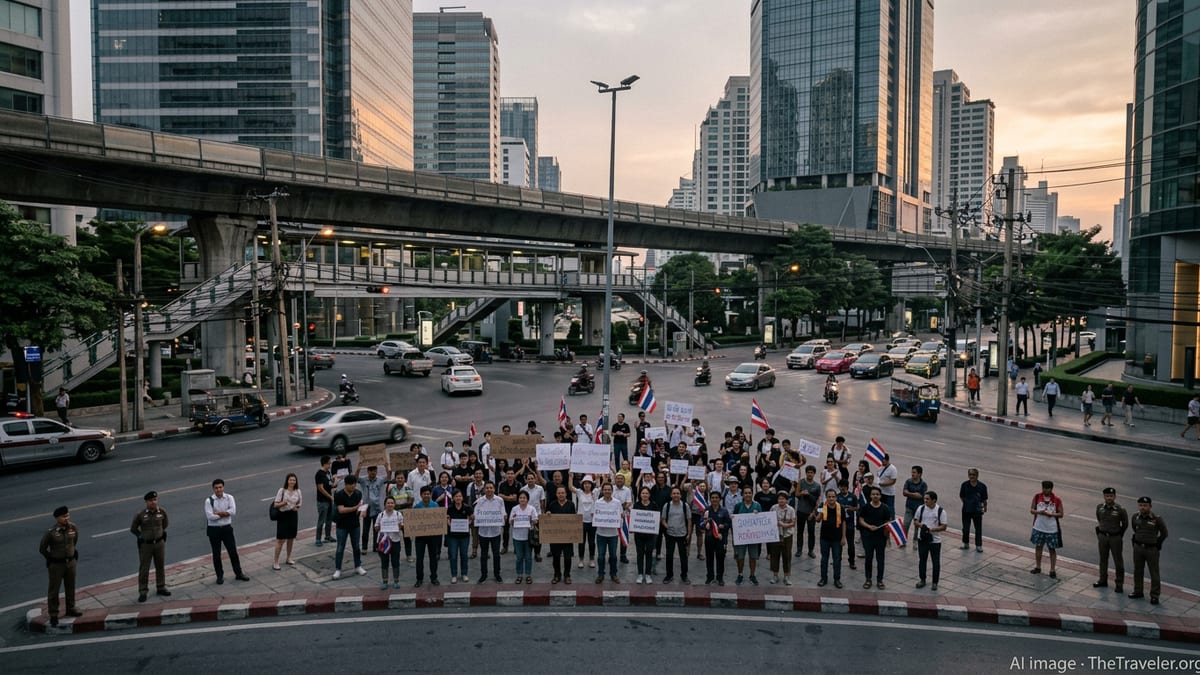
Thailand has a long tradition of mass political mobilization. Major protest cycles in 2010, 2013 to 2014, and 2020 to 2021 brought tens of thousands of people into the streets of Bangkok and other urban centers. While these events were rarely directed at foreigners and typically concentrated in specific districts, they occasionally resulted in clashes with security forces, temporary occupation of intersections or public buildings, and localized disruptions to transportation and commerce.
Data from rights and legal aid organizations indicate that between 2020 and the mid 2020s, authorities relied heavily on emergency decrees, assembly laws, sedition provisions, and computer crime statutes to manage demonstrations. Hundreds of protesters and activists have faced legal charges related to unauthorized gatherings or online expression. The net effect has been to reduce the scale of overt protest activity compared with the peak years, though underlying grievances related to inequality, institutional reform, and royal prerogatives remain unresolved.
For expats, the physical security risk in normal conditions is comparatively low by global standards. Political violence is generally contained, with incidents of serious harm to bystanders rare relative to many other countries with similar instability scores. However, operational disruptions can occur during peak protest periods, especially in central Bangkok where many embassies, corporate headquarters, and expatriate residential areas are located. Road closures, heightened security presence, and sporadic clashes can temporarily complicate commuting and logistics.
For businesses, continuity planning should explicitly include political protest scenarios. This typically involves mapping office locations against past protest zones, developing work from home protocols for short periods, ensuring communication channels for staff during demonstrations, and maintaining awareness of government declarations of emergency measures that might affect operating hours or mobility.
Implications for Foreign Corporate Governance and Decision Making
The key political risk signals in Thailand converge around institutional unpredictability rather than systemic breakdown. Elected governments change frequently and may face judicial or military backed constraints; core economic technocracy within ministries and the central bank often provides a measure of continuity; and the legal environment contains specific high risk zones related to speech and political activity. Foreign executives must integrate these elements into corporate governance and relocation frameworks.
Board level risk discussions on Thai exposure typically address three categories. First, regime and coalition risk the chance that a governing coalition is reshuffled, weakened, or removed through non electoral mechanisms, affecting policy priorities and regulatory timetables. Second, rule of law and compliance risk, particularly concerning defamation, computer crime, and national security statutes that can affect both local staff and foreign employees. Third, reputational and stakeholder risk, as international stakeholders and home country regulators scrutinize operations in environments where political pluralism is perceived as constrained.
For individual expatriates, employer policies on public political engagement, social media use, and participation in demonstrations are increasingly formalized in high risk jurisdictions, and Thailand is no exception. Clear internal guidelines help reduce inadvertent exposure to politically sensitive conduct. Companies also tend to invest more in local government relations capacity and in scenario planning around elections and court decisions that could alter the operating environment.
Overall, Thailand is neither a high conflict failed state nor a politically placid environment. It occupies an intermediate category where governance structures function, infrastructure and services are broadly reliable, but the political “rules of the game” remain contested. Relocation and investment decisions should therefore weigh Thailand’s economic strengths against a realistic appraisal of political volatility and legal constraints on expression.
The Takeaway
Thailand’s political risk profile is defined by recurrent institutional contestation, a powerful unelected establishment, and stringent limits on certain forms of political expression, rather than by pervasive violence or outright state collapse. Elections can and do bring change, but they operate within a constitutional framework that allows courts, the military, and the monarchy centric establishment to set boundaries on how far reformist agendas can go. This arrangement has produced an equilibrium of managed instability, in which governments turn over frequently and parties are occasionally dissolved, yet economic life continues and core macroeconomic institutions remain functional.
For expats, the primary political considerations are compliance with strict speech related laws, situational awareness during protest cycles, and an understanding that public political engagement carries higher legal stakes than in many home jurisdictions. For investors, the key issues are a persistent political risk premium, potential delays or reversals in reform programs, and the possibility of short term market volatility around major political events. In both cases, Thailand rewards careful risk management and informed expectation setting.
Relocation and deployment strategies that incorporate robust legal guidance, contingency planning for protests and electoral volatility, and clear internal protocols on political activity can significantly mitigate exposure. For organizations and individuals prepared to operate within these parameters, Thailand remains a viable, if politically complex, destination. Those requiring predictable long term institutional trajectories or broad latitude for political expression should recognize that Thailand’s current political configuration offers only partial alignment with those preferences.
FAQ
Q1. How likely is another military coup in Thailand in the near term?
The probability of another coup cannot be ruled out given Thailand’s history, but many analysts view it as lower than during the pre 2014 crisis years, due to the existence of constitutional and judicial tools that already give the establishment significant leverage over elected governments.
Q2. Are foreigners commonly targeted in Thailand’s political conflicts?
Foreigners are rarely the direct focus of political disputes, and violence is usually contained among domestic actors. However, expats can be indirectly affected by disruptions to transportation, demonstrations near workplaces, or heightened scrutiny of politically sensitive speech.
Q3. How strict is enforcement of lese majeste laws for expats compared with locals?
The law applies equally to foreigners and Thai citizens. While most cases involve Thai nationals, there have been instances of foreign academics and residents facing investigation or detention, indicating that expats should treat this risk as real and significant.
Q4. Do political changes typically affect foreign investment protections?
Core legal protections for foreign investors and property rights have generally remained intact across different governments, including during coup periods. The main impact of political change is more often on regulatory priorities, implementation pace, and sectoral reform agendas.
Q5. How volatile are Thai financial markets around political events?
Thai equities and the baht can show noticeable short term volatility around elections, major court rulings, and protest peaks. Historically, markets have tended to stabilize once a new political equilibrium becomes apparent and no systemic policy rupture is expected.
Q6. Are there specific sectors more exposed to political risk in Thailand?
Sectors that depend heavily on government concessions, regulation, or long term policy commitments such as energy, infrastructure, telecommunications, and some natural resources are more exposed to shifts in coalitions and regulatory emphasis than purely export oriented manufacturing.
Q7. How do protests impact daily life for expatriates in Bangkok?
During large protest waves, expats may experience traffic congestion, rerouted public transport, and occasional work from home periods if offices are near rally sites. Direct physical risk to non participants is generally limited but situational awareness is important.
Q8. Does political instability significantly disrupt basic public services?
Even during acute political crises, basic utilities, banking, telecommunications, and core public services typically continue to function. Disruptions, when they occur, are usually localized and temporary rather than systemic failures.
Q9. How should companies adjust relocation policies for staff in Thailand?
Companies commonly add enhanced security briefings, clear guidelines on political activity and social media, contingency plans for protests and elections, and periodic political risk reviews to standard relocation packages for Thailand based assignees.
Q10. Is Thailand suitable for long term relocation despite political risks?
Thailand can be suitable for long term relocation for individuals and firms that are comfortable operating in a competitive but constrained political environment and that implement robust compliance and risk management measures. Those requiring high levels of political predictability or extensive civic space may find the risk profile less aligned with their needs.