


More news on this day
Thailand’s rivers are increasingly becoming slow-travel corridors, as a wave of short “micro-route” cruises begins linking major tourist hubs with little-known markets, temples and riverbank communities that were previously bypassed by mainstream itineraries.
Get the latest news straight to your inbox!
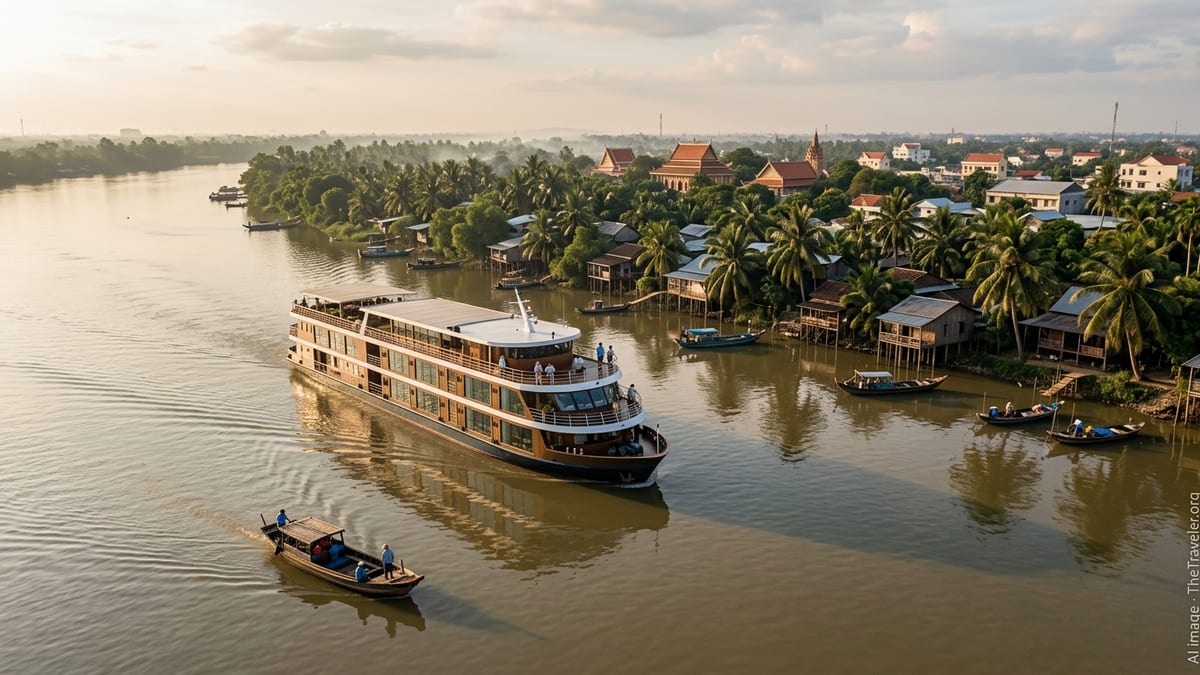
Short Routes Open Up Bangkok’s Backwater Canals
Bangkok’s long-established Chao Phraya boat network is providing the template for compact sightseeing circuits that function more like neighborhood routes than traditional cruises. Publicly available information shows that hop on hop off services now connect central piers with heritage quarters, fresh markets and creative districts along the river, giving visitors a way to explore at a slower pace while using everyday transport rather than chartered boats.
Beyond the main river, newer small-boat tours are threading into the city’s western khlongs, or canals. Around Khlong Lat Mayom, a community-developed floating market in Taling Chan, boat operators offer short loops that pass stilt houses, orchards and waterside shrines before linking several nearby markets within a single trip, according to background information on the attraction. These micro-routes are typically one to two hours long, putting local life and food stalls at the center of the experience rather than on-board entertainment.
Travel guidance on Bangkok’s water transport notes that the canal services are increasingly promoted as an alternative to road traffic for both residents and visitors. The compact scale of these journeys, combined with low fares and frequent departures, is turning them into informal sightseeing products, even when they were not designed as conventional tours. The result is a layered network of short routes that can be stitched together into a full-day exploration of markets, temples and neighborhoods along the water.
Ayutthaya’s Community Cruises Highlight Temple Rings and Craft Villages
North of the capital, Ayutthaya’s encircling rivers and canals are being reorganized into tightly focused cultural circuits. Academic research on riverside tourism in Phra Nakhon Si Ayutthaya reports a growing emphasis on community-based tourism that uses small boats to connect temple-lined stretches of river with farming hamlets and craft villages. These routes typically loop around the historic island or follow a single canal, making them accessible half-day experiences rather than full-scale expeditions.
Studies of riverside communities such as Krachaeng describe how local groups have worked with tourism planners to map heritage sites, farm plots and learning stations into coherent itineraries. The programs often combine short boat hops with shore visits for homestyle meals, pottery workshops or agricultural demonstrations, positioning the cruise as a moving link between multiple micro-attractions. This structure brings travelers into contact with areas that previously saw little visitor traffic despite being close to major temple complexes.
Hotels and small operators along the Chao Phraya and surrounding canals have added their own compact excursions, typically lasting from 60 to 150 minutes. Recent rate sheets for Ayutthaya-based properties highlight sunset loops around the historic city moat and dawn circuits to riverside monasteries, marketed as low-impact ways to observe daily rituals and riverbank routines. These products align closely with a wider policy focus on dispersing visitors and extending stays beyond the most photographed ruins.
Chiang Mai’s Ping River Cruises Link Markets and Multifaith Neighborhoods
In Chiang Mai, the Mae Ping River is emerging as a laboratory for small-boat itineraries that connect urban markets with quieter stretches of countryside. Tour descriptions for half-day city programs increasingly feature long-tail boat segments along the Ping, framed as a pause from temple touring and an opportunity to see how the river shapes everyday life in Thailand’s northern hub.
Specialist travel coverage of the city notes that river excursions frequently tie together Warorot Market and adjacent fresh-produce markets with traditional riverside neighborhoods. Operators offer relaxed journeys that glide past wooden houses, community jetties and small shrines before stopping at local gardens or craft centers. Evening cruises add another layer, with recent reports highlighting dinner sailings that combine on-board meals with short walks through night markets along the riverbanks.
Hospitality-focused publications also point to new branded river experiences operating from high-end riverside hotels. One recently profiled cruise product on the Ping is structured around a compact circuit through a district where Buddhist temples, churches, mosques and gurdwaras share the same waterside streets. The format reflects a broader trend toward interpretive micro-routes that emphasize cultural diversity and neighborhood stories over long-distance travel.
Floating Markets and Rural Detours Draw Domestic and International Travelers
Beyond major cities, floating markets and small river towns are using boat tours of one to three hours to showcase rural life without requiring overnight journeys. Amphawa Floating Market, in Samut Songkhram province, is one of the best-known examples, with published descriptions outlining short canal cruises that depart directly from the market piers. These rides highlight wooden riverfront houses, orchards and small temples, and often include stops to buy snacks from riverside vendors.
Similar approaches can be seen at secondary markets along branches of the Mae Klong and in other low-lying provinces. Operators run narrow boats that weave between houses and orchards, offering a view of how waterways remain integral to trade and transportation in smaller communities. For many domestic tourists, these micro-routes function as weekend escapes that reconnect them with older patterns of river-based life that are less visible in Bangkok’s modern core.
In the north and northeast, community-based tourism initiatives described in conservation and development reports show how homestay villages near the Mekong and its tributaries are adopting short river excursions as part of their offer. Visitors might join a morning boat journey to a forest viewpoint or riverside temple, bookended by village-hosted meals and cultural activities. The limited range of these routes helps keep traffic and environmental pressure manageable while still generating income from boat fees and related services.
Micro-Routes Feed Into Longer Mekong and Chao Phraya Itineraries
The rise of micro-routes is also influencing how longer river cruises in Thailand and the wider Mekong region are designed. Recent brochures for Southeast Asia river-cruise programs highlight shorter land-based and boat-based excursions embedded within multi-day itineraries, with specific references to village visits, floating markets and local craft centers along the Mekong. Rather than days of uninterrupted sailing, itineraries are being broken into clusters of compact outings that resemble the domestic micro-routes now common in Thailand.
Operators on the Chao Phraya and Mekong are increasingly emphasizing flexibility in their published materials, with notes that schedules and docking points may be adjusted in response to water levels or community needs. This adaptive approach allows cruise lines to substitute alternative short segments, such as a neighborhood canal tour or a local temple ring, if primary stops become inaccessible. For travelers, it translates into an expanding menu of small-scale encounters with riverside communities that might not have appeared on older route maps.
Collectively, these trends are putting a finer-grained picture of Thailand’s waterways onto the travel map. From city canals to historic moats and rural branches of major rivers, micro-routes are enabling both domestic and international visitors to experience markets, temples and everyday riverside life in shorter, more intimate segments. As more communities develop their own small circuits, the country’s river journey options are likely to diversify even further, with local stops rather than ship amenities defining what makes a Thai river cruise distinctive.
Chao Phraya hop-on hop-off overview
Khlong Lat Mayom floating market and boat tours
Riverside tourism research in Ayutthaya