


Airport parking comparison sites like Looking4Parking promise to save you money and stress before you even reach the terminal. Used well, they often do. The platform sells parking on behalf of more than a thousand car parks worldwide and regularly advertises savings of up to 60 percent when you book ahead. In practice, though, many travelers only discover the fine print, shuttle gaps or operator disputes when they are standing in a dark car park at 5 a.m. or queuing at an exit barrier that will not lift. This guide walks through the biggest mistakes people make when using Looking4Parking and how to avoid them, drawing on real recent traveler experiences.
Get the latest updates straight to your inbox!
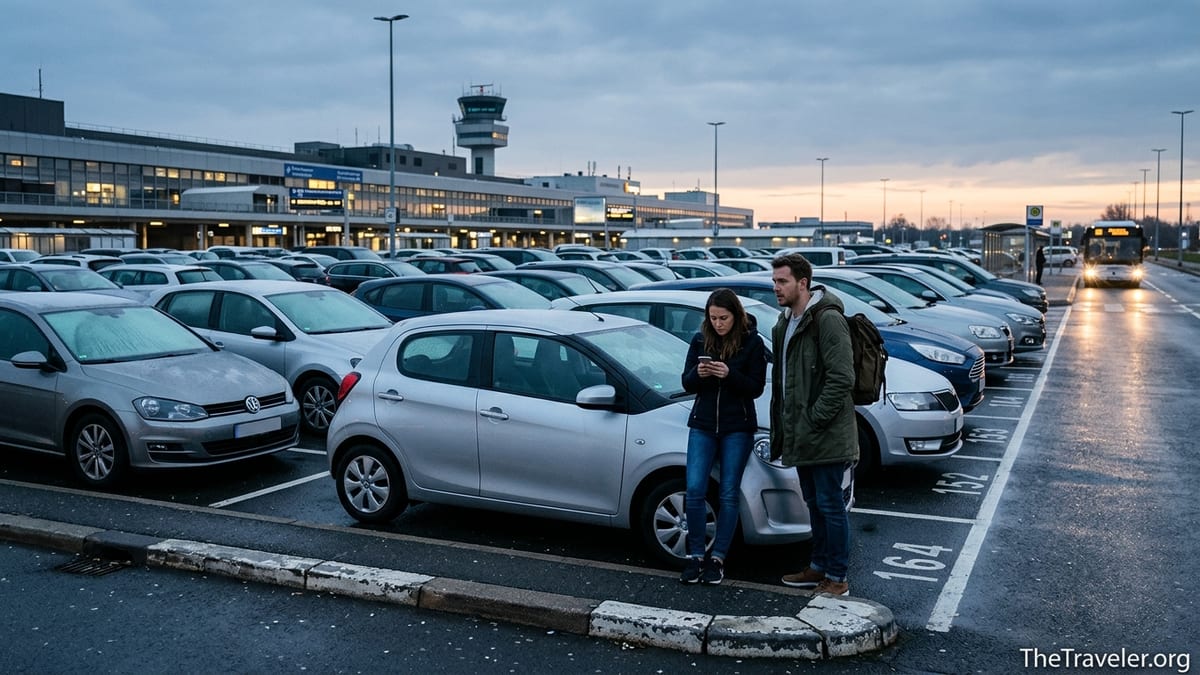
Forgetting That Looking4Parking Is a Broker, Not the Car Park
One of the most important things to understand about Looking4Parking is that it is a comparison and booking platform, not the company that owns or operates the car park where your vehicle will actually sit. On its own site, Looking4 describes itself as selling airport parking on behalf of more than 1,200 car parks at over 200 airports worldwide. That means there is always a second company in the mix: the local operator that provides the shuttle bus, holds your keys or manages the barrier system. Many frustrated reviews on Trustpilot and other platforms come from travelers who only realize this distinction after something has gone wrong and each party starts pointing to the other.
Consider a recent case at Leeds Bradford Airport, where a traveler booked a meet and greet service via Looking4Parking and arrived back from holiday expecting their car at the terminal. Instead, they were told by phone that an “ongoing dispute” about where cars could be left meant their vehicle was now around 10 miles away. They were instructed to take a rideshare to collect it and promised reimbursement, only to be bounced between the operator and Looking4 later when that refund failed to appear. Situations like this feel personal, but structurally they are a product of using a broker that sits between you and the car park owner.
To reduce your risk, treat your Looking4 confirmation as only half the paperwork. As soon as you book, identify the named parking provider in the email, search for that company’s own terms, reviews and recent news, and save their direct contact details. If something on the ground looks wrong, such as staff asking you to leave your car in a one‑hour free parking bay at the terminal, you need to know who you are really dealing with and whether their behavior aligns with airport guidance. Seeing Looking4’s logo on a booking does not mean the staff at the gate are employed by Looking4 or that the broker controls what happens in that lot.
Another subtle consequence of this broker model is how complaints are handled. Looking4’s regional terms and conditions typically limit its role to taking your booking and passing it, along with your money, to the car park. Liability for damage, late shuttles or disputes on return is framed as sitting with the operator. If you want a realistic expectation of support, you need to read these terms before you commit, not on your phone in the rain outside Arrivals.
Booking the Wrong Parking Type for Your Trip
Looking4 groups most of its offers into three broad categories: on‑site airport parking, park and ride, and meet and greet. On paper this looks simple. In reality, many travelers click the cheapest price without noticing that a park and ride lot might add 20 to 30 minutes each way, or that some meet and greet offers are run by small off‑airport firms using unmarked vans and unofficial drop‑off points. Choosing the wrong format can easily erase any savings you made.
Park and ride is usually the lowest price, especially at busy UK hubs such as Gatwick, Manchester or Birmingham. You park in an off‑site compound, keep or hand over your keys, then take a shuttle. For a mid‑week three‑day stay, you might see prices well under what the airport itself charges at its long‑stay car park. The catch is timing. A family with two small children and heavy luggage who discovers the shuttle runs only every 20 minutes, and not at all between midnight and 4 a.m., is going to have a very different experience from a solo traveler on a mid‑morning departure. Complaints on review sites frequently mention “we waited 40 minutes for a bus in the cold” or “the last shuttle left before our delayed flight arrived.”
Meet and greet promises premium convenience. You drive to a drop‑off zone near the terminal, hand over your keys and walk straight to check‑in. When it works as advertised, this can feel like a luxury at an affordable price. But many airports have issued warnings about rogue valet companies who park cars in retail lots or residential streets. Some Looking4 customers at regional UK airports report being told to leave their car in short‑stay bays or one‑hour free zones where airport staff later clamp down. If you are going to pay extra for meet and greet through a broker, make sure the service operates from an official, signposted area and that the company name on your paperwork matches the signage at the handover point.
The safest strategy is to start from your real‑world constraints instead of the headline discount. If you have a 6 a.m. departure, a young family and two checked bags each, shaving a few pounds off the price by choosing an off‑airport park and ride can be a false economy. In that scenario, an on‑site long‑stay car park booked through Looking4 or an official airport meet and greet might be worth the modest premium for guaranteed early‑morning access and 24‑hour staffing.
Ignoring Shuttle Timetables and Overnight Gaps
One of the most consistent patterns across negative Looking4Parking reviews is upset around shuttle buses. Travelers arrive assuming that all off‑site lots operate like big commercial brands in the United States, with continuous loops every 10 to 15 minutes around the clock. In reality, many of the independent operators and smaller hotel‑linked car parks that appear on Looking4 run shuttles only at set times, or pause operations for several hours nightly. Those constraints are often buried in a paragraph of small print, while the main listing emphasizes distance to the terminal instead.
Imagine you book a bargain park and ride at a major European airport for a long weekend, scheduled to return on a late evening flight. On paper the lot is “10 minutes from the terminal” and the pricing beats the official airport long‑stay by a wide margin. When your flight is delayed and you finally clear customs at 1:30 a.m., you discover the shuttle stopped at midnight and the contact phone just rings. That 10‑minute ride has now become a 45‑minute wait for a taxi willing to drive out to an industrial estate, plus a night surcharge on the fare. Savings evaporate fast in moments like this.
There are also timing traps on outbound journeys. Some hotel park and stay packages that feed into Looking4’s inventory only guarantee shuttle seats at certain times. Guests are sometimes told at check‑in that they must add their name to a clipboard for a morning transfer or pay an extra fee per passenger outside of standard hours. If you booked purely on price and did not notice that the earliest bus runs at 5 a.m., but your check‑in opens at 4:00 a.m., you will be starting your holiday in an avoidable panic.
To protect yourself, treat shuttle information as non‑optional. Before you click “confirm,” scan the product description for explicit operating hours, frequency and any surcharge notes. If you cannot see them clearly, copy the operator name into a search engine and look up their own site or recent customer comments. For truly early or very late flights, favor either on‑airport car parks or large, dedicated commercial lots that advertise 24‑hour, continuous shuttle loops as part of their core identity rather than as a vague add‑on.
When your plans fall outside typical daytime windows, it can also be worth doing a rough mental comparison with ride‑hailing or a pre‑booked taxi. For short trips of two or three days, especially from urban airports with strong ground transport, combining public transit or a cab may be cheaper and far less stressful than relying on the thinnest‑margined off‑site lot in the area.
Skimming Over Terms, Fees and Cancellation Rules
Like most intermediaries, Looking4 structures its terms so that you pay a booking fee for its comparison service, while the underlying parking product is subject to the car park’s own rules. Regional terms on Looking4’s European sites, for example, make it clear that if you cancel within a certain timeframe, you can receive a refund of the parking cost but not the Looking4 booking fee. Some products are clearly labeled as non‑refundable or non‑amendable once purchased. Travelers who skim these details often assume they can change or cancel up to 24 hours before arrival without penalty, only to discover hard limits when their flight or personal plans change.
A common friction point is the optional cancellation waiver that Looking4 sometimes offers at checkout. This is presented as a small extra charge that allows you to cancel for any reason up to a stated deadline, with a refund of your parking fees. Many travelers ignore it to save a few units of local currency. That can be a rational choice for a one‑night stay, but it becomes riskier for an expensive multi‑week booking made months in advance. If you decline the waiver and later need to cut your holiday short or change airports, there may be little Looking4 can do beyond pointing you back to non‑refundable operator terms.
Fees and surcharges are another area where rushing the booking page can cost you. Some off‑airport services add late return charges if you are more than a few hours beyond your booked exit time, even when the delay is caused by airline schedules. Others may levy extra fees for oversized vehicles, additional passengers on shuttles or out‑of‑hours key collection. Reviews on independent sites mention cases where travelers believed they had fully prepaid, only to be told on arrival that they owed an extra amount because their car was classed as a van or because they arrived outside the advertised window.
The most reliable way to avoid surprises is to read both layers of terms before paying: Looking4’s own conditions and the operator’s specific rules, which are usually linked or summarized in the product description. As a sanity check, ask yourself whether the savings are still worthwhile if you have to pay a modest rebooking fee or lose the booking fee portion in a worst‑case scenario. If you are making a last‑minute, one‑off booking on a low‑cost flight, strict cancellation rules may not matter much. For a two‑week family holiday booked far ahead, paying a little extra for flexibility can be cheap insurance.
Not Double‑Checking Booking Details and Access Instructions
Another mistake that surfaces repeatedly in traveler stories is treating the confirmation email as something you can always easily retrieve later. People delete it by accident, mis‑type their address at checkout or simply forget to open the attachment that contains detailed arrival instructions, QR codes or barcodes for barriers. When they turn up at the car park and the automatic barrier does not rise, or staff cannot immediately find their booking, stress levels spike fast.
Looking4 customers have described arriving at airports such as Luton in the United Kingdom to find that the barrier system did not recognize their registration plate, even though they had prepaid. In one case, the airport’s own support staff at the exit tried to charge the driver the full gate price again, insisting that no prepaid booking was visible. Only after a tense exchange over the intercom and manual checking did they allow the car to leave without a second payment. Episodes like this are awkward for everyone involved, especially if there is a queue of cars building up behind you.
A simple discipline can prevent many of these headaches. As soon as you receive your Looking4 confirmation, forward it to a secondary email account, save it in a dedicated “Travel” folder, and store a PDF copy in your phone’s files or a cloud service. Many modern phones allow you to add QR codes or booking references directly to a wallet app. It is also worth taking a screenshot of any key details such as the booking reference, license plate recorded and operator contact numbers, then favoriting that image for quick access offline.
Before your travel day, read the access instructions carefully. Some car parks require you to press a certain button at the barrier, use an intercom and quote your booking reference rather than relying on automatic recognition. Others ask you to call a mobile number 20 minutes before arrival for meet and greet. If you assume that every lot works the same way, you increase the odds of showing up at the wrong entrance, missing the handover or being told that “no booking has been made” because you were in the wrong zone.
Relying Blindly on Star Ratings and Outdated Reviews
Looking4 prominently features a high average review score from Feefo on its own site, while independent platforms such as Trustpilot and regional review aggregators show a more mixed picture. This contrast can be confusing. Many travelers see a four‑plus star average in a booking widget or airline add‑on page and assume that all the underlying parking products are consistently reliable. When things go wrong, they feel misled, not realizing that those stars often reflect thousands of bookings over many years, across different countries and a shifting roster of operators.
Review scores are especially poor at capturing recent changes. A car park that once offered quick, friendly shuttles can deteriorate rapidly under new management or during staff shortages, while a previously disorganized operator might improve service after investing in new buses or technology. Looking4’s inventory also changes as contracts with individual car parks start and end. A glowing five‑star average from three years ago may refer to a completely different operator than the one you will encounter this summer, even though the product name looks similar.
To make reviews work for you rather than against you, focus on patterns in recent comments rather than topline scores. Look at what travelers have said in the last six to twelve months about specific lots, paying particular attention to mentions of shuttle reliability, vehicle condition on return and customer service responsiveness. If you notice several people complaining recently about long waits, damaged cars or disputes over extra charges at the same location, take that seriously, even if the overall rating still looks decent.
It is also wise to compare feedback across more than one platform. A car park with near‑perfect scores on a site that works closely with the operator, but much lower ratings on independent forums or general travel review sites, should prompt extra caution. None of this means you should never use Looking4 or trust any positive reviews. It simply means treating online scores as one input into your decision, alongside practical factors like shuttle schedules, operating hours and the presence of clear, up‑to‑date contact information.
Assuming Someone Else Is Responsible for Vehicle Damage
Many travelers only think seriously about risk to their vehicle after they have handed over the keys at a meet and greet bay or left their car in an unfamiliar compound. At that point, it is easy to fall back on a vague belief that “insurance will cover it” or that the broker will sort things out. In reality, responsibility for any damage, theft or break‑in is determined tightly by the operator’s own conditions, and those conditions often require you to inspect the car and report any issues before leaving the site on your return.
Looking4’s partner terms and various sample contracts with airlines stress this point. Customers are expected to check their vehicle at the time of collection and notify the service provider immediately of any new scratches, dents or interior damage. If you drive away and only notice a problem when you get home, your chances of a successful claim fall sharply, because the operator can argue that the damage occurred after you left. Some contracts even specify that no liability is accepted for minor cosmetic marks, stone chips or interior wear, framing these as normal risks of motoring.
In practice, this means you need to build a few extra minutes into your pick‑up routine. When you collect your car, walk around it slowly, comparing it with photos you took before departure. Look for fresh scuffs on alloy wheels, bumper scrapes or changes in mileage that might indicate the car was driven further than necessary to move it between lots. Open the boot and check that any visible items you left behind are still there. If anything seems off, calmly raise it with staff on the spot and ask them to log the issue in writing, even if you also plan to follow up with Looking4 as the broker.
For higher‑value vehicles or longer trips, you may decide that the peace of mind of an on‑airport car park where you keep your own keys outweighs the extra cost. These lots are not immune to damage, but they typically involve less movement of vehicles by third‑party staff and clearer chains of responsibility. Whatever you choose, remember that neither a logo on a booking page nor a high average review score guarantees that someone else will automatically pay if your car comes back scratched.
The Takeaway
Looking4Parking can be a useful tool in the airport parking puzzle. The platform brings together a wide range of options at different price points, and many travelers report smooth, straightforward experiences, especially when they book simple on‑site or well‑known park and ride products. Yet the same system that enables genuine savings also encourages rushed clicks, half‑read fine print and optimistic assumptions about who will help if your plans change or something goes wrong.
The travelers who get the most value from Looking4 tend to do three things well. First, they remember that Looking4 is a broker, and they take time to research the actual operator whose lot they will use. Second, they match the parking type and shuttle setup to the realities of their flight times, luggage and family needs, rather than chasing the absolute lowest headline price. Third, they pay attention to terms, confirmations and vehicle condition, so that if there is a problem, they have documented evidence and realistic expectations of support.
None of this requires hours of extra work. Spending ten minutes before you book to skim the operator’s rules, scan recent reviews and check shuttle hours can spare you late‑night taxi searches, unexpected charges at barriers or arguments on the forecourt after a long flight. In a travel environment where flights, security and weather are already unpredictable, turning parking into the most predictable part of your trip is a small but meaningful win.
FAQ
Q1. Is Looking4Parking a legitimate company or a scam?
Looking4Parking is a long‑established airport parking comparison and booking platform that works with hundreds of car parks worldwide. It is a legitimate business, but service quality varies because the actual parking is provided by local operators, not by Looking4 itself. That is why experiences range from excellent to very poor depending on which specific lot you choose.
Q2. Why do some customers have great experiences while others have serious problems?
The wide spread in reviews usually comes down to differences between individual car parks, not the booking process itself. Some operators run frequent shuttles, maintain secure, well‑staffed lots and handle issues quickly, while others cut corners. If you only look at the overall rating for Looking4 and not at recent comments about the particular lot you are booking, you may end up with a very different experience from another traveler who chose a better‑run provider.
Q3. What happens if my flight is delayed and I return later than my booked exit time?
Policies vary by operator. Some car parks allow a short grace period of a few hours, while others charge an extra daily or hourly rate if you overstay, even when airline delays are to blame. Before booking through Looking4, check the operator’s terms for late returns and consider building in a little extra time on your reservation if your route is prone to delays.
Q4. Can I cancel or change a Looking4Parking booking without losing money?
It depends on the product you choose and whether you buy a cancellation waiver. Flexible rates usually allow cancellations up to a stated deadline, refunding the parking cost but not the non‑refundable Looking4 booking fee. Cheaper, non‑refundable deals may not allow any changes. Always read the cancellation section on the product page and in your confirmation email so you know exactly what is possible.
Q5. How can I avoid problems with shuttle buses when using off‑site parking?
Before you confirm a booking, look closely at the shuttle information for operating hours and frequency. If those details are vague or missing, search for the operator’s own website or recent traveler reviews that mention shuttle reliability. For flights very late at night or very early in the morning, it is often safer to choose on‑airport parking or a large, dedicated lot that clearly advertises 24‑hour, frequent shuttles.
Q6. What should I do if the barrier will not lift even though I prepaid through Looking4?
Stay calm, use the intercom at the barrier and have your booking reference and car registration ready. Explain that you have a prepaid reservation via Looking4 and ask staff to check their system manually. If they try to charge you again, politely insist that you have already paid and request written confirmation of any additional payment they demand. Keep screenshots of your booking and, if necessary, follow up afterward with both the operator and Looking4.
Q7. How can I protect myself against damage to my car while it is parked?
Before leaving your vehicle, take clear photos of all sides, the mileage and any existing marks. On your return, inspect the car carefully before driving away and compare it with your photos. If you spot new damage, report it to the operator immediately and ask them to log the issue in writing. This documentation will be crucial if you need to pursue a claim with the operator, your insurer or, in some cases, through Looking4 as the booking intermediary.
Q8. Are meet and greet services booked through Looking4 always safe to use?
Many meet and greet services work smoothly and are run by reputable operators, but standards vary. To reduce risk, check that the handover point is in an official, signposted area of the airport, that staff wear branded identification matching your confirmation, and that recent reviews do not mention cars being parked in non‑secure locations. If anything about the operation feels improvised or unofficial, consider walking away and contacting Looking4 immediately.
Q9. Is it better to book directly with the car park instead of using Looking4Parking?
Booking direct can sometimes offer clearer accountability and access to the operator’s own flexible rates, while Looking4 can surface cheaper deals or packages you might not find on your own. A good approach is to use Looking4 to discover options and indicative pricing, then compare those with direct offers from the same operator or the airport. If the prices are similar, you may prefer to book wherever the terms and customer support look strongest.
Q10. What is the safest way to use Looking4Parking for a family holiday?
For a family trip, prioritize reliability over shaving off the last few units of currency. Choose on‑airport or well‑reviewed park and ride options with clearly advertised 24‑hour shuttles, read both Looking4’s and the operator’s terms, save your confirmation in multiple places and photograph your car before leaving it. Spending a little extra time and, if necessary, a modest premium at booking stage can make the start and end of your holiday much smoother.