


Rail Europe can be a convenient, English-language gateway to train tickets and rail pass reservations across much of Europe. It aggregates schedules from national operators like SNCF in France, Trenitalia in Italy and Deutsche Bahn in Germany into one familiar interface. Yet that convenience sometimes masks higher prices, missing trains, confusing reservation rules and policies that can trip up first-time visitors. Understanding how Rail Europe actually works, and where travelers most often stumble, can save you real money and stress on your next trip.
Get the latest updates straight to your inbox!
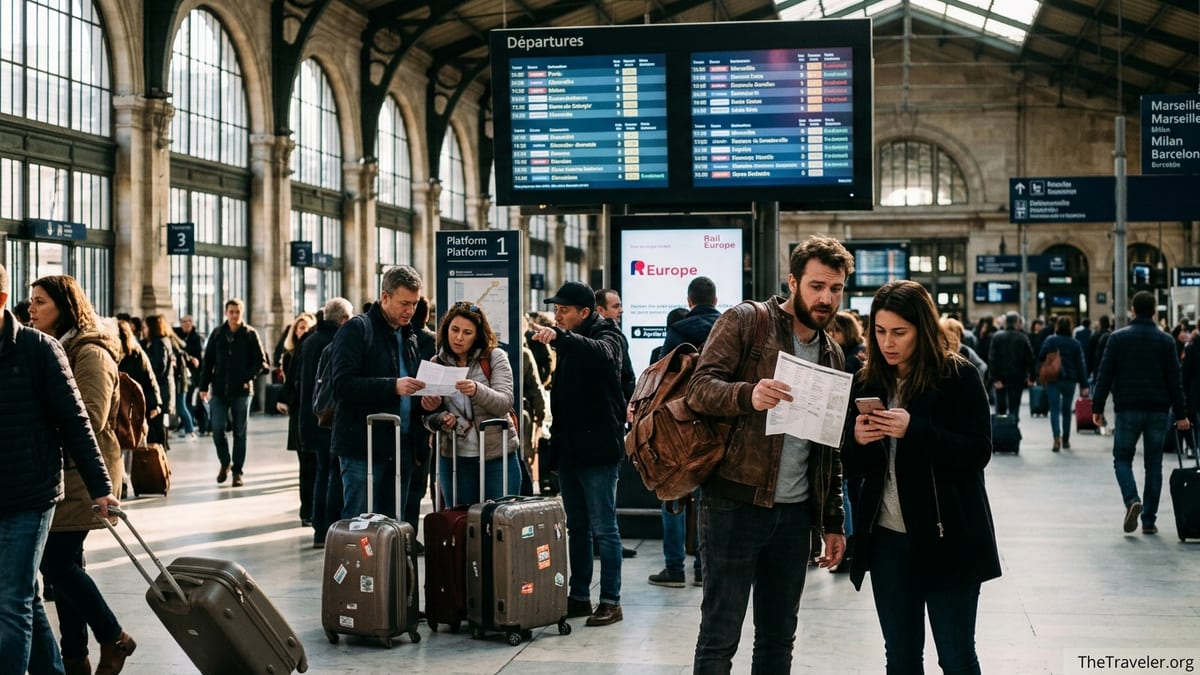
Confusing Rail Europe With a National Rail Operator
One of the biggest conceptual mistakes is assuming Rail Europe is itself a railway company. It is not. Rail Europe is a reseller and booking platform that connects to the reservation systems of individual train operators and rail pass providers. When you buy a Paris to Lyon TGV ticket, for example, the train is still run by SNCF and the fare rules are ultimately set in the French operator’s system, not by Rail Europe. The same applies if you book a Frecciarossa train in Italy or an ICE service in Germany. Rail Europe is essentially a travel agency layer sitting on top, with its own fees, interface and customer service structure.
In practice, that means some issues can only be resolved by the underlying operator. If a TGV from Paris Gare de Lyon is canceled because of a strike, SNCF staff at the station handle reaccommodation, even if you bought through Rail Europe. Travelers sometimes queue at a Rail Europe-branded counter or call center expecting it to function like a rail company desk, only to be redirected to the national operator. Understanding that distinction ahead of time helps set realistic expectations about who can help with delays, refunds or seat changes on the day of travel.
Confusion can also surface when things go wrong online. If Rail Europe’s site briefly shows “not available” for a German ICE train, some travelers assume the entire route has sold out. In reality, Deutsche Bahn might still show multiple standard fares on its own site. Because Rail Europe is an intermediary, it is only as comprehensive and reliable as the connections it has into each operator’s inventory on a given day.
Overpaying by Ignoring Operator Websites and Alternatives
Another frequent mistake is treating Rail Europe as a universal best-price engine. While its base fares are usually aligned with the prices set by the operators, Rail Europe generally adds its own booking fee on top, which may be several euros per booking or per person. Independent tests comparing Rail Europe with competitors have found that for a sample Berlin to Munich ICE journey, both Rail Europe and a rival aggregator showed the same operator-set base fare of about 49 euros in second class, but Rail Europe added a higher booking fee, nudging the total price above its competitor for the identical train and departure time. Travelers who do not cross-check may never notice these small but cumulative differences.
On simple point-to-point routes, national sites often remain cheaper or more flexible. A traveler booking a Paris to Lyon high-speed TGV might see a midweek advance fare around 40 to 60 euros on SNCF’s own platform for a two-hour journey, while Rail Europe shows the same base fare but then adds a separate service fee. Over multiple segments, such as Paris to Lyon, Lyon to Nice and Nice to Milan, those extra charges can reach the cost of a full extra ticket. For budget-conscious travelers or families, this hidden layer of fees is one of the main arguments for at least checking operator websites before finalizing through Rail Europe.
Rail Europe’s inventory is also not fully universal. Some low-cost or regional brands do not always appear, or they may be harder to spot. For instance, French budget operator Ouigo, which runs no-frills TGV services on routes like Paris to Lyon or Paris to Marseille, is not integrated into every international booking system. That means a traveler relying exclusively on Rail Europe might conclude that only a standard TGV at 80 euros is available, while a Ouigo train running at a slightly different time could be selling seats below 30 euros on the operator’s own site or app. Missing that sort of alternative can meaningfully inflate the cost of a European rail itinerary.
Misunderstanding Rail Passes vs. Seat Reservations
Travelers who combine Rail Europe with Eurail or Interrail passes are especially prone to confusion about what they are actually buying. A rail pass functions as the basic travel ticket within its validity; for many long-distance and high-speed trains you then need to purchase a separate seat reservation or “passholder fare.” Rail Europe sells these reservations for various countries and operators, but they are not full tickets. Platforms like ItaliaRail, which also deal heavily with passholders, emphasize that a “passholder fare” is only the reservation fee and requires a valid rail pass to be meaningful. This distinction can get lost when everything appears in one basket as if each line item were a complete ticket.
Consider a traveler with a Eurail Global Pass planning Florence to Rome. They might log into Rail Europe, select the direct Frecciarossa high-speed train and see a modest additional charge labeled as a reservation. That fee, which could be around 10 to 15 euros for a passholder on this type of Italian service, buys only the assigned seat. If the traveler later cancels their pass or misunderstands and fails to activate it on the travel day, the reservation alone is worthless at the ticket check. Conversely, inexperienced travelers sometimes buy both a full-price ticket and a passholder reservation for the same train, effectively paying twice for the right to travel on a single service.
Another common misunderstanding is believing that Rail Europe is always the only or best way to secure pass reservations. In reality, guidance from specialist rail resources suggests that booking directly with operating railways often results in lower reservation prices, avoids extra service fees that pass platforms add per person per train, and occasionally offers better seat selection. For example, someone reserving a Paris to Barcelona TGV with a pass might find that the reservation fee booked at a French ticket office or on a national site is slightly lower than the same slot sold through an intermediary that charges its own handling supplement on top.
Assuming Availability and Coverage That Rail Europe Cannot Guarantee
Because Rail Europe offers a broad timetable view, travelers sometimes mistake its search results for a complete map of what is possible. That leads to frustration when certain trains, passholder quotas or night services do not appear. High-demand trains with limited passholder seats, such as Eurostar between London and Brussels or London and Paris, are a good example. A traveler might check Rail Europe weeks before departure, see no passholder options, and assume every seat has sold out. In reality there may still be regular tickets for sale at standard fares on the Eurostar site, but the dedicated allocation for passholders is gone, meaning the pass no longer brings value on that service.
Similar issues can appear with cross-border trains and specific operators that have not fully integrated every ticket type into Rail Europe’s system. Intercity and EuroCity services crossing between countries, or special seasonal trains to coastal or mountain regions, sometimes appear late or not at all. Discussion threads from passholders planning September journeys on certain EuroCity routes have described situations where operator websites still offered non-pass tickets while third-party platforms could not issue the corresponding passholder reservation. The result is an impression that “no trains are available” when in fact the limitation sits with the intermediary’s connection to the underlying booking system.
Night trains illustrate another subtle gap. Some night services, such as those run under the Nightjet brand across Austria, Germany and Italy, are bookable on Rail Europe, but specific couchette types, sleeper compartments or rail pass reservation options may not show up consistently. Travelers who are not aware of this might reroute or downgrade their plans when a particular couchette category seems unavailable, instead of checking directly with the operator where more granular berth choices and promotional offers can sometimes still be found.
Overlooking Restrictions, Refund Rules and Service Fees
Rail Europe’s user-friendly design encourages fast, almost airline-style purchasing, but that speed can lead travelers to skim over ticket conditions that differ from operator to operator. French TGV tickets, German ICE fares and Italian high-speed offers each come with their own refundability and exchange rules. When you add Rail Europe’s own policies and service fees into the mix, you can end up with a far less flexible ticket than expected. Official correspondence between a UK rail regulator and Rail Europe has highlighted how mandatory booking fees on UK tickets were sometimes presented in a way that was not immediately clear to consumers, prompting calls for better transparency.
A simple example is a traveler booking a London to Edinburgh journey in Britain. On Rail Europe, they might see a non-flexible Advance fare at an attractive price, complete with booking fee. If their plans change, the original operator’s terms might allow limited changes with a charge, but the Rail Europe interface and its service fees could make the process more cumbersome or expensive than going directly through a UK operator or domestic retailer. Travelers often discover only after attempting a change that part of the amount paid is a nonrefundable service fee distinct from the fare itself.
Refund policies become even more complex for seat reservations attached to passes. A Eurail or Interrail pass is governed by separate terms that specify how and when seat reservations can be refunded or modified. Rail Europe’s help materials now explain that some reservation types, such as specific TGV seat coupons or Eurostar passholder reservations, may have strict refund windows and may require contacting Eurail or the operator rather than Rail Europe. Passholders who assumed they could freely change their reservations through the same third-party interface they used to book find themselves navigating multiple layers of policies and support channels instead.
Booking Too Early, Too Late or on the Wrong Channel
Timing mistakes are another recurring theme when using Rail Europe. Different operators open bookings at different times. For example, Eurostar usually opens sales several months in advance, while some TGV routes or German long-distance trains may load timetables and discounted fares progressively. Travelers sometimes log into Rail Europe almost a year before a intended trip, see sparse or placeholder timetables, and then commit to suboptimal connections or higher fares because they did not realize that better options will appear closer to the travel date on operator sites.
The opposite mistake is leaving essential reservations to the last minute in peak season. In Spain, for example, many long-distance and high-speed AVE services require mandatory seat reservations, and local experts have long warned that popular Friday or summer departures can sell out. While Rail Europe has improved its coverage of Spanish passholder reservations, trains around holidays or big events still fill quickly. First-time passholders who assume they can make those reservations a day or two beforehand through a single platform, whether Rail Europe or Eurail, can be caught with no seats on their preferred departure and limited slower alternatives.
Channel choice also matters when systems are temporarily misaligned. When a new timetable takes effect or a rail operator rolls out new rolling stock, there are often short periods when third parties do not yet show all trains or carriage configurations accurately. Forums for rail travelers are full of anecdotes where a desired international train, such as a TGV from Brussels to the south of France or a new EuroCity link, was only visible on the operator’s own portal for several days before appearing on aggregators like Rail Europe. Travelers who checked only one channel concluded that route did not exist and rearranged hotel bookings unnecessarily.
Ignoring Practical Details: Station Names, Classes and Connections
Beyond pricing and policy issues, many of the headaches that surface on Rail Europe bookings are rooted in small practical oversights. One classic example is mixing up station names in cities with multiple terminals. In Paris, Gare du Nord, Gare de l’Est and Gare de Lyon serve different axes of the country. A traveler might arrive on a Eurostar at Gare du Nord and, while searching Rail Europe in a hurry, book a TGV down to Lyon from Gare de Lyon only 20 minutes later, not realizing they need to change stations using the metro or a taxi. The itinerary is technically possible in the search results, but unrealistic in real life, turning what looked like a smooth connection into a sprint with luggage through central Paris.
Class of service can also be misread. Rail Europe allows you to choose between first and second class tickets, as well as to indicate whether you hold a first or second class rail pass when booking reservations. Travelers occasionally select a first class passholder reservation while holding a second class pass, or vice versa, creating inconsistencies that conductors will flag on board. Others see only the modest price difference between second and first class on a short route, such as Milan to Venice, and assume they are similar products, without realizing that seat layouts, quiet zones and onboard amenities can differ significantly between classes and operators.
Finally, some users assume that Rail Europe will automatically build in safe transfer times for complex itineraries. While the platform does consider minimum connection times at many hubs, it cannot anticipate everything from immigration delays on cross-Channel journeys to seasonal crowds at tourist stations. A traveler piecing together a journey from London to the Swiss Alps might book London to Paris, a self-transfer across the city, and then Paris to Geneva with tight margins on each leg because it all fits neatly in one Rail Europe search tab. Only later, when a slight Eurostar delay cascades into a missed TGV and onward Swiss connection, do they realize that separate tickets via an intermediary give them less protection than a through-ticket with guaranteed connections might have done.
The Takeaway
Rail Europe remains a useful tool in the European rail ecosystem, particularly for travelers who value an English-language interface, consolidated timetables and the ability to handle multiple countries in one place. The biggest pitfalls arise not from the platform’s existence, but from misplaced assumptions about what it does and does not guarantee. Confusing it with a rail operator, ignoring alternative booking channels, misunderstanding rail passes and reservations, and overlooking fine print on fees and refundability can all translate into higher costs and unnecessary stress.
The smartest way to use Rail Europe is as one instrument in your travel planning, not the only one. Cross-check key journeys against national rail websites, especially for countries like France, Germany, Italy and Spain. Read fare rules carefully, distinguish clearly between tickets and reservations, and remain alert to trains or budget brands that might not appear in aggregated searches. Build realistic connection times, pay attention to station names, and be prepared to book critical high-demand legs as soon as reasonable while leaving space for regional spontaneity where reservations are unnecessary. With that mindset, you can enjoy the convenience of Rail Europe while sidestepping the most common and costly booking mistakes.
FAQ
Q1. Is Rail Europe always more expensive than booking directly with rail operators?
Not always, but Rail Europe usually adds its own booking fee on top of the operator’s base fare, so direct booking can often be a few euros cheaper per journey.
Q2. Can I rely on Rail Europe to show every available train and fare?
No. Rail Europe covers many operators but not all ticket types or low-cost brands. Some budget or regional trains, and certain passholder fares, may only appear on operator sites.
Q3. If a train is sold out for passholders on Rail Europe, is it sold out for everyone?
Not necessarily. It may just mean the limited passholder quota is gone, while regular full-fare tickets could still be available directly from the operator.
Q4. Do I need both a Eurail or Interrail pass and a full ticket when booking through Rail Europe?
No. With a valid rail pass you usually only need a seat reservation or passholder fare where required. Buying a full ticket on top of that would mean paying twice for the same journey.
Q5. Can Rail Europe customer service change my ticket if the train company cancels my train?
They may assist, but in many cases changes and reaccommodation for cancellations are handled by the operating railway at the station or via its own channels.
Q6. Why does Rail Europe sometimes show no night trains when I know they exist?
This can happen if certain sleeper products or new schedules have not yet been fully integrated. Checking the night train operator’s own website often reveals more options.
Q7. How early should I book Eurostar or other high-demand trains on Rail Europe?
As soon as practical once your dates are fixed, since both standard fares and limited passholder seats on popular departures between major cities can sell out weeks in advance.
Q8. Does Rail Europe automatically build in enough time for station transfers?
It respects official minimum connection times but cannot account for real-world delays or city transfers, so you should add extra buffer, especially when changing stations.
Q9. Are Rail Europe tickets and reservations easy to refund or change?
It depends on the fare type and operator rules. Some are flexible, others strictly nonrefundable, and Rail Europe’s own service fees are often not returned.
Q10. When is Rail Europe the best choice for booking my trains?
It works well when you want a single English-language platform for multiple countries, especially for straightforward daytime journeys, and you have compared key prices with at least one operator site.