


Rental car insurance is one of the most confusing parts of trip planning, and Allianz is one of the most recognizable names in travel protection. That combination can lead to a dangerous assumption: that buying “Allianz rental car insurance” means you are fully covered for anything that might happen on the road. In reality, Allianz products are quite specific in what they protect, and travelers who do not read the fine print can end up with large, unexpected bills from rental companies. This guide walks through the biggest mistakes people make when buying Allianz rental car insurance, using real-world style examples so you can avoid costly surprises on your next trip.
Get the latest updates straight to your inbox!
Confusing Damage Coverage With Liability Coverage
One of the most significant misunderstandings around Allianz rental car insurance is the difference between covering damage to the rental car itself and covering your legal responsibility to others. Allianz’s flagship product for U.S. travelers renting cars, often marketed as a “OneTrip Rental Car Protector” or “Rental Car Damage Protector” through partners like Hotwire and online travel agencies, typically focuses on collision, theft, and vandalism to the rental vehicle up to a stated limit, often around tens of thousands of dollars. That sounds comprehensive, but it does not mean you are covered if you injure someone in an accident or damage their property.
Imagine you rent a compact car in Phoenix for a week at about 40 dollars per day. At checkout on a booking site, you add Allianz rental car protection for about 11 to 15 dollars per day because it promises up to 75,000 dollars of coverage for damage or theft of the rental car. Two days later, you rear-end another vehicle at a traffic light. The Allianz policy can help with repairs to the rental car and related charges the rental company imposes, but it generally will not pay the medical bills of the driver you hit or repairs to that driver’s car. Those costs fall under liability insurance, which is a different type of coverage.
Another common situation is a traveler who does not own a car at home and assumes that buying Allianz rental coverage takes care of everything. In many U.S. states, the rental company’s basic liability insurance only meets the legal minimum, which can be very low. If you cause a serious accident, medical costs and legal claims can quickly exceed those limits. Allianz rental car products are usually designed to sit beside, not replace, liability insurance. Failing to recognize this gap can be a devastating mistake, especially in high-cost destinations or if multiple people are injured.
The takeaway is that Allianz rental car damage coverage and liability coverage are two separate problems to solve. Before you rely on Allianz alone, confirm whether your personal auto policy or a separate liability add-on from the rental company will protect you if you harm someone else or damage their property, not just the car you are driving.
Ignoring Existing Coverage From Credit Cards and Auto Policies
Another expensive mistake is buying Allianz rental car insurance without first checking what protection you already have. Many U.S. travel reward credit cards offer rental car collision damage benefits when you pay for the rental with the card and decline the rental agency’s collision or loss damage waiver. Some popular premium cards from major banks provide primary coverage for damage and theft of the rental vehicle, while mid-range cards often include secondary coverage that kicks in after your personal auto insurance. If you already have one of these cards, adding Allianz on top may be unnecessary or duplicative for collision and theft.
Consider a traveler from Chicago who owns a car at home, carries a full coverage auto policy with collision and comprehensive, and holds a travel credit card that includes primary rental car coverage on most rentals worldwide. She books a 7-day rental in Colorado during ski season for around 450 dollars. At checkout, she is offered Allianz rental car protection for 13 dollars per day, totaling more than 90 dollars for the week. If she accepts without thinking, she will have three layers of potential coverage for damage to the rental car: her auto insurer, her card’s primary benefit, and the Allianz policy. She might still choose Allianz for specific reasons, but buying it blindly means paying for protection she may never need to use.
The picture changes if you do not have a car or you are traveling abroad. Suppose you live in New York City without personal auto insurance and you are flying to Portugal for a road trip. Your U.S. auto policy will not help, and many credit cards only offer secondary coverage that becomes effectively primary abroad when there is no underlying policy. In this case, an Allianz rental car protector can provide a clear, dedicated pot of money to repair or replace the rental car without involving a non-existent personal insurer. The key is to compare your card’s benefit guide and any home policy against the Allianz offer before you buy, instead of assuming that more is always better.
In many states, consumer disclosures on travel insurance even suggest checking your personal auto coverage first. That is not a sign that Allianz products are weak, but a recognition that you should avoid paying for overlapping coverage when a card benefit or existing policy already covers the same risk.
Not Reading the Fine Print on Exclusions and Limits
Allianz rental car policies, like any insurance, include detailed exclusions and caps that matter a lot when you file a claim. Travelers sometimes focus on the headline benefit such as “up to 75,000 dollars in coverage” and overlook what types of vehicles, uses, and driving conditions are actually excluded. This can lead to an unpleasant surprise if the accident involves a vehicle or situation the policy specifically carves out.
Vehicle type is a frequent stumbling block. Allianz rental car coverage sold in the U.S. and through online agencies often excludes vehicles with an original manufacturer’s suggested retail price above a certain threshold, such as around 75,000 dollars. It may also exclude motorcycles, large passenger vans, antique cars, exotic sports cars, and certain commercial or off-road capable vehicles. If you upgrade at the counter from a mid-size sedan to a luxury SUV or a high-end sports coupe without checking whether that upgrade fits within the policy’s definitions, you could find yourself driving a car that Allianz will not cover, even though you paid for the protection.
Use is another critical exclusion. Policies often bar coverage when the vehicle is used off paved roads, in racing, in paid delivery work, or in violation of the rental agreement. Picture a group of friends in Utah who rent a compact SUV and purchase Allianz protection through an online travel site. They decide to explore a poorly maintained dirt track near a national park. A hidden rock tears out the undercarriage, causing several thousand dollars in damage. If the Allianz policy defines off-road use or non-public roads as excluded, their claim may be denied, and the rental company can pursue them for the full repair bill plus loss-of-use charges.
There are also practical conditions buried in the wording. Some Allianz documents emphasize the importance of inspecting the car at pickup, documenting existing damage, and obtaining a detailed loss report from the rental company if an incident occurs. If you return a damaged vehicle but fail to get documentation, or you leave the scene of a minor collision without a police report where one is required, Allianz can have grounds to deny or reduce the claim. Reading the fine print before your trip, and keeping copies of the rental agreement, condition report, photos, and incident paperwork, can make the difference between a smooth reimbursement and a months-long dispute.
Assuming Allianz Covers Every Fee the Rental Company Invents
Another widespread misconception is that Allianz will automatically pay every bill the rental company sends after an accident. In reality, Allianz policies typically define exactly which charges are covered and for how much. Coverage usually focuses on the actual physical loss or damage to the rental car and may include specific allowances for loss-of-use, reasonable towing, and similar expenses, but not necessarily every administrative fee or inflated invoice the rental counter generates.
Rental companies often add a long list of charges after a loss: daily loss-of-use fees while the car is in the body shop, “diminished value” claims, administrative processing fees, appraisal fees, and sometimes inflated repair rates from preferred shops. An Allianz-style policy may pay for certain categories of these charges up to the policy limit, but it will also expect the rental company to substantiate the amounts. In practice, insurers sometimes push back when a rental firm cannot show that the car was truly unavailable or that the fees reflect real losses. That back-and-forth can place you in the middle of a dispute you did not anticipate.
Consider a traveler renting through an online agency in Orlando who adds Allianz rental car damage protection for peace of mind. He returns the car with a scraped bumper, and the rental company later charges 2,600 dollars: 1,100 dollars for repairs, 900 dollars in loss-of-use for 9 days, and 600 dollars in administrative and other fees. Allianz may readily cover the documented repair costs but question the number of loss-of-use days if the company cannot prove when the car was actually in service, or may limit administrative charges based on policy language. If the rental company automatically charges the traveler’s credit card, the traveler may still have to dispute some portion, even though he assumed Allianz would take care of everything.
Another complication arises with currency conversion and local taxes. In some countries, repair estimates and fees are in the local currency, then converted to dollars for the purpose of reimbursement. If exchange rates move or the rental company pads the bill, Allianz will still only reimburse what is considered reasonable under the policy. Travelers who accept any charge without question or documentation risk owing amounts beyond what Allianz will pay. To protect yourself, insist on itemized invoices, keep correspondence, and involve Allianz promptly so the insurer can challenge unsupported charges on your behalf.
Overlooking Country-Specific Rules and Rental Company Requirements
Travelers also run into problems when they assume Allianz rental car insurance operates identically everywhere. In reality, coverage can vary by country of residence, destination, sales partner, and governing law. Some policy versions note that benefits are not available to residents of certain states or that coverage is primary in some scenarios and secondary in others. Country exclusions, local insurance rules, and rental company contract terms can all affect what Allianz will and will not cover.
For example, a U.S. resident renting in Italy or Ireland may find that the rental company requires the purchase of a local collision damage waiver regardless of any Allianz or credit card coverage. In those countries, basic CDW is often baked into the rental price or mandated by local practice, and declining it can trigger very high security deposits or outright refusal to rent. In this situation, Allianz may still provide useful protection by reimbursing the deductible or excess that remains under the local CDW, but it may not allow you to skip the rental company’s coverage entirely the way it might in the United States.
Another real-world wrinkle is how coverage applies to long rentals. Some Allianz rental car products have a maximum rental length, such as 45 consecutive days. A digital nomad planning a 60-day road trip around Spain might rent a car for the entire period and buy Allianz coverage assuming it extends for the full rental. If the policy limit is shorter, coverage could end on day 45, leaving the final two weeks uninsured for damage and theft. Similarly, some policies limit coverage to rentals that begin and end within the traveler’s trip dates as defined in a broader travel plan. Extending the car rental at the last minute without updating your insurance can leave gaps.
Rental companies themselves impose conditions that interact with Allianz coverage. Common requirements include naming all drivers on the rental agreement, respecting age limits, and adhering to geographic restrictions such as not taking the car across certain borders. If your partner or friend drives but is not an authorized driver under the rental contract, Allianz may deny a claim even if you faithfully purchased the policy, because you have violated the rental agreement that the coverage is built around. Always align the rental contract terms with the Allianz policy conditions before you pick up the keys.
Underestimating Documentation and Claims Process Requirements
Many travelers think of Allianz rental car insurance as something that pays automatically the moment something goes wrong. In practice, Allianz is an insurer that requires evidence, forms, and timelines. Failing to gather the right documentation at the right time is one of the most avoidable mistakes travelers make, and it can significantly delay or jeopardize a payout.
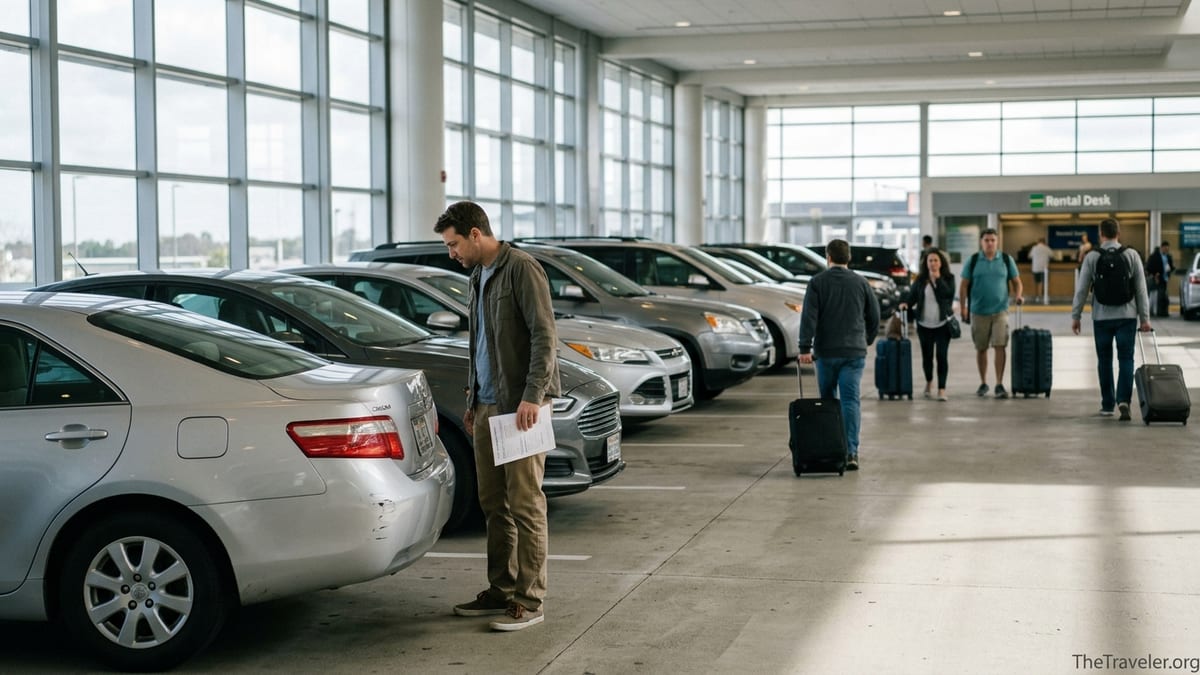
When a rental car is damaged or stolen, Allianz will usually ask for a copy of the rental agreement, the pre-rental condition report if one exists, photos of the damage, a police report in cases of theft or significant accidents, and an itemized bill from the rental company. Some policy wording emphasizes that the vehicle should be inspected at pickup and that all pre-existing damage be recorded. If you rush out of the parking garage without walking around the car, you might later be blamed for a scratch or dent that was already present, and Allianz may have difficulty contesting it without evidence.
Imagine landing in Los Angeles late at night, tired after a long-haul flight. You quickly accept the rental agent’s assurance that “everything is noted in the system” and drive away. Two days later, you lightly bump a curb, causing visible damage to a wheel. When you return the car, the rental company claims that both the wheel damage and an older rear bumper scratch are your fault. They charge 1,800 dollars to your card. Allianz may be able to help with the wheel damage if you provide photos and a timeline, but without any pre-rental photos or a paper condition report, disputing the bumper claim is difficult.
Timing also matters. Allianz policies specify deadlines for notifying the company of a loss and submitting required documents. Travelers who wait weeks to contact Allianz, or who ignore follow-up emails requesting additional information, risk having their claim closed for lack of cooperation. Keeping electronic copies of all rental documents in a single folder and reporting incidents to Allianz as soon as practical can streamline the process. Treat the claim the way you would a claim on your homeowner’s or health insurance: methodically, with attention to detail.
The Takeaway
Allianz rental car insurance can be a valuable tool in your travel risk toolkit, especially if you do not have robust coverage from a personal auto policy or a credit card. It can shield you from large repair bills when a rental car is damaged or stolen and help prevent a single mishap from ruining an otherwise great trip. Problems arise when travelers assume that the Allianz logo alone guarantees full protection in every scenario, from liability claims to obscure rental company fees.
The most important steps you can take are simple but powerful. First, understand what Allianz is actually promising to cover: typically physical damage and theft of the rental vehicle up to a defined limit, subject to exclusions. Second, compare that protection against what you already have through credit cards and auto insurance, so you do not pay for overlapping coverage or overlook critical gaps such as liability. Third, read the policy wording for vehicle types, uses, country rules, and maximum rental duration so your actual plans fit within the coverage, not the other way around.
Finally, treat your Allianz policy as a contract that requires your participation. Inspect the car thoroughly, document its condition, follow the rental agreement, and collect every piece of paperwork if something goes wrong. Approach the purchase with the same care you give to choosing flights or hotels, and Allianz rental car insurance can work as intended: as a targeted, cost-effective layer of protection rather than an expensive false sense of security.
FAQ
Q1. Does Allianz rental car insurance cover liability if I injure someone in an accident?
In most cases, Allianz rental car products for travelers focus on damage or theft of the rental vehicle and do not provide broad third-party liability coverage. You usually need liability protection from your personal auto policy or from the rental company’s liability or supplemental liability options.
Q2. If I have a credit card with rental car coverage, do I still need Allianz?
It depends on what your card offers and your risk tolerance. Some premium cards provide primary collision and theft coverage, which can make Allianz less necessary for damage to the rental car. However, if your card only offers secondary coverage, or has tighter limits or exclusions than you are comfortable with, Allianz can add an extra layer of protection.
Q3. Does Allianz rental car insurance cover luxury or exotic vehicles?
Allianz policies often exclude vehicles above a certain original price threshold and typically do not cover exotic sports cars, specialty vehicles, or some large vans. If you are upgrading to a high-end model at the counter, check the policy’s vehicle definitions before assuming you are covered.
Q4. Will Allianz pay all the fees the rental company charges after an accident?
Allianz generally covers reasonable and documented costs related to repairing or replacing the rental car, and may cover some associated charges like loss-of-use up to policy limits. It does not automatically accept every administrative or inflated fee a rental company adds, so some items may be limited or disputed.
Q5. Is Allianz rental car coverage primary or secondary?
That can vary by product and by where and how you buy it. Standalone rental car damage protectors are often designed to act as primary coverage for damage and theft to the rental vehicle, but some travel insurance plans bundle rental car coverage as secondary. Always check the certificate or summary for how it coordinates with other insurance.
Q6. Does Allianz rental car insurance cover rentals outside the United States?
Many Allianz rental car products do cover international rentals, but there can be country exclusions and local requirements. In some places, rental companies may still require their own collision damage waiver, and Allianz may function more as protection for the deductible or excess. Confirm country eligibility and any special conditions before your trip.
Q7. What documents do I need to file a claim with Allianz after rental car damage?
You should expect to provide the rental agreement, the pre-rental condition report if available, photos of the damage, an incident or police report when required, and an itemized invoice from the rental company. Keeping digital copies of everything and reporting the incident to Allianz promptly will make the process easier.
Q8. Are other drivers covered under my Allianz rental car policy?
Coverage usually follows the terms of the rental agreement. If a driver is listed as an authorized driver on the rental contract and meets the policy conditions, they are typically covered. If someone drives who is not authorized under the rental agreement, Allianz may deny a claim.
Q9. Does Allianz rental car insurance cover personal items stolen from the car?
Rental car damage protection focuses on the vehicle itself, not your belongings. Some broader travel insurance plans from Allianz include separate baggage or personal effects coverage, but standard rental car damage policies will not replace items stolen from inside the car.
Q10. How long can my rental be for Allianz coverage to apply?
Allianz rental car products usually have a maximum rental duration, such as a set number of consecutive days. If your rental exceeds that limit, coverage may end before the rental does. Always check the maximum rental period listed in your specific policy and adjust your booking or insurance accordingly.