


More news on this day
Europe’s leading airport and airline groups are warning that the European Union’s new digital border regime has reached a “crisis point,” with reports of queues of up to five hours at passport control and growing fears of widespread disruption as the summer holiday rush builds.
Get the latest news straight to your inbox!
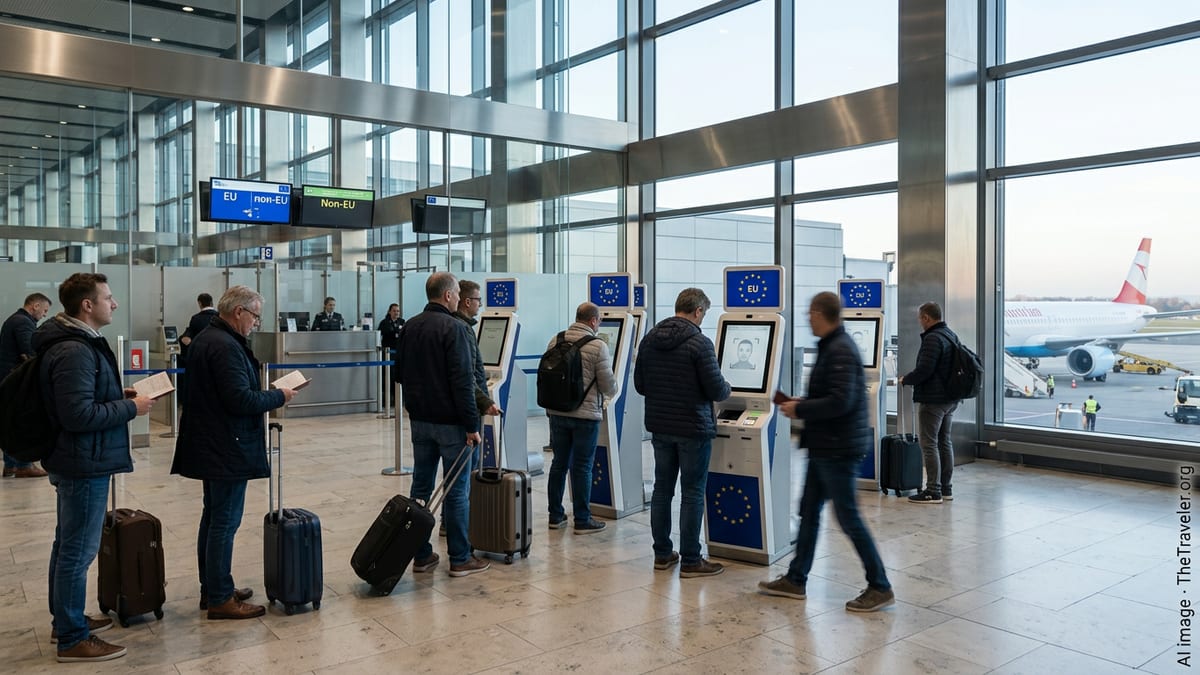
Mounting complaints over EU’s new border regime
The alarm focuses on the Schengen Entry/Exit System, or EES, which has been fully phased in this year for non-EU nationals entering or leaving the bloc. The scheme records biometric data and travel histories at automated checkpoints, replacing manual passport stamps. While designed to tighten external border security, its rollout is now at the center of an escalating operational storm.
According to coverage in Travel Weekly and other outlets, aviation trade bodies report that waiting times at some European border posts have climbed to as much as five hours during peak periods, even before the main school-holiday surge. Airports Council International (ACI) Europe, Airlines for Europe (A4E) and the International Air Transport Association (Iata) jointly describe the situation as having reached a “critical point.”
Publicly available information indicates that the problems are not confined to one or two major hubs. Reports point to congestion across a range of Schengen airports and land and sea border crossings used heavily by leisure travelers, including French airports, the Port of Dover and cross-Channel rail and tunnel terminals.
Industry assessments suggest that issues with fingerprint and facial-recognition scanners, software updates and staffing levels are combining to slow the new process. In some cases, local border authorities have reportedly taken biometric devices offline or limited their use when long queues start to build.
Airports and airlines urge summer suspension of checks
In an open letter highlighted by Travel Weekly, International Airport Review and several European news outlets, ACI Europe, A4E and Iata have appealed directly to European Commission president Ursula von der Leyen for rapid intervention ahead of the peak July and August travel period. They argue that the current rules leave border authorities and airport operators with too little flexibility to manage demand surges.
The groups are calling for member states to be allowed to temporarily suspend EES procedures in full at locations where passenger volumes exceed available processing capacity. They also seek broader, longer-term options to scale back checks during disruption, arguing that this kind of “emergency brake” is essential until the technology and staffing catch up with real-world traffic levels.
According to recent coverage in the Straits Times, The Local and other outlets, the joint industry letter warns that without such measures, airports could see queues routinely stretching to four or five hours, with knock-on impacts including missed connections, delayed departures and flights leaving with empty seats because passengers are still stuck at border control when gates close.
Some operators are already weighing unilateral action. Biometric and aviation trade publications report that airports in Rome have discussed suspending EES processes during the busiest summer weeks to prevent what one executive described as an impending “disaster” for passengers.
From early warnings to full-blown summer test
The latest intervention follows months of increasingly stark alerts from the sector. Aviation news reports from early 2026 show airports and airlines already flagging persistent waits of up to two hours at passport control during the initial phase of the EES rollout, when only a portion of third-country nationals had to be fully registered.
Since then, the system has moved to full usage, expanding the number of travelers who must complete biometric enrollment at the border. At the same time, travel demand has continued to rebound. Industry bodies now estimate that European airports will handle around 40 million more passengers in July and August than in the previous two months, sharply raising the stakes.
Local media coverage in popular leisure markets such as Spain has highlighted warnings that British holidaymakers, in particular, could face waits of up to six hours at passport control during peak days if no further flexibility is introduced. Reports from Italy and France also describe passengers queueing outside terminal buildings in high temperatures as airport interiors reach capacity.
Despite these accounts, European Commission representatives have maintained in public comments that the system is “fully operational and works well,” attributing some recent queues to factors such as staffing shortages, flight bunching at certain times of day and pre-existing bottlenecks at specific border posts.
Technology, staffing and reputation all under pressure
Behind the immediate political row lies a complex operational challenge. Aviation groups argue that EES is exposing long-standing weaknesses in border staffing and infrastructure, while also suffering from its own technology teething problems. Industry briefings cite chronic shortages of trained officers at several key gateways and a lack of fully functional self-service kiosks and e-gates at others.
Reports from biometric-industry outlets describe how environmental factors, such as heat and humidity, have interfered with fingerprint capture, forcing manual intervention and slowing lines. Meanwhile, some installations are said to be waiting on software updates or hardware certification before they can be used at full capacity, limiting the benefits of automation that EES was meant to deliver.
Airport and airline leaders also warn that the fallout from long queues goes beyond inconvenience. Public-facing statements and media interviews stress that extended delays at passport control are damaging Europe’s reputation as a welcoming, efficient destination and could undermine tourism recovery at a critical moment for many regional economies.
Some commentators note that the disruption is particularly sensitive given that many travelers have already adjusted to post-Brexit changes in border processing for UK nationals, only to now encounter a further layer of checks. Travel agents and consumer groups quoted in local coverage report rising anxiety among holidaymakers planning trips during school breaks.
What travelers should expect in the coming weeks
With school holidays starting in several key markets and transatlantic demand running high, the coming weeks are likely to provide the toughest test yet of the new system. Industry forecasts suggest that peak days in late July and early August could see passenger volumes far above those experienced during the spring rollout, particularly at Mediterranean and major hub airports.
Unless the European Commission grants the flexibility sought by airports and airlines, travelers heading to or through the Schengen area this summer may face significantly longer border-control times than they were used to before EES. Media reports already record examples of missed flights, missed connections and long queues spilling into outdoor areas at some facilities.
Travel specialists are advising passengers to build in more time at departure and arrival airports, particularly where they must clear an external Schengen border, and to monitor airline and airport guidance closely as the situation evolves. Some operators and tourism bodies have started issuing their own advisories, urging visitors to plan for slower passport checks while emphasizing that flights and wider airport operations continue.
For now, the dispute over how to balance security ambitions with operational realities looks set to run through the heart of Europe’s summer getaway season. Whether emergency flexibility is granted, or airports are left to improvise local fixes, will shape the travel experience for millions of passengers over the coming months.