


More news on this day
A new heritage corridor in Central Texas is quietly reshaping road trips across the region, as the Penatuhkah Comanche Trails open to travelers interested in Indigenous history, wide-open ranch country, and community-led cultural tourism.
Get the latest news straight to your inbox!
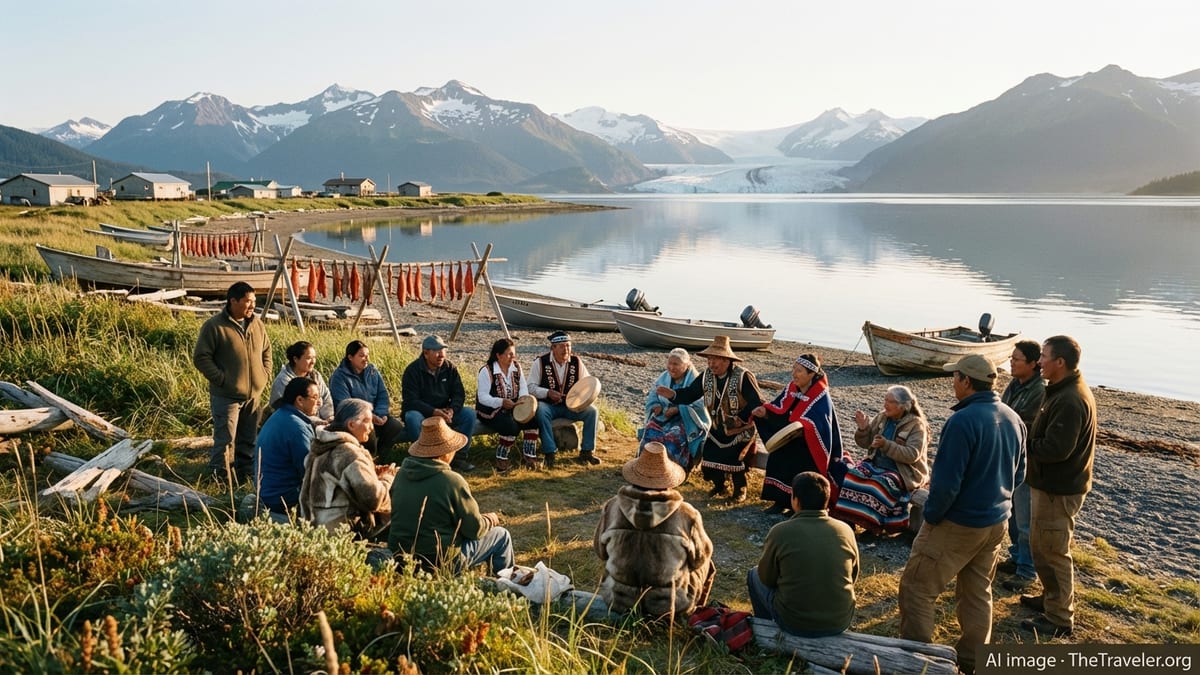
A Living Map of Penatuhkah Comanche Homelands
The Penatuhkah Comanche Trails are not a single footpath or state park, but a network of driving routes, scenic byways, and interpretive stops that trace the historic homelands and travel corridors of the Penatuhkah band of the Comanche in Central Texas. Publicly available information from the Penatuhkah Comanche Trails Partnership indicates that the initiative connects a string of towns including Comanche, Brownwood, San Saba, Menard, Coleman, Goldthwaite, and Santa Anna, tying together landscapes where Comanche families once moved seasonally with their horse herds and hunting parties.
The project is described as a heritage and ecotourism initiative that restores attention to traditional cultural properties such as mesas, river crossings, and camp sites. Rather than creating a heavily engineered super-trail, the partnership is mapping and interpreting places that already exist, from family ranchlands and historic forts to small-town museums and scenic backroads that still follow former Indigenous routes across the Hill Country and adjoining plains.
This approach turns an overlooked swath of Texas into a living map. Travelers can follow state highways and farm-to-market roads that were once Comanche pathways, stopping at museums, historic markers, and frontier-era sites that gain new meaning when understood as part of a much older Indigenous landscape.
Regional tourism organizations frame the trails as part of a broader Texas Heritage Trails network that promotes historic travel corridors across the state. In this context, the Penatuhkah Comanche Trails stand out for centering Native history and guidance from the Comanche Nation while also seeking new economic opportunities for rural communities that are far from Texas’s largest metropolitan tourism hubs.
From Long-Term Vision to a 2026 Launch Moment
While the partnership that stewards the Penatuhkah Comanche Trails formally came together in 2019, organizers describe roots that stretch back three decades, through earlier collaborations between the Comanche Nation and local historical groups. Planning documents and public updates point to assistance from the National Park Service’s Rivers, Trails and Conservation Assistance program, which helped the coalition shape a vision for a heritage corridor that could be marketed to visitors without overwhelming fragile cultural sites.
According to recent updates posted by the partnership, a “preview” phase of the trails ran through 2025, with communities testing signage, tour concepts, and cooperative marketing. A grand opening has been targeted for spring 2026, timed with Central Texas wildflower season when bluebonnets, Indian paintbrush and other blooms draw scenic drivers onto rural highways that historically followed Comanche routes.
This staged rollout means that travelers in 2026 and beyond are arriving just as wayfinding, interpretive materials, and cross-regional itineraries are taking shape. The region is not yet saturated with crowds or mass-market tour buses, but enough groundwork has been laid that visitors can find coherent loops connecting multiple trail communities, museums, and landscapes.
For heritage travelers, this is a rare window when a new cultural route is open and accessible, yet still personal, flexible, and largely shaped by local voices. It also offers communities time to monitor how visitation affects sensitive sites and to refine how stories are told about both Comanche life and later conflicts on the Texas frontier.
What Visitors Experience on the Ground
On the road, the Penatuhkah Comanche Trails translate into a series of day trips and extended loops anchored by small towns, regional museums, and prominent landscape features. Public descriptions emphasize mesas, river valleys, and open rangeland that once formed the tactical high ground and seasonal routes of Comanche riders. Near Santa Anna, for example, twin mesas dominate the horizon and are closely linked in local interpretation with Penatuhkah history and the war leader whose name the town carries.
Travelers can expect experiences that combine classic Texas road-trip scenery with deeper cultural context. Typical visits might pair a drive across rolling pastures and low hills with stops at courthouse squares, historical exhibits, preserved frontier-era forts, and family-run museums that are participating in the partnership. Many communities along the trails also link heritage storytelling with long-standing attractions such as local festivals, courthouse squares, and river recreation.
Because much of the landscape remains working ranchland, visitors are encouraged through publicly available guidance to stay on public roads, respect private property, and use established viewpoints, parks, and visitor centers to learn about significant sites that cannot be directly accessed. The emphasis is on seeing the broader cultural landscape rather than ticking off a checklist of individual landmarks.
Ecotourism is another pillar of the concept. The same open country that once sustained buffalo and horse herds now offers birdwatching, wildflower drives, and stargazing far from metropolitan light pollution. The trails tie into a statewide push for nature tourism, where visitors seek both natural beauty and deeper stories about the people who lived in these places long before the arrival of ranches and railroads.
Comanche-Led Storytelling and Community Partnerships
One of the most distinctive features of the Penatuhkah Comanche Trails is the partnership model. The Comanche Nation of Oklahoma is listed as a key partner, working with local chambers of commerce, museums, a regional Texas Forts Trail organization, tourism networks, and the National Park Service planning program. Public information from the partnership highlights a mission focused on restoring, conserving, and interpreting Comanche traditional cultural properties in Texas, and encouraging a modern Comanche presence in the band’s historic homeland.
This structure helps address a long-standing gap in Texas tourism, where Indigenous histories have often been mentioned only at the margins of frontier narratives. Trail materials, exhibits, and community programming are being shaped to reflect Comanche perspectives on mobility, trade, warfare, ceremony, and adaptation on the Southern Plains and in the Hill Country.
For travelers, this collaborative model means that heritage stops are not simply frontier reenactments, but spaces where more layered stories emerge: how Comanche families used particular springs or crossings; how alliances and conflicts shifted with Spanish, Mexican, and then Anglo-American expansion; and how Comanche people continue to maintain ties to these landscapes today.
At the same time, the partnership aims to channel new visitor spending into rural economies that have seen cycles of boom and bust tied to ranching, energy and highway travel. Heritage tourism is presented as a more sustainable economic engine, one that rewards preservation of open space, historic buildings, and cultural landscapes instead of replacing them.
Travel Timing, Access and Emerging Challenges
For prospective visitors, timing is central to the Penatuhkah Comanche Trails experience. Public updates note that a grand opening focus on spring 2026 aligns with peak wildflower displays and mild weather, making two-lane drives, short walks, and town-center exploration particularly appealing. Autumn is also highlighted by Texas travel organizations as a strong season in this part of the state, with cooler temperatures, changing light on the mesas, and community festivals that add to the appeal of small-town stops along the routes.
Because the trails are defined more by corridors than by a single facility, access typically begins at community visitor centers, museums, or downtown squares where travelers can obtain printed maps, orientation materials, and recommendations for local lodging and dining. Heritage trail networks in Texas often supplement this with digital storytelling platforms, so visitors following state highways in rental cars or recreational vehicles can learn about significant sites through mobile-friendly content while remaining on public rights-of-way.
The partnership has also been vocal in public statements about emerging challenges, particularly proposed high-voltage transmission lines that could cross some of the most intact Comanche landscapes in the region. Organizers argue that large infrastructure easements risk fragmenting viewsheds, disturbing archeological sites, and undermining decades of work to position the area as a destination for heritage and nature tourism. The debate underscores how quickly culturally important landscapes can be altered and why current travelers are being urged to experience the region while its horizons remain largely uninterrupted.
As the Penatuhkah Comanche Trails move from preview phase into a fuller public launch, the project offers a rare opportunity for travelers to participate in an evolving heritage corridor, one that is still actively shaping how stories are told and how landscapes are protected. For visitors willing to slow down, listen, and look beyond the highway shoulder, the trails promise a richer understanding of Texas as Comanche country, and of how present-day communities are working with the Comanche Nation to keep that story visible on the land.