


Most visitors pour into Great Smoky Mountains National Park through Gatlinburg or Cherokee, joining long lines of cars, packed trailheads, and crowded overlooks. Yet on the park’s northeastern edge, the Cosby entrance quietly offers another way in. For travelers willing to drive a little farther off the beaten path, Cosby delivers the Smokies at their most peaceful: cool creekside campgrounds, uncrowded waterfalls, and big mountain views without the bumper‑to‑bumper traffic.
Get the latest updates straight to your inbox!
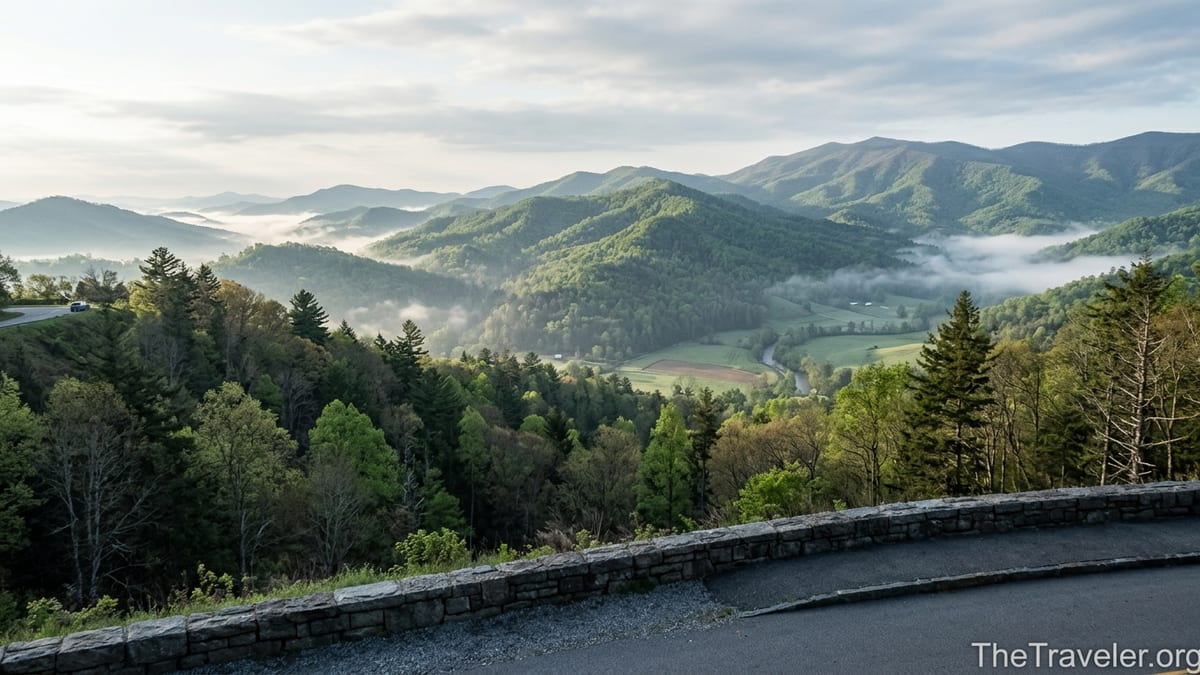
Why Cosby Is the Smokies’ Quiet Back Door
The Cosby entrance sits on the Tennessee side of Great Smoky Mountains National Park, roughly 20 to 30 minutes east of Gatlinburg along US 321, just beyond the small community of Cosby. Unlike the Gatlinburg and Cherokee gateways, there is no busy strip of arcades and neon here. Instead, Cosby feels like a rural valley town, framed by pastoral fields and the forested ridges of the park rising directly above.
This quieter setting immediately changes how you experience the Smokies. Traffic is usually light along the Cosby entrance road, and even in peak seasons you are more likely to share the parking areas with a handful of cars rather than dozens of tour buses. That calm makes simple moments, like hearing Cosby Creek as soon as you step out of the car, part of the trip rather than background noise you have to fight to notice.
Cosby’s location also provides easy access from Interstate 40 at the Hartford exit, making it particularly convenient for travelers driving in from Asheville, Knoxville, or points farther north and east. Instead of threading through the congestion of Pigeon Forge and Gatlinburg, you can follow a scenic rural highway to a low‑stress entrance that still delivers you straight into the heart of the park.
For many visitors, that combination of convenience and quiet is the hidden advantage of Cosby. It feels remote as soon as you arrive, yet it is remarkably simple to reach compared with navigating the main resort corridors.
A Different Kind of Arrival: Low Stress, High Scenery
Driving into Great Smoky Mountains via Cosby means your vacation can start before you ever reach the park boundary. Approaching from I‑40, the road winds along the Pigeon River before you swing south toward the Cosby Valley. Old barns, small churches, and roadside produce stands appear between stretches of forest, offering a more authentic Appalachian backdrop than a string of billboards and go‑kart tracks.
Instead of sitting in stop‑and‑go traffic outside Gatlinburg, you may arrive at the Cosby entrance and roll straight into the picnic area or campground without delay. On busy autumn weekends, when parking lots at places like Alum Cave and Laurel Falls fill early, Cosby is often where locals send visitors who still want a full day outdoors but have missed the dawn rush at the central trailheads.
The drive itself can be part of the reward. The nearby eastern section of the Foothills Parkway, a roughly five‑ to six‑mile national parkway segment between Interstate 40 and US 321 near Cosby, offers sweeping views across the valley and back toward the main Smokies crest. Many travelers staying in cabins around Cosby use this short stretch as a sunrise or sunset outing, pulling into its overlooks to watch fog lift off the hills or the last light slide across Mount Cammerer.
All of this happens without the pressure of navigating tight downtown streets or hunting for parking garages. If you value a soft landing at the start of your trip, Cosby’s less commercial approach can feel like a relief.
Cosby Campground: Creekside Nights Without the Crowds
Cosby Campground is the main developed camping hub at this entrance and a prime example of Cosby’s quieter character. The National Park Service lists about 150 sites here, most designated for tents with a limited number able to accommodate smaller RVs. There are no electric hookups, which helps keep the feel rustic and discourages large rigs from overwhelming the loops.
Shaded by mature hardwoods, many sites sit within earshot of Cosby Creek, and a few are close enough that the sound of moving water is the soundtrack to the night. Typical individual sites include a tent pad, picnic table, fire ring, and nearby access to restrooms with cold running water. Travelers who are used to the bustle of Cades Cove or Elkmont often remark on how much easier it is to find a quiet corner here, especially outside of peak holiday weekends.
Reservations, managed seasonally through the federal booking system, help you plan ahead. In shoulder seasons like early May or mid‑September, you may still find availability a week or two in advance for around the kind of nightly fee common in national park front‑country campgrounds, while prime October weekends often fill earlier. Because Cosby tends to attract hikers, families, and repeat visitors rather than large tour groups, campground life usually feels relaxed and neighborly.
Practical advantages add to the appeal. From a campsite in Loop A or B, you can often walk directly to trailheads like Lower Gap or Gabes Mountain without ever getting back in the car. That means you can leave at dawn for a summit, return for lunch at your picnic table, and head back out in the afternoon, all within a few hundred yards of your tent.
Trails From Cosby: Waterfalls, Ridges, and the Appalachian Trail
One of Cosby’s biggest hidden advantages is how much classic Smokies hiking lies right outside its entrance station. The Gabes Mountain Trail starts near the Cosby Picnic Area and leads about 2 to 2.2 miles one way to Hen Wallow Falls, a roughly 90‑foot waterfall that fans out as it drops into a rocky pool. The National Park Service notes the round trip at just over 4 miles through a mixed hardwood and hemlock forest, with a steep but short side trail dropping to the base of the falls.
Compared with headline hikes like Laurel Falls, Hen Wallow Falls sees far fewer visitors, especially early or late in the day. On a weekday in late spring, it is not unusual to share the overlook with just a few other hikers, even when parking lots closer to Gatlinburg are overflowing. Small details, like spotting salamanders in the pool below the cascade or pausing on the wooden footbridges that cross side streams, become easier to enjoy when you are not jostling for a view.
For more ambitious hikers, the Lower Gap Trail climbs steadily from Cosby Campground to the Appalachian Trail at Cosby Knob, roughly 3 miles and a significant elevation gain away. From there, you can turn east or west along the Appalachian Trail for sweeping ridge walks or continue on side paths toward Mount Cammerer’s fire tower for one of the park’s classic panoramas. Many backpackers use Cosby as a starting point for overnight loops, reserving backcountry campsites online and picking up their first miles under the cool shade of the valley forest.
Even short leg‑stretchers are close at hand. Families can walk the first gentle mile of Gabes Mountain or meander up the Cosby Nature Trail near the campground, letting younger children explore creek banks and rhododendron tunnels without committing to a full‑day outing. Because trailheads are so concentrated around the entrance, you can easily mix a waterfall hike in the morning with a scenic drive later in the day.
Scenic Drives and Day Trips From a Cosby Base
Staying near the Cosby entrance does not mean you are cut off from the rest of the park. Instead, it provides a calmer place to sleep while keeping major sights within reasonable day‑trip range. Gatlinburg is typically under a 40‑minute drive in normal traffic, allowing you to visit places like Newfound Gap or Clingmans Dome and still retreat to quieter lodging at night.
One favorite route for visitors based in Cosby is a loop that links the entrance area, the Foothills Parkway east segment, and I‑40. You can leave the campground after breakfast, drive the parkway’s overlooks for mid‑morning views across the valley, then continue to the Pigeon River gorge for lunch in a riverside town outside the park. In the afternoon, you might return via back roads lined with farm stands selling local apples or jars of honey, ending the day with a campfire rather than an urban dinner rush.
The Cosby location also works well for travelers who want to combine the Smokies with other regional destinations. Asheville lies to the east along I‑40, while Knoxville sits to the west. Many road‑trippers route their journeys so that they enter the park through Cosby after a city stay, spend a few quieter nights along Cosby Creek, then exit through Gatlinburg or Cherokee when they are ready for more structured attractions, restaurants, and shops.
Because you can reach both high‑profile highlights and quiet corners from the same base, Cosby functions almost like a pressure valve. On days when crowds and traffic feel overwhelming elsewhere in the park, you can pivot back to local trails, creekside picnics, or simply another drive along the parkway above the valley.
Practical Perks: Parking, Picnics, and Pace
One of the most immediate, if unglamorous, benefits of entering Great Smoky Mountains via Cosby is parking. At many of the main trailheads near Gatlinburg, arriving after mid‑morning often means circling lots, walking long distances along busy roads, or abandoning plans for a different hike. At Cosby, even in busy seasons, you have a better chance of finding a space at the picnic area or campground trailheads without a pre‑dawn start.
That easier access shapes the pace of your entire day. If you are camping, you can leave a cooler of food at your site, hike to Hen Wallow Falls, then return for lunch without worrying whether your parking spot will still be available. Families with small children or older relatives can adjust their plans on the fly, shortening or lengthening outings based on energy levels rather than a hard deadline dictated by where they managed to park.
The Cosby Picnic Area itself, located just before the campground, offers shaded tables near the creek, restrooms, and room for kids to explore. On a weekend when sugar maples are turning color in October, you might find a few local families grilling or spreading out tablecloths, but it rarely feels as crowded as the major picnic spots closer to the central park entrances.
Local services in and around Cosby add another layer of convenience. Small motels, cabin rentals, and roadside eateries cluster along US 321 and Tennessee Route 32, often at prices lower than equivalent rooms in Gatlinburg or Pigeon Forge. You might grab a hearty breakfast at a family‑run diner before your hike or pick up barbecue from a takeout window to eat back at your campsite, enjoying the sense that your dollars are supporting small, long‑time local businesses.
Who Benefits Most From Using the Cosby Entrance
While anyone can appreciate the calmer atmosphere at Cosby, certain types of travelers tend to get the most from this hidden gateway. Hikers and backpackers are at the top of the list. With routes leading directly from the campground to waterfalls, Appalachian Trail junctions, and panoramic fire towers, you can spend several days here without ever repeating the same outing, all while avoiding some of the heaviest trail traffic in the park.
Families looking for a gentler national park experience also fit well. The compact layout around the Cosby entrance, where picnic areas, camp loops, and trailheads sit close together, makes it easier to manage naps, snack breaks, and early bedtimes. Parents do not have to load everyone into the car for long drives between every stop, and older kids can safely explore short side paths or creek banks within sight of the main facilities.
Travelers on a budget may also find Cosby attractive. Campsites are priced in line with other park campgrounds, but lodging and dining nearby often cost less than in the signature resort towns. If you are road‑tripping with a tent, a small camper, or simply a cooler full of groceries, Cosby allows you to keep spending focused on experiences rather than premium nightly rates.
Finally, anyone who has visited the Smokies before and felt overwhelmed by the crowds might discover a different side of the park here. Entering through Cosby does not mean skipping famous viewpoints or drives entirely, but it does mean anchoring your trip in a place where the sound of the creek at night can still drown out the noise of the wider world.
The Takeaway
Entering Great Smoky Mountains National Park through Cosby is not just a geographic choice; it is a decision about how you want your trip to feel. This quieter back door trades flashing lights for dark skies, congestion for creeks, and crowded trailheads for a more measured pace. From creekside camping and a relatively uncrowded waterfall hike at Hen Wallow Falls to easy access to the Appalachian Trail and the nearby Foothills Parkway, Cosby delivers a full Smokies experience wrapped in a calmer package.
For many travelers, the real hidden advantage is that Cosby lets the best parts of the Smokies stand out. The scent of wet leaves on the trail, the pattern of sunlight across a mossy log, the echo of water over rocks at night: these details are easier to notice when you are not constantly battling traffic or searching for a place to park. If your idea of a perfect national park visit involves more time in the forest and less time in line, starting your journey through the Smokies at Cosby might be the smartest move you make.
FAQ
Q1. Where exactly is the Cosby entrance to Great Smoky Mountains National Park?
The Cosby entrance is on the Tennessee side of the park, near the small community of Cosby, reached primarily via US 321 and Tennessee Route 32 east of Gatlinburg.
Q2. Is the Cosby entrance open year‑round?
The entrance road and day‑use areas are generally accessible most of the year, but specific facilities like the campground and some services operate seasonally and may close in winter.
Q3. How does traffic at Cosby compare with Gatlinburg and Cherokee entrances?
Traffic at Cosby is usually lighter, especially on weekdays and outside peak foliage and holiday periods, making it easier to park and start hikes later in the morning.
Q4. What are the most popular hikes from the Cosby entrance?
Hen Wallow Falls via Gabes Mountain Trail, the Lower Gap Trail to the Appalachian Trail at Cosby Knob, and the route to Mount Cammerer’s fire tower are among the best‑known options.
Q5. Can I access the Appalachian Trail from Cosby?
Yes. The Lower Gap Trail climbs from Cosby Campground to meet the Appalachian Trail along the ridge, giving you options for day hikes or backpacking itineraries.
Q6. Are there good places to stay near the Cosby entrance if I do not want to camp?
Yes. The Cosby area has a mix of small motels, rental cabins, and vacation homes along US 321 and nearby back roads, often at quieter locations and more modest prices than major resort towns.
Q7. Does Cosby have the same amenities as more popular park areas?
Cosby offers basics like restrooms, picnic tables, and campground facilities, but you will find fewer shops and attractions. Most visitors pair it with occasional trips into Gatlinburg or Sevierville for groceries and dining.
Q8. Is the Cosby entrance suitable for first‑time visitors to the Smokies?
Yes. First‑time visitors who prioritize nature, hiking, and a slower pace often find Cosby an excellent base, especially when combined with day trips to well‑known viewpoints elsewhere in the park.
Q9. How long does it take to drive from Cosby to major sights like Newfound Gap or Clingmans Dome?
Under normal conditions, expect roughly an hour or a bit more to reach central high‑elevation areas, depending on traffic and stops along the way.
Q10. Are scenic drives like the Foothills Parkway easy to reach from Cosby?
Yes. A short eastern segment of the Foothills Parkway connects Interstate 40 with US 321 near Cosby, providing a convenient scenic drive with broad valley and mountain views.