


On paper, the Abrams Falls Trail in Great Smoky Mountains National Park sounds like an easy win: about 5 miles round trip, only a few hundred feet of elevation gain, and a big waterfall payoff at the end. It is consistently labeled “moderate” in guides and visitor brochures, and the first half mile feels almost leisurely. So why do so many visitors come back surprised by how demanding it felt? The answer lies in a hidden challenge you will not notice on a trail map: cumulative, rolling effort layered onto rough, rooty terrain and Southern Appalachian heat.
Get the latest updates straight to your inbox!
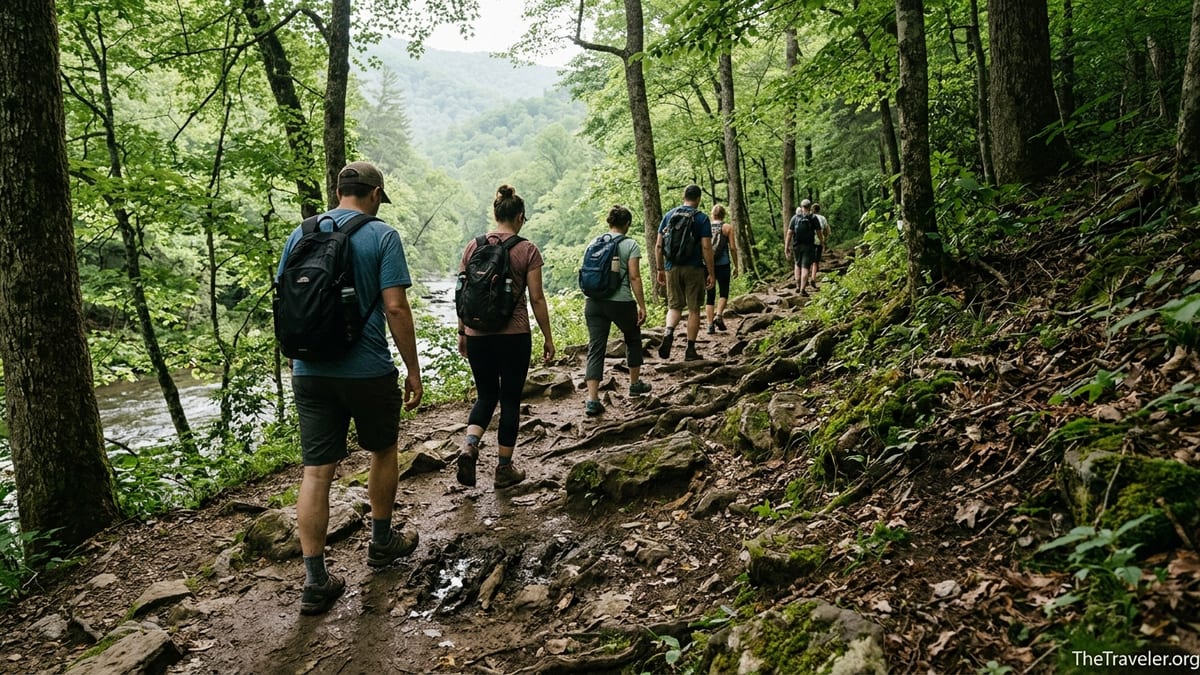
Why a 5-Mile “Moderate” Hike Feels Harder Than It Looks
Most descriptions of Abrams Falls focus on the basics: roughly 5 to 5.2 miles round trip along Abrams Creek from Cades Cove, with around 340 to 600 feet of total elevation gain, depending on the source and where you turn around. The profile does not show a single huge climb. Instead, the trail undulates over several low ridges that never seem intimidating in isolation. That is exactly why many travelers underestimate it when they glance at a park map at the Cades Cove visitor center or skim a brochure in their Gatlinburg hotel.
In reality, the constant pattern of short ups and downs adds up. You will drop from the trailhead toward the creek, climb over a wooded spur ridge, descend again, then repeat the rhythm in reverse on the way back. Visitors who are used to paved tourist walks like Laurel Falls are often surprised to find that “moderate” in the Smokies usually means narrow dirt tread, rocks, exposed roots and frequent sidehill sections where one foot lands higher than the other. Even fit travelers who run on flat suburban greenways at home often report that Abrams “felt longer than five miles” simply because there is rarely a long section where you can switch off and cruise.
Consider a family that drives the Cades Cove Loop from Pigeon Forge, starts the hike at late morning, and expects to be back for a mid-afternoon lunch. On a map, two and a half miles to the falls looks like a two-hour round-trip stroll. On the ground, add in the rolling climbs, photo stops, tricky footing and congestion at narrow spots, and their outing often stretches to three or four hours. For visitors who are not accustomed to uneven trails, the psychological gap between “this looked easy online” and “I am breathing hard and concentrating on every step” can feel surprisingly wide.
Timing also contributes to the perception of difficulty. Park information and recent trail guides suggest that most people take roughly 3 to 4 hours for the full out-and-back, even without extended breaks at the falls. Travelers who are used to covering 5 miles in under 90 minutes on a treadmill may find that pace baffling until they experience the repeated ups, rocky stair steps and brief bottlenecks behind slower groups that naturally slow progress on a popular mountain trail.
The Real Hidden Challenge: Continuous Uneven Footing
The single biggest factor that makes Abrams Falls feel tougher than it looks is continuous uneven footing. Almost from the moment you cross the wooden bridge at the trailhead, the tread alternates between rock slabs, roots as thick as wrists, and dirt sections that have been eroded into irregular steps. There is no long gravel lane where you can stride without thinking. Over the course of five miles, that constant micro-adjustment taxes your ankles, stabilizer muscles and mental focus in ways that do not show up in a simple elevation statistic.
One recent visitor from the Midwest, used to wide dirt paths in local nature preserves, described Abrams as “5 miles of walking on a root-covered staircase.” That is an exaggeration, but not by much in certain stretches. In several places, the trail hugs the slope above Abrams Creek with a narrow sidehill track. A misstep here means a short slide toward the water, not a sheer drop, but you still need to place each foot carefully, especially when the surface is damp from overnight rain or morning dew.
The rocks themselves add another layer of difficulty. Many stones along the creek have been polished by thousands of boots. In the cool months, they can be slick with leaf litter; in summer, they collect a fine dust that turns into marbles underfoot. Visitors wearing casual sneakers or smooth-soled fashion shoes from town often find themselves slipping on angled rock steps. By contrast, hikers in grippy-soled trail runners or light hiking boots generally report that the trail felt much more manageable, which speaks to how much traction matters here.
Even the simple act of crossing small creeks and wet patches becomes more demanding on Abrams than on paved waterfall walks. A few spots require what experienced hikers casually call “rock-hopping” across stones or shallow rivulets. None of these crossings is technical, but they do require balance, especially for kids or older adults. Over the course of several hours, the small stressors of stepping from rock to rock, bracing against a root, or adjusting around muddy ruts add up to a level of overall fatigue that surprises many first-time visitors.
Heat, Humidity and Crowds: The Multipliers No One Mentions
Conditions in the Smokies act like amplifiers for Abrams Falls’ underlying difficulties. In late spring, summer and early fall, the combination of heat and humidity can make modest elevation feel significantly harder. On a July afternoon, the shaded forest may keep you out of direct sun, but the air along Abrams Creek often feels like a warm, damp towel. Travelers who set out with a single small bottle of water they grabbed at a gas station frequently discover halfway in that they are rationing sips and feeling lightheaded on climbs they would barely notice at home.
Layered on top of that is the trail’s popularity. Abrams Falls is one of the marquee attractions accessed from Cades Cove, and recent descriptions consistently refer to it as busy, especially on weekends and during peak foliage. That popularity means you will often hike in a loose line of people, pause at narrow points to let groups pass, and spend extra time negotiating rocky steps behind visitors who move carefully. The effect is subtle but real: you are working in the heat for longer than the raw mileage would suggest.
Real-world examples illustrate how this plays out. On a warm Saturday in October, a couple from Atlanta might arrive at the Cades Cove Loop around 10:30 a.m. and spend nearly an hour crawling through scenic-stop traffic before they even reach the Abrams trailhead turnoff near stop number 10. Once on the trail, they find themselves in a slow-moving train of families, photographers and casual walkers. They stop repeatedly to let others pass on skinny sidehills and wait in line for the log footbridge near the start. By the time they reach the falls, three hours have passed, and the return trip in still-warm afternoon temperatures feels substantially harder than the mild statistics suggested.
Humidity also interacts with the terrain in subtle ways. Rocks and roots that might dry quickly in an arid climate stay slick for longer in the Smokies. A light morning shower or overnight thunderstorm can leave polished rock steps damp well into midday. The result is a trail that requires careful foot placement even when the sky has cleared, further slowing progress and increasing the perception of difficulty for less-experienced visitors.
Deceptive Downhill: Why the Return Trip Bites Back
Another hidden aspect of Abrams Falls’ challenge is the way its elevation is distributed. From the trailhead, the first half-mile or so trends gently downhill, which feels easy and encouraging. The real work comes later, in undulating climbs over low ridges and then in the subtle but steady ascent on the way back. As a result, many people feel surprisingly fresh on the outward leg and then are caught off guard by fatigue on the return, especially in warm weather.
Imagine a family with school-age children who set off mid-morning. The kids sprint down the early downhill section, racing ahead between rhododendron tunnels and pausing to look over the first bridge at the clear water of Abrams Creek. Parents may even think, “The ranger said this was moderate, but it is not bad at all.” An hour and a half later, after navigating rocky steps and short climbs above the creek, they reach the falls, spread out snacks on a boulder and enjoy the mist. Spirits are high. It is only on the trek back, facing the same ridges now in the uphill direction, that the younger hikers start to drag, asking repeatedly how much farther it is.
This pattern is familiar to rangers and local guides, who often encounter tired, under-supplied hikers on the final mile. Because the total elevation gain is mapped as a relatively modest few hundred feet, many people do not anticipate how tiring it can be to climb those feet in small increments after several hours on rough tread. The psychological effect matters as much as the physical: expecting a casual stroll and then discovering repeated climbs late in the hike can make the trail feel tougher than if you had anticipated a more strenuous outing from the start.
Even experienced hikers notice the return. A trail runner from Knoxville who often trains on steeper routes may not struggle aerobicly on Abrams, but might still remark that the last rolling hills feel “sticky” compared with the first downhill stretch. It is a classic example of an out-and-back where the perceived effort tilts heavily toward the second half, especially on warm afternoons when dehydration and muscle fatigue begin to creep in.
Risk at the Falls: Slippery Rocks and False Sense of Security
The hidden challenge of Abrams Falls is not only about effort; it is also about safety at the destination. The 20-foot waterfall pours into a broad pool that looks inviting on hot days. Yet the National Park Service explicitly warns against swimming here, citing a powerful undertow, strong currents and slippery rocks that have contributed to multiple drownings and serious injuries over the years. The danger catches many visitors off guard because the waterfall is not especially tall compared to some in the park, and the pool can appear calm at a glance.
Real incidents illustrate how deceptive the setting can be. Local rangers and rescue teams have responded to numerous calls involving people who slipped from wet boulders while posing for photos, or who underestimated the force of the current while wading near the base. In one widely discussed case on social media, a visitor was bitten by a bear near the falls after apparently surprising the animal at close range, underscoring that this popular spot is still wild habitat, not a curated water feature. For every headline-making event, there are many more minor falls and near-misses that visitors never hear about but that park staff see regularly.
On a typical summer afternoon, you might see teenagers climbing out onto the slick rock slabs beside the falls to jump into the pool, despite prominent warning signs that specifically prohibit jumping and emphasize the risk of drowning. Parents stand on the sand and gravel bar taking smartphone videos, assuming that a quick dip is harmless because the water is relatively shallow near shore. What many do not realize is that the hydraulics near the base of the falls can trap even strong swimmers, and that cold water shock can sap strength faster than expected.
The rocks along the approach area compound the hazard. Algae and persistent spray keep many surfaces perpetually slick. Sand and grit act like ball bearings under shoes without good tread. It is not uncommon to see someone in flip-flops or fashion sandals step out onto a wet boulder for a selfie and skid instantly. The same rough footing that characterizes the trail continues right up to the viewing areas, so the need for deliberate, careful movement does not end when you catch your first glimpse of the falls.
Planning Around Cades Cove: The Effort Before the Effort
Abrams Falls’ difficulty is also shaped by its access point: the Cades Cove Loop. This one-way, 11-mile scenic drive is one of the most popular areas in Great Smoky Mountains National Park. In peak seasons and on weekends, vehicles often crawl between historic cabins and viewpoints, with frequent stops for wildlife sightings and photo opportunities. Reaching the Abrams Falls trailhead, which branches off near stop number 10 on the loop, can take significantly longer than the distance would suggest.
That slow approach adds unseen strain. Travelers may leave Gatlinburg or Townsend early, expecting to start hiking mid-morning, but find themselves sitting in near-standstill traffic instead. By the time they reach the signed side road to the Abrams trailhead and find parking, it may be late morning or even early afternoon, the hottest part of the day in summer. Families who have already spent two hours in the car, snacking on convenience-store food and drinking minimal water, start the hike less hydrated and more fatigued than they realize.
Practical examples drive the point home. A couple from Ohio might check into a Pigeon Forge cabin, read online that Abrams is “only a 5-mile hike,” and plan to squeeze it into the same day as a leisurely Cades Cove drive. They set out from town at 10 a.m., arrive at the loop around 11, and do not pull into the Abrams parking area until nearly 12:30 p.m. because of slow traffic. Afternoon thunderstorms are building over the ridges, humidity is high, and they are starting a “moderate” hike after a morning of low-level stress and minimal movement. Even if the trail itself has not changed, the context makes it significantly more taxing.
There is also the matter of timing the return. The side road to the Abrams trailhead is gated at dusk, and Cades Cove Loop itself is closed to vehicles from sunset to sunrise. Hikers who underestimate their pace can find themselves hustling back to their car to avoid getting locked in or navigating the last mile in gathering dark. That time pressure can turn what should be a measured, careful walk on uneven terrain into a rushed exit, multiplying the risk of slips and twisted ankles.
How to Make Abrams Falls Enjoyable, Not Punishing
Understanding the trail’s hidden challenges allows you to plan in a way that makes Abrams Falls rewarding rather than exhausting. Start with timing. Aim to reach the Cades Cove entrance early in the morning, preferably around or before the time gates open in peak season, to minimize traffic delays and take advantage of cooler temperatures. If you are staying in Townsend, the drive to the loop is shorter and often less stressful than from Gatlinburg or Pigeon Forge, which can help reduce pre-hike fatigue.
Footwear is another crucial variable. Trail-specific shoes with aggressive tread or lightweight hiking boots provide far more security on Abrams’ roots and rock steps than casual sneakers or sandals. You do not need stiff mountaineering boots, but you do want soles that grip wet stone and protect your feet from irregular surfaces. Travelers who invest in a pair of basic trail runners before their trip, often in the 80 to 130 dollar range from mainstream brands, tend to report a more confident, less tiring experience on Smokies trails in general.
Hydration and pacing may matter more here than the numbers suggest. Bring more water than you think you will need: at least one to two liters per person in warm months, carried in reusable bottles or a small hydration pack rather than a single flimsy disposable bottle. Plan to snack every hour or so on simple, familiar foods like trail mix, granola bars or fruit. Build in extra time at the falls for rest and enjoy the scenery from dry, stable ground rather than wandering onto slick boulders. Most visitors will be happier if they budget four to five hours, door to door inside the loop, rather than treating Abrams as a quick side stroll.
If you are new to uneven trails or traveling with young children or older relatives, consider doing a shorter warm-up hike on a previous day, such as the partially paved path to Laurel Falls or the gentle riverside miles along the Middle Prong Trail in Tremont. These outings help everyone get used to Smokies terrain and give you a realistic sense of how your group handles roots, rocks and humidity before committing to a longer, rougher five-mile walk.
The Takeaway
Abrams Falls is not a backcountry epic. It is a popular, well-trodden path to one of the Smokies’ most photogenic waterfalls, and thousands of people of varying ages hike it every year. Yet its reputation as an easy or “family” trail can be misleading. The real challenge hides in plain sight: persistent uneven footing, rolling elevation that stacks up on the way back, heat and humidity, crowd-related delays, and a deceptively hazardous destination pool.
Treat Abrams as a genuine half-day hike rather than a casual stroll, give yourself extra time to navigate Cades Cove, wear proper footwear, carry sufficient water and practice conservative judgment at the falls themselves. Do that, and what might have been an unexpectedly punishing outing becomes what it should be: a memorable walk through classic Smokies forest to a roaring curtain of water, with enough challenge to feel earned but not so much that it overshadows the experience.
FAQ
Q1. How long does it really take to hike Abrams Falls Trail?
Most visitors should plan on 3 to 4 hours of walking time, plus breaks at the waterfall and delays from crowds, making it a half-day outing once you factor in the Cades Cove drive.
Q2. Is Abrams Falls suitable for young children or older adults?
It can be, but only for people comfortable with uneven ground, roots and short climbs. Many families hike it successfully, but strollers are not practical, and those with balance issues may find some sections challenging.
Q3. Why is Abrams Falls rated “moderate” if it feels so hard?
The “moderate” label reflects its distance and total elevation gain, which are modest on paper. What makes it feel harder is the combination of rolling terrain, rough footing, heat and time spent on the trail.
Q4. Can I swim in the pool at the base of Abrams Falls?
Swimming is strongly discouraged. The National Park Service warns of powerful currents, undertows and slippery rocks that have led to multiple drownings and serious injuries, even in seemingly calm conditions.
Q5. What kind of shoes should I wear for Abrams Falls?
Wear trail runners or light hiking boots with good tread. Casual sneakers, flip-flops and fashion sandals perform poorly on the trail’s wet rocks and roots and significantly increase your risk of slipping.
Q6. How crowded is the Abrams Falls Trail?
It is often busy, especially on weekends, during summer and in peak fall color. Expect to share the trail with many other hikers, wait at narrow sections and see a crowd at the waterfall itself.
Q7. When is the best time of day to hike Abrams Falls?
Early morning is ideal. Starting soon after the Cades Cove Loop opens lets you avoid the worst traffic, enjoy cooler temperatures and experience a less crowded trail and falls area.
Q8. Do I need special permits or reservations for Abrams Falls?
No special permits or timed-entry reservations are currently required to hike Abrams Falls, but you must have a valid parking tag for Great Smoky Mountains National Park and respect any temporary closures posted by rangers.
Q9. Are there bears on the Abrams Falls Trail?
Black bears live throughout the park, and occasional sightings on or near the trail are possible. Give any bear plenty of space, never feed wildlife, store food securely and follow all current park guidelines for bear safety.
Q10. What should I bring to be prepared for Abrams Falls?
Carry sturdy footwear, at least one to two liters of water per person in warm weather, simple snacks, a small first-aid kit, a light rain layer, sun protection and a charged phone, and let someone know your plans before you go.