


Maya Mobile has quickly become one of the most talked-about global eSIM providers among frequent travelers, digital nomads, and remote workers. Its big promise is simple: install one eSIM and enjoy fast, “unlimited” data across much of the world without wrestling with airport kiosks or surprise roaming fees. But how does that promise hold up in the real world, and when is Maya Mobile actually the best value on the road? This article looks past the marketing to examine what Maya Mobile really offers, where it shines, and the situations where another provider or even a local SIM might serve you better.
Get the latest updates straight to your inbox!
What Maya Mobile Actually Is (And Is Not)
Maya Mobile is a travel-focused eSIM provider that sells prepaid data plans you can activate digitally on compatible phones, tablets, and some laptops. Instead of swapping physical SIM cards at every border, you install one Maya eSIM profile and then buy country, regional, or global plans that activate over that profile. Recent marketing materials highlight coverage in more than 160 countries and territories, including popular routes that combine Europe and Asia or multiple stops across North and South America.
In practice, Maya Mobile behaves much like other travel eSIM brands: you purchase a plan online, receive a QR code or in-app installation, and activate it once you land. There is no local phone number on most plans, just data. Calling and texting run through apps such as WhatsApp, FaceTime, Signal, or Google Voice. This makes Maya best suited to travelers who already live inside those apps and are more worried about maps and ride-hailing than traditional voice minutes.
It is also important to separate Maya Mobile from other brands with similar names. Maya Mobile is not the Philippines-based Maya banking and payments app, nor is it a domestic mobile carrier in the United States or Europe. It sits in the same broad category as competitors like Airalo, Nomad, Holafly, and Yesim: a travel eSIM retailer that buys wholesale access from underlying networks and resells that access as flexible data bundles.
Understanding this role explains both its strengths and limitations. Because Maya Mobile does not own cell towers, its performance depends heavily on which local carriers it partners with in each country and how those partners prioritize traffic from third-party eSIM users compared with their own subscribers.
Plans, Pricing, and What “Unlimited” Usually Means
Maya Mobile’s plans fall into two broad buckets: limited data bundles and so-called unlimited plans. Limited bundles typically offer fixed data, such as 3 GB, 5 GB, or 20 GB, for a set number of days. For example, a common pattern on recent price comparison sites is a global plan with 3 days of unlimited data advertised around 10 dollars, and longer validity options with higher prices scaling roughly by duration and region. Country and regional plans for destinations like Japan, Europe, or South America are often cheaper per day than the global plans but restricted to specific coverage zones.
The unlimited plans are what attract many long-haul travelers. Marketing copy often emphasizes “truly unlimited” data in more than 160 countries at a daily cost that can drop under 2 dollars if you commit to a 30-day global package. In real budgets, this means a month-long trip from Lisbon to Seoul, via Turkey and Thailand, might cost under 60 dollars in total data fees, compared with 10 dollars or more per day in roaming charges from many home carriers.
The fine print, however, matters. Maya Mobile’s own fair use and acceptable use guidelines make clear that unlimited does not mean infinite high-speed tethering, constant streaming, or running your phone as a hotspot for a small office. Those rules explicitly warn that usage patterns resembling a fixed-line home connection, commercial hotspot, or data reselling service may be throttled or deprioritized. Travelers report that after sustained heavy usage such as hours of HD streaming or cloud backups, speeds sometimes step down from 5G or fast 4G to slower LTE or even 3G, especially at busy times of day.
For most tourists and business travelers who use their phones for maps, social media, email, and the occasional video call, these fair use limits rarely pose a serious problem. But for heavier users, such as full-time remote workers who need to upload large files from a campervan or stream regularly on platforms like Twitch, the “unlimited” label can be misleading. In those cases, a local SIM with a clearly defined high-speed data cap or a dedicated mobile hotspot plan may provide more predictable performance than leaning entirely on a global eSIM.
Coverage and Performance on Real Trips
On paper, Maya Mobile’s coverage map looks impressive, with support in more than 160 countries and territories including much of Europe, North and South America, large parts of Asia, and popular tourist regions of the Middle East and Africa. However, coverage maps rarely tell the whole story. What matters on the road is how the service behaves in actual cities, on trains, and in more remote areas where many travelers find themselves relying on maps and rideshare apps the most.
Consider a traveler on a 10 day loop through Georgia and Armenia in the Caucasus. Reports from trips like this describe Maya’s global eSIM connecting quickly on arrival in Tbilisi, with strong 4G speeds in the city center and near the airport. As the traveler moves into mountain towns such as Stepantsminda or along less-developed highways, the service sometimes falls back to 3G or lower signal strength. In several accounts, coverage remains usable for maps and messaging but becomes unreliable for high-definition video or large file transfers.
Similar patterns emerge across other emerging destinations. In Saudi Arabia, for example, travelers using Maya Mobile eSIMs have mentioned that everyday apps such as messaging and browsing usually work normally in major cities, but some banking or government apps refuse to connect or behave erratically. That is more a function of local network routing and app-specific security rules than Maya itself, but it demonstrates that a global eSIM is still ultimately riding on layers of local infrastructure you do not control.
In contrast, performance in heavily touristed regions of Europe, East Asia, and North America is generally smoother. In cities like Paris, Tokyo, or New York, Maya Mobile typically connects to top-tier networks with 4G and 5G availability. Travelers frequently report that once they have gone through the initial setup, they can step off a train in Berlin, land in Istanbul, or cross from San Diego into Tijuana without babysitting their connection, as the eSIM automatically selects the partner network in each area.
Comparing Maya Mobile With Airalo, Nomad, and Local SIMs
To understand the real value of Maya Mobile, it helps to measure it against the options most travelers actually weigh: other travel eSIMs such as Airalo and Nomad, and traditional local SIM cards purchased on arrival. The differences come down to pricing details, coverage nuances, and how much time and hassle you are willing to trade for small savings.
Take a two-week trip across three European countries, for example: Spain, France, and Italy. A Maya Mobile regional Europe plan with unlimited data might come out to the equivalent of a few dollars per day for 14 days of coverage, with no need to swap plans or manage multiple eSIMs. Airalo might offer a 10 or 20 GB regional Europe plan at a slightly lower total cost for moderate users, but it will stop working or require a top-up once you hit the data cap. Nomad, meanwhile, often competes on per gigabyte pricing and sometimes undercuts both Maya and Airalo in Europe if you are comfortable estimating your own data needs.
Local SIMs can still beat all three on price, especially in destinations like Thailand, Vietnam, or Turkey, where airport counters sell tourist packages with generous high-speed data for under 15 dollars a week. However, those deals require time at the kiosk, handing over your passport, and occasionally troubleshooting APN settings in a language you may not speak. If you are landing late at night or passing through multiple countries in quick succession, the idea of handling fresh paperwork at every airport becomes less attractive.
Where Maya Mobile starts to look particularly valuable is on more complex, multi-country itineraries. Imagine a month-long work trip that begins in Mexico City, continues to New York, then jumps to London, Dubai, and Singapore. Piecing together local SIMs or several single-region eSIMs can produce a tangle of expiring plans and unused balance. In that scenario a single Maya global plan covering the entire route, at a known total price, can be worth a modest premium over stitching together cheaper but fragmented options.
The trade-off is that you are buying convenience and predictability rather than the absolute lowest possible price in every country. For backpackers on strict daily budgets who are happy hunting bargains in each destination, a combination of Airalo or Nomad plus local SIMs may still win. For busy professionals and families who value landing connected right away in every country, Maya’s simplicity is often the real value.
Fair Use, Hotspotting, and Hidden Limits
Any traveler considering Maya Mobile’s unlimited plans needs to understand how fair use and hotspot rules work in practice. The company’s official guidelines emphasize that service is intended for normal personal mobile use, not as a replacement for a home broadband line or commercial hotspot. Examples of disallowed use include running a router or proxy that feeds multiple computers for extended periods or reselling connectivity to others.
In concrete terms, tethering your laptop at an airport for a few hours to upload photos, or sharing a connection with your partner’s phone in a café, is usually fine. What risks triggering throttling or other network management measures is turning your phone into a permanent hotspot for several colleagues at a conference, streaming 4K video all day, or using peer-to-peer file sharing that saturates bandwidth for long stretches. Travelers who have pushed these boundaries sometimes describe an initially fast connection that becomes slow or unstable after sustained heavy use, especially on crowded networks.
It is also important to remember that throttling thresholds can vary by region and underlying network. A data pattern tolerated without issue on a quiet network in rural Portugal might prompt a slowdown on a congested network in Tokyo during rush hour. Because Maya Mobile is ultimately subject to its partner carriers’ capacity and policies, no global eSIM can guarantee uniform performance for every usage style in every location.
If your work or lifestyle depends on guaranteed high-speed tethering, budget for redundancy. One common strategy among digital nomads is to pair a global eSIM like Maya with a local SIM or a second eSIM from another provider. For instance, you might rely on Maya for everyday phone use across borders, but purchase a local data SIM in your main base city each month to handle large uploads, video editing, or live streams. That way, if fair use measures kick in on your Maya plan, your critical tasks remain protected.
Customer Experience, Support, and Reliability
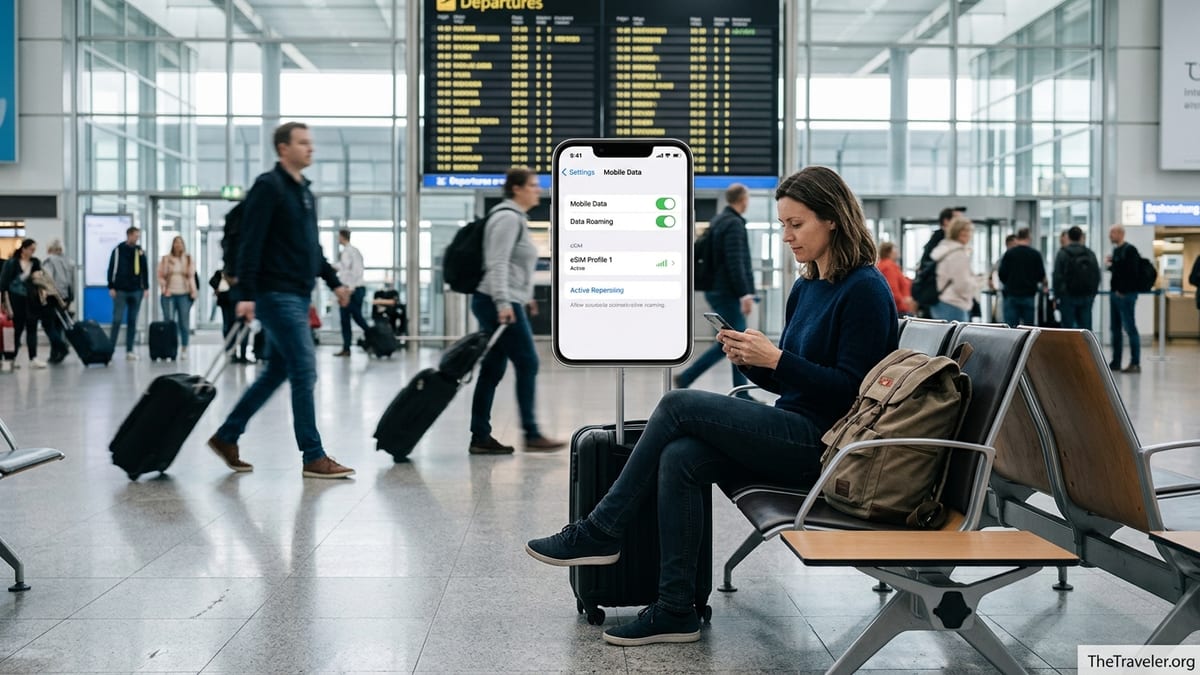
Price and coverage only matter if the service works when you need it and someone can help if it does not. Maya Mobile’s onboarding is generally straightforward: you scan a QR code or follow in-app steps, add the eSIM to your phone’s settings, and switch your data line to Maya when you land. Many short-trip travelers report that once installed, the eSIM simply works across airports, hotels, and city centers with minimal intervention.
The more nuanced picture emerges when something goes wrong. Because Maya Mobile operates entirely online, there is no physical counter or shopfront to visit if your eSIM fails to activate or you misconfigure your device. Support typically runs through email and chat. Some travelers report positive experiences, such as quick refunds when a device was not compatible or helpful assistance moving a plan to a new phone after an upgrade. Others describe slower responses during busy periods or difficulty getting detailed troubleshooting beyond generic reset advice.
These mixed accounts are not unique to Maya. Most travel eSIM providers run lean support operations compared with large domestic carriers, which means response times and depth of assistance can vary. For travelers who are comfortable digging into their phone’s settings, toggling roaming options, and checking APN configurations, this is rarely a deal breaker. For those who prefer in-person help, a local SIM sold at a shop remains a safer choice.
When evaluating Maya Mobile before a major trip, it can be helpful to test it at home first. Installing the eSIM and purchasing a low-cost local or regional plan while you are still on familiar Wi-Fi lets you confirm compatibility and understand how to switch between your primary and Maya lines. That small rehearsal greatly reduces the stress of landing in a new country and trying to debug connectivity issues at baggage claim.
When Maya Mobile Is a Great Deal (And When It Is Not)
Looking across the real-world examples, certain patterns make it easier to decide whether Maya Mobile is likely to be a good value for your specific trip. The service shines for travelers who move through multiple countries in a short period, want to stay connected door to door, and are willing to pay a bit more for that simplicity. A month of global coverage that just works, without queuing at kiosks or tracking several different plans, can be worth far more than the modest cost difference versus a more fragmented approach.
Maya Mobile is also attractive for travelers who already do everything over data: messaging apps instead of SMS, app-based ride hailing, online maps, and streaming entertainment. If you do not care about a local phone number and rarely make traditional calls, having a data-only plan tailored to your route makes sense. This is especially true for solo travelers and couples who want to share a hotspot occasionally but do not rely on it for full-time remote work.
On the other hand, Maya Mobile becomes less compelling if you are staying in a single country for several weeks or months, particularly in markets where local data is cheap. A long-term stay in Thailand, Indonesia, or Mexico will usually be better served by a domestic prepaid SIM with a generous data package and local number, especially if you need to receive calls from local banks, landlords, or delivery drivers. In those situations, Maya works best as a backup or a bridge for the first few days while you settle in and buy a local plan.
Maya also may not be the optimal choice for travelers with extremely heavy data needs. If you regularly upload large video files, stream in high definition for hours each day, or run multiple devices tethered at all times, the combination of fair use policies and network management may become frustrating over time. For this specific segment, building a more robust setup that combines local SIMs, dedicated hotspots, and possibly multiple eSIM providers is usually a smarter strategy than relying on any single unlimited travel plan.
The Takeaway
The real truth about Maya Mobile is that it is neither a miracle cure for all roaming problems nor a gimmick to be dismissed. It sits in the middle ground as a genuinely useful tool for many modern travelers, especially those navigating complex, multi-country itineraries who want predictable costs and a single eSIM that follows them across borders.
Its strengths are convenience, broad coverage, and relatively straightforward pricing. For trips that hit several regions in one go, the ability to land connected everywhere without hunting for kiosks or deciphering local offers is a meaningful advantage. For light to moderate users who mostly need maps, messaging, social media, and occasional video calls, Maya Mobile’s unlimited-style plans usually deliver enough speed and stability to feel like good value.
Its weaknesses mirror those of the wider travel eSIM market. Unlimited plans are governed by fair use policies that can slow speeds after heavy usage, hotspotting is intended for personal use rather than full-time tethering, and customer support, while available, cannot always match the immediacy of a physical carrier store. In single-country, long-stay scenarios where local data is inexpensive, or for travelers with very high data demands, a local SIM or more tailored mix of services often wins.
If you go in with realistic expectations and a basic understanding of its limits, Maya Mobile can be an excellent part of your connectivity toolkit. The key is to match the tool to the trip: use Maya where its global simplicity pays off, and do not hesitate to lean on local SIMs or competitor eSIMs where they make more sense. Approached that way, Maya Mobile’s real value is not just in cheap data, but in how much of your journey it quietly keeps connected.
FAQ
Q1. Does Maya Mobile really offer unlimited data, or will I be throttled?
Most unlimited plans are subject to fair use policies. Light to moderate usage for maps, social media, and occasional streaming is usually fine, but sustained heavy use, especially via hotspot, can trigger slower speeds or deprioritization on busy networks.
Q2. Is Maya Mobile cheaper than buying a local SIM card in each country?
Often it is not the absolute cheapest option. Local SIMs in destinations like Thailand, Vietnam, or Turkey can be cheaper for single-country stays. Maya Mobile’s value comes from convenience and multi-country coverage rather than always having the lowest headline price.
Q3. Will Maya Mobile give me a local phone number for calls and SMS?
Most Maya Mobile plans are data-only and do not include a local phone number. You will place calls and send messages through apps such as WhatsApp, FaceTime, or other internet-based services instead of traditional voice and SMS.
Q4. How well does Maya Mobile work for remote work and heavy tethering?
For occasional laptop tethering and video calls it can work well, but if your job requires constant high-speed uploads, large file transfers, or all-day streaming, you may run into fair use limits and variable speeds. In that case, pairing it with a local SIM or dedicated hotspot plan is safer.
Q5. Can I rely on Maya Mobile for coverage in remote or rural areas?
In many rural areas Maya will still connect, but speeds may drop to 3G or lower and coverage gaps are more common. It depends heavily on underlying partner networks. For trips that involve remote driving or hiking, it is wise to have offline maps and not depend entirely on any single eSIM.
Q6. How does Maya Mobile compare with Airalo and Nomad for a multi-country Europe trip?
For multi-country routes, Maya’s regional or global plans simplify things by covering all stops under one eSIM. Airalo and Nomad sometimes offer slightly cheaper or more granular data bundles but often require estimating data needs and possibly juggling multiple plans.
Q7. What should I do if my Maya Mobile eSIM does not activate when I land?
First, check that your device is eSIM-compatible, roaming is enabled, and the Maya line is selected for mobile data. If it still fails, restart your phone and reach out to Maya support via their app or email while you are on airport Wi-Fi or another connection.
Q8. Is Maya Mobile a good option for families traveling together?
It can be, especially for families visiting several countries in one trip. However, because fair use rules discourage heavy hotspot sharing, larger families may prefer each adult having their own eSIM plan or mixing Maya with local SIMs to avoid one device carrying all the load.
Q9. Will Maya Mobile affect my existing home carrier SIM or phone number?
Installing a Maya eSIM does not cancel your primary SIM. You can keep your regular number active for calls or messages while routing mobile data through Maya. Just confirm in your device settings which line handles data, calls, and SMS before you travel.
Q10. Is it worth testing Maya Mobile before an international trip?
Yes. Installing and activating a small, inexpensive plan at home is an excellent way to confirm compatibility, learn how to switch data lines, and avoid first-time setup stress when you land in a new country.