


On paper, the ANZ Rewards Black credit card reads like a dream for Australian travelers: a huge sign up bonus, up to 2 ANZ Reward Points per dollar on everyday spending, and the promise of flexible transfers to airline partners and gift cards. Yet frequent travelers and card churners who live with the card quickly discover that the glossy brochure leaves out some important fine print. The real problem with ANZ Rewards Black is not that it is a bad product, but that its pain points are subtle, scattered through terms and conditions, and rarely discussed in mainstream comparisons. For anyone planning to use the card as a serious travel tool, these blind spots matter.
Get the latest updates straight to your inbox!
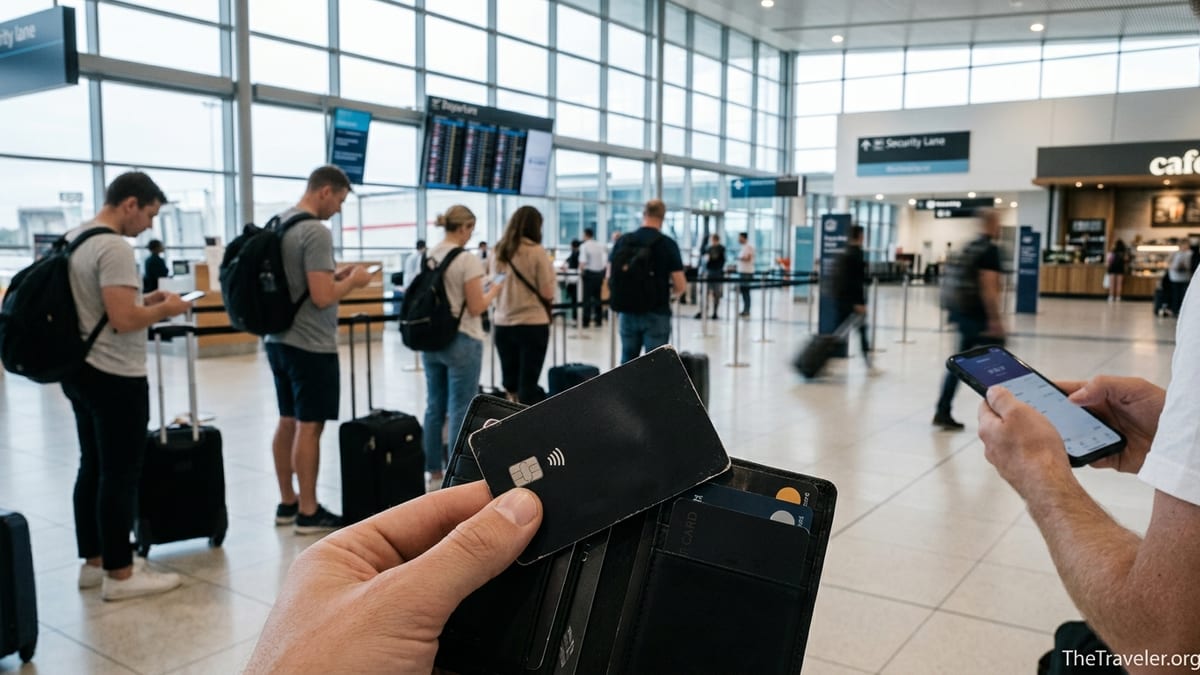
The Black Card Hype vs Everyday Reality
ANZ markets Rewards Black as its flagship flexible rewards card, with a headline earn rate of 2 ANZ Reward Points per 1 Australian dollar on eligible purchases up to a monthly threshold, then a lower rate after that. In mid 2026, public product pages describe 2 points per dollar up to 5,000 Australian dollars per statement period and 1 point per dollar after that, along with a large introductory bonus for new cardholders who meet a minimum spend within the first three months. For a traveler staring down a 5,000 Australian dollar European holiday or a home renovation, the idea of collecting around 190,000 to 200,000 ANZ Reward Points in a short window can feel compelling.
In practice, many cardholders primarily come for that one time windfall. Online communities focused on credit card churning are full of people who sign up for ANZ Rewards Black, funnel 5,000 Australian dollars of regular expenses or planned purchases through the card, collect the bonus and a few thousand extra points, convert them to airline miles or eGift cards, then cancel before the second year’s annual fee is charged. That pattern alone suggests the long term value is less impressive than the sales pitch. Where casual comparison sites might focus on the sign up bonus and headline earn rate, the day to day realities tell a more complicated story.
The real issue is not that ANZ Rewards Black is uniquely poor, but that the contrast between marketing and everyday use is stark. Travelers who do not read the terms in detail can end up missing out on points they thought they were earning, seeing their points lose value when converted to airline partners or gift cards, or discovering that the benefits they assumed would protect their next trip are hedged with exclusions.
The Quiet Cap on “Uncapped” Earning
One of the first surprises is how quickly the top earn rate can drop away. ANZ Rewards Black currently offers 2 points per dollar on eligible purchases up to and including 5,000 Australian dollars per statement period, then just 1 point per dollar on further spend in that billing cycle. That cap is clearly stated in the small print but rarely highlighted in marketing material. For a traveler whose household spends 7,000 Australian dollars a month on combined business and personal costs, that means 10,000 ANZ Reward Points earned on the first 5,000 Australian dollars of spend and only 2,000 points on the next 2,000 Australian dollars. Flattened out, the effective earn rate across the whole month is only around 1.43 points per dollar.
The impact feels even more pronounced if you are aiming to build airline miles rather than redeeming for cash back or gift cards. At a typical conversion rate of 3 ANZ Reward Points to 1 airline mile for several major partners, 5,000 Australian dollars of spend at the top rate might generate roughly 3,300 frequent flyer miles after conversion. The extra 2,000 Australian dollars of spend over that threshold might add only around 660 miles. For a traveler putting a 7,000 Australian dollar family trip to Japan through the card, that difference alone can be the equivalent of a one way economy hop between Sydney and Melbourne.
The cap also reinforces an awkward reality: if your monthly spending consistently exceeds 5,000 Australian dollars, you may be better off pairing the ANZ Rewards Black with another card for overflow purchases, or even skipping it entirely in favor of a card with a lower earn rate but no threshold. Yet because the 5,000 Australian dollar figure is buried in product tables rather than headlining the pitch, many cardholders only notice after their first statement arrives and the math does not match their expectations.
Fine Print on What Actually Earns Points
Another under discussed problem is how many everyday transactions do not earn ANZ Reward Points at all. The official terms carve out a long list of exclusions: cash advances, cash equivalent transactions, government charges, BPAY and Post Billpay payments, gambling and gaming transactions, balance transfers and interest charges. That means using the card to pay a tax bill to the Australian Taxation Office, to load a digital wallet via a cash equivalent top up, or to buy lottery tickets will not move you any closer to that big sign up bonus or your next flight.
These exclusions matter because many travelers plan their minimum spend strategy around large one off bills. For example, a self employed photographer might assume that putting a 3,000 Australian dollar quarterly tax instalment and a 1,000 Australian dollar BAS payment on the ANZ Rewards Black will almost meet the 5,000 Australian dollar requirement for the introductory bonus. In reality, those government and BPAY style transactions may earn no points and not even count toward the qualifying spend, leaving the cardholder a long way short of the threshold.
Some cardholders also report friction around gift card purchases and other edge cases. A typical scenario is someone buying several hundred dollars of supermarket or department store gift cards on the card to accelerate their minimum spend, only to later find those transactions did not generate ANZ Reward Points. While policies can evolve over time and individual outcomes depend on merchant classification, the broader lesson is consistent: ANZ retains wide discretion over what counts as an eligible purchase, and that discretion can cut into the value of the product for travelers who rely on creative methods to hit spend targets.
Conversion Rates That Erode Travel Value
For travelers, the key promise of ANZ Rewards Black is flexibility. Instead of locking you into a single frequent flyer program, ANZ Rewards lays out a menu of airline partners and retail options. In practice, the conversion rates from ANZ Reward Points to partner points are where a lot of the hidden cost sits. A common pattern today is a 2 or 3 to 1 ratio: for example, 3 ANZ Reward Points converting to 1 airline mile in a major Asian carrier program, or 2 ANZ Reward Points converting to just over 1 Airpoints Dollar when transferred to Air New Zealand’s scheme. That means the headline “2 points per dollar” becomes roughly 0.66 or 1.1 airline miles per dollar after conversion depending on the partner.
Take a real world example. A cardholder puts 5,000 Australian dollars of travel and everyday spending on the ANZ Rewards Black in a month, staying entirely below the cap. They earn about 10,000 ANZ Reward Points from that spend, ignoring any bonus offers. Converting those points to a major carrier at 3 to 1 nets approximately 3,300 miles. In many programs, a one way Sydney to Singapore economy saver fare might cost around 28,000 to 30,000 miles plus taxes. At that level, the month’s worth of spending on ANZ Rewards Black looks more like a small discount than a free flight.
The same erosion applies to gift card redemptions. Public information suggests that 1,250 ANZ Reward Points can be redeemed for 5 Australian dollars of ANZ cashback, implying a value of approximately 0.4 cents per point. A traveler who has collected 180,000 ANZ Reward Points from the sign up bonus could reasonably expect around 720 Australian dollars of cashback if they redeemed at that rate. On the surface that sounds generous against a 375 Australian dollar annual fee, but once you factor in the time to earn the bonus, the cap on ongoing spend, and alternative cards that directly earn airline miles at around 1 or more mile per dollar, the relative value looks less spectacular.
Conversion offers can occasionally improve the picture. For instance, some airlines periodically run limited time promotions where transferring ANZ Reward Points during a specific month triggers a 20 to 30 percent partner bonus. However, relying on promotional timing adds complexity and risk. Travelers who transfer at standard rates, or who miss a promotional window because they are not watching the fine print, may feel they are getting a much weaker deal than the headline marketing implied.
Point Expiry and the “Use It or Lose It” Clock
The expiry rules on ANZ Reward Points are another quiet catch. According to current ANZ Rewards program terms, points must be used to claim a reward within 36 months of 31 December of the year in which they were added to your account. After that, they are cancelled. In other words, if you earn points in March 2026, the broad window to use them stretches to the end of 2029, but not indefinitely. If you close your ANZ Rewards account, you generally have only 90 days to redeem any remaining points before they vanish.
For casual travelers who fly overseas once every few years, this rolling expiry can be a major problem. Picture a family based in Brisbane that signs up for ANZ Rewards Black in 2026, collects the introductory bonus and then uses the card modestly for grocery and petrol spend. They might accumulate around 220,000 ANZ Reward Points over four years. If they have not been actively tracking expiry dates and holding a clear redemption plan, a large chunk of those points could disappear before they are converted into flights or hotel stays.
The 90 day window after account closure is particularly unforgiving for card churners. Someone might reasonably think they can cancel the card before the second year fee posts, then log back in a few months later to transfer points. In reality, any points not redeemed or transferred within roughly three months of closure are likely to be wiped. In community reports, this has caught out people who cancelled in the middle of a busy life season and only remembered their leftover balance months later.
Travel Insurance That Is Not as Simple as It Sounds
ANZ Rewards Black promotes complimentary international travel insurance as a perk, which for many cardholders is a significant psychological draw. Frequent travelers often rationalize the 375 Australian dollar annual fee by telling themselves that they will save on standalone travel insurance policies each time they fly. The problem is that the complimentary coverage is embedded in a separate insurance booklet, issued and underwritten by third parties, and full of conditions that are rarely discussed at application time.
Typical conditions include minimum spend requirements on prepaid travel costs, age limits, trip duration caps and a long list of general exclusions. For instance, you may need to charge a specified amount of your return airfare or cruise fare to the ANZ Rewards Black card, or pay for your entire trip on the card, before coverage activates. Some pre existing medical conditions may be completely excluded or require separate underwriting. Adventure activities such as off piste skiing, motorbike rental over a certain engine size, or mountaineering might also sit outside standard cover.
Consider a traveler who books a 4,500 Australian dollar multi city itinerary to Europe through an online travel agent, splitting payment between the ANZ Rewards Black card and a debit card. They might assume that simply holding the card gives them full cancellation and medical cover. If their trip is later disrupted due to illness, they could discover that the partial payment did not meet the activation threshold for the complimentary insurance, leaving them partially or entirely uninsured. The brochure-level promise of “complimentary travel insurance” masks a nuanced reality that demands careful reading before relying on it as a core travel safety net.
Service Friction and Bonus Timing
Beyond the mathematics, a quieter problem many cardholders mention is administrative friction. Because the sign up bonus on ANZ Rewards Black is typically structured in tiers, with a large chunk credited within three months of meeting the spend requirement and an additional component arriving only after keeping the card open beyond a year, some applicants underestimate how long they will need to hold the card to unlock full value. If a promotion offers, for example, 130,000 points after reaching 5,000 Australian dollars of spend in three months and another 50,000 points after keeping the card for 15 months from activation, closing the card early can mean forgoing a substantial second tranche of points.
In practice, points do not always post instantly after you hit the magic spend number. Community reports show timelines where cardholders met their minimum spend in the first statement period but waited six to ten weeks to see bonus points arrive. That delay can be stressful for anyone timing a redemption for school holiday flights or a specific award seat sale. While ANZ’s official language allows a broad window for crediting bonuses, the expectation set by comparison tables and social media chatter is often that points will appear almost immediately once the spend threshold is crossed.
Customer service can also become a problem point. If bonus points do not post when expected, cardholders have to contact ANZ and, at times, provide detailed transaction breakdowns to prove that they met the conditions with eligible spend. This back and forth can be particularly frustrating for new churners who entered the game expecting a streamlined, almost automated experience. Travelers juggling work, family and trip planning may find that the time cost of chasing points narrows the value gap between ANZ Rewards Black and simpler alternatives.
The Takeaway
ANZ Rewards Black remains a powerful tool in the right hands, especially when a generous introductory offer aligns with a short burst of high, organic spending on flights, accommodation or major purchases. Used surgically, it can shave hundreds of dollars off a new laptop, cover much of a domestic holiday through gift cards, or kick start a frequent flyer balance with a partner airline. For cardholders who are organized, comfortable reading product disclosures, and willing to track expiry dates and conversion ratios, the card can still earn its place in a travel strategy.
The underlying problem is that most of the significant drawbacks sit below the marketing waterline. A capped top earn rate, a long list of non earning transaction types, point conversions that dilute value, strict expiry rules and conditional complimentary insurance all chip away at the headline appeal. Add in delayed bonus posting and occasional service friction, and the ANZ Rewards Black ends up looking less like a simple premium travel companion and more like a tool that demands active management. For travelers who want straightforward value, a card that directly earns airline miles, or a lower fee product with a transparent earn structure, may be a better fit.
Before applying, travelers should map out exactly how they will hit the minimum spend using eligible transactions, which partner program they ultimately care about, and when they plan to redeem. They should also decide whether they are truly willing to keep the card for more than a year to unlock all bonus tiers, and what their exit strategy will be to avoid wasting points at account closure. Approached with clear eyes, ANZ Rewards Black can work. Approached with only the brochure in hand, it can easily disappoint.
FAQ
Q1. Is the ANZ Rewards Black card still worth it for frequent travelers?
It can be worthwhile for travelers who can easily meet the minimum spend with eligible purchases, redeem during good partner promotions and actively manage point expiry. For less engaged users who prefer simple, direct airline earn cards or low fee options, the complexity and caps on ANZ Rewards Black may undermine its headline value.
Q2. What is the biggest hidden downside of ANZ Rewards Black?
The combination of the monthly earn cap and the non earning transaction categories is arguably the biggest quiet downside. Many cardholders only discover after the fact that large government bills or certain utility payments did not count toward the bonus or earn points, and that spending beyond 5,000 Australian dollars in a statement period earns at a lower rate.
Q3. How long does it usually take for ANZ Rewards Black bonus points to post?
Official language allows up to several months after you meet the spend requirement, and some real world reports show waits of six to ten weeks. While some cardholders see points earlier, you should not rely on an immediate crediting if you are timing a specific flight redemption.
Q4. Do ANZ Reward Points expire if I keep my account open?
Yes. Under current program rules, ANZ Reward Points generally must be used within a set period that runs for several years from when they are earned. If you do nothing, older points can quietly expire even while your account is still open, so it is important to plan redemptions rather than hoard indefinitely.
Q5. What happens to my points if I cancel my ANZ Rewards Black card?
If you cancel your ANZ Rewards account, you usually have only a short window, around a few months, to redeem or transfer any remaining ANZ Reward Points before they are cancelled. Travelers planning to churn should line up redemptions or transfers before requesting closure.
Q6. Is the complimentary travel insurance on ANZ Rewards Black enough on its own?
It depends on your trip, age and health. The complimentary cover has activation conditions, benefit limits and exclusions. For straightforward trips with no major medical issues, it may be sufficient. For complex itineraries, adventure activities or travelers with pre existing conditions, a standalone policy tailored to your needs may still be safer.
Q7. Are gift card purchases a good way to meet the minimum spend?
Gift cards can work in some cases but are risky. Depending on how the merchant is classified and evolving rules on cash equivalent transactions, some gift card purchases may not earn points or may be scrutinized. If you plan to rely on gift cards, consider using them only as a small supplement, not the backbone of your strategy.
Q8. How does ANZ Rewards Black compare to dedicated airline cards?
Dedicated airline cards often have simpler earn structures and more transparent value, directly crediting miles to a single frequent flyer program. ANZ Rewards Black offers flexibility across multiple partners, but that flexibility comes at the cost of more complex conversion ratios and an extra step when transferring points.
Q9. Can I hold multiple ANZ credit cards and still get bonuses?
Current promotional terms typically exclude applicants who hold or have recently held another ANZ Rewards or ANZ Frequent Flyer credit card within a set look back period. That means you may not be eligible for multiple sign up bonuses in quick succession, even if the cards are technically different products.
Q10. What should I do before applying for ANZ Rewards Black?
Before applying, list your upcoming three to six months of expenses, making sure they are likely to count as eligible purchases, decide which airline or redemption you care about most, check your ability to pay the annual fee comfortably and read the current ANZ Rewards and insurance terms. Going in with a clear plan will help you avoid the hidden traps and decide whether this card genuinely suits your travel style.