


More news on this day
Severe thunderstorms sweeping across the Midwest on July 4 collided with record holiday demand at Chicago O’Hare International Airport, triggering FAA flow restrictions, ground stops and a widening web of delays, diversions and cancellations across the national air network.
Get the latest news straight to your inbox!
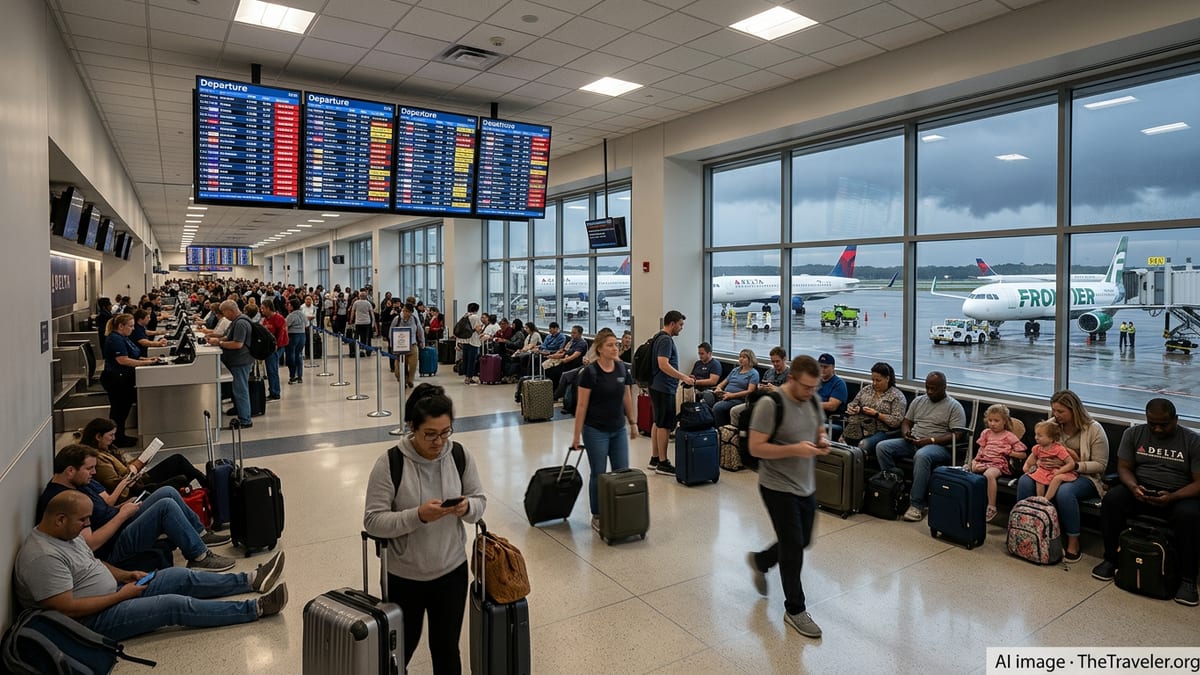
Holiday Surge Meets Fragile Air Traffic System
The Independence Day period in 2026 was already projected to be the busiest Fourth of July travel window in Chicago’s history, with the Chicago Department of Aviation expecting close to 2 million passengers to pass through O’Hare and Midway between June 27 and Sunday, July 5. Publicly available forecasts from AAA and local outlets indicated that more than 4 million Illinois residents were likely to travel at least 50 miles from home, with air travel volumes at O’Hare running above last summer’s levels.
At the same time, the Federal Aviation Administration has kept seasonal caps on operations at O’Hare designed to curb chronic congestion. Industry briefings show that carriers had scheduled more than 3,000 daily movements out of the hub for this summer, with the FAA limiting the practical ceiling to roughly 2,800 flights per day to protect airport and air traffic control capacity during peak periods. That left little margin once disruptive weather moved into the Chicago market.
As storms intensified late on July 3 and into July 4, the combination of near-record passenger loads, tightly packed schedules and constrained throughput rapidly exposed how little slack exists in the system. Airline operations that were already running near maximum capacity had few options to absorb cascading delays without widespread knock-on effects for travelers across the country.
Travel data providers tracking the July 4 weekend show that by late Saturday, thousands of flights nationwide were operating behind schedule, with the Chicago hub repeatedly ranking among the top airports for delays and cancellations as thunderstorms pulsed over northern Illinois.
Thunderstorms Force Ground Stops and Flow Restrictions at O’Hare
Meteorological information from the National Weather Service for Saturday, July 4 indicated lines of intense thunderstorms over the Chicago area, bringing lightning, heavy rain and shifting winds to O’Hare during the critical afternoon and evening push. FAA status pages for Chicago O’Hare reflected convective weather and light thunderstorm rain in the vicinity of the airport, with departure delays of 30 minutes or more as traffic managers throttled the number of flights allowed into and out of the region.
According to the FAA’s National Airspace System advisories, the agency’s Air Traffic Control System Command Center issued a series of holiday weekend operations plans highlighting “the Chicago market” as a focal point for potential route restrictions, metering and ground delay programs. These advisories outlined expectations for flow controls as storms developed, signaling to airlines that departure rates to and from O’Hare could be sharply reduced for extended periods.
On the ground, social media posts from passengers and aviation enthusiasts on July 3 and July 4 described rolling ground stops at both O’Hare and nearby Chicago Midway as lightning moved overhead. Travelers reported average departure delays from O’Hare of an hour or more at various points, with aircraft held at gates, staged in long departure queues and, in some cases, parked on taxiways while arrivals and departures were briefly paused for safety.
Public tracking of individual flights showed that arrival rates into O’Hare were repeatedly cut as storms intensified, forcing controllers to sequence inbound traffic at larger intervals and prompting airlines to divert aircraft rather than allow them to circle in holding patterns near the weather cells.
Nationwide Ripple Effects: Diversions, Missed Connections and Cancellations
As the primary Midwest hub for United Airlines and a major node for American Airlines, disruptions at O’Hare quickly spilled across the country. Radar data and airline tracking sites on July 4 and July 5 documented a string of diversions away from Chicago, including multiple international and domestic flights routed to Milwaukee’s Mitchell International Airport and other alternates as thunderstorm activity temporarily closed arrival windows.
One widely followed case involved an American Airlines flight from Charlotte to Chicago on July 4 that first endured a departure delay of more than seven hours, then diverted to Minneapolis instead of reaching O’Hare as storms again flared in northern Illinois. Published accounts of that journey describe passengers ultimately arriving far from their intended destination at the height of the holiday weekend, emblematic of the disarray rippling through the system.
Passenger reports on airline forums over the weekend detailed missed connections, overnight airport stays and rebookings pushed one or two days out as carriers struggled to reposition aircraft and crews. Some travelers attempting to reach Chicago described multiple cancellations in succession, with limited remaining seat availability on alternative flights due to the heavy July 4 demand.
Operational data compiled by flight-tracking services indicated that the storm-related disruptions in the Chicago area contributed to elevated delay and cancellation totals nationwide for several days, as aircraft and crews fell out of position and subsequent rotations departed late from airports far from the original weather impacts.
FAA Constraints, Airline Schedules and a System Under Strain
Aviation analysts have noted that what unfolded around Chicago during this holiday period reflects broader structural stress in the U.S. air travel system. FAA construction and modernization programs at O’Hare and other major hubs, combined with staffing limitations in some control facilities, have led to a patchwork of flow restrictions, slot adjustments and seasonal caps that limit peak throughput even when skies are clear.
FAA construction impact reports illustrate how ongoing runway, taxiway and facilities work at O’Hare is staged through 2026, requiring frequent rebalancing of arrival and departure rates to maintain safety and manage noise and community impacts. When thunderstorms or strong winds overlay those constraints, controllers must reduce flows further, quickly overwhelming schedules built around optimistic assumptions of on-time operations.
At the same time, airlines have been adding back capacity to Chicago in response to robust demand, with Chicago Department of Aviation statistics showing that flight counts and passenger volumes have climbed steadily since the pandemic trough. Industry briefings ahead of the summer season suggested that daily operations filed for O’Hare once again pushed the limits of available runway and terminal capacity, leaving little buffer when weather or technical issues arise.
Travelers caught in this latest disruption expressed frustration online not only with the immediate delays, but also with what they view as a pattern of repeated weather-related breakdowns at the airport. Past storm events in March and earlier in the year produced similar waves of cancellations at O’Hare, reinforcing perceptions that the system has become increasingly fragile during peak travel periods.
What Travelers Can Expect as Operations Recover
By the morning of Sunday, July 5, FAA status pages suggested that the most intense thunderstorm activity over northern Illinois had eased, allowing higher arrival and departure rates at O’Hare compared with the previous evening’s restrictions. However, recovery operations remained complex, with airlines working through backlogs of displaced passengers, aircraft out of position and crews facing duty-time limits after extended delays.
Published coverage indicates that carriers are focusing on restoring core hub banks at O’Hare and Midway first, then rebuilding thinner point-to-point routes as aircraft become available. Travelers whose flights were canceled over the peak of the July 4 storm period are being rebooked as seats open, with some itineraries pushed into early next week due to limited spare capacity.
Travel experts note that, for future holiday periods, passengers connecting through weather-sensitive hubs such as Chicago may want to build in longer connection times, seek early-morning departures that are less exposed to afternoon storms, or consider itineraries through alternate hubs when feasible. Data from previous severe-weather events show that once a major node like O’Hare seizes up, recovery can take days, particularly when demand is already at or near record levels.
For O’Hare itself, the July 4 disruptions underscore the challenge of serving as both a global connecting hub and a construction site in the middle of a sustained travel boom. With more storms likely during the heart of summer, and infrastructure and staffing constraints still in play, the margin for error at one of the nation’s busiest airports remains thin as the busy travel season continues.