


More news on this day
American Airlines is moving ahead with a broad cabin upgrade program that will add more premium seats and expand high-speed Wi-Fi across much of its fleet, as the carrier competes for higher-spending travelers and seeks new revenue from onboard amenities.
Get the latest news straight to your inbox!
Major retrofit program reshapes cabin layouts
Publicly available fleet information shows that American is in the midst of one of its most extensive interior upgrade cycles in years, touching widebody jets used on long-haul routes, narrowbodies on domestic and transcontinental services, and dual-class regional aircraft.
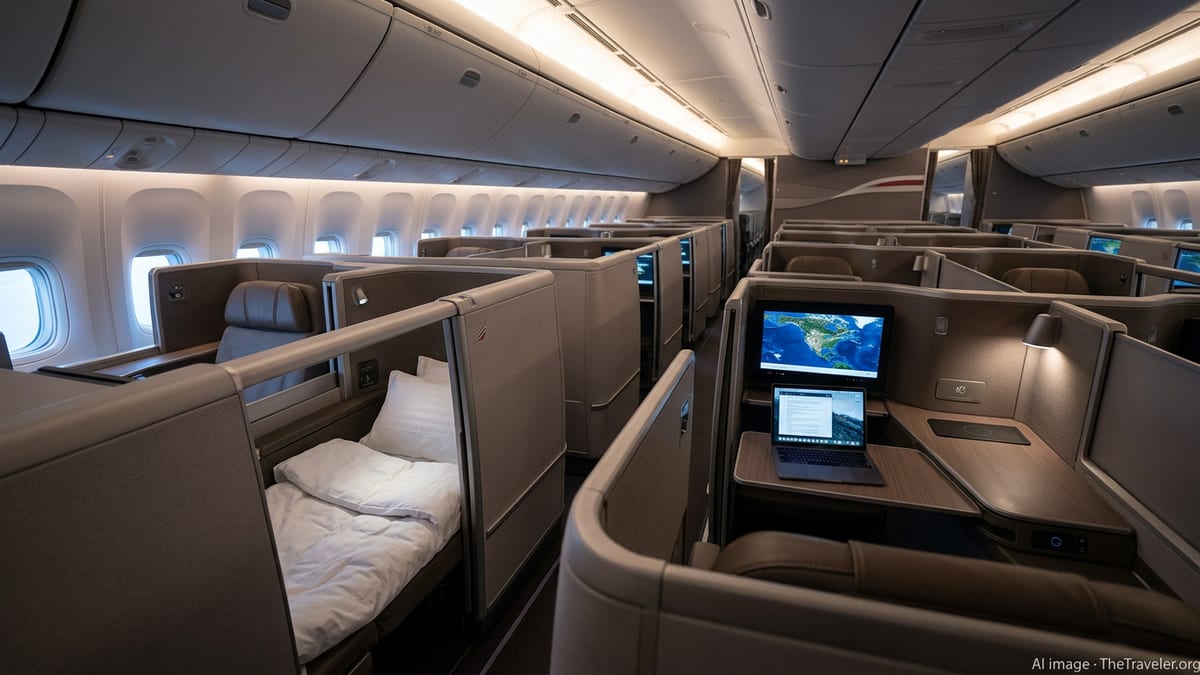
The airline has been gradually reconfiguring aircraft to increase the number of premium seats, particularly in business and premium economy cabins, while maintaining or modestly adjusting total seat counts. Industry reports on forthcoming Boeing 787-9 deliveries and refitted Boeing 777-300ER aircraft describe layouts that favor lie-flat business suites and a larger dedicated premium economy section compared with older configurations.
For travelers, the most visible changes are on long-haul aircraft, where new seats and cabin designs are being introduced as aircraft return from refurbishment lines. Coverage of the first refitted 777-300ER entering service in mid-2026 highlights what analysts describe as one of American’s most significant premium upgrades in more than a decade, reflecting the carrier’s bet on high-yield international demand.
On the narrowbody side, updated cabin plans indicate that American is aligning layouts to offer more seats at the front of the plane in domestic first and extra-legroom sections, while standardizing interiors across subfleets to reduce complexity and make it easier for travelers to recognize the product.
High-speed Wi-Fi expansion across mainline and regional jets
Alongside the addition of premium seats, American is extending satellite-based connectivity across its network, aiming to offer high-speed Wi-Fi on essentially every mainline aircraft and a growing share of regional jets. Company disclosures and recent analysis of the carrier’s strategy describe this as a key differentiator in the North American market.
Reports on the airline’s most recent annual filings note that American plans to have high-speed Wi-Fi available on all American-operated flights by around spring 2026, including regional jets flying under the American Eagle banner. This would give the carrier one of the most comprehensive onboard connectivity footprints among major U.S. airlines.
The push into ubiquitous Wi-Fi is being paired with a strategy that encourages passengers to use personal devices, rather than relying on built-in seatback screens. Commentators observing the retrofit program point out that, on many aircraft, traditional in-seat entertainment has been removed or de-emphasized in favor of streaming content over the onboard network.
For business travelers and loyalty program members, the expansion of connectivity is particularly notable. Public coverage of American’s recent initiatives describes complimentary or sponsored Wi-Fi offers targeted at AAdvantage members, which could make in-flight internet access a recurring perk for frequent flyers on both short and long routes.
Regional jets get a premium and connectivity upgrade
American’s regional fleet, which connects smaller markets to major hubs, is also undergoing a significant refresh. According to a September 2025 announcement summarized in aviation and interiors industry coverage, the airline plans to retrofit all of its dual-class regional jets with updated cabins that bring them closer in look and feel to mainline aircraft.
These regional upgrades include new seat coverings, in-seat power at every seat, and a continued rollout of satellite-based Wi-Fi, making it possible for travelers on shorter flights to use laptops and mobile devices much as they would on longer segments. The refurbishments also preserve a distinct first-class cabin and extra-legroom seating, reinforcing the airline’s premium focus even on smaller jets.
Analysts note that this move reflects competitive dynamics in the U.S. domestic market, where major carriers are working to narrow the gap between regional and mainline experiences. For American, aligning the product across fleets can support higher fares on key business routes and improve the perception of connecting itineraries that include both large and small aircraft.
The regional jet investments also signal an effort to standardize service expectations: passengers connecting from a widebody or large narrowbody aircraft onto a smaller jet are increasingly likely to find power outlets, Wi-Fi, and a recognizable premium cabin, rather than an older, less equipped interior.
Strategic bet on premium revenue and loyal customers
Industry analysis of American’s recent strategy portrays the cabin and connectivity upgrades as part of a broader pivot toward higher-yield segments of the market. By increasing premium seating across the fleet, the airline is positioning itself to capture more revenue from business travelers, affluent leisure customers, and loyalty program members willing to pay for extra comfort or redeem miles for upgraded cabins.
Research on airline economics indicates that premium cabins, while occupying more space per passenger, contribute disproportionately to overall revenue. American’s decision to add more business-class suites and premium economy seats can therefore support profitability, especially on long-haul routes where demand for lie-flat beds and upgraded service remains resilient.
The airline is also using cabin investments to reinforce its loyalty offering. Publicly available information on recent AAdvantage changes shows a closer link between earning and spending rewards and accessing premium experiences, from cabin upgrades to enhanced lounge access. Expanded Wi-Fi availability and digital services on board further integrate the loyalty program into every stage of the journey.
For travelers, the outcome is a more segmented cabin with clearer distinctions between standard economy, extra-legroom options, premium economy and business class. While this can translate into more opportunities to pay for comfort, it also reflects a continuing industry shift toward unbundled fares and a wide range of paid enhancements.
What travelers can expect as upgrades roll out
As American’s retrofit program advances through 2026, passengers are likely to encounter a mix of old and new cabins for some time, depending on route and aircraft assignment. Aviation trackers and frequent flyer forums already document variations between aircraft of the same type, with some featuring the latest suites and Wi-Fi systems and others still operating with earlier interiors.
Travelers booked in premium cabins on long-haul flights will see the most dramatic changes, particularly on updated 777 and 787 aircraft, where new business-class suites offer direct aisle access and greater privacy. Premium economy cabins are also expanding, giving those who want more space but do not need a lie-flat bed an intermediate choice.
On domestic and regional routes, the upgrades may feel more incremental, centered on refreshed seats, additional power outlets and more reliable connectivity. However, for frequent flyers and travelers who regularly work on board, improved Wi-Fi performance and the option to sit in an enhanced premium cabin can meaningfully change the experience.
While individual reactions will vary, the overarching trend is clear: American Airlines is reshaping its cabins and digital infrastructure to attract premium demand, using more upscale seating and widespread high-speed Wi-Fi as key tools in an increasingly competitive global airline market.