


For many New Jersey and New York City beachgoers, summer often comes down to a familiar question: Island Beach State Park or Sandy Hook? Both offer wild Atlantic surf, sweeping dunes, and miles of sand, but the experience on the ground can feel very different. Choosing the right one for you depends on how you like to spend a beach day, how far you are willing to drive, and whether you crave solitude, history, or convenience.
Get the latest updates straight to your inbox!
Getting There: Convenience vs Classic Shore Drive
If you are coming from New York City or northern New Jersey, Sandy Hook usually wins on pure convenience. The Sandy Hook unit of Gateway National Recreation Area sits at the northern tip of the Jersey Shore in Monmouth County, reached directly via Route 36. On a good weekend morning from Manhattan, drivers often make it to the park gates in about 60 to 75 minutes, traffic permitting. Many visitors treat it as their default “near-the-city ocean” option instead of Rockaway Beach or Coney Island.
Island Beach State Park, by contrast, lies farther south on the narrow Barnegat Peninsula just beyond Seaside Park in Ocean County. Reaching it from New York City or North Jersey usually involves heading down the Garden State Parkway toward Exit 82 and then continuing through Seaside Heights and Seaside Park. In summer, that last stretch can be slow, with traffic lights and shore-town congestion, especially on Saturday mornings. From central New Jersey or Philadelphia’s suburbs, however, the difference narrows and Island Beach can feel like a straightforward Parkway run.
Public transit also tilts in favor of Sandy Hook. Seasonal ferry services from Manhattan’s Pier 11 and West Side terminals typically run directly to Sandy Hook, allowing car-free access for city residents who do not want to deal with traffic or parking. Island Beach State Park has no direct rail or ferry access; the closest New Jersey Transit train stops in Bay Head or Point Pleasant Beach, after which you would still need a rideshare or taxi to reach the park. If you rely on transit, Sandy Hook is realistically the more viable choice.
For travelers already staying in Seaside Heights, Lavallette, or other central shore communities, Island Beach State Park becomes an easy day trip just a few miles down the peninsula. You can leave a busy boardwalk scene behind and reach a more natural beachscape in under 20 minutes, which is a big draw for vacationers who want variety without a long drive.
Fees, Parking, and Crowd Patterns
Costs are similar, but structured differently. Island Beach State Park charges a per-vehicle entrance fee collected at the gate during the main season. For the 2026 schedule, New Jersey residents typically pay a modest single-digit fee on weekdays and a slightly higher amount on summer weekends and holidays, while nonresidents pay roughly double those amounts per vehicle. An annual New Jersey State Park Pass, which costs around the price of a single tank of gas, can cover entrance fees at Island Beach and other fee-based state parks for frequent visitors.
Sandy Hook does not charge an entrance fee to the park itself. Instead, it charges for beach parking from around Memorial Day weekend through Labor Day. Recent National Park Service information lists typical parking fees at about 20 dollars per day or around 100 dollars for a season pass for a standard vehicle, with higher prices for oversized vehicles. That fee structure means that if you are dropped off, bike in, or arrive on a ferry service that includes transport within the park, you may bypass parking costs, while drivers should budget for it on every peak-season visit.
On busy summer weekends, both parks can hit capacity. At Island Beach State Park, staff close the gates once parking lots fill, especially around the main bathing areas and popular access points. The park’s own guidance notes that “park full” simply means that every marked spot is occupied; in practice, this can happen by mid-morning on sunny July or August Saturdays. Sandy Hook experiences similar crunches, especially at the closer lots like Beach B and Beach C. Drivers occasionally find digital signs along Route 36 warning that lots are full, forcing late arrivals to turn around or wait.
If you prioritize lighter crowds, Island Beach usually offers more options. With nearly 10 miles of oceanfront and large stretches of undeveloped shoreline, you can often walk away from the main swimming pavilions toward quieter sections, even on busy days. South of the guarded beaches, the coastline becomes progressively emptier, particularly where surf-fishing vehicles are permitted. Sandy Hook also has quieter corners, such as North Beach and some of the southern lots later in the day, but its role as a close-to-city beach means that it often feels busier across more of the shoreline.
Beach Atmosphere: Wild Dunes vs Urban Views
The signature appeal of Island Beach State Park is how wild it feels despite being within sight of dense development. On the ocean side, you get broad stretches of soft sand backed by high, grass-covered dunes and maritime shrubs. Turn around and you see almost no buildings, only dune fencing and occasional lifeguard stands or boardwalk access paths. On the bay side, shallow coves and salt marshes host egrets, ospreys, and shorebirds. Many first-time visitors are surprised to discover such an undeveloped shoreline between heavily built-up towns like Seaside Heights and Long Beach Island.
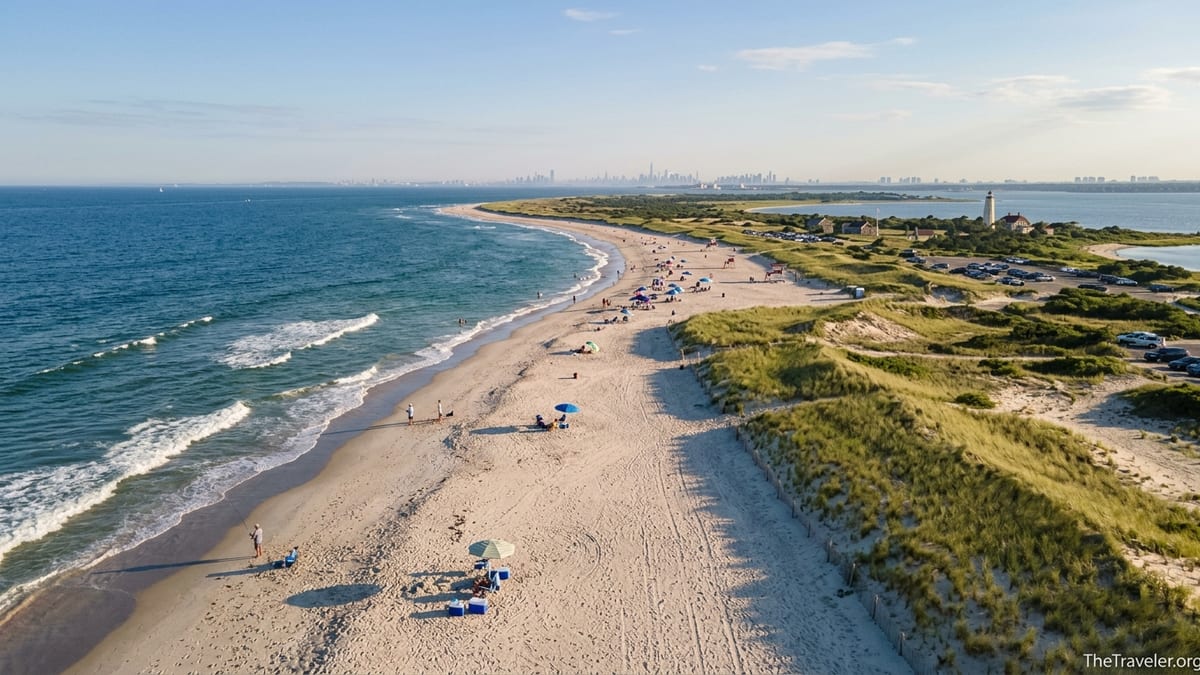
Sandy Hook delivers a different kind of scenery. Here, the oceanfront beaches face directly east, with long views up and down the coast, while the bay side offers wide panoramas of Lower New York Bay and, in clear weather, the Manhattan skyline and Verrazzano-Narrows Bridge. From North Beach or certain bayfront spots near Fort Hancock, you might be sitting on sand dunes and sea grass while looking at container ships heading for New York Harbor. It feels less remote than Island Beach but more connected to the metropolitan seascape.
Soundscape and energy levels differ too. Island Beach tends to attract anglers, birders, families seeking a low-key day, and locals who prefer coolers and beach chairs over boardwalk rides. You will still find groups with portable speakers, but away from the main bathing pavilion the vibe leans quiet, with long stretches where you mostly hear surf and seabirds. At Sandy Hook, especially near the main bathing beaches, the atmosphere skews livelier and more urban, with clusters of families, groups of friends meeting from Brooklyn and Jersey City, and more background music and conversation.
If you dream of a classic barrier-island landscape with little visible development, Island Beach State Park is the stronger fit. If you like the contrast of dunes on one side and skyscrapers on the distant horizon on the other, and enjoy the sense of being close to the city while clearly “at the shore,” Sandy Hook offers a uniquely metropolitan coastal experience.
Swimming, Activities, and Unique Experiences
Both parks provide guarded swimming areas during the peak season, typically from mid-June through Labor Day, roughly 10 a.m. to 6 p.m., though exact dates and hours can vary each year. At Island Beach State Park, designated bathing areas around the main pavilions include restrooms, changing areas, and seasonal concessions. Outside of those guarded zones, swimming is generally at your own risk, and conditions can change quickly with rip currents, so families with children usually stay near lifeguards.
Sandy Hook is divided into several named ocean beaches: North Beach plus lettered beaches A through E, as well as Gunnison Beach. Most of these have seasonal lifeguards, restrooms, and snack bars or food trucks. Beach B is often popular with families because it is one of the first lots you encounter and has a short walk to the sand. North Beach and some of the more distant parking lots appeal to visitors who prefer more space and slightly quieter surroundings while still remaining within lifeguarded zones.
Beyond basic swimming, each park offers a distinct menu of activities. Island Beach State Park is well-known among surf anglers, who line the water’s edge at dawn and dusk for striped bass and bluefish during the spring and fall runs. A mobile sport fishing permit allows qualified four-wheel drive vehicles to access designated sections of beach specifically for fishing, creating a culture of serious anglers and customized trucks with rod racks. On the bay side, shallow waters are popular for kayaking and stand-up paddleboarding, with local outfitters in nearby towns renting gear for day use.
Sandy Hook, by contrast, mixes beachgoing with rich historic and recreational options. The Sandy Hook Lighthouse, dating from the 18th century, stands near the tip of the peninsula, and the former Fort Hancock Army post still features rows of yellow officer housing, concrete gun batteries, and other relics. Visitors can bike or walk paved paths that loop around these sites, or join ranger-led programs when available. Many beachgoers spend the morning in the surf and then explore the lighthouse or fort buildings in the late afternoon, turning a simple beach day into a broader outing.
Nature, Wildlife, and Conservation Focus
If your idea of a perfect day involves birdwatching, dune hikes, or photographing wild landscapes, Island Beach State Park has a strong edge. The park protects one of the longest remaining stretches of undeveloped barrier island ecosystem in New Jersey, with maritime forest, freshwater ponds, dune systems, and extensive tidal marshes. In spring and fall, migrating songbirds, hawks, and shorebirds move along this coastal corridor, and groups like New Jersey Audubon often organize seasonal walks and birding events in the park.
The bay side of Island Beach provides opportunities to watch ospreys hunting, diamondback terrapins crossing sandy tracks, and horseshoe crabs spawning in late spring. Short nature trails depart from several parking areas, offering interpretive signs and overlooks of both the ocean and Barnegat Bay. Families with school-age children often appreciate the chance to combine a swim with a simple nature walk that feels like a small field trip without leaving the peninsula.
Sandy Hook also has important natural areas, though they exist amid more visible infrastructure. Salt marshes, tidal flats, and a maritime holly forest provide habitat for shorebirds, raptors, and migratory species. During peak migration seasons, birders line the bayside paths with spotting scopes, scanning for terns, plovers, and raptors riding thermals over the fort. Some parts of the dunes and back-bay areas may close temporarily to protect nesting shorebirds or other sensitive wildlife, so beachgoers occasionally see fenced sections or advisory signs.
In both parks, visitors are encouraged to respect fencing, stay off sensitive dunes, and pack out trash. While enforcement styles differ slightly between state and national management, the core message is the same: treat these remaining wild shorelines as shared resources rather than party venues. If you enjoy learning about coastal ecology, Island Beach’s more immersive natural setting and shorter nature trails may resonate more strongly, whereas Sandy Hook combines pockets of habitat with a heavier overlay of history and recreation.
Facilities, Food, and Practical Comforts
When comparing comfort and convenience, Sandy Hook usually offers more in-park services, while Island Beach relies more on nearby shore towns for full amenities. At Sandy Hook’s main beach areas, you will typically find restrooms, outdoor rinsing showers, seasonal snack bars or food trucks, and rental options for items like beach chairs or umbrellas, depending on current concessions contracts. Some summers feature mobile vendors selling cold drinks, ice cream, or simple hot foods in the parking-lot areas, so you can manage a full day without ever leaving the park.
Island Beach State Park has basic but sufficient facilities at its main bathing areas: restrooms, changing areas, and seasonal concessions that may offer quick-service items such as sandwiches, snacks, and drinks. However, the overall feel is more low-key and self-catered. Serious beach regulars tend to bring large coolers, pop-up canopies within allowed size limits, and all-day supplies. If you want a sit-down meal or boardwalk-style food, you drive back into Seaside Park or Seaside Heights, where pizzerias, ice-cream stands, and waterfront bars line the main streets and boardwalk.
Accessibility and walking distance can matter a lot to families with small children or travelers with mobility challenges. At both parks, some lots are very close to the sand and others require a longer walk over soft dunes. At Sandy Hook, closer beaches like B and C often appeal to those who want minimal distance from car to towel, but they also fill fastest. Island Beach’s main swimming areas offer wooden walkways and, in some seasons, beach wheelchairs on a first-come basis, helping visitors cross softer sand. If minimizing walking is a priority, arriving early and choosing the right access point is essential at either park.
Restroom cleanliness varies by time of day and crowd level at both locations. Many regulars at Island Beach aim for earlier morning or later afternoon visits when facilities are less busy, bringing their own hand sanitizer and wipes. At Sandy Hook, the National Park Service continuously works with seasonal staff and concessionaires, but high summer weekends inevitably put stress on restrooms and trash collection. In practical terms, planning meals, restroom visits, and shade breaks around peak midday crowds will make either park feel more comfortable.
Vibe and Visitor Profiles: Who Each Beach Best Serves
Island Beach State Park tends to attract visitors who value a “back to nature” beach experience. Regulars include surf anglers towing coolers and rod racks, birders with binoculars, and families or couples who prefer conversation and surf sounds over loud music. Alcohol rules are strict and increasingly enforced, and the absence of a boardwalk or nightlife within the park shapes the day toward quieter pursuits: reading, paddling, long walks, photography, and simple picnics.
Sandy Hook’s visitor mix is more urban and diverse in origin. On a busy July weekend, license plates in the lots will show a blend of New Jersey, New York, and Pennsylvania, and it is common to hear conversations in multiple languages. Groups of young adults set up day camps with Bluetooth speakers and beach games; families from Brooklyn or Queens arrive via ferry; cyclists in Lycra roll through on long training rides before cooling down at the bay. Parts of the park feel social and lively, while others remain relatively calm, but overall the energy tilts more toward a city-adjacent playground.
One of Sandy Hook’s most distinctive features is Gunnison Beach, a clothing-optional beach by long-standing custom and federal oversight. It attracts a mix of naturists, curious first-time visitors, and some day-trippers who appreciate the more relaxed dress norms. That option simply does not exist at Island Beach State Park, which follows standard New Jersey state park regulations on attire. If nudity or a more European-style beach experience is something that either appeals to you or that you want to avoid, Sandy Hook’s configuration matters in your decision.
For multi-interest groups, the choice often comes down to priorities. A family with young children and grandparents who want simple, quiet surf time, easy nature trails, and a low-key cooler lunch might find Island Beach State Park closer to their ideal. A group of friends planning a day that mixes swimming, people-watching, exploring historic sites, and possibly catching a ferry back to the city at sunset may lean strongly toward Sandy Hook.
The Takeaway
Choosing between Island Beach State Park and Sandy Hook is less about which park is “better” and more about which best matches your style of beach day. Both offer true Atlantic surf, dunes, and protected natural areas within a relatively short drive of major cities. The details of access, atmosphere, and amenities, however, lead many seasoned shoregoers to favor one over the other for specific occasions.
If you are craving wide, largely undeveloped beaches, a quieter crowd, and a strong immersion in dune and marsh landscapes, Island Beach State Park is likely your best fit. It rewards those willing to bring their own supplies, arrive early to beat parking closures, and perhaps stay late to walk an almost empty shoreline after most day-trippers have left. Paired with a nearby rental in Seaside Park or a day of rides and restaurants in Seaside Heights, it can deliver both nature and classic boardwalk fun in the same weekend.
If convenience from New York City, robust in-park facilities, and a blend of beachgoing with history and skyline views matter most, Sandy Hook is hard to beat. The option to arrive by ferry, the variety of beaches from family-focused to clothing-optional, and the presence of the lighthouse and Fort Hancock create a uniquely layered experience. For many, it functions as their closest ocean escape, the place they can decide to visit over coffee at 8 a.m. and still be under an umbrella by mid-morning.
Ultimately, the best strategy for frequent shore lovers may be not to choose at all. Visit Sandy Hook on days when you want easy access and a quick return to city life, and head to Island Beach State Park when you need to feel far away, even if you are only a few miles down the coast from neon lights and roller coasters. With both in relatively easy reach, New Jersey beach escapes can be tailored to almost any mood.
FAQ
Q1. Which beach is better for families with young children, Island Beach State Park or Sandy Hook?
Both can work well for families, but many parents prefer Island Beach State Park for its quieter atmosphere and more natural setting, especially around the main bathing areas. Sandy Hook’s closer parking and broader facilities at certain lots may be more convenient for hauling strollers and gear, yet its crowd levels and livelier vibe can feel overwhelming with very small children on peak weekends.
Q2. Is one park generally less crowded than the other in summer?
Island Beach State Park usually offers more opportunities to find space, particularly if you hike away from the main pavilions or explore farther south along the shore. Sandy Hook, as the easier option from New York City and North Jersey, tends to feel busy across more of its beaches, though North Beach and some distant lots can be relatively calm on non-holiday weekdays.
Q3. How do the typical costs compare for a day trip by car?
Island Beach State Park charges a seasonal per-vehicle entrance fee that is generally lower for New Jersey residents than for nonresidents, with slightly higher rates on summer weekends. Sandy Hook does not charge an entrance fee but does charge a beach parking fee that recently has been around 20 dollars per vehicle per day in peak season. If you visit frequently, a New Jersey State Park Pass or a Sandy Hook season parking pass can reduce per-trip costs.
Q4. Can I visit either beach without a car?
Sandy Hook is more practical without a car, thanks to seasonal ferries from Manhattan that drop visitors near the beaches and internal shuttle or walking options. Island Beach State Park lacks direct rail or ferry service, so you would need to pair a New Jersey Transit train or bus with a taxi or rideshare from towns such as Toms River, Seaside Heights, or Point Pleasant Beach, which can add both time and cost.
Q5. Which park is better for fishing and wildlife watching?
Island Beach State Park has a stronger reputation among surf anglers and wildlife enthusiasts due to its long undeveloped shoreline, extensive dunes, and bay-side marshes. A dedicated mobile sport fishing program, along with frequent bird migrations and osprey nesting platforms, make it especially appealing for those who value casting lines at sunrise or scanning the sky with binoculars.
Q6. Are there boardwalks, rides, or nightlife directly at either beach?
Neither Island Beach State Park nor Sandy Hook offers boardwalk rides or significant nightlife inside the park boundaries. For that experience near Island Beach, visitors often head to Seaside Heights, just up the peninsula, which features amusement rides, arcades, bars, and late-night boardwalk activity. Near Sandy Hook, nightlife and dining options are found in nearby towns such as Highlands, Sea Bright, and along the northern shore, rather than on the sand itself.
Q7. How strict are rules about alcohol and behavior on the beach?
Both parks have been tightening enforcement of alcohol and conduct rules in recent years. Open containers and loud, disruptive behavior risk fines or ejection, particularly at Sandy Hook, where rangers respond to issues at busier beaches. Island Beach State Park has a long-standing emphasis on low-key, family-friendly recreation, and visitors generally find that keeping gatherings moderate and respecting quiet sections helps avoid any issues.
Q8. Is camping available at either Island Beach State Park or Sandy Hook?
Neither park offers traditional oceanfront campground loops for tents or RVs. Island Beach State Park is strictly a day-use destination, with visitors required to leave at closing times unless they hold specific overnight fishing permits. Sandy Hook has limited specialized or group camping arrangements in some years, often tied to organized programs rather than casual tent camping, so most beachgoers stay in nearby shore towns or return home after sunset.
Q9. Which beach is better suited for cycling and long walks?
Sandy Hook is particularly attractive for cycling, with miles of paved roads and paths circling the lighthouse area, Fort Hancock, and bayfront overlooks. Cyclists often complete full laps of the peninsula as part of longer training rides. Island Beach State Park is better for long walks on sand or short nature trails rather than road cycling, since the main access road is narrow, busy, and not designed as a dedicated bike corridor.
Q10. If I only have one day, which should I choose for a first-time visit?
If you are starting from New York City or northern New Jersey and want maximum time on the sand with minimal driving, Sandy Hook is usually the smartest first choice. If you are based farther south in New Jersey or simply value a more secluded, natural-feeling shoreline over skyline views and historic forts, Island Beach State Park may leave a stronger first impression. In either case, arriving early, packing plenty of water and shade, and checking the latest park advisories will help your single beach day feel like a true escape.