


More news on this day
Europe’s once straightforward border checks are being quietly transformed by new biometric systems, future pre-trip authorizations and tighter document rules, yet many tourists are still planning as if nothing has changed.
Get the latest news straight to your inbox!
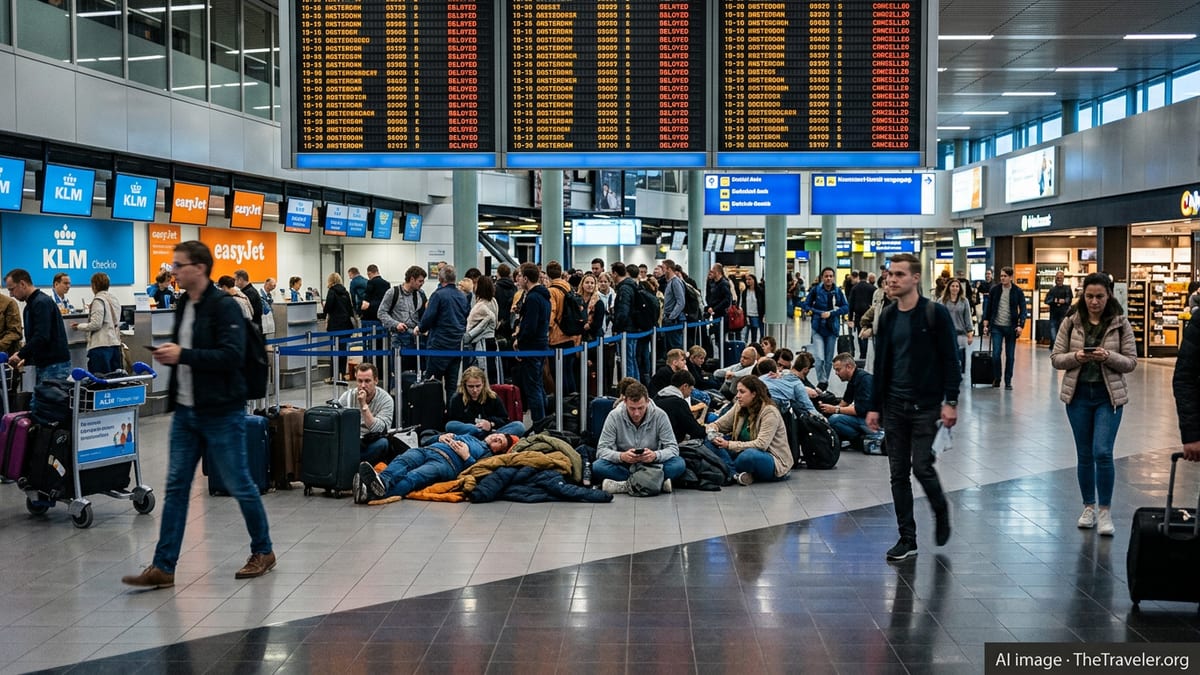
Biometric Borders Replace Passport Stamps
The most significant shift for visitors to much of Europe is the phased introduction of the European Union’s Entry/Exit System, or EES, which began rolling out in October 2025 at external air, land and sea borders of the Schengen area and several associated states. Publicly available information shows that the system replaces manual passport stamps for most non-EU nationals on short stays and creates an electronic record of each crossing.
Under EES, first-time arrivals from countries such as the United States, Canada and the United Kingdom are now enrolled with fingerprints and a facial image alongside their passport details. Subsequent trips use that stored data to verify identity and track days spent in the Schengen zone. Travel industry briefings indicate that this is already catching some tourists by surprise at airports and busy land crossings, where the one-time biometric capture can add several minutes per person.
Border agencies and travel advisories have been warning that, during the transition, queues are likely to lengthen at peak times while staff and travelers get used to the new procedures. Some airports have installed more self-service kiosks and automated gates, but implementation remains uneven. For now, passengers who still expect a simple stamp in the passport may instead find themselves directed to digital kiosks and camera booths.
The change also quietly tightens enforcement of the long-standing “90 days in any 180-day period” rule for visa-free stays. With entries and exits now logged automatically, overstays that once might have slipped through manual checks are more likely to be detected, something frequent visitors and long-stay tourists ignore at their peril.
ETIAS: The Future Pre-Trip Check Many Still Misunderstand
Alongside EES, European institutions are preparing a separate system that has generated considerable confusion among travelers: the European Travel Information and Authorisation System, or ETIAS. According to official timelines and recent specialist coverage, ETIAS will not launch until the last quarter of 2026, following full deployment of EES across all relevant borders.
ETIAS is not a visa but a digital travel authorization, similar in concept to systems used by the United States and the United Kingdom. Visa-exempt travelers, including most visitors from North America, parts of Latin America and several Asia-Pacific countries, will need to complete an online application, pay a modest fee and receive electronic approval before boarding transport to the Schengen area and certain neighboring states.
Despite repeated clarifications, many prospective visitors still believe ETIAS already applies to upcoming trips. Anecdotal reports on travel forums, as well as guidance from insurers and visa services, suggest that some travelers have delayed bookings or sought unnecessary visas because of outdated headlines about an earlier planned start date. Current public information indicates that, until ETIAS actually begins, visa-exempt tourists can continue to travel without this pre-authorization as long as they meet existing entry rules.
Officials and travel advisers are urging would-be visitors to watch for a clear launch announcement and to rely on up-to-date information rather than assumptions. When ETIAS does arrive, it is expected to be valid for multiple trips over several years, but applications that trigger extra screening could take days or weeks to process, making last-minute planning riskier for some travelers.
Stricter Proof of Funds, Plans and Purpose
Even without new databases, Schengen rules on who can enter have not changed as much as many assume. What is shifting is how consistently those rules are applied at the border. The Schengen Borders Code already allows officers to ask for proof of sufficient funds, onward or return travel and accommodation, yet seasoned travelers report that such questions are being asked more frequently, especially at busy hubs and for first-time visitors.
Legal and consular guidance notes that travelers may be asked to show recent bank statements, credit cards backed by available funds, hotel bookings, formal invitations or evidence of sponsorship. Some countries publish minimum daily amounts that visitors should be able to cover, and advisory sites point out that printouts or app screenshots alone may not always be accepted as proof, depending on national practice.
For those applying for a Schengen visa in advance, these requirements are even more explicit. Applicants must typically show detailed itineraries, confirmed accommodation, travel medical insurance with at least 30,000 euros of coverage and documentation of income or savings. Reports indicate that gaps or inconsistencies in these documents are a growing reason for visa refusals and for additional questions on arrival, particularly when travelers cannot clearly explain their plans.
At the border itself, the power to ask these questions applies equally to visa-exempt tourists. Visitors accustomed to a quick stamp with no queries may now be surprised to be asked how long they plan to stay, where they will sleep and how they will pay for their trip, especially if their profile or travel history raises red flags in the new databases.
Schengen vs. Non-Schengen: Border Expectations Diverge
The tightening and digitalization of checks applies primarily to the Schengen area and a small group of aligned states, but the patchwork of regimes inside Europe adds another layer of confusion. Different rules still apply in countries such as Ireland, which remains outside Schengen and is not expected to take part in ETIAS, even as neighboring states roll the system out.
Public information from national governments and the European Union highlights that travelers can no longer assume that entering one European country automatically grants free movement everywhere. Some destinations maintain internal border checks or temporary controls within the Schengen zone itself, and non-Schengen members keep their own entry rules, document demands and stay limits.
This complexity is already catching out visitors who plan intricate multi-country itineraries without checking each country’s requirements. Travel agents and online forums report cases where tourists arrive with documentation suited to one country but not another, or where itineraries inadvertently breach stay limits once land crossings and connecting flights are taken into account.
For travelers, the practical lesson is that “Europe” is not a single border, even if much of the continent shares common systems and databases. Understanding where Schengen starts and ends, how long a stay is permitted and whether national rules add extra conditions is now an essential part of trip planning rather than a fine print detail.
What Smart Travelers Are Doing Differently
The emerging pattern is that visitors who adapt early to the new environment experience fewer surprises at the border. Travel advisories, consular notices and industry briefings all emphasize simple but often overlooked steps: checking passport validity well ahead of time, verifying that travel insurance meets Schengen standards, and keeping printed or easily accessible copies of bookings and financial documents.
Another change is timing. With EES already in place and ETIAS on the horizon, airlines and airports are urging passengers to arrive earlier than they might have done in the past, especially when traveling at peak holiday periods or through land crossings that are still adjusting to biometric checks. Regular travelers are also paying closer attention to the cumulative days they spend in the Schengen zone, using calculators and apps to avoid unintentionally breaching the 90/180-day rule.
Finally, seasoned visitors increasingly treat official European and national websites as their primary reference for travel rules, rather than relying on older articles or word of mouth. As Europe’s border systems become more interconnected and data-driven, small mistakes made at the planning stage can quickly surface at check-in or passport control. For those willing to engage with the new rules, however, the continent remains accessible; what is changing is the expectation that a European holiday can be planned casually without reading the fine print.