


More news on this day
Airlines mishandle millions of bags every year, yet a wave of new tracking tools is giving travelers more visibility than ever into where their suitcases actually are, often before airport systems catch up.
Get the latest news straight to your inbox!
Why Tracking Your Own Bag Matters More Than Ever
Recent industry data shows that while global baggage mishandling rates have improved compared with the chaos of the early post-pandemic years, the problem has not disappeared. Technology firm SITA’s latest baggage insights indicate that airlines still misroute or delay tens of millions of bags annually, with transfer points on complex itineraries remaining a particular weak spot. International connections are especially vulnerable, where multiple airlines and airports handle the same suitcase.
In the United States, figures compiled from government and industry reporting continue to show hundreds of thousands of mishandled bags each year, even as carriers roll out upgraded scanners and automation at major hubs. Reports indicate that delays account for the vast majority of mishandling incidents, meaning bags do eventually surface, but often long after passengers have left the airport.
As airlines and airports continue to digitize their systems, a growing gap is emerging between what carriers can see in their internal tracking platforms and what passengers experience standing at an empty carousel. Personal trackers, airline apps and digital bag tags are increasingly filling that gap, allowing travelers to build their own parallel tracking network that can help shorten the time between a bag going astray and being reunited with its owner.
Using Airline Apps and Bag Tags to Follow Your Suitcase
The first layer of tracking remains the airline’s own infrastructure. Most major carriers now display basic bag status in their mobile apps, from check-in confirmation to when luggage is loaded, transferred and delivered to the carousel. Some airlines also support digital bag tags that sync with their apps, replacing traditional paper stickers with reusable electronic labels linked to the booking.
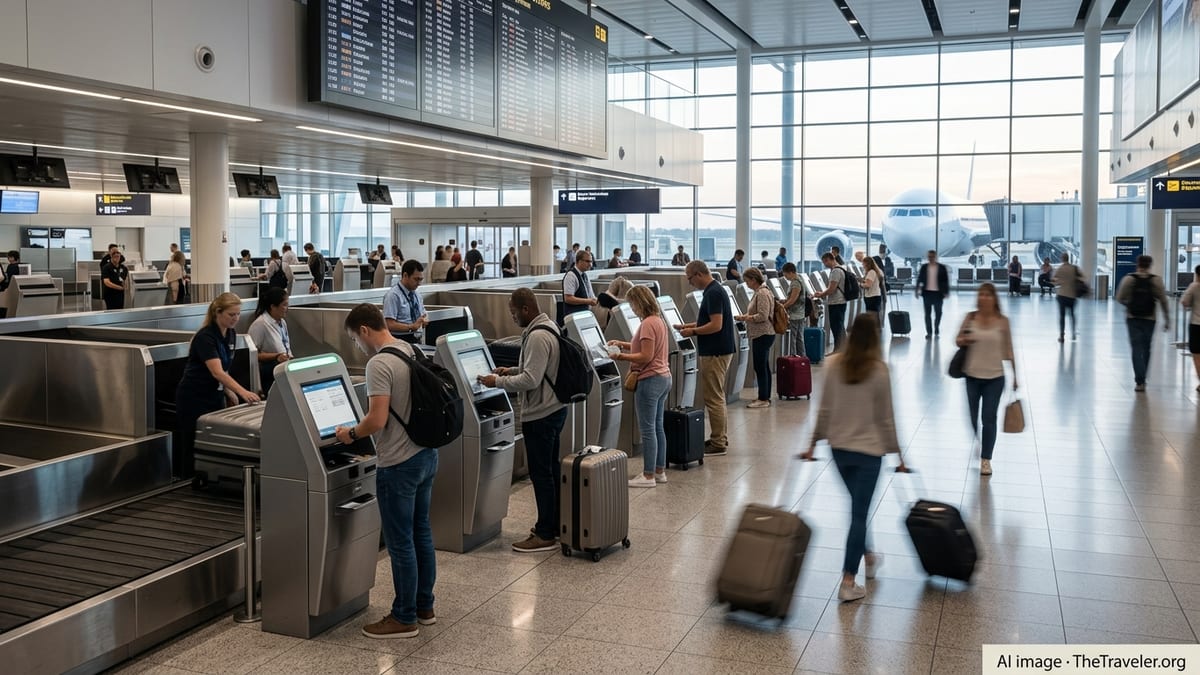
Publicly available information from aviation technology providers indicates that a large share of airlines and airports have deployed automated bag drops and barcode or radio-frequency identification tag readers, allowing more scans as luggage moves through conveyor systems and security screening. Each scan generates a data point that can surface in the airline’s system and, in many cases, the passenger’s app.
Travelers can make the most of this infrastructure by checking that their name and destination are correct on every printed or electronic tag before the bag leaves their hands, and by photographing the tag number. That code is used in global tracing systems that airports rely on when bags miss flights or are sent to the wrong destination. Having it to hand can speed up the creation of a file when reporting a missing suitcase at a service desk or via an online portal.
On longer itineraries with multiple connections, experts recommend monitoring airline app updates during each layover. If a bag status fails to show as loaded for the next flight when boarding time approaches, travelers may be able to flag the issue before departure rather than discovering the problem after landing.
Bluetooth and GPS Trackers Inside the Bag
The most visible shift in recent years has been the rise of personal luggage trackers placed inside checked bags. Bluetooth-based devices that tie into large location networks, such as those offered by major smartphone manufacturers, have become widely used among frequent flyers who want a near real-time view of their suitcase’s location as it moves through airports.
These compact trackers rely on nearby phones to relay their position, which means they tend to work best in crowded travel environments like terminals, aircraft cabins and baggage halls. Travelers report that such devices can often show when a bag is still in the departure airport, sitting in a connection hub or already on the carousel, even when airline systems only display a generic “delayed” status.
For those flying on routes with long connections or to airports with fewer nearby devices, dedicated GPS luggage trackers are another option. These typically use cellular networks to send location data and can cover wider areas, but they usually require a subscription and must comply with airline rules on lithium batteries and transmitting devices in checked baggage.
Consumer technology coverage highlights several practical steps to reduce risks: set up and test any tracker before departure, assign clear names like “Checked suitcase” in the app, and ensure batteries are fully charged or recently replaced. Travelers should also be aware of privacy settings and choose sharing options that limit who can see live location data.
When Airline Systems and Your Tracker Disagree
Published accounts from passengers show that personal trackers do not automatically guarantee faster reunions with lost bags, but they can provide crucial evidence when airline records are incomplete or lag behind reality. In some cases, travelers have used their own data to demonstrate that a bag is sitting in a different city or in a specific corner of a terminal, contradicting initial information from standard tracing systems.
If an airline app indicates that a bag is on its way but a personal tracker shows it stationary in another airport, travelers are advised to file a missing baggage report promptly and provide the most precise location description possible. While frontline staff may not be authorized to enter restricted areas based solely on a phone screen, detailed information can help baggage services teams narrow their search and update internal records.
Experts caution, however, that passengers should not attempt to retrieve bags from secure zones themselves, even if a tracker pinpoints the location. Authorities typically require bags to be processed through official channels for customs and security reasons. The most effective approach is to combine tracker data with formal reports, keeping copies of all reference numbers and taking photos of the bag and its tag to attach to digital claims.
Personal experience shared across traveler forums also suggests that trackers can provide reassurance during long waits at baggage claim, allowing passengers to see that their suitcase has at least arrived at the same airport, even if it is slow to reach the carousel. That peace of mind can make the difference between racing to file a claim in a panic and waiting a few more minutes for an overloaded belt to clear.
Preparing Before You Fly and Reacting Quickly When Things Go Wrong
Effective luggage tracking starts long before a bag is checked. Travelers are encouraged to place contact details both inside and outside their suitcases, use distinctive straps or covers to avoid mix-ups at busy carousels, and keep photos of their luggage and contents on their phones. These details make it easier for baggage staff to match found bags with owners and for insurers to process claims if items are never recovered.
Before heading to the airport, passengers can verify whether their airline offers real-time bag tracking in its app and whether their departure and arrival airports support advanced tagging technologies. On the day of travel, confirming that personal trackers appear correctly in their respective apps, and that location services and notifications are enabled, helps ensure that alerts will come through during tight connections or overnight layovers.
When a bag does not appear, time is critical. Industry guidance recommends reporting missing luggage before leaving the airport whenever possible, providing the bag tag number, flight details, a detailed description of the suitcase and its distinguishing features, and any available tracker information. Keeping boarding passes, baggage receipts and screenshots of app status updates can be valuable if compensation is later requested under airline policies or travel insurance.
As airlines and airports continue to invest in smarter baggage handling, travelers who layer airline apps, digital tags and their own tracking devices are placing themselves in a stronger position. While no technology can completely eliminate the risk of a lost suitcase, having independent, real-time information can turn a stressful mystery into a manageable delay, and can often help luggage catch up with its owner faster than in the past.