


More news on this day
Biometric border checks are reshaping how visitors enter and leave Europe, and recent rollouts suggest many international travelers should brace for slower, more complex airport routines in 2026.
Get the latest news straight to your inbox!
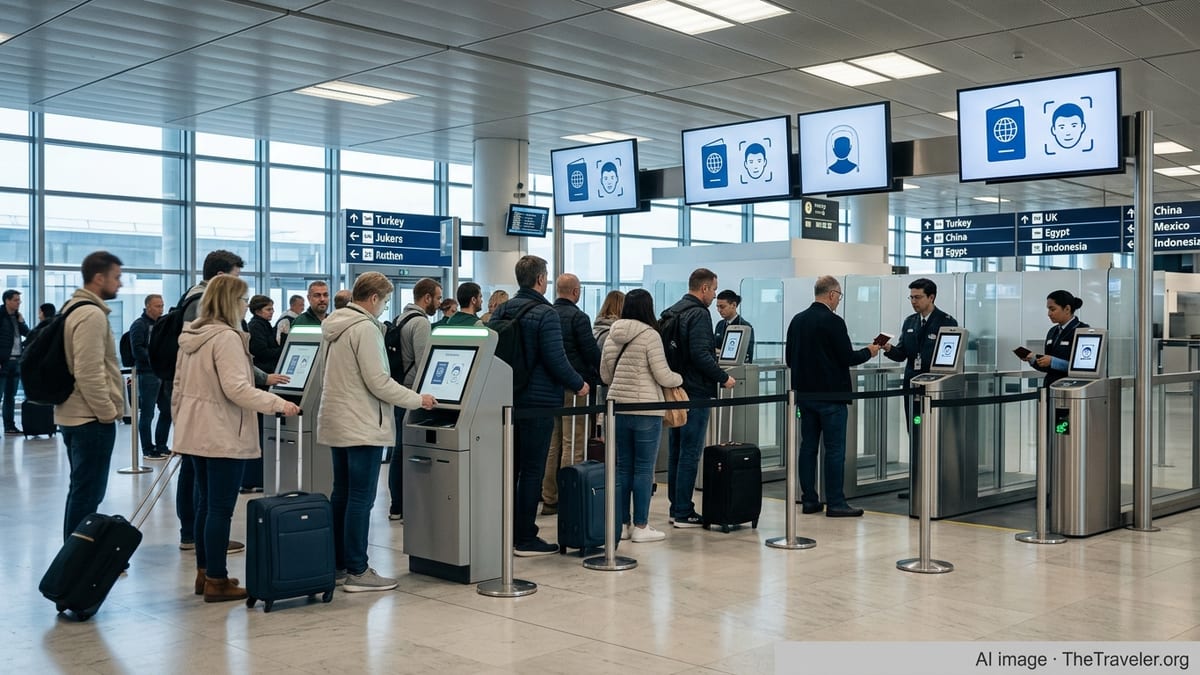
What Europe’s New Biometric Border Systems Actually Do
The European Union has begun operating a large scale Entry Exit System that records when non EU nationals cross the external borders of the Schengen area. Instead of relying on manual passport stamps, the system creates an electronic file for each traveler, storing personal details from the passport alongside biometric identifiers.
According to publicly available EU documentation, the database holds a facial image and four fingerprints for most short stay visitors, along with dates, times and locations of every recorded entry and exit. The goal is to enforce the 90 days in any 180 days rule that applies to many visa exempt travelers and to spot overstays more easily than border agents could by scanning pages of stamps.
EU institutions describe the project as part of a broader digital border overhaul designed to improve security and eventually speed repeat crossings. In practice, at least during the first months of operation, the shift to biometric recording has added new steps at passport control lines and created fresh pressure points at busy airports, ferry ports and land crossings.
From Stamps to Scans: Why Lines Are Getting Longer
The promise of the new system is that, once a traveler is enrolled, future crossings can be verified quickly against stored biometrics. The difficulty lies in the initial registration. First time entrants since the scheme went live are typically required to provide fingerprints and have a facial image captured at the border, on top of the usual passport inspection and questions about their stay.
Reports from European travel hubs indicate that these first time registrations are taking several minutes per person, particularly when equipment must be adjusted, travelers need instructions, or fingerprints fail to capture on the first attempt. When multiplied across a full wide body flight or a busy holiday weekend at a seaport, the added processing time is contributing to bottlenecks that did not exist when officers simply stamped passports.
Industry bodies representing airports and airlines have been warning for several years that the transition could lengthen queues without significant investment in staffing and infrastructure. As rollout has moved from test phases into regular operations, those concerns are now playing out in real terminals, where staffing and desk layouts were often designed for faster, stamp based checks.
Early Pressure Points: Ferries, Land Borders and Hub Airports
The impact of the new checks has not been uniform. Some of the longest waits have been reported at busy Channel ports where British travelers, now treated as non EU nationals, must enroll in the system when crossing into Schengen territory. On peak weekends, publicly reported accounts describe multi hour queues for car passengers waiting to have their details and biometrics taken before boarding ferries.
Land crossings on popular routes into the Schengen area present similar challenges. Border posts that handled steady flows with traditional passport stamps now need dedicated equipment and space for biometric capture. Where infrastructure upgrades lag behind demand, travelers have reported long, slow moving lines and a sense that procedures vary significantly from one crossing to another.
Major hub airports across continental Europe are experiencing a more mixed picture. Some terminals have deployed self service kiosks and automated gates that guide travelers through data entry and facial capture before they meet a border officer, which has helped to keep traffic moving. Others still rely heavily on manual booths, where each added biometric step can translate directly into longer queues at peak arrival banks.
How This Affects Travelers from the United States and Other Visa Exempt Countries
For visitors from countries such as the United States, Canada, the United Kingdom and many others who do not currently need a visa for short stays, the new procedures add an extra layer to a familiar journey. The first trip to the Schengen area after the system became operational is likely to be the slowest, because that is when biometric data are collected and the individual file is created.
On subsequent visits, the crossing should in principle be faster, as border staff can verify the traveler’s identity and stay history digitally rather than relying on a manual review of entry and exit stamps. However, anecdotal accounts from travelers who have already made multiple trips suggest that checks can still feel lengthy when lines are long, staff are adjusting to new software, or kiosks are taken out of service.
Another important change on the horizon is the separate travel authorization scheme known as ETIAS, which the EU plans to introduce after the biometric border database is fully embedded. Once operational, many visa exempt travelers will need to apply online for a paid authorization before departure, in addition to undergoing biometric checks on arrival. The combination is expected to reshape the administrative landscape for future leisure and business trips to Europe.
What You Can Do Now to Reduce Border Friction
While the evolution of the systems and the pace of rollout are largely beyond individual travelers’ control, a few practical steps can help reduce the risk of border related disruption. Publicly available guidance from European agencies recommends checking in advance whether the first point of entry into Europe is already using full biometric registration, and allowing extra time at connecting hubs when planning itineraries.
Travelers may also encounter airlines and ferry operators that adjust their check in cut off times or boarding procedures to account for longer processing at immigration. It is therefore advisable to pay close attention to carrier communications in the weeks before departure, as operators respond to conditions at specific ports and airports.
Above all, visitors should anticipate that a Europe trip in 2026 might involve slower border crossings than they were used to in the pre biometric era, especially at the first Schengen entry point. As systems mature, staff gain experience and more travelers complete their initial enrollment, some of the current friction may ease. For now, though, biometric border checks remain a factor that could meaningfully extend the start and end of many journeys.