


The Appalachian Trail has become a modern pilgrimage. Social media is full of misty ridgelines, smiling thru-hikers at the summit of Katahdin, and campfire sunsets that make a 2,000 mile walk from Georgia to Maine look almost dreamy. Yet for most people who step onto the white blazes at Springer Mountain or Katahdin, that romantic idea collides fast with blisters, brutal weather, logistics, and the grinding routine of hiking all day, every day, for months. If you are imagining your own thru-hike, it pays to understand what it really takes before you quit your job, sell your stuff, and shoulder a pack.
Get the latest updates straight to your inbox!
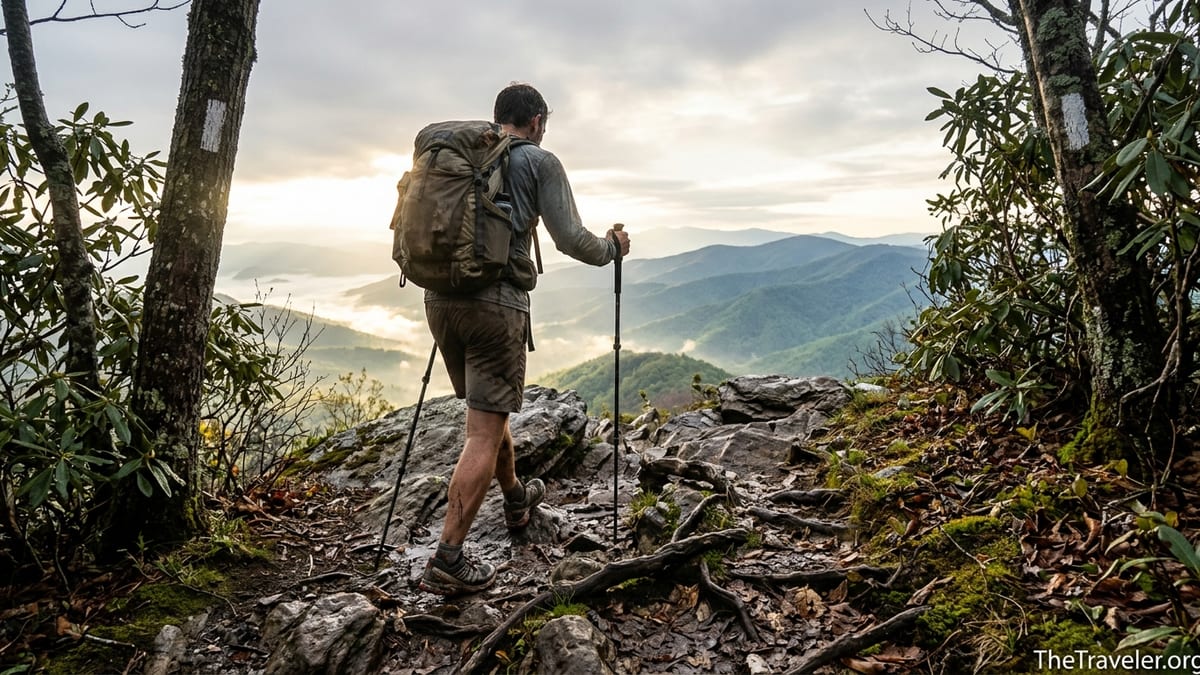
The Dream vs. The Dropout Numbers
In recent years roughly one in four people who set out to hike the entire Appalachian Trail actually finishes. The Appalachian Trail Conservancy’s 2025 hiker counts show that more than two thousand northbound hikers started near Amicalola Falls and Springer Mountain, but only a fraction reported completions at Baxter State Park in Maine. Put simply, hundreds of people every spring arrive in Georgia with a thru-hike dream, and most of them are off trail before summer.
The reasons are rarely dramatic. A few hikers do leave because of serious injury or family emergencies, but far more fade away after weeks of nagging overuse injuries, low morale, or the realization that they do not actually enjoy walking 15 miles a day with a pack. Hikers often report that by Harpers Ferry, the symbolic halfway point in West Virginia, about half of their bubble has gone home. Between there and Maine, many more disappear as the novelty wears off and the effort keeps mounting.
Understanding these numbers is not meant to discourage you. It is a reminder that the Appalachian Trail is not a scenic vacation with guaranteed success at the end. It is a long, uncertain project where persistence and adaptability matter more than how excited you were on day one. If you are serious about finishing, you have to prepare for the likelihood that at some point you will be cold, wet, lonely, and wondering why you ever thought this was a good idea.
The hikers who do reach Katahdin usually are not the fittest or the fastest. They are the ones who recognize early that the trail will be harder than they imagined, adjust their expectations, and treat each section like a separate, solvable challenge instead of an all or nothing quest.
Money, Time, and the Logistics Few Romanticize
Popular trail documentaries and Instagram reels focus on big views and communal hostel dinners. They rarely dwell on what it takes to afford five or six months off work, keep resupplied, and move along a corridor that crosses 14 states with different rules and land managers. On the money side alone, many 2023 and 2024 thru-hikers reported spending somewhere between 1,000 and 1,500 dollars per month on the trail, not counting pre-hike gear. That adds up to 6,000 to 9,000 dollars for a typical six month hike, and some spend more.
That money disappears in specific and often unromantic ways. A bunk at a popular southern hostel like those around Hiawassee, Georgia or Franklin, North Carolina might cost 30 to 45 dollars a night. A shuttle into town to resupply can easily be 10 to 20 dollars per person. Two restaurant meals, a beer, and a supermarket run in Damascus, Virginia or Hot Springs, North Carolina might eat 60 to 80 dollars in a single afternoon. Replace a broken trekking pole in a small outfitter in the Shenandoah corridor and you could spend as much as you would at a big box retailer back home, sometimes more.
Time is its own currency. A traditional northbound thru-hike averages about six months, with hikers walking roughly 14 to 20 miles per day. Some people push that down to five months, but that demands long days almost from the start. Others slow down and take seven months, stretching a March start at Springer Mountain into an October finish on Katahdin. Every variation has consequences: a later start can make the Smokies colder, a slower pace can push you toward Baxter State Park’s late October closure for camping and summits.
Then there are permits and rules layered over the route. Crossing Great Smoky Mountains National Park requires a specific backcountry permit and overnight stays in designated shelters and campsites. Baxter State Park, which contains the northern terminus on Katahdin, requires Appalachian Trail hikers to obtain a special permit card and follow strict camping and day use regulations. Other sections, like Shenandoah National Park or certain parts of New Jersey, allow camping only at designated sites. None of this is insurmountable, but it means your romantic idea of pitching a tent anywhere you like along a wild green tunnel does not match reality.
The Daily Grind: Weather, Pain, and Repetition
Most people who romanticize the Appalachian Trail picture a string of highlight days. In practice, a thru-hike is defined more by its least glamorous routines. A typical day might start with your alarm going off at 6 a.m. in a damp tent above Standing Indian Mountain. You pull on cold socks, pack up gear that is still wet from last night’s storm, eat oatmeal you are tired of, and start walking before the sun hits the ridgeline. You repeat some version of that for 150 to 180 days.
Weather rarely cooperates with your dream. Early season hikers in Georgia and North Carolina often encounter freezing rain and nights in the 20s Fahrenheit, sometimes even snow on the ridges of the Great Smoky Mountains. Later in Virginia and Pennsylvania, the problem shifts to heat, humidity, and afternoon thunderstorms. By New Hampshire’s White Mountains and Maine’s 100 Mile Wilderness, the challenge might be cold, sleet, and early autumn storms. Anytime from early spring through fall, a wrong gear choice or poor decision about pushing over an exposed ridge can leave you shivering and miserable.
The trail surface also surprises many hikers. The southern states mix soft dirt with rocky and rooty stretches, but by the time you reach central Pennsylvania, the path is notorious for its ankle-twisting rocks. Farther north, the Whites and southern Maine turn hiking into scrambles up slick slabs and hand over hand ascents. It is not unusual for hikers who cruised 20 mile days through mid-Virginia to find themselves reduced to 10 or 12 miles when they reach the steep and technical climbs around Franconia Ridge or the Mahoosuc Range.
To this, add the slow accumulation of aches and pains. Blisters give way to sore knees, plantar fasciitis, tendonitis, and raw spots on hips and shoulders from your pack. Even hikers in their twenties discover they need regular stretching, foot care, and rest days in town to keep going. The romance of “just walking” gives way to treating your body like a mildly injured athlete’s: taping hot spots, icing shins in cold streams, using trekking poles more heavily on descents, and sometimes taking several zero days in places like Gatlinburg or Hanover to recover.
Resupply, Hostels, and the Reality of Trail Town Life
Trail culture paints idyllic images of friendly hostels and generous trail magic. Those exist, but the day to day reality is more complicated. Most thru-hikers resupply every three to seven days, hopping off the trail into towns like Neel Gap, Franklin, Erwin, Damascus, Pearisburg, or Gorham. Each stop involves a similar sequence: find a bed or campsite, pick up or buy food for the next stretch, shower, do laundry, eat, and try not to blow your budget in a single evening.
Consider a typical resupply in Damascus, a well known hiker town in Virginia. You might arrive after four days on trail with an almost empty food bag. A bunk at a hostel could be 30 or 35 dollars, plus a few extra dollars for a towel and laundry. A large pizza split with another hiker, a few drinks, and breakfast at a local diner might be another 40 to 50 dollars. Your resupply at the grocery store could easily run 60 dollars once you add up tortillas, peanut butter, instant potatoes, ramen, snacks, and coffee. What felt like a quick overnight can turn into 120 dollars or more.
Hostels themselves vary widely. Some are clean, quiet, and well run, with clear expectations about quiet hours and shared chores. Others feel chaotic, with crowded bunkrooms, late night noise, and the occasional hiker drama over gear, relationships, or group dynamics. You may love the first few hostel stays, then eventually discover that a simple tent site behind a gas station or a budget motel room with a closed door and your own bathroom feels like a luxury.
The constant movement in and out of town has another less romantic side: it can make it hard to maintain a healthy routine. After three days of careful pacing and simple trail food, you might binge in town on rich restaurant meals and beer, then feel sluggish and dehydrated the next day climbing back to the ridge. It takes discipline to enjoy the social side of trail towns without letting late nights and heavy food sabotage your progress.
Rules, Safety, and Managing Real Risk
Because the Appalachian Trail crosses a patchwork of national parks, national forests, state lands, and private easements, thru-hikers walk through a regulatory maze whether they realize it or not. In Great Smoky Mountains National Park, for example, backcountry camping is allowed only at designated shelters and campsites, and hikers are expected to obtain and carry a valid permit. In Shenandoah National Park, hikers must complete a free backcountry form and follow site specific rules. In Baxter State Park, home of Katahdin, camping is allowed only at authorized sites by reservation, and long distance hikers must carry a Katahdin specific permit card before they attempt the summit.
Violating these regulations is not just a matter of etiquette. Rangers in parks like the Smokies or Baxter can issue fines if hikers camp illegally, build fires where they are not allowed, or ignore posted closures. The rules often exist because these sections see heavy use, sensitive alpine environments, or dangerous weather patterns. Ignoring them can harm fragile vegetation or leave you and others at more risk when storms sweep across exposed ridgelines.
Safety on the trail involves more than following local camping rules. Temperatures that are merely uncomfortable at home can become dangerous when you are wet, tired, and exposed. In Pennsylvania and other mid Atlantic states, state conservation agencies warn hikers about hypothermia even in shoulder seasons, noting that prolonged rain and wind can lower your core temperature faster than you might expect. In the White Mountains and on Katahdin, weather can shift suddenly from sunny to cold fog, sleet, or thunderstorms, and rangers may close high routes to prevent accidents.
Crime on the Appalachian Trail is relatively rare compared with urban areas, but it is not nonexistent. Occasional incidents of theft, harassment, and violence make the news and leave a mark on the community. More commonly, hikers encounter uncomfortable situations in shelters or hostels involving alcohol, drugs, or personality clashes. Romantic visions of instant camaraderie often give way to a more nuanced reality where you sometimes choose to camp a bit farther from a shelter, move on from a group that no longer feels safe, or say no to rides and invitations that do not sit right with you.
Gear, Comfort, and Learning to Like “Good Enough”
In winter before a thru-hike starts, it is easy to fall in love with gear. Shiny new ultralight packs, 900 fill down quilts, titanium pots, and trail runners with aggressive tread dominate conversations in gear shops and online forums. On the actual Appalachian Trail, gear quickly becomes less about perfection and more about what is comfortable and durable enough to survive thousands of miles of abuse.
Most thru-hikers arrive at Springer Mountain with packs between 25 and 35 pounds when fully loaded with food and water. By the time they reach Damascus or Harpers Ferry, many have swapped heavy tents for lighter models, mailed home extra clothing, or changed footwear. A hiker might start in sturdy leather boots, then discover that breathable trail running shoes work better for long days in warm weather, even if they wear out every 500 to 700 miles. Another might ditch a bulky cooking system for a simple alcohol stove or cold soaking jar once they realize they do not actually cook elaborate dinners on trail.
Real world conditions also limit how light you can safely go. Early spring nights in the southern Appalachians can still drop below freezing, so a quilt or sleeping bag rated around 20 degrees Fahrenheit and a decent insulating pad are more than luxury. Rain gear that seemed overkill in your backyard shakedown suddenly matters when you face three days of cold rain between Fontana Dam and Gatlinburg. Ultralight shelters that rely on perfect pitches can feel less charming in the middle of a thunderstorm on a ridge in Virginia.
Over time, most hikers develop a deeply personal relationship with their kit. They might repair a favorite trekking pole with duct tape for the third time rather than buy a new set in town, or keep a slightly heavier fleece because it makes cold mornings feel more bearable. The romantic idea of the perfectly optimized ultralight list gives way to a pragmatic, slightly messy setup that reflects hundreds of real world decisions made under fatigue, weather, and budget pressure.
Mental Grit, Loneliness, and the Emotional Roller Coaster
If the Appalachian Trail breaks hikers, it usually does so mentally before it does physically. Many people discover they can push through blisters and sore knees, but struggle more with boredom, homesickness, or a loss of purpose once the novelty wears off. After the early excitement of Georgia and the challenge of the Smokies, Virginia’s long green miles can blur together. Hikers talk about the “Virginia Blues,” a stretch where the scenery is still beautiful, but you are far enough from the start that quitting means admitting defeat, and far enough from the finish that Maine feels abstract.
Social dynamics complicate this. In the early weeks, you may fall in with a loose “tramily,” a group that hikes similar daily miles and shares shelters and town days. This can be wonderful, but also fragile. People get injured, speed up, slow down, or leave the trail entirely. A hiker who counted on their group’s energy might find themselves suddenly alone in central Pennsylvania, trying to decide whether to keep pushing north or go home.
There are also quieter emotional challenges. Long stretches without consistent cell service mean you cannot always vent to friends back home or share every hard moment in real time. Birthdays, family events, and news from the outside world filter in unpredictably through spotty wifi at hostels or libraries in trail towns. Some hikers thrive on this disconnection, while others find it destabilizing, especially during stretches when the weather is poor or injuries linger.
Those who finish tend to cultivate a few practical mental habits. They break the trail down into manageable segments, focusing on “town to town” rather than Georgia to Maine. They allow themselves to take a zero day when their morale dips instead of making big decisions while exhausted and wet. They remember that a single bad week on trail does not erase months of progress, and that it is normal for motivation to ebb and flow over such a long endeavor.
The Takeaway
The Appalachian Trail deserves its reputation as a life changing journey, but not because it is a continuous montage of golden hour ridgelines and trail magic. It is transformative precisely because it strips away much of the romance and leaves you face to face with your own limits, habits, and desires. The 2,000 plus miles between Springer Mountain and Katahdin are stitched together from mundane, repetitive days, difficult conditions, strict rules, and small, hard won joys.
If you are dreaming of a thru-hike, recognizing this reality early is not about scaring you off. It is about giving yourself the best possible chance of being among the roughly quarter of hikers who actually reach the northern terminus. Budget more money and time than you think you need. Test your gear and your stomach with multi day shakedown trips. Read up on regulations in places like the Smokies and Baxter so you do not get surprised at a critical moment. Talk to recent hikers about what broke them and what got them through.
Most importantly, decide whether you are drawn to the idea of being a thru-hiker or to the daily practice of walking, sweating, problem solving, and improvising in the mountains for months on end. The first is easy to romanticize. The second is what you will actually live. If the real picture still excites you, then the Appalachian Trail may be exactly the kind of demanding, unforgettable journey you are looking for.
FAQ
Q1. How long does it really take to thru-hike the Appalachian Trail?
Most hikers take about five to seven months, with six months being common. Faster hikes demand long daily miles from the start and leave less margin for rest or bad weather.
Q2. How much should I budget for a full Appalachian Trail hike?
Many recent thru-hikers report spending roughly 1,000 to 1,500 dollars per month on trail, plus 2,000 to 3,000 dollars for gear, though costs vary widely by lifestyle and pace.
Q3. Do I need permits to hike the whole trail?
You do not need a single thru-hike permit, but you will need specific permits or registrations for sections like Great Smoky Mountains National Park, Shenandoah, and Baxter State Park.
Q4. How dangerous is the Appalachian Trail?
Most hikers complete the trail without serious incidents, but real risks include falls, hypothermia, lightning, illness, and occasional crime. Good judgment and preparation significantly reduce those risks.
Q5. Can I bring my dog on a thru-hike?
Dogs are allowed on much of the trail, but banned in some key areas, including Great Smoky Mountains National Park and Baxter State Park. Many thru-hikers choose to hike without pets for logistical reasons.
Q6. What kind of shape do I need to be in before starting?
You do not have to be an elite athlete, but a base of regular walking or hiking, plus some strength and flexibility work, makes the first month far more manageable and reduces injury risk.
Q7. Is it possible to work or study while thru-hiking?
Some hikers do remote work on nero or zero days using town wifi, but reliable connectivity and energy are limited. Most people treat a thru-hike as a full time commitment.
Q8. How often will I see other people on the trail?
In peak northbound season you may see many hikers daily in Georgia, North Carolina, and Virginia. Traffic usually thins out somewhat in the mid Atlantic and north, but popular shelters and hostels still fill up.
Q9. What is the difference between a thru-hike and a flip-flop?
A thru-hike typically means a continuous journey in one direction within 12 months. A flip-flop breaks the hike into big sections, for example starting in Harpers Ferry, hiking north, then returning to Harpers Ferry and hiking south.
Q10. Is the Appalachian Trail right for me if I mostly day-hike now?
If you love long days on your feet, do not mind discomfort, and are willing to learn backcountry skills and logistics, it can be. Multi day backpacking shakedowns are the best way to test whether the lifestyle fits you.