


Psarou Beach has a reputation that precedes it. Most travelers arrive expecting only celebrity sightings, champagne rituals, and eye watering sunbed prices at Nammos. That scene is very real, particularly in peak summer, but it is not the whole story. Tucked around this compact bay are quieter pockets of sand, local tavernas, and simple experiences that many day trippers and even repeat visitors never notice. Understanding what most people miss can completely change how you experience Psarou.
Get the latest updates straight to your inbox!
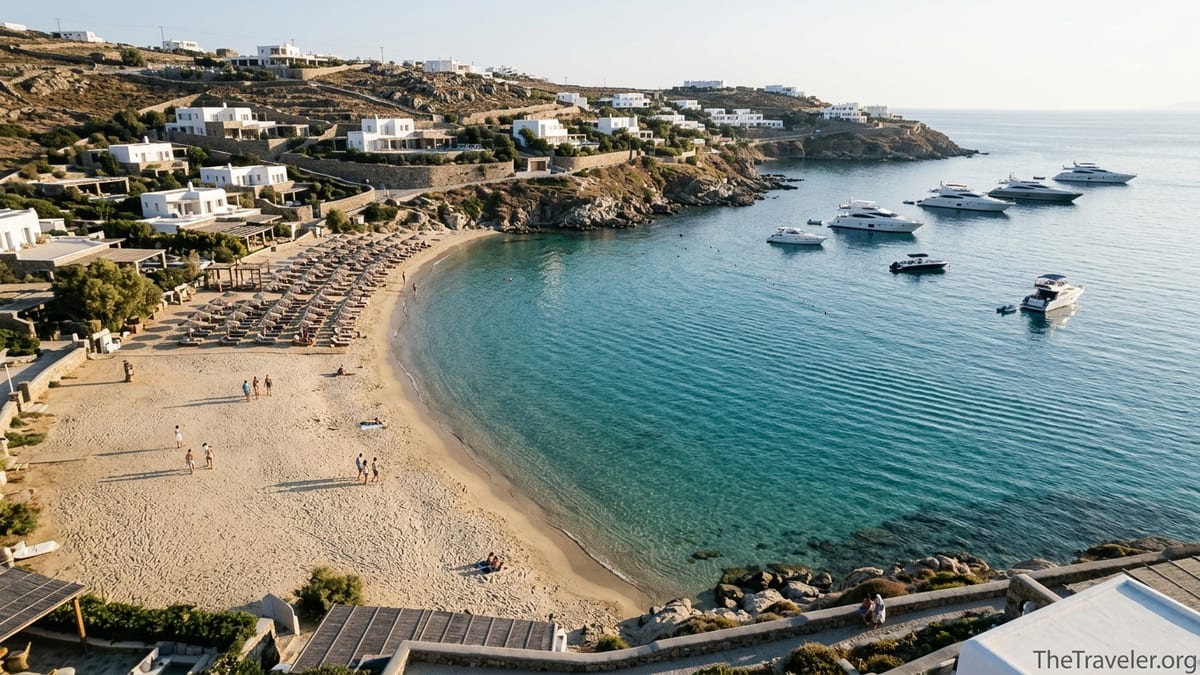
The Secret Geography of Psarou Bay
At first glance, Psarou looks fully taken over by luxury. The iconic Nammos complex and neighboring beach setups dominate the central strip of sand, lines of sunbeds stretching almost to the shoreline. Yet the bay itself is small, only around 150 meters long, and shaped like an almost enclosed amphitheater. That compact, sheltered form is exactly what creates the opportunities that casual visitors walk straight past.
Most people arrive via taxi or transfer that drops them at the lower parking area behind Nammos Village, the open air luxury shopping complex above the beach. From here, they are channeled naturally down the main access to the central beach clubs. If, instead, you detour along the paths to either side of the bay, you quickly reach less developed corners of sand and rock where you can swim directly from the shore without the soundtrack of a DJ. These side pockets are small and can fill up, but they remain noticeably calmer than the high energy middle section.
The headlands on each side of Psarou also create a break from the meltemi wind that whistles across other parts of Mykonos, which is why the water here almost always looks like polished glass. On windy days when nearby Paradise or Super Paradise can feel choppy and exposed, Psarou’s geometry matters. Locals and yacht crews know that the north facing rocks on the right hand side, looking out to sea, often have the calmest water and best visibility for snorkeling.
Because of this natural “bowl” shape, sound and crowds concentrate in the center while the edges stay relatively quiet. Many visitors never bother to walk the extra two or three minutes along the shoreline or the rough path behind the beds. If you are willing to move away from the door staff and reservation stands, you suddenly see a different side of the same beach.
The Free Beach People Rarely Use
One of the biggest misconceptions about Psarou is that you have to pay for a sunbed to enjoy it. That belief suits the beach clubs, but Greek law still requires a public access strip along the shore, and at Psarou there remains a small but significant free section. It is not large and in high season it fills quickly, yet many visitors never realize it exists because their taxi driver or hotel concierge has framed Psarou entirely as a Nammos experience.
The free area shifts slightly year to year depending on how the beach setups are arranged, but it is typically toward one side of the bay where the organized loungers thin out. In practice this means you may need to walk past rows of sunbeds and polite but persistent hosts offering “packages” to find the unclaimed sand. Bring a light beach mat or travel towel so you can settle in even where there is only a narrow gap between rented loungers.
Prices at the main clubs reinforce why making the effort is worthwhile. At peak times, two sunbeds and an umbrella in a prime row at Nammos or neighboring high end setups can cost from around 250 euros and climb much higher for the front line. Even a simple drink can easily run 10 to 12 euros for a soft drink and 12 to 18 euros for a cocktail, with full lunches for two routinely reaching several hundred euros by the time wine and dessert are added. Sitting on the free sand with a bottle of water from a minimarket suddenly feels like a very smart decision.
Concrete example: a couple arriving at midday in August might be quoted a package price close to what they are paying for a night’s accommodation elsewhere on the island, while a family of four will often be told that every person, including children, must have their own lounger. Those who know the layout simply decline with a smile, keep walking to the public section, and enjoy the same translucent water without committing to a day long spend.
Quiet Corners for Snorkeling and Swimming
Psarou’s surface scene is all about people watching and posing, but under the water it is surprisingly tranquil. The central seabed is mostly soft sand with patches of seagrass, which makes for comfortable swimming but not much visual interest. The rocky fringes beneath the headlands, however, are where Psarou quietly shines for anyone who packs a mask and snorkel.
On the right hand side of the bay, facing out to sea, a line of rocks begins just beyond the last cluster of loungers. Slip into the water there and you will find small schools of fish darting between cracks, starfish on the rocks, and shifting patterns of light rippling over the seabed. Visibility is often excellent thanks to the sheltered nature of the cove and the generally gentle currents. Even basic snorkeling gear picked up in Mykonos Town or at a general store in Platis Gialos is enough to enjoy half an hour or more exploring along the wall.
The left hand side is slightly less dramatic but still offers a more natural feel than the sandy middle. Here you will sometimes see local kids and off duty staff from the beach clubs diving from smaller rocks late in the afternoon when the crowds thin. Swim out a little and turn toward the open sea and you can look back at Psarou’s arc of golden sand from water level, with yachts anchored beyond the swimming zone forming a floating backdrop.
Because most day visitors arrive to socialize rather than snorkel, you will often have these rocky stretches almost to yourself even on very busy days. This is especially true before midday, when the party scene is still waking up and the music from the beach bars is subdued. If you are staying nearby, an early morning swim along the edge of the bay can feel like a private experience in what is otherwise one of the most photographed beaches in Greece.
Local Flavors Above the Sand
At beach level, menus lean heavily into international glamour: sushi platters, magnums of champagne, and brand name cocktails. There is nothing wrong with embracing that for a special occasion, but many visitors do not realize that a short climb up from the sand leads to a much more grounded food scene in Psarou village itself. Here you can still find Greek tavernas and small eateries that serve simpler dishes at a fraction of beach club prices.
For example, a grilled fish of the day with a side salad and carafe of local wine in one of the family run tavernas above the beach will often come in at around what a single upscale cocktail and starter might cost downstairs. Dishes like moussaka, gemista (stuffed tomatoes and peppers), or freshly fried calamari reflect the Cycladic home cooking that many travelers say they want to try but somehow never order once they sit down among champagne buckets and DJ booths.
The vibe a few minutes uphill is also noticeably different. You are more likely to see off duty hotel staff, yacht crews, and locals grabbing a quick lunch in work clothes rather than beachwear. Conversations shift from table reservations and bottle service to ferry schedules and the wind forecast. This contrast can be refreshing after a few hours on the sand and gives you a more three dimensional sense of Psarou as a working place rather than just a glamorous backdrop.
If you prefer to picnic on the beach, consider stopping first at a minimarket or bakery in nearby Platis Gialos on your way over. Picking up spinach pies, fresh fruit, and bottled water before arriving allows you to enjoy a simple meal in the free section without feeling pressured to order drinks or snacks at beach club prices.
Approaching Psarou on Foot or by Sea
Most people experience Psarou as a destination they are delivered to: a five to ten minute taxi ride from Mykonos Town at a fare that often lands around 20 euros, depending on traffic and time of day, or a pre arranged transfer included with a villa or hotel stay. This is convenient, but it also means the journey itself is unremarkable and often frustrating, particularly when the narrow access road clogs with vehicles in July and August.
There are two alternative approaches that feel dramatically different: on foot and by sea. Walking to Psarou from Platis Gialos takes roughly 15 to 20 minutes along a coastal path, depending on your pace. The route is not difficult but does involve uneven steps and short rocky sections, so proper sandals or walking shoes are wise. As you follow the curve of the coastline, you get shifting views into the bay and out to the open Aegean that drivers never see. You also pass smaller, almost pocket sized beaches where there are no clubs at all, only rocks, sand, and clear water.
Arriving by sea is another underused option. Water taxis and small boats link several of the south coast beaches, allowing you to step off onto Psarou’s sand after a short cruise from Platis Gialos, Ornos, or Paradise. From the water you understand immediately why yacht owners favor this bay: the amphitheater shape, the clarity of the water, and the way the buildings rise discreetly behind the palm trees rather than dominating the shoreline. Even if you are not chartering a private vessel, a one way hop on a shared boat can feel like a mini cruise and saves you from hunting for parking or queuing for taxis in the heat.
Both approaches also change how you leave. Instead of rejoining the flow of cars up the access road in the late afternoon, you can stroll back along the path as the light softens or catch one of the last sea taxis and watch the bay slip behind in gold and pink tones. These quieter departure moments are when Psarou feels least like a stage and most like a real stretch of coastline.
Psarou Beyond the Party Hours
For many visitors, Psarou exists only between late morning and early evening, when the sun is high, the DJ is playing, and the Instagram stories are rolling. Yet some of the most memorable experiences here happen outside those core hours. If you are staying within walking distance, make a point of visiting either very early or very late in the day, even if only for half an hour.
In the early morning, before 9 am, staff are setting up sunbeds and sweeping the sand. The bay is often almost empty except for a few swimmers and joggers, and the water has an undisturbed clarity you rarely see later. This is the time to swim straight out toward the line of anchored yachts, stop within the buoyed swimming zone, and float on your back with nothing but the sound of gentle waves against the hulls.
After sunset, once the last beats from the afternoon party fade and the day trippers have left, Psarou settles into a calmer mood. Lights from the surrounding villas and hotels twinkle on the slopes, and the sea reflects them in faint shimmering lines. Some evenings you will hear only quiet conversation from a few waterfront tables and the low hum of generators from the yachts. Walking along the waterline in flip flops, with only a handful of other people sharing the sand, you can hardly believe this is the same beach that felt so intense at 5 pm.
If you are staying elsewhere on the island, consider timing a dinner reservation at a nearby taverna so that you arrive in the area after the loudest part of the party but before everything closes. You will still glimpse the glamorous side of Psarou from a distance yet end your evening feeling rested rather than overwhelmed.
Managing Costs and Expectations
Psarou is not a budget beach, and pretending otherwise leads to disappointment. What many savvy travelers do instead is treat the high end elements as an occasional splurge while using local knowledge to keep the overall day affordable. The most common strategy is to choose either a paid lounger or a high end lunch, but not both in the same visit.
For instance, a couple might reserve sunbeds in a second or third row at one of the organized sections for a mid range price, then keep their food and drink orders modest: coffees in the morning, shared salad and one main dish for lunch, and plenty of tap water. Another pair might skip the loungers entirely and base themselves in the free area, then walk up to the village for a proper sit down lunch at a traditional taverna before returning to the sand with takeaway water and fruit.
Timing also matters. If you visit in June or September instead of late July or August, prices for loungers can be slightly more flexible, and there is often more negotiation room, especially away from the absolute premium rows. Arriving early, before midday, gives you more choice and sometimes access to lower minimum spends, while showing up at 4 pm expecting a reasonably priced front row is almost guaranteed to frustrate.
Finally, remember that you are never obliged to stay if the atmosphere or prices are not what you hoped for. Because Psarou connects by road, path, and sea taxi to neighboring beaches like Platis Gialos and Ornos, you can always pivot. Many travelers quietly leave after a quick look, then return another day better prepared with knowledge of where the free section lies, what they are willing to spend, and how to access alternative food and drink options nearby.
The Takeaway
Psarou Beach’s global image is dominated by its most visible elements: Nammos, designer boutiques, and lines of sunbeds that look almost choreographed. For some travelers, that is exactly the Mykonos they want to experience, and there is no denying the energy and spectacle of a full afternoon here in high season. Yet focusing only on that surface can mean missing the smaller, quieter, and sometimes more authentic moments that unfold around the edges of this compact bay.
Walk a little further along the sand, and you find a free patch of beach where the only requirement is a towel. Slip into the water by the rocks, and you discover a calm snorkeling route that most sunbathers never see. Climb a few minutes uphill, and the menu shifts from champagne labels to home cooked Greek dishes served to locals on their lunch break. Approach by path or sea taxi rather than cab, and the journey itself becomes part of the pleasure.
If you arrive with clear expectations about costs, a willingness to explore beyond the main entrance, and an openness to experiencing Psarou outside the peak party hours, the beach reveals far more than its luxurious stereotype suggests. In the end, what most visitors miss here is not a secret venue or hidden bar, but the chance to let this famous bay feel simple again: just golden sand, calm water, and the timeless rhythm of the Aegean.
FAQ
Q1. Is there really a free public area at Psarou Beach?
The public section is relatively small but it does exist, usually toward one side of the bay where organized sunbeds thin out. You may need to walk past the main beach clubs to find a narrow stretch of unclaimed sand, so bringing your own towel or mat is essential.
Q2. How expensive are sunbeds at Psarou compared with other Mykonos beaches?
Sunbeds at Psarou, especially at high profile venues like Nammos, are among the most expensive on the island. In peak season, two loungers and an umbrella in prime rows can cost several hundred euros, whereas more relaxed beaches such as Platis Gialos or Elia often offer sets for a fraction of that price.
Q3. What is the best time of day to visit Psarou if I want to avoid crowds?
Early morning, before around 9 am, is usually the quietest time, with calm water and only a few swimmers or staff setting up. Late afternoon after the peak party energy subsides and into the evening can also feel calmer, though there will still be people on the sand.
Q4. Can I walk to Psarou Beach from other beaches nearby?
Yes, there is a coastal path linking Psarou with nearby Platis Gialos that takes roughly 15 to 20 minutes at an easy pace. The route offers sea views and passes smaller coves, but it involves uneven steps and rocky sections, so wearing sturdy sandals or walking shoes is recommended.
Q5. Is Psarou a good choice for families with children?
The sheltered bay and usually calm, clear water make swimming conditions family friendly, but costs and crowd levels can be challenging for parents. Many families choose to use the free area with their own towels and rely on nearby tavernas for meals rather than committing to multiple paid loungers for adults and children.
Q6. Are there more affordable places to eat near Psarou?
Yes, above the beach in Psarou village you will find smaller tavernas and casual eateries that are typically far less expensive than beachfront restaurants. Walking a few minutes uphill or stopping at a bakery or minimarket in Platis Gialos on your way in can significantly reduce your food and drink costs.
Q7. Is snorkeling at Psarou Beach worth doing?
The sandy center of the bay is not especially interesting for snorkeling, but the rocky edges below the headlands offer clear water, small fish, and good light. Bringing a mask and snorkel to explore along the sides of the bay is a simple way to experience a quieter, more natural side of Psarou.
Q8. How do I get to Psarou without dealing with parking?
Parking near the beach is limited and often full by midday in summer, so many visitors avoid driving. Alternatives include taxis from Mykonos Town, the coastal path walk from Platis Gialos, or seasonal water taxis linking Psarou with other south coast beaches, which let you arrive directly on the sand.
Q9. What should I wear at Psarou Beach?
Swimwear is standard on the sand, but in and around the high end beach clubs and designer shopping area, many people wear resort casual outfits such as light dresses, linen shirts, and smart sandals. Having a cover up makes it easier to move between the beach, restaurants, and shops without feeling underdressed.
Q10. Is Psarou worth visiting if I am not interested in the party scene?
Yes, especially if you plan your visit carefully. By coming early or later in the day, using the free beach section, exploring the rocky fringes for swimming, and eating in the village above, you can enjoy Psarou’s natural beauty and sheltered water without fully engaging in the high energy, high spend party atmosphere.