


More news on this day
Travelers who feel like they are always waiting at the same major U.S. airport may not be imagining it, as federal data shows one busy hub has ranked among America’s four most delay prone for three consecutive years.
Get the latest news straight to your inbox!
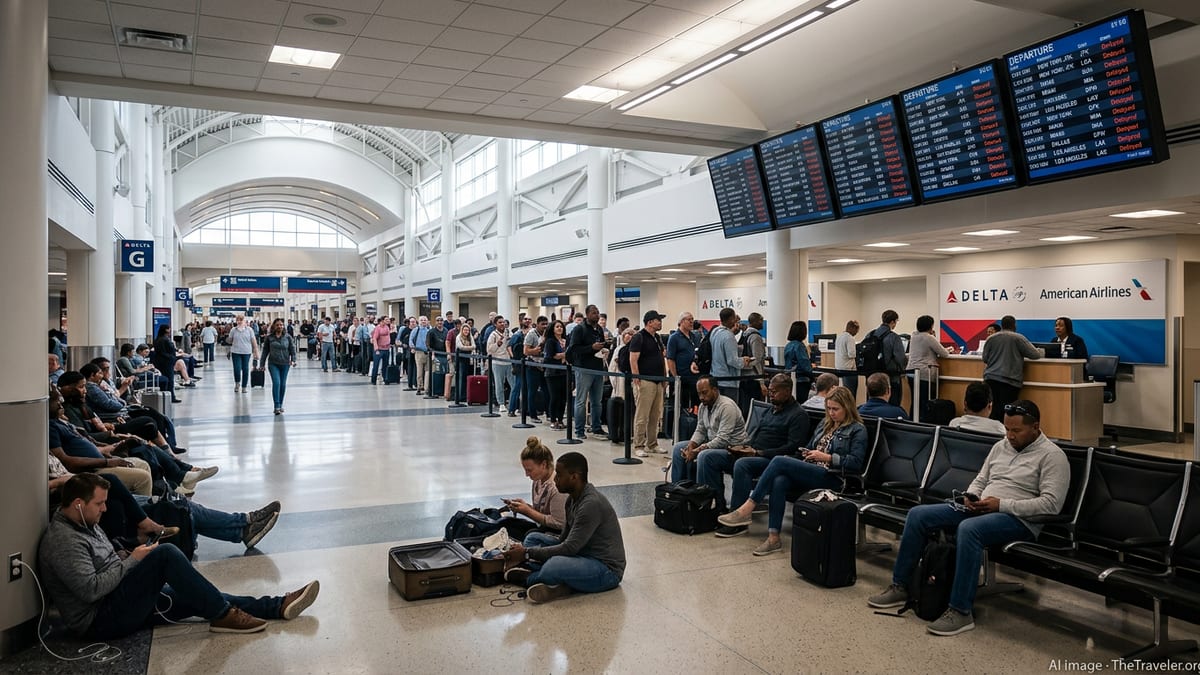
Federal data highlights a persistent delay leader
Publicly available statistics from the U.S. Department of Transportation and the Federal Aviation Administration show that one large hub airport has repeatedly landed in the bottom tier for on time arrivals and departures. Across the most recently available three year window, the facility has consistently ranked among the four worst performing major U.S. airports when measured by the share of flights arriving more than 15 minutes behind schedule.
The ranking is derived from federal on time performance tables that compare the nation’s busiest airports. These tables aggregate airline reports on delays, cancellations and tarmac times to identify where travelers are most likely to experience schedule disruptions. When those figures are lined up year over year, one airport stands out for remaining entrenched near the bottom even as others move up or down the list.
While the specific percentages and positions vary by year, the pattern is clear: the airport in question has stayed within the four lowest spots on the on time leaderboard for three straight reporting cycles. That persistence is unusual, as most large hubs see their rankings shift more noticeably in response to weather patterns, construction projects, airline schedule changes and wider industry trends.
The data cover periods that include both peak holiday seasons and slower travel months, smoothing out short term spikes such as winter storms or summer thunderstorms. As a result, the designation as a serial delay hotspot reflects chronic congestion and operational strain rather than a single bad season.
Why one airport keeps falling behind schedule
Several factors appear to be driving the airport’s stubbornly high delay rates. Federal summaries of delay causes point to a mix of airline scheduling choices, heavy traffic volumes, limited runway capacity and frequent weather disruptions as recurring issues at the country’s worst performing hubs. The airport in question combines many of these challenges in one location.
Traffic levels have grown steadily, with more passengers connecting and more airlines adding routes through the airport even as its infrastructure strains to keep pace. When operations are already near capacity, relatively small disturbances such as low clouds, strong crosswinds or storms in nearby airspace can quickly ripple into longer queues for takeoff and landing.
National statistics on flight delays also indicate that late arriving aircraft and air traffic system congestion are leading contributors at many major hubs. When an aircraft shows up late from another city, its next departure is likely to leave behind schedule as well. At an airport that serves as a key connection point, these knock on effects can multiply across the day, pushing average delay times higher.
Industry analyses have additionally noted that extended construction projects, gate realignments and terminal upgrades can reduce operational flexibility. When apron space and taxi routes are constrained, controllers and ground crews have fewer options to keep aircraft moving, which can further entrench an airport’s reputation as a difficult place to run an on time schedule.
What the delay designation means for travelers
For passengers, an airport’s repeated appearance among the nation’s most delayed hubs has practical implications for how they plan trips. Travel experts often suggest building in longer connection times when itineraries route through historically congested airports, especially during winter, peak summer vacation periods or major holiday weekends.
Travelers booking tight layovers may face a higher risk of missed connections when passing through a hub with a long running delay record. Padding schedules by an extra 30 to 60 minutes, choosing earlier flights in the day and avoiding the final departures on a given route are common strategies for reducing the chance of being stranded if disruptions cascade.
Passengers connecting through a delay prone hub may also want to pay closer attention to seasonal patterns. Federal summaries of delay causes show that some airports struggle more in summer because of convective storms, while others see their worst performance during icy winter months. Matching travel dates and connection choices to these patterns can help mitigate risk.
For those starting or ending their trips at the affected airport, leaving additional time before important events remains prudent. That can include scheduling key meetings a day after arrival, considering nonstop flights when possible, or, for shorter regional journeys, weighing alternatives such as nearby airports that report stronger on time performance.
Airlines and agencies respond to chronic congestion
Repeatedly appearing among the country’s worst airports for delays has also drawn attention from airlines and federal transportation agencies. Published policy documents describe efforts to smooth schedules at the most congested hubs by adjusting flight timings, encouraging more realistic block times and coordinating closely with air traffic control on peak hour flows.
Some carriers have responded by trimming or retiming flights during the busiest parts of the day at historically delayed airports, shifting certain departures to shoulder periods where runways and taxiways are under less strain. Others have introduced larger aircraft on select routes to carry similar numbers of passengers with fewer individual takeoffs and landings.
At the federal level, reports outline longer term initiatives at major delay hotspots, including investments in new taxiway configurations, upgraded navigation technology and modernized air traffic procedures. These efforts are intended to increase runway throughput and reduce the amount of time aircraft spend waiting in line to depart or circle before landing.
Local authorities and airport operators, meanwhile, have emphasized terminal expansions, improved gate utilization and better real time information for passengers. While such steps do not eliminate delays driven by weather or national airspace constraints, they can make disruptions more manageable and improve the overall experience for those who find themselves stuck on the ground.
What to watch as new delay data emerge
Because federal transportation agencies release on time performance figures with a lag, travelers and analysts are only now getting a full picture of how the nation’s busiest hubs performed in the most recent year. Early summaries suggest that while the same airport remains a top contributor to delays, some peers have improved modestly or slipped further down the rankings.
Observers will be watching closely to see whether schedule adjustments, infrastructure upgrades and air traffic modernization efforts at the perennial delay leader begin to show up in the next sets of statistics. A meaningful rise in the airport’s on time percentage or a move out of the bottom four would indicate that congestion relief strategies are starting to gain traction.
Until that happens, the airport’s three year run among America’s most delayed hubs serves as a reminder that not all connections are created equal. For travelers, factoring persistent local bottlenecks into planning remains a key part of navigating an air travel system that continues to operate near full capacity at many of its busiest nodes.