


More news on this day
Air travelers across the United States faced a difficult start to the weekend as more than 3,200 flights were canceled or delayed on Saturday, with disruptions concentrated in Texas, Florida, Illinois, Massachusetts, Georgia and Michigan and affecting carriers including Delta, SkyWest, Frontier, American, Envoy and Horizon.
Get the latest news straight to your inbox!
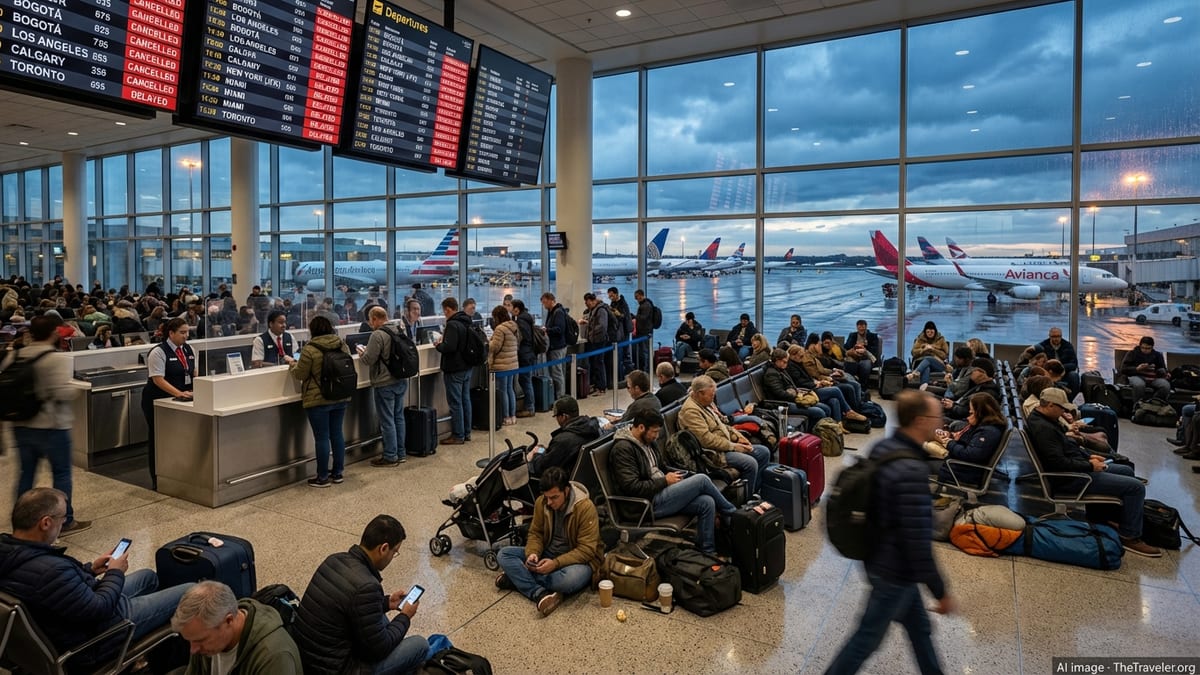
Weather Systems And Staffing Strains Converge
Tracking services indicated that at least 232 flights were canceled and about 3,002 were delayed nationwide, creating long lines, rolling gate changes and missed connections at some of the country’s busiest hubs. The pattern mirrored recent disruption days when severe thunderstorms, low ceilings and air traffic control constraints combined to slow operations across multiple regions.
In Texas and the Southeast, strong storm cells and unstable air were reported in key aviation corridors, affecting operations in and out of Dallas Fort Worth, Houston and Atlanta. In the Northeast and upper Midwest, low clouds, pockets of heavy rain and visibility reductions contributed to flow restrictions at airports serving Boston, Chicago and Detroit. Publicly available aviation data shows that such conditions often trigger ground delay programs and tighter spacing between arrivals, quickly translating into backlogs.
Staffing limitations at some facilities added to the pressure. Recent coverage of delays at large U.S. airports has highlighted how thinner rosters in air traffic control and ground handling can magnify the impact of poor weather, stretching recovery times even after storms pass and runways reopen.
Industry analysts note that while the overall proportion of flights canceled remains relatively low compared with the total schedule, days with widespread convective weather can produce clusters of delays in multiple regions at once, making it difficult for airlines to reposition aircraft and crews and leaving travelers with few immediate rebooking options.
Major Hubs In Texas, Florida And The Midwest Hit Hard
Texas was among the hardest hit states, with disruptions centered on large connecting hubs that serve as gateways for both domestic and international traffic. When operations slow at those airports, connecting banks of flights can unravel, pushing missed connections and rolling delays throughout airline networks.
Florida’s busy leisure and cruise gateways also experienced significant knock-on effects. Even modest schedule changes in and out of the state can be amplified during peak travel periods, as aircraft arriving late from other parts of the country force subsequent departures to push back behind schedule.
Illinois and Michigan, home to large connecting hubs in Chicago and Detroit, saw a combination of weather and traffic management initiatives that reduced throughput at key times of day. Massachusetts faced similar patterns in the Northeast, where constraints at Boston contributed to broader slowdowns on some transcontinental routes.
Georgia’s primary hub city, already a critical node in the national air network, experienced pressure as flow restrictions elsewhere pushed more aircraft and rerouted traffic into its airspace. When several of these states experience disruptions concurrently, the cumulative effect is felt by travelers far from any storm line or local advisory.
Delta, American And Regional Partners Bear Much Of The Load
The wave of cancellations and delays was spread across several major carriers, with Delta Air Lines and American Airlines among those experiencing substantial operational challenges. Both carriers run extensive hub-and-spoke networks through key airports in the affected states, which means that weather or congestion in a single city can ripple through dozens of routes.
Regional operators that fly under the brands of larger airlines were also significantly affected. SkyWest, Envoy and Horizon operate thousands of daily departures on smaller jets, often serving as the first and last legs of travelers’ journeys between large hubs and regional airports. When mainline flights are delayed or inbound aircraft arrive late, these regional connections are frequently rescheduled, combined or canceled.
Frontier, which operates a point-to-point network with a lean spare aircraft pool, faced challenges recovering from disruptions on closely timed routes. Public data on the carrier’s recent performance has underscored how low-cost operators can be particularly exposed when storms or airspace constraints interrupt tightly planned rotations.
Industry observers emphasize that on days when multiple large networks and their regional partners are all responding to the same weather systems, spare crews and aircraft become scarce, limiting the ability of any single airline to offer quick alternatives to stranded passengers.
Knock-On Effects For Travelers Across The Country
The impact for travelers extended well beyond the cities directly under storm clouds. Delayed inbound aircraft led to late evening departures from secondary markets, while crew duty-time limits forced some flights to be canceled even after conditions improved, as airlines sought to keep within safety and regulatory requirements.
For passengers, the result was a familiar pattern of rolling text alerts, revised boarding times and unplanned overnight stays. Travel forums and social media feeds showed images of crowded gate areas and long customer service lines as people sought rebooking options, meal vouchers and hotel accommodations.
Travel experts recommend that passengers facing similar disruption days monitor their flight status closely through airline apps, sign up for proactive alerts and consider earlier departures when storms are forecast in key hub regions. Those with flexible plans may be able to shift to alternative routings or travel days before large blocks of the schedule are affected.
Consumer advocates also point to the importance of understanding airline policies on rebooking and compensation, which can differ depending on whether a delay is categorized as weather related or attributed to carrier-controlled factors such as crew or maintenance. Having that information in advance can help travelers make faster decisions when offered limited options at the airport.
What The Disruptions Signal For The Peak Travel Season
The latest round of cancellations and delays arrives as U.S. airlines head into the heart of the summer travel season, when schedules are full and spare capacity is at a premium. Recent data on on-time performance and cancellation rates suggests that while carriers have generally improved reliability compared with some past summers, the system remains vulnerable to days of intense convective weather.
Aviation analysts say that climate and demand trends point toward continued volatility, with more frequent severe storm systems intersecting with record passenger volumes and complex hub-and-spoke networks. While investments in technology, staffing and infrastructure have helped, they have not eliminated the cascading effects seen when several major regions experience operational constraints at once.
For now, travel planners suggest building extra time into itineraries that involve tight connections through weather-prone hubs, particularly in Texas, the Southeast and the Northeast. Choosing earlier flights in the day, when aircraft and crews are less likely to have accumulated delays, can also provide a buffer.
As airlines, airports and regulators continue to evaluate performance data from heavy disruption days, travelers can expect ongoing adjustments to schedules, staffing levels and traffic management strategies. The goal, industry watchers say, is to reduce the frequency and severity of nationwide ripple effects like those seen in this most recent wave of cancellations and delays.