


More news on this day
Thousands of travelers across the United States are facing hours-long waits and missed connections as more than 90 flight cancellations and nearly 4,000 delays ripple through major hubs from Chicago and New York to Orlando and Anchorage.
Get the latest news straight to your inbox!
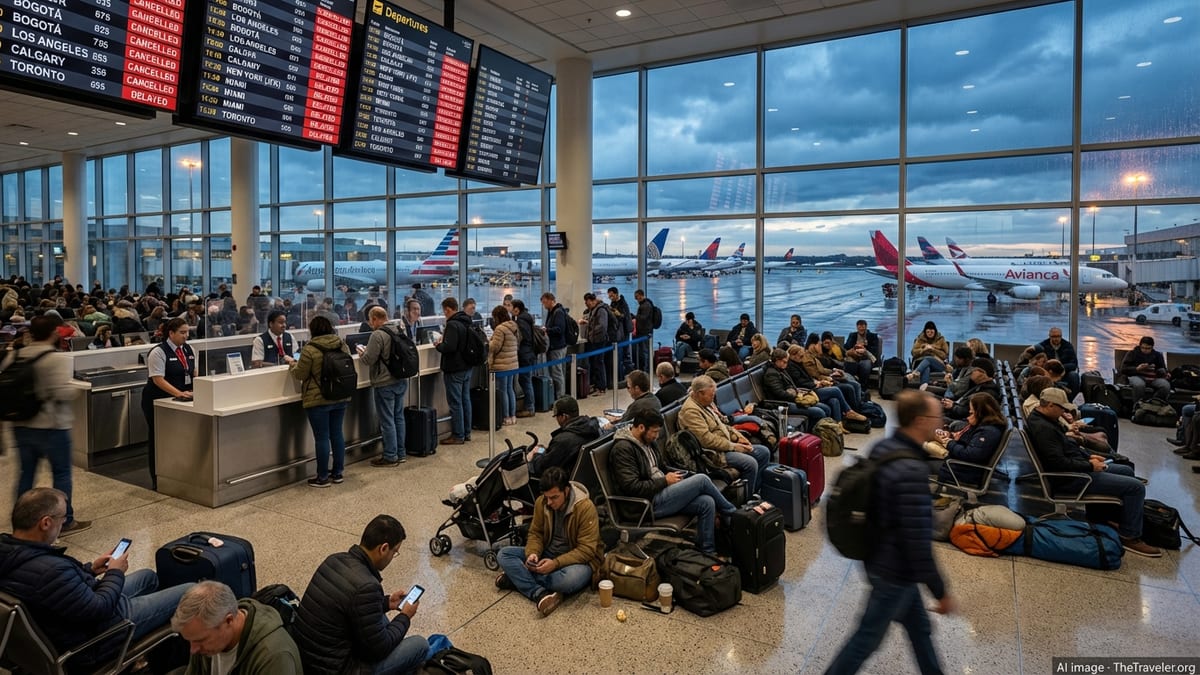
Delays Mount Across Major U.S. Hubs
Tracking data reviewed on June 10 indicates a fresh wave of operational disruption at U.S. airports, with 91 cancellations and approximately 3,900 delays logged nationwide by early evening. The impact is concentrated at large connecting hubs and popular summer gateways, where thunderstorms, tight schedules and lingering crew shortages have combined to slow operations.
Airports in Chicago, New York, San Diego, Houston, Charlotte, Anchorage and Orlando are among the facilities experiencing the heaviest strain. Publicly available flight boards show dense clusters of departures running late by 30 minutes or more, with some banks of flights pushed back in successive increments throughout the day. Passengers report long queues at check in, gate counters and customer service desks as airlines attempt to rebook disrupted itineraries.
The latest episode follows a difficult stretch for U.S. aviation in early June, when published coverage highlighted several days with hundreds of cancellations and thousands of delays centered on Chicago, Denver and Dallas. That earlier disruption left schedules fragile, increasing the risk that relatively localized weather or traffic issues could cascade into a broader national slowdown.
Multiple Airlines, From Legacy to Regional, Affected
The current round of disruption is affecting a wide swath of carriers, including Delta Air Lines, Southwest Airlines, Alaska Airlines, United Airlines and regional operators such as SkyWest and Republic. Data from flight tracking services shows delayed departures and arrivals for both mainline and regional flights, especially on routes feeding large hub airports.
Regional carriers play a critical role in connecting smaller communities to major hubs, and earlier June disruptions documented by travel outlets showed how quickly problems at these operators can spread through the wider network. When regional flights operated by companies like SkyWest or Republic run late or are canceled, passengers can miss onward connections on larger jets, amplifying the overall number of disrupted journeys.
Low-cost and hybrid carriers are also contending with pressure on their schedules. Publicly available information shows Southwest dealing with clusters of delays on high demand domestic routes, including services touching Chicago, Orlando and Houston, while Alaska has experienced disruptions on select routes into and out of the Pacific Northwest and Alaska region. The breadth of affected airlines underscores that the current situation reflects systemic strain rather than issues at a single company.
Hubs from Chicago and New York to Orlando Feel the Strain
Chicago remains one of the most affected regions, with both O’Hare International and Midway International showing elevated levels of delay activity. O’Hare’s role as a central hub for United and a major station for other carriers makes it particularly vulnerable to knock on effects when weather or air traffic control programs slow operations in the Midwest.
In the Northeast, New York area airports are again under pressure, with LaGuardia and John F. Kennedy International reporting numerous late departures and arrivals. Busy transcontinental and shuttle routes, including services linking New York with Chicago and major West Coast cities, are prone to congestion when schedules slip, leading to rolling delays through the afternoon and evening peak.
Farther south, Orlando and Houston are facing their own challenges. Orlando’s status as a major leisure gateway and family travel destination means large volumes of passengers are affected when flights run behind schedule. In Texas, heavy demand at Houston’s airports combined with periodic thunderstorms can quickly ripple through airline operations, forcing ground stops, diversions and crew reassignments that reverberate well beyond the immediate weather window.
Anchorage, San Diego and Charlotte Show How Disruptions Spread
Anchorage and San Diego highlight how delays at hub airports can spill over into secondary markets. Anchorage relies heavily on a mix of passenger and cargo operations, and publicly available tracking data shows that when schedules tighten in the lower 48 states, knock on delays can spread into Alaska, affecting both long haul and regional services.
San Diego, meanwhile, operates with constrained runway and gate capacity, which leaves less margin when flights arrive late from other parts of the country. When arriving aircraft are held up due to congestion at origin airports such as Chicago, Houston or Denver, San Diego’s tightly packed schedule can quickly bunch up, leading to outbound delays for travelers heading onward to other cities.
Charlotte, a significant connecting hub in the Southeast, is also seeing elevated delay levels. Its role as a transfer point between Northeast, Midwest and Sun Belt destinations means that disruptions in any of those regions can translate into missed connections and backed up departure banks in North Carolina, even if local weather conditions are relatively stable.
What Travelers Can Expect in the Coming Days
Recent Air Travel Consumer Reports from the U.S. Department of Transportation show that while overall on time performance has improved compared with the immediate post pandemic rebound, airlines still operate with limited slack during peak travel periods. When storms, air traffic constraints or crew availability issues arise, the system can quickly become saturated, leading to the kind of widespread delays now being seen across multiple hubs.
With the summer travel season ramping up, aviation analysts expect periodic flare ups of disruption to remain a feature of the network, particularly around busy holiday weekends or during stretches of unstable weather. Publicly available forecasts indicate that additional thunderstorms and high demand days are likely in the coming weeks, raising the prospect of further operational challenges for carriers and airports alike.
Travelers scheduled to fly through heavily impacted hubs such as Chicago, New York, Orlando or Houston are being advised by airlines and travel advisors to monitor flight status frequently, allow extra time at the airport and, where possible, build longer connection windows into itineraries. As airlines work through backlogs and reposition aircraft and crews, residual delays can persist even after the immediate weather or traffic trigger has eased.