


More news on this day
Thousands of travelers across the United States faced hours of disruption as nearly 300 flights were canceled and more than 5,700 delayed at major hubs from Washington and Chicago to Denver, Houston, California, Florida and Utah, with carriers including American, Alaska and Delta struggling to keep schedules on track.
Get the latest news straight to your inbox!
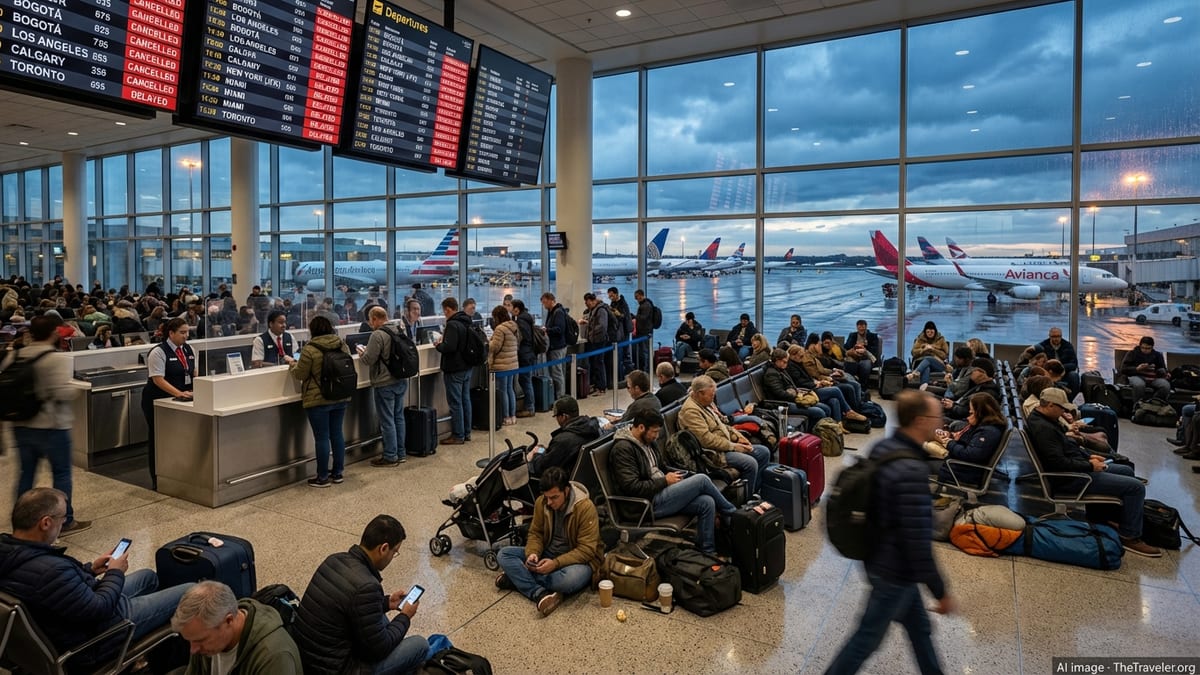
Flight Disruptions Ripple Across Major U.S. Hubs
Publicly available aviation tracking data shows at least 297 flights canceled and 5,719 delayed across the country during the latest wave of operational turmoil, underscoring how fragile the air travel network remains when multiple regions experience bad weather and congestion at the same time. The impact has been most visible at large connecting hubs such as Chicago, Denver and Houston, but secondary airports in Utah, Florida, Washington state and California also saw mounting delays.
According to aggregated industry trackers, the elevated numbers put the disruption in line with some of the worst single day events so far this year, albeit below the most extreme winter storm peaks that can wipe out thousands of flights. Even so, the combination of cancellations and rolling delays left passengers stranded in terminals, stuck in long lines at customer service desks and attempting to rebook scarce seats heading into the busy summer period.
Carriers most affected include the big network airlines American and Delta, along with Alaska Airlines and several regional partners that operate feeder routes through the affected hubs. Low cost and ultra low cost carriers also reported knock on problems as congestion built in shared airspace and at crowded gate areas, compounding delays beyond the hardest hit cities.
Industry scheduling data indicates that many of the cancellations were preemptive, as airlines tried to thin schedules to cope with limited runway availability and to give themselves room to recover later in the day. However, widespread delays still developed as thunderstorms, high heat and earlier backups slowed the flow of aircraft through already tight timetables.
Severe Weather, Heat and Storm Systems Drive Delays
Meteorological reports point to a cocktail of severe weather as a central driver of the disruptions. A series of intense storm cells moved across parts of the Midwest and Great Plains, while summer heat indexes surged in portions of the Southeast, including Florida. In the Chicago area, recent heavy rain and thunderstorms led to ground delays at O’Hare International Airport and contributed to hundreds of cancellations and late arrivals and departures, according to recent local coverage and Federal Aviation Administration advisories.
Similar weather related constraints have affected Denver International Airport, where spring and early summer systems can swing rapidly from clear skies to thunderstorms, creating temporary ground stops and slowing arrivals as air traffic controllers space out aircraft for safety. In Utah and across the Mountain West, convective storms have also periodically shut down departure banks or forced reroutes, adding minutes and sometimes hours to already long journeys.
In Florida, where heat indices have recently climbed into dangerous territory, storms building in the hot, moist air have disrupted operations at major coastal airports. Public weather information shows that much of the state has been dealing with a combination of extreme heat and scattered severe thunderstorms, a pattern that increasingly drives afternoon and evening delays as the day progresses.
West Coast travel has not been spared. Airports in California and Washington state have reported intermittent fog, low ceilings and onshore systems that reduce visibility and capacity on key runways. When these conditions coincide with busy transcontinental and international departure windows, air traffic managers often meter departures, triggering knock on effects for flights scheduled to continue on to hubs like Chicago, Denver, Houston and beyond.
American, Alaska, Delta and Other Airlines Struggle to Rebalance
The latest disruption has hit a cross section of the U.S. airline industry, with traditional network carriers, regional operators and low cost airlines all facing challenging operating conditions. Publicly accessible data from the U.S. Department of Transportation’s Air Travel Consumer Report for recent months shows that, even in normal conditions, major airlines typically cancel a small share of their flights and experience delays from multiple causes, including carrier related issues, extreme weather, national aviation system constraints and late arriving aircraft.
American Airlines, Delta Air Lines and Alaska Airlines are among the carriers that rely heavily on the hubs and regions experiencing problems, making it difficult to isolate the disruption to a single airport or route. When a thunderstorm shuts down arrivals into a hub like Chicago or storms slow departures from Denver, the immediate effect is felt by passengers at that airport. The secondary effect, however, is often felt hours later in distant cities as aircraft and crews arrive late for subsequent segments.
Regional affiliates and codeshare partners compound the challenge. Many short haul flights into and out of cities in Utah, the Pacific Northwest and smaller markets in California and Florida are operated by regional airlines under the brands of the larger carriers. When a hub experiences a ground delay program or capacity reduction, these flights are often among the first to be delayed or canceled, stranding travelers who rely on them to connect to long haul services.
Low cost and ultra low cost carriers typically operate tighter schedules with faster aircraft turnarounds, leaving less room to absorb unexpected delays. Once weather or air traffic issues slow operations at a handful of key airports, recovery can take an entire day, especially when spare aircraft and crews are limited. This dynamic has contributed to rolling delays that stretch late into the night in several affected markets.
Systemic Vulnerabilities Highlighted by New Disruption
Analysts reviewing recent disruption patterns note that the latest wave of cancellations and delays underscores structural vulnerabilities in the U.S. air travel system. A concentration of traffic at a small number of very large hubs means that problems at airports such as Chicago O’Hare, Denver International or Houston’s primary hub can propagate across the network in a matter of hours, affecting cities that may be experiencing clear skies and calm winds.
Earlier this year, a live tracker of flight cancellations tied to storms across the Midwest and East Coast documented how a series of severe weather events over several days led to thousands of cancellations and tens of thousands of delays nationwide. Those numbers far exceeded the latest event but illustrate how quickly conditions can spiral when weather, capacity and tight schedules intersect. In both cases, recovery has taken multiple days, as airlines work to reposition aircraft, reassign crews and work through backlogs of stranded passengers.
The current disruption is unfolding against a backdrop of rising travel demand and tight aviation infrastructure. Federal regulators have already asked some airlines to trim summer schedules at congested airports to preserve safety and reduce the risk of prolonged gridlock. Carriers have responded by slightly reducing planned departures at certain hubs, but the high volume of flights still leaves the system sensitive to even modest disturbances.
Public data from recent Air Travel Consumer Reports shows that, across all reporting U.S. airlines, roughly one fifth of flights typically arrive late in an average month, with a smaller fraction canceled or diverted for various reasons. Extreme weather accounts for only a portion of these delays, with national aviation system factors such as air traffic control capacity and runway congestion also playing a major role. The latest day of turmoil fits squarely within this pattern, as airlines face both meteorological and operational headwinds.
What Travelers Can Expect in the Days Ahead
With aircraft and crews still out of position in multiple regions, travelers can expect knock on effects to continue beyond the initial day of chaos. Even after skies clear over a particular hub, it can take several flight cycles for airlines to restore normal operations, especially on complex multi leg itineraries involving connections through cities like Chicago, Denver and Houston. Passengers booked through affected hubs in Washington state, California, Florida and Utah may see continuing schedule adjustments as carriers rebalance fleets.
Consumer advocates note that travelers facing cancellations or significant delays generally have specific rights under U.S. regulations and individual airline policies, including rebooking options and, in some cases, refunds. However, benefits such as meal vouchers, hotel accommodations or interline rebooking onto other airlines vary widely by carrier and by whether the disruption is considered within the airline’s control. Weather related disruptions typically trigger more limited compensation, even when the practical impact on travelers is severe.
Given the combination of seasonal storms, high heat and lingering staffing and infrastructure constraints, aviation experts expect further pockets of disruption as the peak summer travel season continues. Travelers connecting on American, Alaska, Delta and other carriers through busy nodes in Washington, California, Florida, Utah, Houston, Denver and Chicago are being advised by public travel bulletins and industry guidance to monitor flight status frequently, allow extra time in their itineraries and be prepared for last minute gate or schedule changes.
While the latest tally of 297 cancellations and 5,719 delays falls short of the worst case days recorded during major winter storms, the widespread geographic footprint of the disruptions highlights the challenge of maintaining reliable air service in a complex and highly interconnected system. For the thousands of travelers who spent hours waiting on tarmacs and in crowded terminals, the numbers translate into missed connections, lost vacation time and a reminder that air travel in the United States remains vulnerable to both the weather above and the bottlenecks on the ground.