


More news on this day
Severe thunderstorms sweeping across southeast England on Saturday, 27 June, have caused widespread disruption at London’s Heathrow and Gatwick airports, with hundreds of flights delayed and some passengers facing waits of up to six hours.
Get the latest news straight to your inbox!
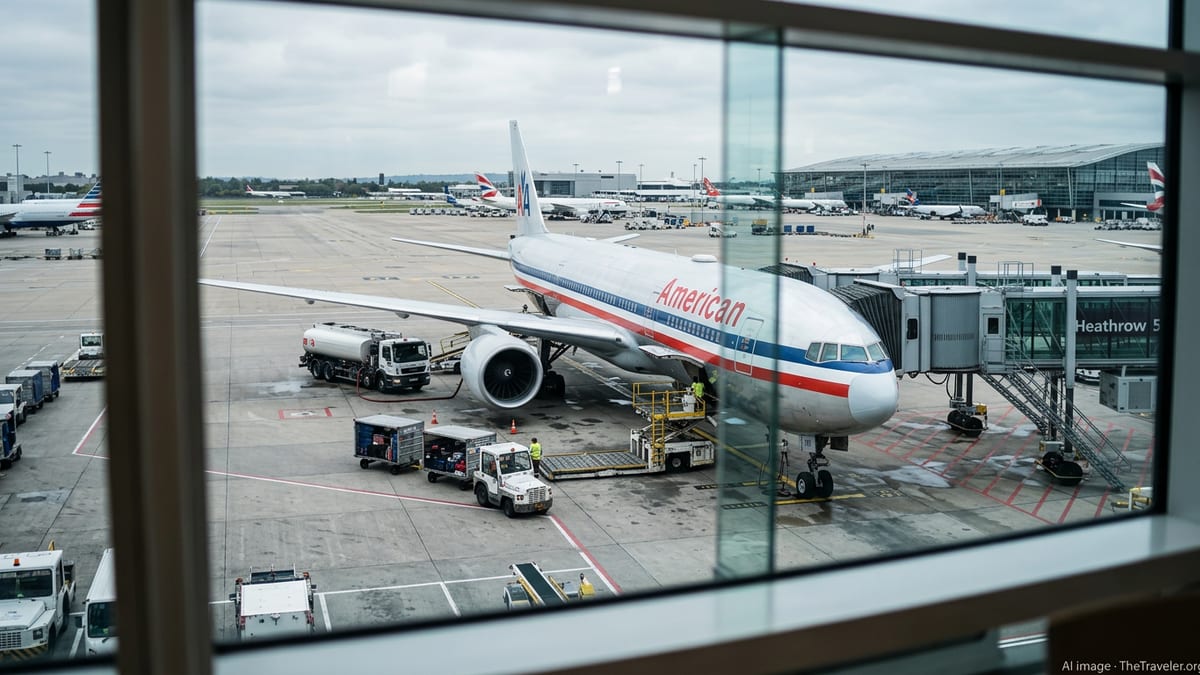
Hundreds of Flights Affected as Storms Hit London’s Air Corridors
Publicly available flight tracking data indicates that more than 600 arrivals and departures linked to Heathrow and Gatwick have been delayed, with dozens of services cancelled outright as storm cells moved across southern England. Both airports form part of one of Europe’s busiest aviation corridors, amplifying the impact as aircraft, crews and gates fell out of their scheduled positions.
Reports from aviation data services show that by Saturday afternoon, Heathrow had recorded several hundred delayed flights, while Gatwick registered a similar volume of disruption. Some services to and from European hubs were pushed back by multiple hours, creating knock-on delays throughout the wider network as aircraft scheduled for later rotations were held on the ground.
Information published by Eurocontrol, Europe’s air traffic management organisation, has highlighted Heathrow and Gatwick as the only United Kingdom airports currently experiencing heavy weather-related delays, concentrated in the busy airspace linking southeast England with northwestern Europe. Those constraints have limited the number of aircraft permitted to depart or arrive each hour, even during periods when rainfall temporarily eased at the airports themselves.
Passenger accounts shared on social platforms describe aircraft held at stands awaiting departure slots, as well as inbound flights placed in holding patterns or diverted while thunderstorm cells passed across key approach routes. In several cases, travellers reported total journey disruptions extending to five or six hours compared with original schedules.
Heatwave Breaks with Violent Storms over Southern England
The disruption comes at the end of a prolonged June heatwave in England, with national records repeatedly challenged over recent days. Forecasts from the Met Office had warned that the hot, unstable air mass over the southeast would break down into intense thunderstorms, bringing torrential rain, lightning and the risk of localised flooding.
Evidence from weather radar imagery and lightning detection networks on Saturday shows clusters of slow-moving storm cells tracking across the London area and wider southeast, at times sitting over the primary flight paths serving the capital’s airports. Under such conditions, air traffic managers typically reduce arrival and departure flows to maintain safe separation between aircraft and avoid routing traffic through the most active storm cores.
Operational procedures at major hubs also require temporary suspensions of ramp activities when lightning is detected in the immediate vicinity, affecting tasks such as baggage loading, aircraft refuelling and pushback. Documents published by Heathrow on its weather risk planning outline how lightning can trigger short standstills on the airfield, which in turn contribute to queues of aircraft waiting for gates or for ground handling teams to resume work.
The combination of airspace restrictions, ramp closures and lower runway throughput has meant that even relatively brief thunderstorm episodes have translated into long delays on the ground. With both Heathrow and Gatwick operating near capacity on peak summer weekends, recovery from such interruptions can take many hours.
Ripple Effects for European and Long Haul Connections
According to aviation news outlets, the latest disruption has affected a mix of short haul European services and long haul flights to North America, the Middle East and Asia. Aircraft scheduled to operate multiple sectors in a single day have encountered cumulative delays, with late inbound arrivals leading to late departures on subsequent legs.
Travel industry analysis notes that connections through Heathrow and Gatwick are particularly vulnerable during convective weather episodes, because missed transfer windows can cascade across the network. Passengers travelling from regional European cities via London to long haul destinations have reported missed onward flights and unplanned overnight stays as schedules unravelled.
Some airlines have attempted to consolidate services or swap aircraft types to preserve capacity on the busiest routes, but limited spare aircraft and crew availability in the height of the summer season restricts how quickly operations can be rebalanced. Earlier in June, industry data already pointed to rising delay levels across European hubs as traffic volumes climbed above 2025 levels, leaving little slack for dealing with new weather-related shocks.
Observers note that Saturday’s storms follow a pattern seen in recent weeks, in which clusters of thunderstorms and heat-driven weather systems have triggered localised but severe disruption at major airports across Europe, from London to Amsterdam and Paris. In each case, flows through critical airspace sectors have had to be cut significantly during peak hours, forcing airlines to rework rotations on short notice.
Guidance for Affected Travelers
Consumer advocacy organisations specialising in air travel have advised passengers flying through Heathrow or Gatwick to treat the current disruption as a developing situation, with knock-on effects likely to persist into the evening and potentially into Sunday as aircraft and crews are repositioned. Many airlines are encouraging customers to track their flight status via apps and airport information boards rather than relying on previously issued itineraries.
Under United Kingdom and European passenger rights frameworks, compensation for long delays is generally limited when the root cause is classified as extraordinary circumstances such as severe weather. Published guidance from air passenger rights bodies, however, emphasises that airlines remain responsible for providing care and assistance, including refreshments, communication options and accommodation where overnight delays occur.
Travel rights specialists also note that passengers whose flights are cancelled still retain the option of a refund or rebooking at the earliest opportunity, regardless of whether compensation is payable. In practice, rebooking options during peak travel weekends may be constrained by high load factors on alternative services, especially on popular leisure routes linking London with Mediterranean destinations.
Advisers recommend that travellers with non-essential journeys over the coming 24 hours consider flexible arrangements where possible, and that those with critical long haul connections allow additional time in London or consider re-routing through less affected hubs. With further thunderstorms possible as the unstable air mass continues to clear, operational planners expect intermittent restrictions to remain a risk through the remainder of the weekend.
Airports and Airlines Work to Restore Normal Operations
As weather conditions slowly improve, operational updates from airport dashboards show some reduction in the rate of new delays, although backlogs remain significant. Turnaround times are extended as ground teams work through accumulated tasks, from baggage handling to aircraft repositioning, following earlier lightning-related stand closures.
Air traffic flow management tools used across Europe are gradually increasing the permitted number of movements per hour in sectors over southeast England as storm intensity decreases. Even so, aviation analysts caution that it can take much of a day for a complex hub system to return to a stable schedule once rotations have been heavily disrupted, particularly when aircraft are out of their usual bases.
In the medium term, the latest episode is likely to feed into broader discussions within the industry about resilience to extreme weather, which climate projections suggest could become more frequent and intense. Operational reports from previous years have already identified thunderstorms as a growing source of delay minutes at large European airports, alongside chronic factors such as congestion and staffing constraints.
For now, travellers heading to or from London’s main airports are being urged, through publicly available advisories, to check in early, remain flexible where possible, and prepare for the possibility that their journeys may take significantly longer than planned while airlines and airports work to absorb the impact of Saturday’s thunderstorms.