


More news on this day
Severe thunderstorms over Switzerland on August 28, 2026 brought Zurich Airport to a near standstill, canceling 27 SWISS flights to and from the hub and disrupting journeys for around 3,100 passengers.
Get the latest news straight to your inbox!
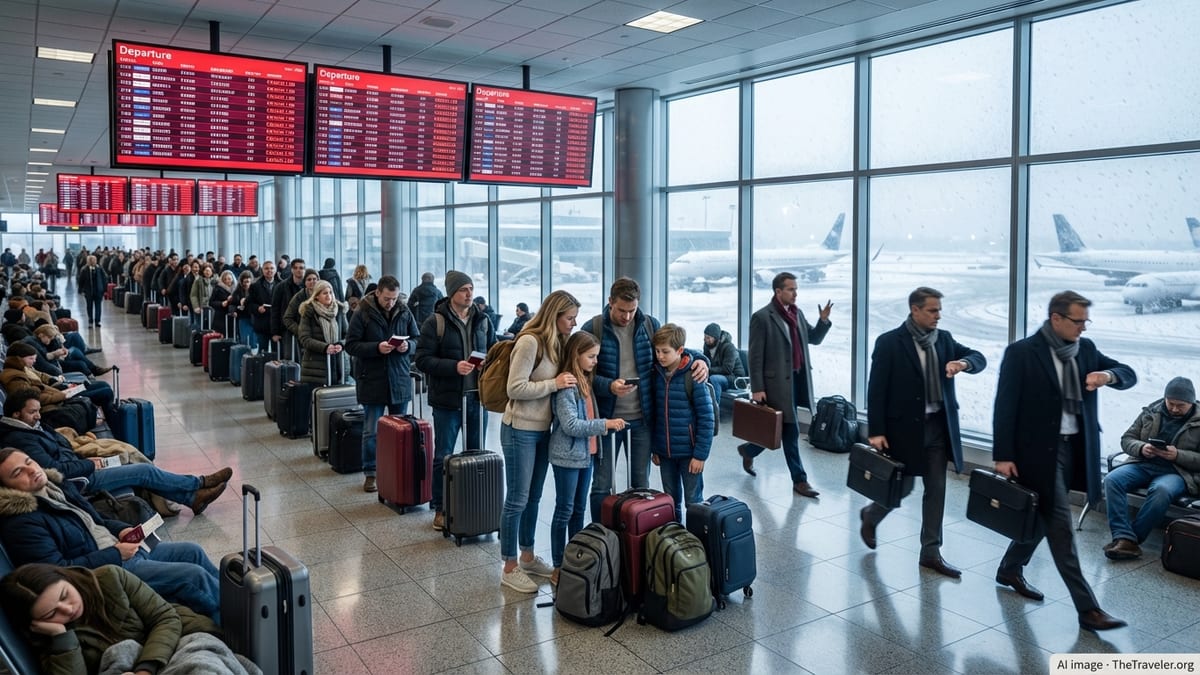
Lightning Strikes Force Ground Operations to a Halt
According to published coverage from Swiss and international outlets, intense thunderstorm cells repeatedly passed over the Zurich region on Friday, August 28, 2026, triggering a series of lightning strikes in the vicinity of Zurich Airport. Publicly available information shows that these strikes prompted multiple temporary suspensions of ground handling activities, a standard safety measure when lightning is detected close to aircraft stands.
During these so-called handling stops, ramp staff are required to clear the apron area and keep distance from aircraft, fuel trucks and other metal infrastructure. As outlined in Zurich Airport’s own climate and operations documentation, such pauses mean aircraft cannot be loaded or unloaded, refueled or pushed back, causing the flow of traffic to slow dramatically or cease altogether.
The resulting chain reaction quickly affected the broader flight schedule. Reports from Swiss media and an information notice from SWISS indicate that, by around midday, 27 departures and arrivals to and from Zurich had been canceled. The airline also warned that, depending on further storm development, additional cancellations and extended delays were likely into the evening.
Travel industry coverage notes that remaining flights continued to operate but often with delays of up to three hours. With aircraft and crews out of position and takeoff and landing rates restricted by the adverse weather, the knock-on effects spread across the network, complicating onward connections for travelers transiting through Zurich’s hub.
3,100 Passengers Face Cancellations and Long Delays
Figures released in publicly accessible updates from SWISS show that approximately 3,100 passengers were directly affected by the 27 canceled flights on August 28. Additional travelers experienced missed connections and significant delays as the storm-related disruption unfolded through the day.
Media reports highlight that Zurich is one of Europe’s key transfer hubs, with a sizable share of passengers connecting between European and intercontinental services. When disruption hits during peak summer operations, relatively small numbers of canceled rotations can leave thousands of passengers needing rebooking, overnight accommodation or alternative routings.
Travel forums and social media posts from the same period describe long waiting times at customer service desks and challenges obtaining hotel vouchers as local accommodation filled up. Some passengers reported being rebooked onto later services that themselves encountered delays or further schedule changes as thunderstorm cells continued to move across Swiss airspace.
Publicly available information indicates that airlines framed the disruptions as the result of extraordinary weather conditions, a factor that in many jurisdictions limits compensation obligations while still requiring carriers to offer care, such as refreshments and assistance with rebooking. For travelers caught in the storm’s path, the distinction made little difference to the immediate reality of missed holidays, broken business plans and extended hours inside Zurich’s terminal buildings.
Why Thunderstorms Hit Airport Operations So Hard
Background documents on Zurich Airport’s climate adaptation strategy note that thunderstorms are among the most disruptive weather phenomena for aviation. Even when runways remain usable, lightning risk and shifting wind patterns can sharply reduce the airport’s capacity, both in the air and on the ground.
In the air, storm cells and associated turbulence can force air traffic controllers to increase spacing between aircraft, reroute arrivals around active weather, or temporarily suspend approaches and departures. This lowers the number of movements the airport can safely handle per hour, leading to airborne holding patterns, diversions and, ultimately, schedule disruption that can ripple across the day.
On the ground, safety rules around lightning are particularly strict. Zurich Airport’s published material explains that when lightning is detected within a defined radius, ground handling and refueling must pause to protect staff working in exposed outdoor positions. Even a relatively short handling stop can generate a backlog of aircraft waiting for gates, unloading and servicing, making it difficult to recover normal operations once storms pass.
As climate projections for Central Europe signal a potential increase in the intensity and frequency of convective storms, Zurich Airport has identified weather-related disruption as a key operational risk. Planning documents outline investments in infrastructure, procedures and contingency planning designed to keep the airport functioning during increasingly volatile conditions, although events like the August 28 storms show the limits of what can be controlled when lightning activity intensifies directly over a major hub.
Peak Summer Traffic Meets Volatile Weather Patterns
The storm-related disruption arrived during a particularly busy phase for Zurich Airport in summer 2026. Recent operational updates from SWISS and Zurich Airport show that passenger volumes and flight counts have returned to, and in some cases exceeded, pre-pandemic levels, driven by strong leisure demand and solid business travel on key European and long-haul routes.
High utilization can make the system more vulnerable to external shocks. When aircraft are tightly scheduled and turnarounds are short, any weather event that forces a pause in ground activity quickly leads to aircraft queues, missed takeoff slots and a shortage of spare capacity to absorb delays. Published information from SWISS has highlighted the challenge of balancing high demand with increasing constraints from airspace restrictions, staffing and environmental requirements.
Analysts note that this combination of strong demand and fragile capacity has become a recurring theme at many European hubs during peak summer months. In Zurich’s case, the August thunderstorms illustrate how a single afternoon of severe weather can disrupt a carefully calibrated schedule, particularly when connecting passengers rely on narrow time windows to make onward flights.
For travelers, the episode serves as a reminder to allow buffer time for connections at major hubs during summer storm season and to monitor flight status closely, especially when forecasts call for convective weather around key transit airports like Zurich.
Looking Ahead: Managing Future Storm Disruptions
Zurich Airport and the airlines that use it have been refining contingency plans to better manage irregular operations, including those triggered by thunderstorms. Publicly available strategy documents emphasize enhanced coordination between airport operators, carriers and air traffic control, as well as investments in digital tools that can speed up rebooking and improve information flow to passengers during rapidly evolving events.
Airport climate programs also point to infrastructure adaptations, such as improved drainage, more resilient power systems and operational procedures tailored to extreme weather scenarios. While such measures cannot eliminate the need for handling stops during lightning events, they aim to shorten recovery times and reduce the scale of knock-on disruption once storms move away.
For airlines, the Zurich events underscore the value of flexible fleet and crew planning, along with clear communication channels that set realistic expectations when storms are forecast. Travel industry observers suggest that, as weather volatility becomes more common, passengers may increasingly weigh an airline’s track record on handling disruptions when choosing routes and connections through major hubs.
For now, the August 28 storm stands out as one of summer 2026’s most significant weather-related incidents at Zurich Airport, disrupting plans for thousands of travelers and highlighting the complex interplay between climate, aviation safety and the realities of global air travel.
SWI swissinfo.ch coverage of Zurich flight cancellations
SWISS newsbrief on flight operations in thunderstorms