


Tocumen International Airport in Panama City is one of Latin America’s busiest hubs, handling tens of millions of passengers a year as the "Hub of the Americas." For many travelers it is either the entry point to Panama or a key connection between North and South America. Knowing what to expect at passport control, baggage claim, and customs will help you decide how long to allow before leaving the airport or catching a transfer into the city.
Get the latest updates straight to your inbox!
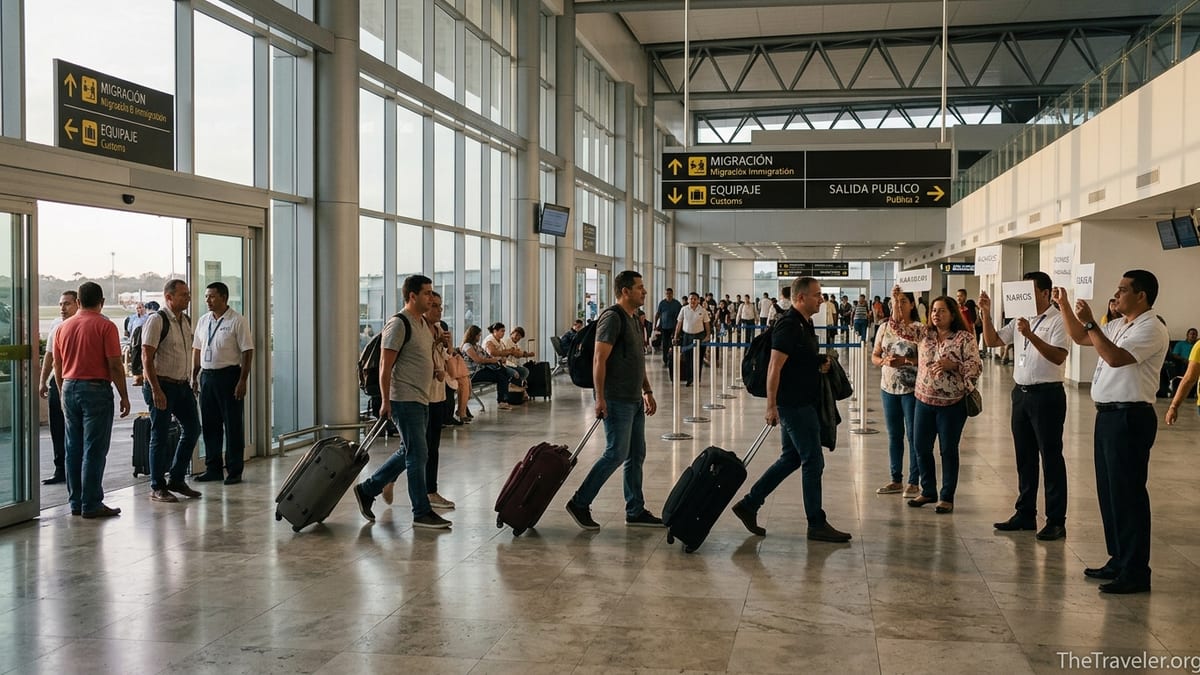
Understanding Tocumen’s Layout and Arrival Flow
Tocumen International Airport (code PTY) has grown into a major connecting hub, anchored by Copa Airlines. The airport is split between the original Terminal 1 and the newer Terminal 2, connected airside by walkways. Most Copa flights, and many international arrivals, now use Terminal 2, especially when Panama City is the final destination. From the passenger’s perspective, both terminals feed into a similar arrivals process: disembark, walk to immigration, proceed to baggage claim, then pass through customs before exiting into the public arrivals hall.
After landing, long-haul flights from North America or South America usually park at contact gates with jet bridges, so you will walk directly into the building. Occasionally, regional flights may use a remote stand with bus transfer, which can add 10 to 15 minutes before you even reach immigration. If you have a tight schedule after landing, this extra buffer can matter. For instance, a traveler arriving from Miami on a morning Copa flight reported spending about 8 minutes from door opening to reaching the immigration hall when parked at a gate, compared with nearly 20 minutes when a bus gate was used on a previous trip.
Arrivals into Panama (as opposed to pure transit passengers) are funneled toward immigration signs labeled "Migración" or "Immigration." If Panama City is your final destination or you plan to leave the secure area during a layover, you will follow these signs. Transit passengers on through-tickets who are not entering Panama are typically directed along clearly marked corridors that bypass immigration and go straight to the departures level and security for their next flight.
Once you clear immigration, you descend to the baggage claim carousels. Customs control sits just beyond the baggage area. This is different from many U.S. airports where immigration and customs are sometimes described together. In Panama, you will first see passport officers, then baggage, then customs inspectors just before the exit doors into the landside arrivals hall.
Passport Control: Typical Wait Times and Peak Periods
Immigration is usually the slowest part of the arrival process at Tocumen. As with most major hubs, wait times are highly dependent on time of day and the clustering of arriving flights. When large banks of Copa flights arrive from cities like New York, Los Angeles, São Paulo, and Buenos Aires within a narrow window in the late afternoon or late evening, queues can swell rapidly.
Recent traveler reports from late 2025 and early 2026 suggest that in off-peak periods, such as mid-morning on weekdays, many passengers clear passport control in 10 to 25 minutes. During busy evening arrival waves, especially Fridays and Sundays between roughly 17:00 and 21:00, waits of 30 to 60 minutes are common, and occasionally longer when several widebody flights land at once. For example, a family arriving from Toronto on an early evening Copa flight in March 2026 reported a 40-minute wait for immigration because three other North American flights arrived within 15 minutes of theirs.
Citizens and residents of Panama usually have a shorter line, while most tourists join the regular foreign-passport queue. Some nationalities may need to pay a tourism fee or present additional documentation; if a few travelers in front of you require detailed processing, it can slow the line. Automated kiosks are less common here than at some U.S. and European airports, so you should plan on seeing a human officer. For a realistic estimate, travelers arriving in moderate traffic should plan on 30 minutes from joining the immigration line to stepping into the baggage hall, and up to 60 minutes during the very busiest banks of arrivals.
To keep your own process smooth, have your passport open to the photo page, boarding pass handy, and any required visa documentation or proof of onward travel ready. Panama often asks visitors where they are staying and for how long. A printed hotel confirmation for common tourist areas such as Casco Viejo or Playa Blanca, or a digital booking on your phone, helps you answer quickly and move on.
Baggage Claim and Customs: How Long It Really Takes
Once you clear passport control, you descend into the baggage claim hall. Carousels are clearly marked by flight number, and overhead monitors list the flights assigned to each belt. In Terminal 2, the area is comparatively modern, with higher ceilings and fairly intuitive signage in both Spanish and English. Carts are often available but may be in higher demand during peak waves of arrivals.
Bags usually begin appearing around 10 to 20 minutes after you reach the claim area. If you spent a long time at immigration, your luggage may already be circling on the belt. Many travelers report that by the time they reach baggage claim after a 30-to-40-minute immigration line, their suitcases are already waiting. On the other hand, if immigration was unusually quick, you may end up waiting a bit longer for the first bags to arrive, especially for flights with a large number of checked items, such as those from shopping destinations in the United States.
Customs in Panama is located just beyond the baggage carousels, typically with an exit channel for travelers with nothing to declare and a separate space where officers may pull bags for inspection. Compared with immigration, customs is often faster, particularly if you truly have nothing to declare. Many passengers pass through in 5 to 10 minutes, essentially just showing their baggage and passing their suitcases through an X-ray machine. However, during peak tourist months like December to March, inspectors may randomly select more passengers for detailed checks, which can add another 10 to 15 minutes.
As a rule of thumb, once you have your checked baggage in hand, allow about 10 to 20 minutes to pass through customs and emerge into the public arrivals hall. If you are carrying specialty items such as professional camera equipment, high-value electronics still in sealed boxes, or large quantities of new goods, be prepared for questions and possible inspection. Having receipts accessible and answers ready about whether items are for personal use can keep any additional scrutiny brief.
Timing Your Exit: How Long to Allow Before Leaving the Airport
For travelers whose final destination is Panama City itself, the key question is how long it will take from the aircraft door opening to reaching a taxi, rideshare, or pre-booked transfer. Combining typical times for each step, most visitors should expect 45 to 90 minutes, depending on time of day and crowd levels.
In a best-case scenario during a quiet midday arrival, a passenger traveling only with carry-on luggage might step off a flight at 11:00, pass through immigration in 10 to 15 minutes, skip baggage claim entirely, and walk through customs with a quick bag scan. They could reasonably be outside the terminal door by around 11:25, meeting a hotel driver or getting in a taxi shortly after. This is common for business travelers who arrive on midweek flights with minimal luggage.
In a more average scenario with checked bags during a noticeable arrival wave, consider an evening flight that lands at 18:30. It might take 10 minutes to disembark and walk to the immigration hall, followed by 30 to 45 minutes in line. Baggage could take another 10 to 20 minutes, and customs perhaps 10 minutes more. In this realistic case, you would likely exit the airport between about 19:30 and 20:00. If you have dinner reservations in Casco Viejo, booking them for 21:00 or later would give you breathing room, factoring in 30 to 40 minutes of drive time in typical evening traffic.
For risk-averse planners, especially families with children or travelers catching long-distance buses from Albrook Bus Terminal, allowing a full 2 hours from scheduled landing time to ground transportation is prudent. While many people clear in less, this buffer covers occasional delays, such as offloading checked strollers, extra-long queues when several widebody aircraft arrive at once, or being pulled aside at customs for a more detailed baggage search.
Transit and Connections: Immigration vs Staying Airside
Tocumen is designed primarily as an international-to-international connection hub. If you are connecting between Copa Airlines flights on a single ticket and you do not intend to enter Panama, you usually do not go through immigration or customs. Instead, you follow bright "Connections" or "Transitos" signs through dedicated corridors that lead directly to the departures level, where you go through security screening and then proceed to your next gate.
Officially, airport and airline minimum connection times at Tocumen can be as low as 30 minutes for certain international-to-international connections on Copa. In practice, many travelers report that 45 to 60 minutes works reliably when both flights are on Copa and operate from the same terminal. For example, a passenger traveling from Los Angeles to Quito via Panama with a 55-minute layover in late 2025 described walking briskly from one gate to the other, passing through security in under 10 minutes, and still boarding with time to spare. The key advantage is that checked bags are tagged to the final destination and are automatically transferred between aircraft.
The situation changes if you are connecting from an international flight to a domestic flight within Panama, such as from New York to David (DAV) or Bocas del Toro. In these cases, you normally must clear immigration, collect your luggage, pass through customs, and then follow signs to the domestic area. Since Copa began using a new domestic terminal at Tocumen in mid-2024, this may involve additional walking or a short transfer inside the complex. Travelers on these routes often recommend at least 2.5 to 3 hours of connection time, particularly if the domestic leg is the last flight of the day.
Another scenario is a self-transfer using separate tickets, such as arriving on an American or United flight and then later departing on a low-cost carrier to another destination. Because your bags are not checked through, you will have to go through the full arrival process into Panama, collect your luggage, clear customs, then check in again landside and clear security as a departing passenger. For this kind of do-it-yourself connection, scheduling at least 3 hours, and ideally closer to 4, offers a safer margin.
Peak Seasons, Times of Day, and How They Affect Waits
Traffic patterns at Tocumen follow both daily and seasonal rhythms. On a typical day, the busiest periods for arrivals are early morning (roughly 06:00 to 09:00) when overnight flights from South America and North America converge, and late afternoon to late evening (around 16:00 to 22:00) when another bank of flights arrives from multiple regions. During these windows, all parts of the arrival sequence can be slower, from walking crowded corridors to waiting for bags and customs checks.
Seasonally, Panama’s high tourist season runs roughly from December through March, aligned with the country’s dry season and an influx of travelers escaping winter in North America and Europe. Flights from cities like New York, Toronto, Madrid, and Amsterdam are frequently full during this period, and immigration queues reflect that. For instance, during a February 2026 school vacation week, several travelers reported 45 to 60 minutes in line at immigration around 18:00 on a Sunday, compared with 20 minutes on a mid-September weekday.
Major holiday periods can also stretch resources. Christmas and New Year weeks, Easter, and certain regional holidays in Latin America bring higher volumes of visiting families and returning residents. In these times, you should assume the higher end of typical wait ranges. Conversely, late April, May, and parts of September and October are often quieter. During shoulder seasons, arriving on a midday flight from cities such as Houston or Bogotá may mean clearing the entire process in under an hour.
If you have flexibility when booking tickets, choosing flights that arrive outside the main banks of long-haul arrivals can pay off. A mid-afternoon arrival from Mexico City or San José, for example, often encounters shorter lines than flights landing right after multiple widebodies from Europe and southern South America. While airline pricing and schedules may limit your options, being aware of these patterns helps you interpret whether an itinerary with just an hour to clear everything after a peak-time arrival is truly realistic.
Planning Ground Transfers and onward Travel from Tocumen
Once you exit customs, you will step into the public arrivals hall where you can meet drivers, find official taxis, or locate the area for ride-hailing pickups if permitted. The drive from Tocumen to central Panama City, including business districts like Obarrio or Punta Pacifica, typically takes 25 to 35 minutes in light traffic, but rush hours can extend it to 45 minutes or more. For historic Casco Viejo or the Amador Causeway, plan for at least 35 to 50 minutes on weekday evenings.
If you have a prepaid hotel transfer, most companies will ask for your flight number and scheduled arrival time. They are accustomed to variable customs and immigration waits at Tocumen, and many drivers monitor flight status in real time. For example, some city hotels along Avenida Balboa build a one-hour average from touchdown to curbside into their pickup timing. Still, if you are delayed substantially at immigration, a brief message via the hotel’s app or email, once you access airport Wi-Fi in the baggage hall, can help your driver adjust.
Travelers connecting to long-distance buses from Albrook Bus Terminal or regional shuttle services to destinations like Coronado, Santa Catalina, or Boquete should be conservative when scheduling departure times. If you land at Tocumen at 15:00 and want to catch a 18:00 bus from Albrook, this is usually feasible: you might exit the airport around 16:15, spend up to an hour in road traffic, and still arrive with a buffer. Trying to make a 17:00 bus in the same scenario would be risky, especially on Fridays when both airport queues and city congestion are heavier.
For early-morning flights arriving around 05:00 or 06:00, you might reach your hotel too early for check-in. Some travelers intentionally book airport-area hotels for a short rest, particularly if they have children or arrive from an overnight transcontinental flight. Factoring in a potential 60- to 90-minute arrival process helps in deciding whether a "day room" near the airport or downtown makes sense before continuing onward to beach resorts or interior provinces.
The Takeaway
Tocumen International Airport is an efficient but busy hub. For most travelers arriving into Panama City, the sequence is straightforward: disembark, pass through immigration, collect baggage, clear customs, and then step into the arrivals hall. The total time from aircraft door opening to curbside generally ranges from about 45 to 90 minutes, depending on crowds, season, and whether you check bags.
Realistic expectations are crucial. During off-peak hours, many visitors clear everything in under an hour, while at peak times such as Sunday evenings in high season, immigration lines alone can take 45 to 60 minutes. If Panama City is your final stop and you have dinner reservations, tours, or bus connections, planning at least 2 hours from scheduled landing to leaving the airport is a safe guideline.
For transit passengers on through-tickets who remain airside, Tocumen’s design favors quick international connections without immigration or customs. A 45- to 60-minute layover on Copa is generally workable, while any connection that requires entering Panama, collecting bags, and rechecking them should have a minimum of 2.5 to 3 hours, especially when domestic flights or separate tickets are involved.
By understanding how Tocumen operates, recognizing peak periods, and building in sensible buffers, you can move through customs and immigration with less stress and make reliable plans for your onward journey into Panama or across the Americas.
FAQ
Q1. How long does it usually take to clear immigration and customs at Tocumen?
For most travelers, the entire process from leaving the aircraft to exiting customs takes about 45 to 90 minutes. In quiet periods it can be as fast as 30 to 45 minutes, while during busy evening arrival banks in high season it may stretch to around 90 minutes.
Q2. What are the busiest times of day for passport control at Tocumen?
The busiest windows are typically early morning from around 06:00 to 09:00 and late afternoon to late evening from about 16:00 to 22:00, when many long-haul flights arrive close together. Arriving just outside these banks often means shorter lines.
Q3. If I am just connecting through Panama on Copa, do I go through immigration?
If you are on a single ticket connecting between international Copa flights and do not plan to enter Panama, you normally stay airside and follow "Connections" signs, passing through security only. Immigration and customs are required if Panama is your final destination or you leave the secure area.
Q4. How much time should I allow for an international-to-international connection at Tocumen?
Official minimums are as low as about 30 minutes, but a more comfortable window is 45 to 60 minutes when both flights are on Copa and bags are checked through. This assumes you remain airside and only need to go through security between flights.
Q5. What if I have a domestic flight within Panama after my international arrival?
In that case you should plan to clear immigration, collect your luggage, pass through customs, and then move to the domestic area. A connection time of at least 2.5 to 3 hours is advisable, especially if your domestic flight is the last one of the day to your destination.
Q6. How long after landing should I schedule a taxi or private transfer pickup?
A practical rule is to allow about 1.5 to 2 hours from scheduled landing time to curbside. Many hotel drivers and transfer companies are used to variable waits and will track your flight, but this window provides a realistic expectation for immigration, baggage, and customs.
Q7. Is baggage claim at Tocumen usually slow?
In many cases, baggage appears 10 to 20 minutes after you reach the carousel. If immigration lines were long, your bags may already be on the belt when you arrive. Occasionally, during peak banks of flights, waiting for checked luggage can add another 15 to 20 minutes.
Q8. Do I need to fill out customs forms when arriving in Panama?
Requirements can change, but many travelers report that they simply walk through customs and place their bags on an X-ray belt, declaring only if they carry restricted items or goods over duty-free limits. It is wise to check current entry rules with your airline or official sources before travel.
Q9. How much time should I leave between landing and a bus from Albrook Terminal?
If possible, leave at least 3 hours between your scheduled arrival at Tocumen and a long-distance bus departure from Albrook. This allows for up to 90 minutes at the airport plus potentially heavy city traffic between the airport and the bus terminal.
Q10. Can immigration or customs delays at Tocumen cause me to miss my connection?
Yes, particularly if you must enter Panama, collect bags, and recheck them for a separate ticket or domestic flight. This is why any connection involving immigration, baggage claim, and customs should ideally have a buffer of 2.5 to 3 hours rather than relying on very tight timings.