


More news on this day
All train services on a key intercity corridor were suspended after a trackside fire damaged critical lineside equipment, disrupting peak-hour travel and leaving thousands of passengers facing long delays and cancellations.
Get the latest news straight to your inbox!
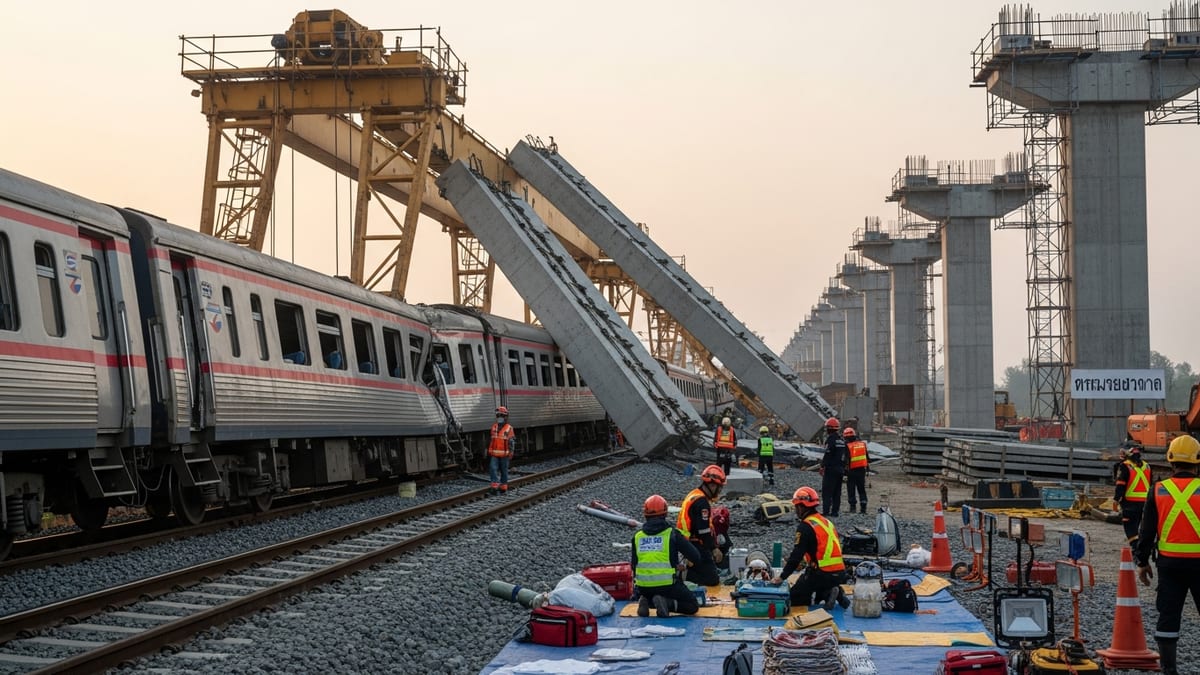
Fire Near Tracks Triggers Network-wide Suspension
According to initial reports from rail operators and transport agencies, the incident began when a trackside fire broke out close to signalling and power infrastructure along a busy main line. The blaze led to an immediate halt to all services through the affected section, as trains were ordered to remain in stations or held at signals for safety checks.
Publicly available information indicates that the fire caused visible damage to cable ducts and equipment housings that control both train movements and the power supply to overhead lines or third-rail systems. Until engineers could confirm that no further damage had occurred and that the structures around the route were safe, traffic was stopped in both directions.
The disruption affected a mix of long-distance, regional and commuter services, with some operators announcing complete cancellations while others attempted to turn trains short of the incident area. Replacement road transport was limited, and in some locations not immediately available, leaving many travelers searching for alternative routes.
Local media coverage described crowded concourses, packed platforms and extensive queues at ticket offices as passengers sought refunds, exchanges, or last-minute bookings on coaches and flights. For many, same-day arrival at their destination was no longer guaranteed.
Operational Challenges for Rail Infrastructure
Rail specialists note that trackside fires pose a particular challenge for modern signalling and power systems. Heat and smoke can damage high-voltage cables, fibre-optic lines and control cabinets that are critical to safe operations. When these components are compromised, operators must assume the most cautious scenario and suspend traffic until full inspections are complete.
In previous incidents, including fires affecting cable ducts and lineside equipment on high-speed routes and suburban networks in Europe and North America, services were significantly reduced or halted for hours while teams assessed the extent of the damage and carried out temporary repairs. In some cases, full restoration of normal timetables has taken several days, particularly where complex junctions or busy terminal approaches were involved.
Rail infrastructure managers generally employ layered safety systems designed to detect faults, trigger automatic signal protections and prevent trains from entering areas where equipment may be failing. A fire next to the tracks can interfere with these systems in unpredictable ways, prompting an operational preference for broad, short-term suspensions rather than attempting to run partial services through a potentially unstable zone.
The current suspension follows that pattern, with operators emphasizing that network reliability can only be restored once engineers have verified the integrity of both the signalling and power supply. Until then, temporary speed restrictions and single-track working are considered secondary options to an initial blanket halt of traffic.
Impact on Passengers and Regional Travel
The sudden loss of all train services along a major route has wide-ranging impacts on regional mobility. Commuters have been advised to work remotely where possible, while leisure travelers and tourists are facing rebooked itineraries, missed connections and, in some cases, additional overnight stays.
Experience from similar disruptions shows that when a core rail corridor shuts down, roads quickly become congested as passengers shift to private cars, ride-hailing services and intercity buses. Airports near the affected corridor may also see increased last-minute demand, particularly on short-haul routes that duplicate the rail line.
Accommodation in major hubs and intermediate cities tends to fill rapidly in such scenarios, as travelers needing to break their journeys or await rescheduled trains seek hotel rooms at short notice. Travel insurers and consumer-rights organizations often receive a spike in claims and inquiries related to missed events, nonrefundable bookings and additional expenses.
For businesses, the suspension can disrupt supply chains that depend on rail for time-sensitive freight, especially where passenger and freight services share infrastructure. While freight operations may be prioritized once limited capacity is restored, today’s cancellations highlight the vulnerability of tightly scheduled logistics to localized infrastructure incidents.
Restoration Efforts Under Way
Rail infrastructure teams were dispatched to the scene shortly after the fire was reported, with specialist engineers tasked with assessing the condition of signal cables, power lines and any affected supports or structures. Public statements from rail operators indicate that the first phase of the response focuses on making the site safe for detailed inspection, including the removal of any remaining hot spots and debris.
Once safety is assured, engineers typically conduct a section-by-section examination of lineside equipment to identify damaged components that must be replaced before trains can operate, even under reduced speeds. This can include installing temporary cable runs, rerouting power feeds and bringing in portable signalling units to restore a basic level of control over train movements.
Transport agencies are advising passengers that services may initially resume in a limited form, with fewer trains, longer journey times and possible diversions around the damaged section. Timetables are likely to be revised at short notice while network managers balance safety requirements with pressure to move stranded travelers as quickly as possible.
In similar past incidents on busy European and North American routes, full restoration of high-frequency timetables has typically followed several stages of interim operations, beginning with a small number of test runs and gradually building back to normal service as permanent repairs are completed.
What Travelers Should Do Now
Travelers planning to use the affected corridor are being encouraged to check real-time updates from train operators and national rail information services before leaving home. Publicly available information suggests that tickets dated for the disruption period may be accepted on later services or alternative routes, though specific arrangements vary by operator.
Passengers already holding reservations are advised to keep documentation of any additional costs incurred as a result of cancellations or long delays, including hotel bills, alternative transport receipts and evidence of missed connections. These records can be important when seeking refunds, partial compensation or travel-insurance claims.
For those yet to depart, rail user groups recommend considering flexible travel options, such as fully refundable fares or tickets that can be rebooked without penalty, until the full extent of the damage is known and a stable operating pattern has been reestablished. Where critical appointments or long-distance connections are involved, some travelers may opt for alternative modes of transport until confidence in rail reliability returns.
While today’s blanket suspension underlines the disruptive impact of trackside fires on modern rail systems, it also highlights the sector’s growing emphasis on safety-first responses and structured recovery plans. The coming days will show how quickly operators can move from total shutdown to a robust, predictable timetable that restores trust for regular passengers and visitors alike.