


More news on this day
All train services in and out of London Liverpool Street were suspended this afternoon after a trackside fire near Waltham Cross triggered a complete halt to movements on one of the region’s busiest rail corridors.
Get the latest news straight to your inbox!
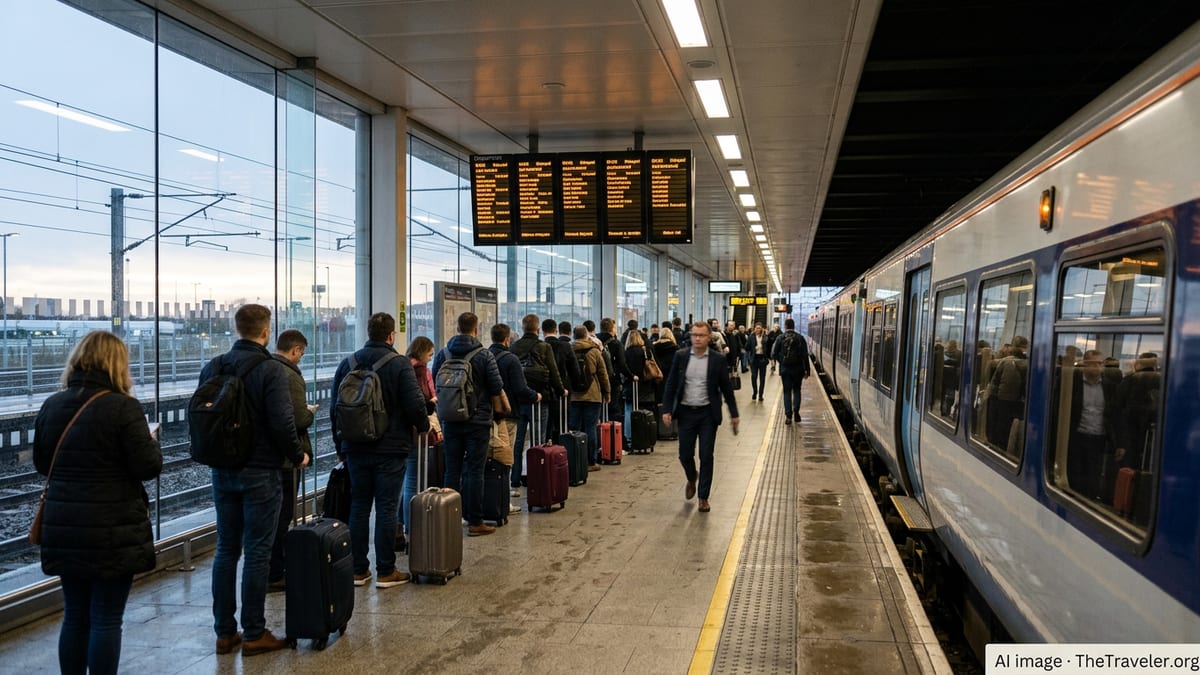
Fire Near Waltham Cross Brings Network to a Standstill
According to publicly available information from rail operators and social media updates, services were abruptly stopped after a fire was reported beside the tracks in the Waltham Cross area north of London. The incident occurred in the early afternoon, with operators stating that all lines serving London Liverpool Street had been brought to a standstill while the situation was assessed.
Initial reports indicate that the blaze affected infrastructure close to the railway, prompting safety systems to halt train movements. Images and descriptions shared by passengers suggest visible smoke near the line, leading to trains being held at signals and at stations across the wider network.
The disruption rapidly cascaded across routes linking London with Hertfordshire, Essex and East Anglia. Regional and commuter services were either terminated short of the capital or cancelled entirely, leaving carriages crowded and concourses filling with stranded travelers during what is already a busy summer holiday period.
Severe Travel Disruption for Commuters and Holidaymakers
Passengers heading into London for work faced extended delays, with some services held in place for long periods before being turned back. Others reported being asked to leave trains at intermediate stations and seek alternative options by road or via other rail termini. Online journey planners showed a rolling series of cancellations and “do not travel” advisories on routes normally feeding into Liverpool Street.
The timing of the fire coincided with afternoon departures for leisure travelers, including families heading to coastal destinations and international flights via connecting services. As trains backed up on approach to the capital, connections were missed and itineraries had to be hastily reworked, with some travelers turning to intercity coach lines or ride-hailing services where available.
According to published coverage, disruption was particularly acute on services linking London with Hertfordshire and the Lea Valley, as well as longer-distance trains serving Suffolk and Norfolk. With key junctions effectively blocked, knock-on effects were felt far beyond the immediate vicinity of the fire, impacting regional timetables and freight movements.
Safety Protocols and Infrastructure Checks Under Way
Railway operators activated standard incident protocols, suspending traffic through the affected section while fire crews dealt with the blaze and engineers began checks on the line. Publicly available operational guidance highlights that any fire close to tracks, power cables or signalling equipment requires a cautious response, as even minor damage can compromise safe operations.
Once the flames are fully extinguished, infrastructure specialists are expected to inspect track, ballast, cabling and lineside equipment for heat damage. Overhead line systems, signalling cabinets and communication cables can be particularly vulnerable, and any signs of melting, smoke damage or deformation may require immediate repairs before services can resume.
Until those inspections are complete, the priority remains preventing trains from entering the affected section. This conservative approach, while highly disruptive for passengers, is consistent with wider industry practice in Europe and North America, where recent trackside fires have led to full suspensions while safety checks are carried out.
Advisories Urge Passengers to Replan Journeys
Public updates from train operators and rail information channels have urged passengers to delay journeys where possible, or to re-route via alternative London terminals. Travelers already on the network are being advised to listen for on-board announcements and to check departure boards frequently, as train allocations and platforming can change at short notice during a major disruption.
Some tickets are being accepted on other operators’ services and local transport, according to online passenger reports, although availability varies by route and time of day. With heavy demand on parallel lines and on long-distance coaches, capacity constraints are expected to persist into the evening peak even if partial services resume.
Travel-news outlets recommend that visitors with time-sensitive connections, such as flights or international trains, consider allowing substantial extra time or exploring options from alternative rail hubs. Those with flexible plans are being encouraged to postpone nonessential trips until a clearer picture emerges on restoration of normal service.
Growing Pattern of Fire-Related Rail Disruptions
The incident near Waltham Cross comes amid a wider pattern of fire-related disruptions on rail networks across Europe and beyond. Recent summers have seen a rise in lineside fires linked to hot, dry conditions, vegetation growth near tracks and, in some cases, suspected vandalism or accidental ignition.
In several cases referenced in recent press coverage, even relatively small fires have resulted in hours of suspended service while infrastructure is inspected, reflecting an increasingly risk-averse approach to asset safety. Operators emphasize that damage to signalling cables, power equipment or overhead lines can have far-reaching consequences if not detected promptly.
Travel analysts note that such incidents underscore the importance for passengers of checking live information before departure, particularly during the summer months when heat and dry vegetation heighten fire risk. For rail operators, the Waltham Cross fire is likely to prompt renewed scrutiny of vegetation management and resilience planning along critical corridors serving major city terminals.