


More news on this day
Rail passengers faced severe disruption on Sunday after a large trackside fire near Waltham Cross brought all services in and out of London Liverpool Street, one of the capital’s busiest railway terminals, to a standstill.
Get the latest news straight to your inbox!
Fire near the tracks shuts down a key commuter artery
According to published coverage, train movements were halted on Sunday afternoon after a series of fires were reported close to the railway lines in the Waltham Cross area, north of London. Services operated by Greater Anglia and other rail companies that use London Liverpool Street were stopped while the situation was assessed.
Reports indicate that the incident occurred at a critical point on the route into Liverpool Street, effectively severing one of the main commuter and regional corridors into the City of London. Trains already en route were held outside affected sections of track or diverted where possible, while others were cancelled outright.
Initial information shared by rail operators described multiple fires alongside the railway, prompting a request to bring all train movements in the area to a halt. The affected stretch of line is part of the busy network carrying services between London, Hertfordshire and Essex, including commuter, airport and longer distance regional trains.
By late afternoon, disruption was still being reported, with operators advising customers that knock-on delays and cancellations would continue even after the immediate fire risk had reduced. Passengers were urged to check live departure boards and journey planners before travelling.
Impact on passengers and weekend travel plans
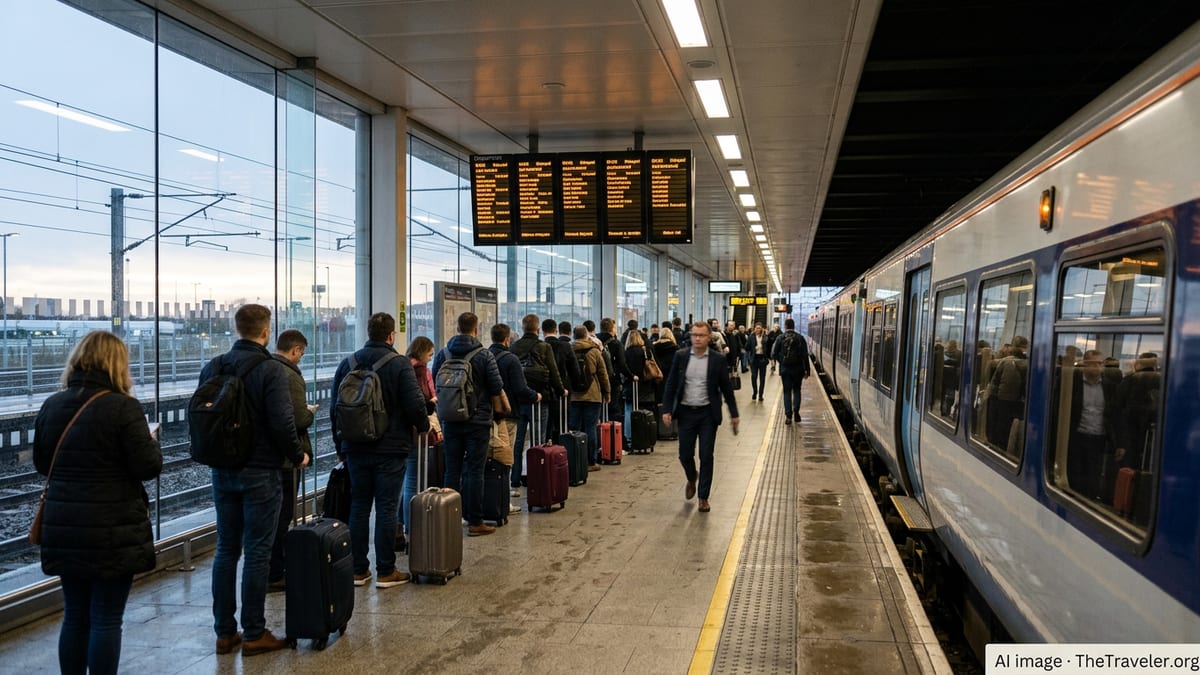
The sudden suspension of services into London Liverpool Street left thousands of passengers facing extended delays and uncertainty. Travellers heading into the capital for weekend events, flights or onward connections were forced to replan journeys at short notice, while those returning home from London encountered crowded platforms and limited alternatives.
Publicly available information shows that some trains were terminated at intermediate stations north of the affected area, leaving passengers to seek buses, taxis or other rail routes into London. Others were held for prolonged periods outside stations while signallers and control staff responded to the incident.
Social media posts and passenger reports described long queues for ticket assistance and information, with some travellers attempting to re-route via other London terminals such as King’s Cross, St Pancras and Euston. For visitors unfamiliar with the capital’s rail network, the sudden loss of a major terminus created particular confusion.
Travel disruption also rippled out to regional destinations served from Liverpool Street, including towns in Essex, Hertfordshire and beyond. With trains and crews out of position, some evening services remained subject to short-notice alterations even after partial running resumed.
Rail network vulnerability to lineside fires
The incident highlights the continuing vulnerability of busy rail corridors to lineside fires, which can be triggered by a range of causes including hot weather, vegetation, discarded items or electrical faults. When such fires occur close to tracks, operators frequently suspend traffic to protect passengers, railway staff and emergency responders while the area is made safe.
Network Rail guidance and publicly available technical material show that infrastructure managers must carefully inspect overhead lines, signalling equipment and trackside structures after any significant fire before allowing normal operations to restart. This can prolong disruption even when flames have been extinguished.
In recent years, similar incidents near major UK stations have caused prolonged delays, particularly during warmer, drier periods when vegetation is more susceptible to burning. The dense track layout on approaches to central London, where multiple routes converge into a limited number of platforms, can magnify the impact of any localised problem.
For operators serving London Liverpool Street, contingency planning typically includes options to divert some services, use alternative terminals or deploy rail replacement buses. However, capacity constraints on parallel routes and on the wider London transport network can limit how quickly disrupted passengers can be accommodated.
Advice for affected travelers and future journeys
Published travel advice in response to the latest incident urged passengers to check for updates before setting out, as services may continue to be altered at short notice while rolling stock and crews return to normal operating patterns. Travelers were encouraged to use journey planners and live departure boards to identify the least disrupted routes.
Passengers holding advance or day tickets for disrupted services were generally advised they could travel on later trains once lines reopened, subject to capacity, or seek refunds and compensation in line with the policies of individual operators. Travelers with time-sensitive connections, such as flights from London airports, were advised to build in additional contingency where possible.
For future trips into and out of London Liverpool Street, regular users of the route may wish to familiarise themselves with alternative options via other London terminals or, where practical, local bus and Underground connections that can bridge gaps during major incidents. Experience from previous disruptions suggests that flexible planning, and allowing extra time for connections, can significantly reduce the stress of unexpected delays.
Across the rail industry, the latest trackside fire is likely to add to ongoing discussions about vegetation management, infrastructure resilience and communication with passengers when serious disruption occurs. For now, travellers are being reminded that services into one of London’s busiest stations may continue to see residual delays even after trains begin running again.