


More news on this day
A collision between a train and a passenger minibus at a level crossing in Ukraine’s northwestern Rivne Oblast has left several people dead and a larger number injured, disrupting rail services and prompting local mourning in communities near the regional center of Rivne.
Get the latest news straight to your inbox!
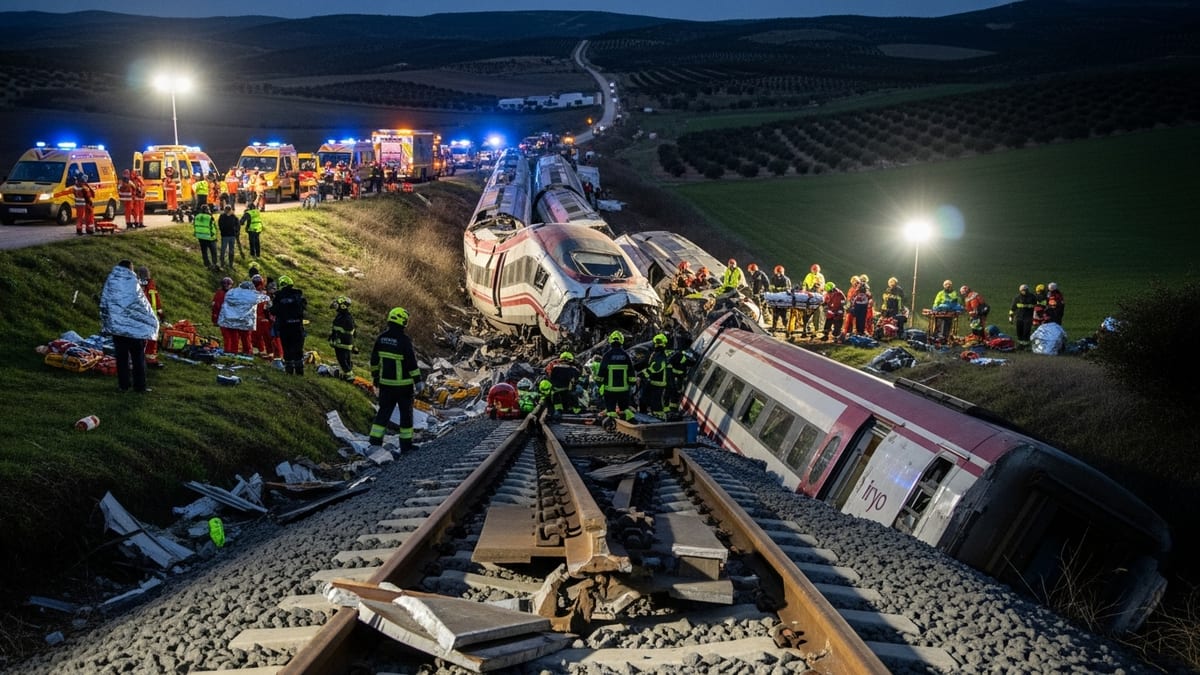
Fatal crash at rural level crossing near Rivne
Publicly available information indicates that the collision occurred on July 2 at a railway crossing in the village of Kvasyliv, just south of the city of Rivne in northwestern Ukraine. A passenger minibus operating a local route was struck by a train traveling along a regional line, with the impact destroying the smaller vehicle and scattering debris along the tracks.
Initial reports from Ukrainian media and the national rail operator describe the crash as a serious road and rail incident with multiple casualties among passengers of the minibus. Early updates mentioned several fatalities and injuries, with subsequent coverage from regional outlets indicating that at least four people were killed and others were hospitalized.
The train involved was operating on a standard passenger route through Rivne Oblast, a corridor that remains in active use despite the ongoing full scale war. Images published by local and national news outlets show emergency crews working beside stationary carriages and the wreckage of the yellow minibus at the crossing.
Rail services along the section were temporarily suspended after the crash while responders worked at the scene and investigators began documenting the damage. Passenger rail remains an important lifeline for domestic travel in Ukraine, making any prolonged disruption to regional lines particularly sensitive for communities that rely on them.
Casualty figures and emergency response
Regional news organizations and national outlets report that four people were confirmed dead in the immediate aftermath of the collision. Among the injured were passengers who were traveling in the route minibus at the time of the impact. Some victims were treated on site while others were transported to nearby medical facilities in Rivne and surrounding communities.
Video and photographs shared by Ukrainian media show a large presence of police, firefighters, railway personnel, and medical teams around the crushed minibus and along the rail embankment. Heavy equipment was brought in to clear debris from the crossing area and to stabilize the scene so that the train could be moved safely once documentation was completed.
Local authorities initiated emergency procedures to manage traffic diversions and coordinate medical care for survivors. The scale of the response reflects the severity of the incident, which has been described in Ukrainian coverage as one of the more serious recent level crossing crashes in the region.
In the nearby Rivne community, municipal representatives announced days of mourning for July 2 and 3, with flags lowered and public events scaled back in memory of those who died in the crash. Such observances have become a familiar, if somber, response to major transport tragedies across Ukraine.
Early indications on cause and safety conditions
At this stage, detailed findings on the cause of the collision have not yet been made public. Coverage from Ukrainian and international outlets notes that investigators are examining how the minibus came to be on the tracks at the moment the train approached, including whether the road user complied with signaling and barrier instructions at the crossing.
Level crossings in Ukraine, as in many European countries, are subject to a combination of visual signs, light signals, and in some cases physical barriers designed to block road traffic when a train is nearby. Published reports on the Rivne Oblast collision suggest that the crossing at Kvasyliv was equipped with protective infrastructure, though it remains unclear whether all systems were functioning correctly or whether driver behavior played a role.
Specialists are expected to review data from the train, witness statements collected at the scene, and any available CCTV or dashboard recordings from nearby vehicles. These materials will form the basis of a formal investigation that could take weeks or months before a full picture is presented to the public.
For now, transport observers in Ukraine are drawing attention to long standing concerns about driver discipline at railway crossings and the vulnerability of smaller road vehicles in collisions with heavy rolling stock, themes that have surfaced after previous minibus train crashes in the country.
Impact on travel and rail operations in the region
The collision has immediate and short term implications for travel in Rivne Oblast, a region that functions as a key transit point in northwestern Ukraine. In the hours after the crash, rail traffic through the affected segment was restricted while the damaged minibus was removed and tracks were inspected for structural harm.
Based on patterns observed in earlier Ukrainian rail incidents, temporary timetable changes and potential bus substitutions are likely on routes passing through the Rivne area while infrastructure specialists verify the integrity of the line. Travelers heading to and from Rivne and neighboring regions may experience delays or rerouted services until regular operations are fully restored.
Road traffic near Kvasyliv also faced disruption, as access to the level crossing was blocked and surrounding streets were partially closed to accommodate emergency vehicles and technical crews. Local residents using the route minibus service will need to adjust to interim changes while operators review their schedules and safety practices.
For international travelers following developments in Ukraine, the crash serves as a reminder that, despite the resilience of the country’s transport system in wartime, road and rail journeys can be affected at short notice by both security conditions and conventional accidents.
Broader context of rail safety in wartime Ukraine
The Rivne Oblast collision unfolds against the backdrop of a national rail network that has been under sustained pressure since Russia launched its full scale invasion in 2022. Ukrainian Railways has continued to operate extensive passenger and freight services across the country, often under the risk of missile and drone strikes on infrastructure.
Even under these conditions, traditional safety challenges such as level crossing management, vehicle maintenance, and driver behavior remain critical factors for accident prevention. Analysts of Ukraine’s transport sector have long highlighted the particular danger posed by collisions between trains and minibuses, which are widely used for local and regional road transport and can carry a significant number of passengers.
Comparisons have been drawn in public discussion to earlier bus train collisions in Ukraine and elsewhere in Europe, where investigations frequently emphasized the need for stricter enforcement of crossing rules and modernization of signaling equipment. While each event has its own circumstances, the Rivne crash is likely to renew calls for further investment in safer crossings and better training and oversight for route bus operators.
For communities in and around Rivne, the immediate focus remains on supporting the injured and families of those who died in the crash. As more details emerge from official investigative channels and local reporting, the incident is expected to inform broader debates about how to protect passengers traveling by both rail and road across Ukraine’s still heavily used transport corridors.