


More news on this day
Travellers at CFB Goose Bay in Labrador faced hours of uncertainty after two Air Borealis flights were cancelled and several others delayed on Wednesday, disrupting vital links to Natuashish, Wabush, Nain, and Gander.
Get the latest news straight to your inbox!
Disruptions Hit Key Regional Lifeline
The latest disruptions unfolded at Goose Bay, a joint military and civilian facility that serves as a critical transportation hub for coastal Labrador and central Newfoundland. Publicly available airport and schedule data show that Air Borealis operates many of the limited daily connections linking small Indigenous and remote communities to Goose Bay for medical appointments, work, and essential supplies.
On the affected day, two Air Borealis departures from CFB Goose Bay were cancelled, while several more experienced prolonged delays. The cancellations affected services on routes that typically connect Goose Bay with Natuashish and Nain on the Labrador coast, as well as Wabush in western Labrador and Gander on Newfoundland island. Travellers reported being unable to complete same-day trips that are often planned tightly around work, health care, and school schedules.
Airport departure boards and third party tracking platforms indicated knock on effects across the regional network, with some inbound aircraft arriving behind schedule and subsequent turnarounds pushed back. With limited frequencies on many of these routes, passengers whose flights did not operate had few same day alternatives and in many cases faced overnight stays in Goose Bay.
Reports from Canadian aviation tracking services and passenger rights organizations suggest that the Goose Bay disruptions formed part of a broader pattern of irregular operations affecting smaller regional carriers in 2026, where even a small cluster of cancellations can have outsized impact on isolated communities.
Travellers Face Long Waits and Uncertain Alternatives
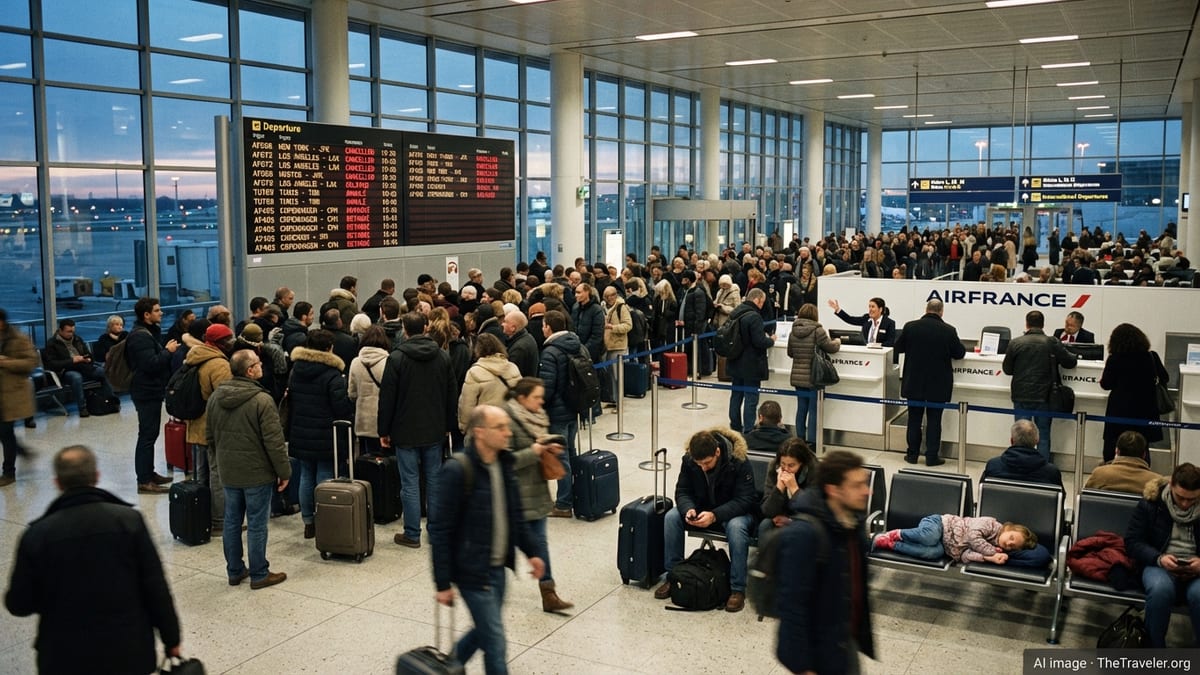
Passengers at Goose Bay described scenes of crowded departure areas and growing lines at service counters as they attempted to rebook. In a region with limited road access and long distances between communities, travellers often depend on a single daily flight, leaving them vulnerable when schedules unravel.
Some passengers bound for the north coast reported missing community events, medical consultations, or work shifts because of the cancellations. Others with onward connections through Gander and St. John’s faced the prospect of reorganizing entire itineraries when their initial legs from Goose Bay did not depart as planned.
With many of the affected communities reachable only by small aircraft or seasonal marine services, options such as driving or taking a bus were either unavailable or impractical. As a result, disrupted travellers frequently had to wait for the next available departure on the same route, which in some cases was not scheduled until the following day.
Local accommodation providers and taxi services in Happy Valley–Goose Bay experienced a sudden influx of stranded passengers, according to publicly available postings and regional travel forums, adding unexpected overnight costs to journeys that are already expensive for many residents of northern Labrador.
Operational Strain on a Sparse Network
Goose Bay’s 2024–25 airport authority reporting shows that Air Borealis and its partner carriers maintain a thin but essential network of flights to coastal Labrador, Wabush, Gander, and larger hubs such as St. John’s and Halifax. On many of these routes, only one or two round trips operate each day, meaning there is little slack in the system when weather, mechanical checks, or crew scheduling issues arise.
Industry observers note that regional airlines serving Canada’s North operate in challenging conditions, with short weather windows, small fleets, and long supply chains for maintenance and spare parts. When one aircraft is taken out of service or delayed, subsequent flights can cascade into delays and cancellations across multiple communities.
Recent consumer reports on Canadian air travel highlight that smaller regional carriers are not immune from the wider pressures facing the aviation sector, including staffing constraints and tight aircraft utilization. While major hubs often attract national attention when disruptions occur, irregular operations at regional airports such as Goose Bay can be just as disruptive for passengers because alternatives are so limited.
Travel analysts point out that the concentration of essential services in a small number of daily flights means travellers in Labrador face higher scheduling risk than passengers in larger southern markets, where missed flights can often be rebooked within hours.
Passenger Rights and Airline Obligations
Under the Air Passenger Protection Regulations administered by the Canadian Transportation Agency, travellers on domestic flights are entitled to certain standards of treatment during delays and cancellations, including communication, rebooking, and in some cases compensation. Air Borealis, like other Canadian carriers, outlines its policies for schedule irregularities and disruptions in its publicly available local and domestic tariff.
That tariff states that when flights are cancelled or significantly delayed for reasons within the airline’s control, the carrier may provide rerouting on the next available flight, meal vouchers, or overnight accommodation, subject to specific conditions and fare types. In the case of Goose Bay, passengers whose same day travel became impossible looked to those provisions to understand what assistance might be available.
Consumer advocates encourage travellers affected by disruptions to retain boarding passes, receipts, and any written communication from the airline to support later claims. They also recommend documenting the length of delay, missed connections, and any additional expenses such as hotels or meals, particularly when passengers are unable to return home because of the limited transport options in remote regions.
However, rules around compensation in Canada differ from those in some overseas jurisdictions, and not every cancellation will result in a payout. Factors such as weather, air traffic control restrictions, or other safety related decisions may exempt airlines from monetary compensation, though rebooking and basic standards of care may still apply.
Communities Call for More Resilient Connectivity
The latest disruption at Goose Bay has renewed conversations in Labrador about the reliability of air access for remote communities. Community leaders, health advocates, and residents have previously raised concerns that even short interruptions to air service can affect delivery of food, medicine, and time sensitive cargo, especially during periods when marine services are reduced or unavailable.
In coastal communities such as Natuashish and Nain, air links through Goose Bay provide not only passenger travel but also a conduit for mail and small freight. When flights are cancelled or heavily delayed, residents may experience gaps in deliveries and face uncertainty about when essential items will arrive.
Transportation analysts suggest that improving resilience could involve a mix of measures, from modest schedule increases on key routes to enhanced contingency planning for aircraft maintenance and crew availability. Some have also suggested that greater coordination between regional carriers and government agencies could help protect critical services such as medical travel and school transportation when regular commercial flights are disrupted.
For now, travellers in Labrador and Newfoundland continue to monitor schedules closely and build extra time into itineraries that pass through Goose Bay. The events of the latest cancellation day serve as a reminder that, in remote regions, the stakes of a missed departure can be far higher than a simple travel inconvenience.