


More news on this day
Emergency crews rushed to the scene after part of a railroad bridge near Des Moines collapsed, triggering a large multiagency response that halted train traffic and intensified scrutiny on rail infrastructure safety in the region.
Get the latest news straight to your inbox!
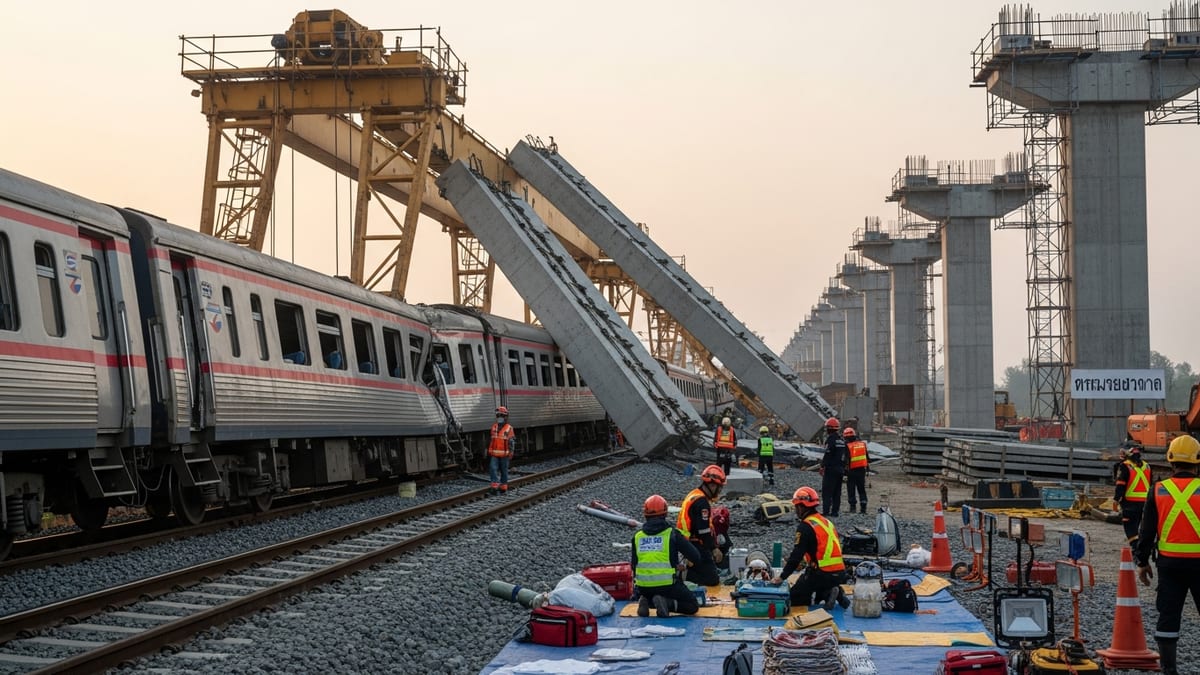
Chaotic scene as emergency crews converge on rail bridge
Initial reports indicate that the collapse occurred on a rail bridge spanning a section of the Des Moines River corridor frequently used by freight trains moving through central Iowa. Video from the scene, shared by regional news outlets and social media users, shows police, fire, and medical crews lining the riverbank while specialized teams assess unstable bridge sections and nearby rail cars.
Responders appear to have established staging areas on both sides of the river, with access roads partially closed to allow heavy vehicles and technical rescue units into the area. Publicly available information shows that boat crews were deployed on the water while personnel on the embankments monitored debris and structural movement.
There were no immediate indications of widespread injuries in early coverage. However, the scale of the response and the precautionary halt to rail traffic underscored the potential severity of a failure on a major freight corridor.
Images from local broadcasts show responders working around twisted metal and damaged timbers, with portions of the bridge deck either missing or sagging toward the river. Train cars nearby were inspected for possible derailment or damage as crews worked to secure the area.
Rail operations halted as investigators document damage
According to published coverage, rail traffic over the affected bridge was quickly suspended while emergency teams confirmed that no trains would attempt to cross the compromised structure. Nearby lines were evaluated for rerouting options, and dispatch centers advised crews to hold trains clear of the area until further notice.
Railroad representatives, as described in local reports, coordinated with emergency managers to share track data, train schedules, and hazardous material information. Early accounts indicated no confirmed release of hazardous cargo, though standard procedure required a careful review of manifests and visual inspections of any stopped railcars.
Drone footage aired by regional outlets shows inspectors photographing fractures, displaced beams, and collapsed segments as they move carefully across the remaining portions of the bridge. That imagery is expected to play a central role in determining whether the collapse began with a structural failure of the bridge itself or a problem with passing equipment on the rails.
Engineering consultants and structural specialists are also expected to be involved in the technical assessment, given the age and importance of many rail bridges in the Des Moines region. The initial safety priority remains preventing secondary collapses while responders and investigators remain under and around the structure.
Infrastructure age and recent high-water events raise questions
The incident comes at a time when river crossings across Iowa face intensifying pressure from repeated flooding and more frequent high-water events. Recent seasons along the Des Moines and nearby river systems have produced fast-moving currents and debris loads known to stress older bridge foundations and supports.
Publicly available planning documents for Iowa communities, including Des Moines and surrounding counties, have highlighted the vulnerability of older railroad bridges to scour, shifting riverbeds, and heavier modern trains. Hazard mitigation plans reference scenarios in which damage to a key rail bridge could disrupt regional freight movements and require a state or federal response.
Past events in the broader Midwest, such as flood-related rail bridge collapses and closures, have demonstrated how quickly a localized structural issue can ripple across supply chains. In those cases, emergency responses have been followed by lengthy engineering reviews, temporary repairs, or full replacements that can take months or years to complete.
In the Des Moines area, local coverage in recent years has documented ongoing work on highway and river crossings, with several structures undergoing either replacement or demolition as they reach the end of their service life. The latest collapse is likely to bring renewed attention to inspection schedules, load limits, and investment priorities for rail infrastructure that often sits just out of public view.
Community impact and travel disruptions near the river corridor
In the hours following the collapse, traffic disruptions extended beyond the railroad itself. Reports from Des Moines media indicate that nearby roads and trails were restricted as responders maneuvered large vehicles, cranes, and rescue boats into position. Residents in adjacent neighborhoods faced detours and intermittent access as crews worked along narrow river-adjacent streets.
Rail passengers and freight customers are expected to face delays while the line remains out of service. Depending on the outcome of structural evaluations, trains may be rerouted over other bridges or held for extended intervals, a pattern that has occurred in previous rail incidents across the region.
The visual impact of the damaged bridge, toppled spans, and emergency activity has also stirred unease among residents who rely on the riverfront for recreation. Many communities along the Des Moines River have invested in trails, parks, and river access points that coexist with long-established rail lines and industrial corridors.
Local officials and transportation planners are likely to weigh the incident as they review broader plans for riverfront improvements, balancing public access and redevelopment with the realities of aging freight infrastructure running through the same landscape.
Next steps: structural review, debris removal and long-term repairs
Once emergency crews complete their immediate safety checks and confirm that no one remains at risk near the site, the response is expected to shift toward stabilization and cleanup. Cranes and heavy equipment will likely be used to remove collapsed spans from the water, clear any damaged railcars, and recover debris that could obstruct river flow.
Rail inspectors and structural engineers will then determine whether partial repairs can reopen the bridge in the short term or whether a full closure and replacement will be required. That decision will depend on the condition of remaining piers, trusses, and track bed, as well as updated assessments of river scour and flood resilience.
The bridge collapse is also expected to draw attention from state and federal transportation regulators, given its potential implications for other river-spanning rail structures in Iowa. Funding mechanisms for rail bridge rehabilitation and replacement have increasingly focused on resilience to extreme weather, higher freight volumes, and the need to protect nearby communities.
For travelers and residents in the Des Moines region, the sight of emergency crews clustering around a fractured bridge is a stark reminder of how essential and fragile key pieces of transportation infrastructure can be. The coming weeks are likely to bring more detailed findings about what went wrong, along with difficult decisions about how and when to rebuild.