


More news on this day
A major train collision north of London has left 28 people in hospital, including nine reported to be in critical condition, after two passenger services collided near Bedford on a busy commuter route.
Get the latest news straight to your inbox!
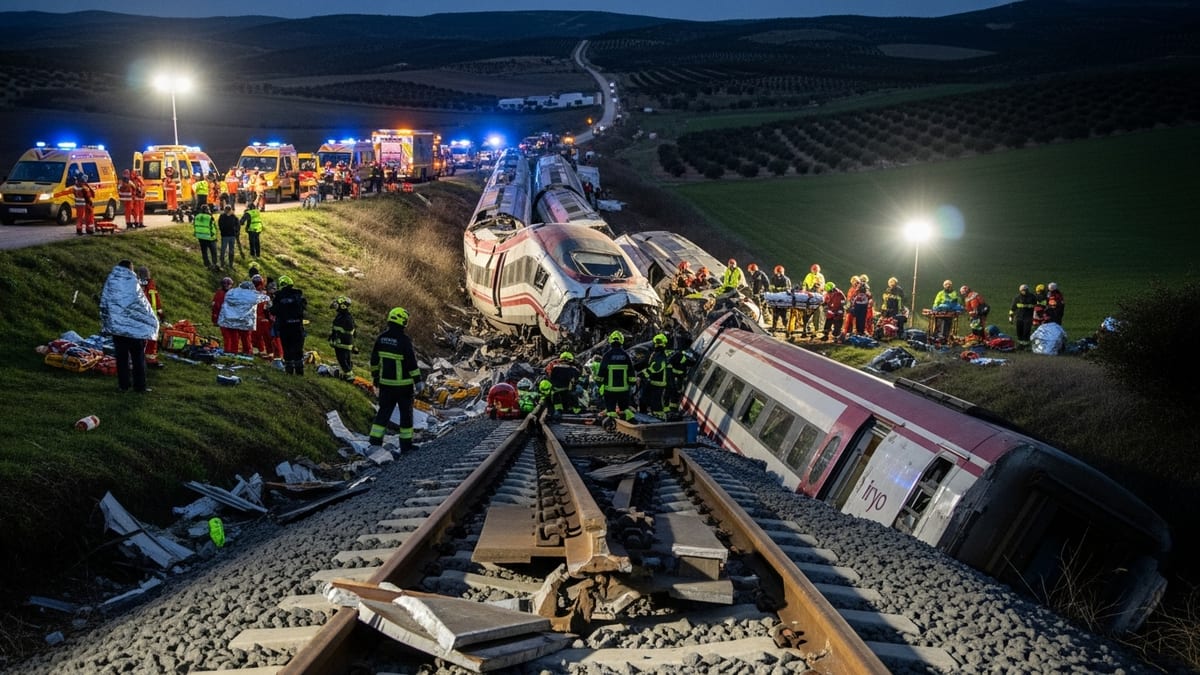
Serious collision on key commuter corridor
The collision occurred on the evening of 19 June 2026 on the Midland Main Line south of Bedford, a vital rail artery linking London with towns and cities in the English Midlands. According to published coverage, one southbound East Midlands Railway service and another passenger train were involved in the impact, which took place on a section of track that carries thousands of commuters and long-distance travelers each day.
Initial reports indicate that one person died at the scene, while dozens more sustained injuries of varying severity. Emergency services transported 28 passengers to hospitals across the region, where nine are described in public reporting as being in critical condition. Others were treated at the scene for more minor wounds and shock.
Images carried by international and British media show a line of carriages halted on the track near open fields, with multiple fire engines, ambulances, and specialized rescue vehicles positioned alongside the railway. Floodlighting was erected to support overnight operations as responders worked in difficult conditions to reach and stabilize the injured.
The incident has drawn attention across Europe, coming only months after other high-profile rail accidents on the continent. Travel industry observers note that the Bedford corridor is widely used not only by local commuters but also by visitors traveling between London and regional cities, underscoring the broader impact of the disruption.
Rescue operation and medical response
Publicly available information shows that a large-scale emergency response was activated shortly after the collision, with regional ambulance, fire, and police services joined by specialist rail incident teams. Medical staff established triage areas close to the tracks to prioritize treatment before patients were transferred to hospitals in Bedfordshire and surrounding counties.
Reports from national broadcasters describe passengers helping one another to move through darkened carriages, some of which had suffered visible structural damage. Rescue crews used cutting equipment and ladders in certain areas to assist people from elevated or twisted sections of rolling stock, while others were guided along trackside walkways to waiting vehicles.
Hospitals across the region enacted major incident protocols to manage the sudden influx of patients. According to news coverage, injuries range from fractures and internal trauma to lacerations and concussion. The nine patients categorized as critical are receiving intensive care, and medical teams are expected to carry out further assessments in the coming days as the full picture of long-term impacts becomes clearer.
Travel analysts point out that the scale of the response reflects lessons drawn from previous rail emergencies in the United Kingdom and elsewhere in Europe, where coordinated incident command and rapid triage have been identified as crucial in reducing fatalities and severe outcomes.
Disruption for rail passengers in and out of London
The collision has caused extensive disruption to services on one of Britain’s busiest intercity and commuter routes. According to operator statements reported in the press, trains between London St Pancras and destinations including Bedford, Wellingborough, Kettering, Corby, Nottingham, and Sheffield faced cancellations and significant delays through the night and into the next day.
Passengers were advised through media bulletins to check live information before traveling, with some services diverted and others terminating short of their planned destinations. Replacement buses were arranged for sections of the route, although capacity constraints and extended journey times created challenges for both local travelers and those connecting to long-distance services and international flights.
For visitors, the disruption highlights the importance of flexible planning when relying on rail connections to and from London. Travel experts recommend allowing additional time for transfers, keeping digital and paper copies of tickets in case of rebooking, and monitoring multiple information channels for updates when an incident of this scale occurs.
Industry commentators note that the Midland Main Line has been undergoing periods of upgrade and maintenance in recent years, including electrification projects and infrastructure renewals. While there is no confirmed link between these works and the collision, the incident is expected to intensify debate around network resilience, capacity management, and contingency planning for major disruptions.
Early focus on investigation and safety implications
According to published coverage, the national rail accident investigation body has opened a full inquiry into the Bedford collision. Investigators are expected to examine onboard data recorders, signaling logs, communications between drivers and control centers, and the physical condition of track and rolling stock to determine the sequence of events leading up to the impact.
Specialist teams will also take account of witness statements from passengers and railway staff, as well as any available CCTV footage from platforms, nearby infrastructure, and inside the trains. Their work is likely to explore a range of factors, including train speed, braking behavior, signaling performance, and any potential human or technical errors.
Rail safety experts interviewed by national outlets emphasize that the UK rail system remains one of the safest in Europe when measured by passenger kilometers traveled. Nevertheless, they note that incidents of this kind can expose vulnerabilities in procedures or technology that may not be evident in routine operations, making thorough investigation essential.
Interim findings from previous major rail accidents have sometimes prompted rapid changes, such as modifications to driver training, signaling rules, or emergency communication protocols. Observers anticipate similar scrutiny in this case, with particular attention to how two passenger services came to be in conflict on a critical stretch of main line track.
Traveler confidence and the wider rail context
The Bedford collision comes at a time when rail travel is central to many governments’ plans to reduce road congestion and cut carbon emissions. For both residents and international visitors, intercity trains provide an efficient alternative to domestic flights on key UK corridors, including routes north from London.
Travel sector analysts suggest that, while isolated incidents may temporarily unsettle some passengers, long-term demand for rail is shaped more by factors such as punctuality, affordability, and network coverage. Historical patterns in Europe show that even serious accidents rarely lead to sustained declines in passenger numbers, provided that clear corrective steps and transparent investigations are carried out.
For travelers planning journeys in the days ahead, rail advisors recommend confirming hotel and tour reservations that may be affected by altered arrival times, and considering travel insurance policies that cover delays and cancellations arising from transport incidents. Maintaining flexible itineraries, particularly when connecting to cruises or long-haul flights, can reduce the risk of knock-on disruption.
As the investigation proceeds and services gradually return to normal, attention is likely to focus on how any lessons from the Bedford collision are applied across the wider network. For many, the priority will be reassurance that the systems, staff training, and technology behind Europe’s busy rail corridors continue to evolve in ways that safeguard both everyday commuters and international visitors.