


More news on this day
A two train collision on a busy commuter route north of London has left a driver dead and 33 people in hospital with serious injuries, according to published coverage from UK and international news outlets.
Get the latest news straight to your inbox!
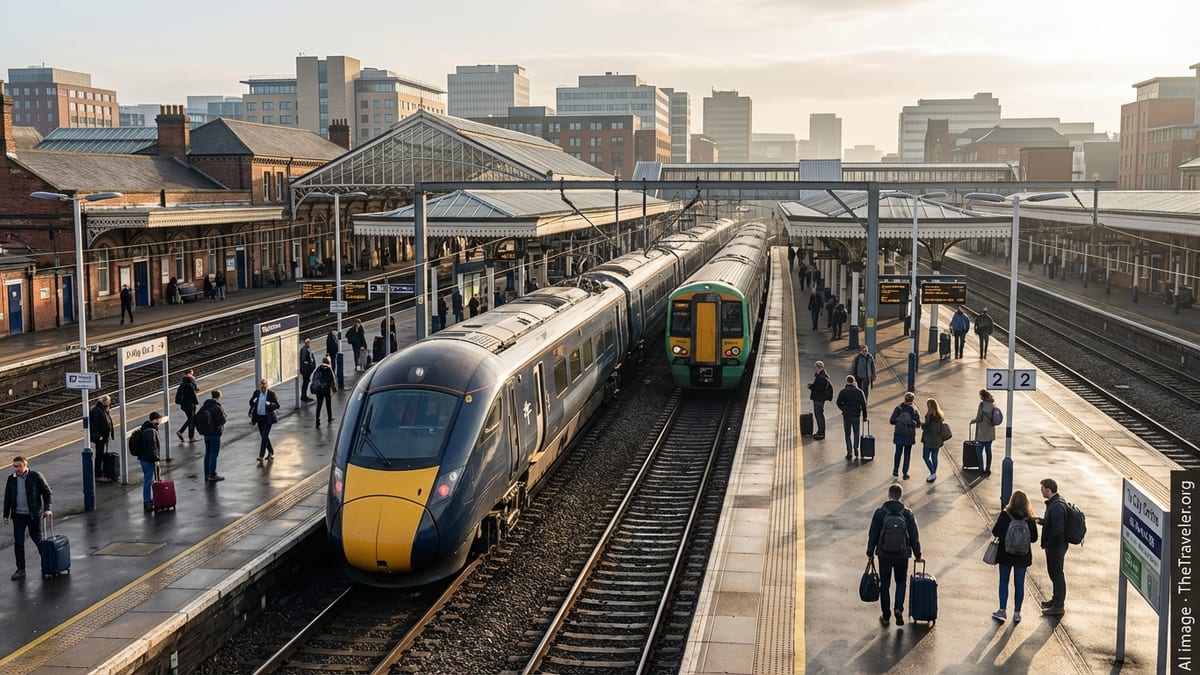
Crash on key London commuter corridor
Reports indicate that the collision occurred on the afternoon of Friday 19 June 2026 on the Midland Main Line near Bedford, around 90 kilometres north of central London. Two southbound East Midlands Railway passenger services, both bound for London St Pancras, were involved.
Based on information compiled from multiple news reports, one service was travelling from Corby and the other from Nottingham when they collided on the approach to Bedford. The impact came at a busy time of day for commuters and long distance travellers heading toward the capital.
Photographs from the scene published by several outlets show at least one train with significant damage to its leading coaches, with emergency personnel working along the trackside. Rail operators reported that power to overhead lines in the immediate area was switched off to allow rescue teams to work safely, causing wider disruption on the corridor.
Rail tracking data cited in coverage suggests the incident happened shortly after 5 p.m. local time, a period when services on the line are typically heavily used by both regional and intercity passengers.
Casualties and emergency response
Publicly available information from ambulance and police statements, relayed by national and local media, indicates that the train driver of one service died at the scene. The case has been described as a major incident by responding agencies.
Ambulance service updates carried by broadcasters and news agencies report that 33 people have been hospitalised with serious injuries. Within that group, early breakdowns from the East of England Ambulance Service, quoted in published coverage, refer to 11 people with very serious injuries and a further 22 with serious but non life threatening trauma. Dozens more are reported to have suffered minor injuries.
Multiple ambulances, a hazardous area response team and an air ambulance were sent to the line north of Bedford. A field style triage operation was established close to the tracks so that the most seriously hurt passengers could be stabilised before transfer to hospitals across the region, according to regional media reports.
Passengers interviewed by British and international outlets described being thrown forward on impact, with some carriages left dark and filled with dust. Accounts mention broken bones, head injuries and cuts from shattered glass, underscoring the violence of the collision at what appears to have been a relatively high line speed.
Disruption for rail passengers and regional travel
The collision has caused severe disruption on one of the main north south rail arteries into London, affecting both local commuters and longer distance travellers. East Midlands Railway has advised passengers through public statements reproduced by news organisations that services on the Midland Main Line face significant cancellations, diversions and delays.
Trains between London St Pancras and key East Midlands destinations such as Nottingham, Derby, Leicester and Sheffield have been curtailed or rerouted, with some operators encouraging passengers to postpone non essential journeys. Replacement buses have been organised on parts of the route, but reports describe crowded stations and extended journey times for those attempting to travel.
The line affected also serves Luton Airport Parkway, an important station for air travellers heading to and from Luton Airport. Although detailed information on airport specific disruption is still emerging, early indications are that some passengers heading for flights experienced missed connections or were forced to seek alternative road based transport at short notice.
Travel advisories circulated by rail operators and reported by UK media recommend that passengers check the latest service information before travelling, allow considerably more time for journeys, and be prepared for short notice alterations while the section of line near Bedford remains partially closed.
Early focus on investigation and safety context
The circumstances that led to two southbound services colliding on the same stretch of track are not yet fully clear. Coverage from British and international outlets notes that specialist investigators have been sent to the scene to examine the trains, signalling equipment and track infrastructure, and to gather data from on board recorders.
Analysts quoted across several reports point out that serious passenger train collisions of this kind have become less common in the United Kingdom in recent decades, following major investments in signalling, train protection systems and rolling stock design. The severity of the injuries in Bedford, however, highlights that even low probability events can have grave consequences when they occur on busy main lines.
Discussions in rail industry reporting are already turning to comparisons with past incidents in which a combination of signalling issues, human factors or infrastructure failures led to collisions on open lines. Observers expect that the investigation will assess the performance of automatic train protection systems, driver actions in the minutes before impact, and any potential role of track or signal faults on the affected section.
Published commentary also suggests that seat and interior design, luggage storage and table structures inside the carriages are likely to form part of the inquiry, as these factors can influence the pattern and severity of passenger injuries during a high energy impact.
Implications for confidence in UK rail travel
For travellers, the Bedford collision is a stark reminder that rail journeys, while statistically far safer than road transport, are not without risk. The incident comes at a time when UK rail operators are working to rebuild passenger numbers after the pandemic and amid ongoing debates over fares, punctuality and investment in infrastructure.
Travel industry commentators note that how quickly and transparently information is shared with the public, and how effectively disrupted passengers are cared for and re routed, will help shape perceptions of the network’s resilience. Compensation arrangements, clear guidance on ticket validity and the provision of alternative routes are likely to be closely watched by consumer groups.
At the same time, safety specialists cited in media analysis stress that detailed investigations and any resulting recommendations typically take months to complete. They argue that ensuring lessons are fully implemented across the network, rather than focusing only on the immediate headline figures from Bedford, is key to maintaining and improving the UK’s strong overall rail safety record.
For now, travellers planning journeys through the corridor north of London are being encouraged by operators and travel information services to monitor updates closely as recovery work and formal inquiries continue around the crash site.