


More news on this day
A freight train derailment in downtown Durand has blocked a main street crossing near the city’s historic rail hub, tangling local traffic and renewing questions about how quickly small communities can recover when a long train stops across their busiest routes.
Get the latest news straight to your inbox!
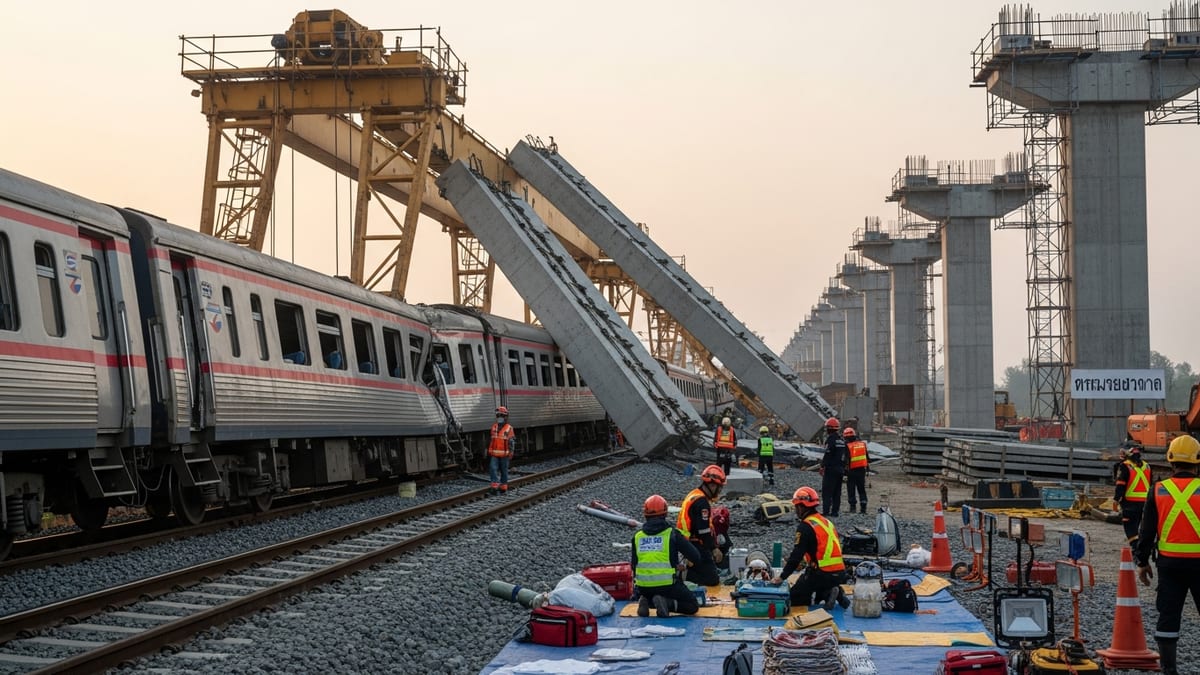
Freight cars off the tracks near Durand’s rail landmark
The incident occurred close to Durand Union Station, the city’s signature rail landmark and an active junction on one of Michigan’s key freight corridors. Publicly available information indicates that several freight cars left the tracks as the train was moving through the compact downtown area, coming to rest across a street-level crossing used daily by residents, commuters and visitors.
Initial reports do not indicate any widely reported injuries among train crew or people nearby, and there are no early signs of a hazardous materials release. The derailed cars appear to be general freight, a scenario that still requires careful inspection and cleanup but typically poses less risk than incidents involving tank cars or chemical loads.
The derailment adds an unwelcome layer of disruption in a community that has long embraced its rail identity. Durand Union Station is home to the Michigan Railroad History Museum and sits beside active freight and passenger lines, making the surrounding streets a regular passageway for trains and rail enthusiasts alike.
While rail activity is a familiar backdrop in Durand, a full derailment in the heart of downtown is far less routine and has an immediate effect on how residents and travelers move through the city.
Blocked crossing forces drivers onto longer detours
The most visible impact has been at the blocked street crossing itself, where crossing arms are down and freight cars are stretched across the pavement. Drivers who normally use this direct route through downtown are being forced to loop around several blocks or seek alternative crossings farther from the commercial core.
Comparable derailments and stalled freight trains in other Midwestern communities have led to delays stretching from minutes to hours as rail crews assess damage, bring in heavy equipment and begin the process of re-railing cars or clearing damaged equipment. In those cases, traffic often backs up on nearby streets, and navigation apps direct out of town drivers onto side roads that are not designed for heavy volumes.
For Durand, a blocked downtown crossing affects not only routine errands but also access between neighborhoods, local businesses and civic buildings clustered near the station. Visitors drawn by the historic depot and museum may encounter unexpected barriers and need to adjust walking and driving routes around the rail corridor.
Emergency planners across the United States have raised concerns in recent years about blocked crossings limiting access for fire, police and medical vehicles. Although there are no early reports of emergency access problems specific to this incident, the blocked street in downtown Durand adds to a wider national conversation about how communities cope when a long freight train suddenly becomes a stationary obstacle.
Railroad response and technical assessment begin
Once a derailment occurs, railroads typically prioritize stabilizing the scene, inspecting the track and equipment, and determining whether any cargo has spilled or been compromised. Publicly available information on similar recent incidents shows that specialized crews often use cranes and heavy trucks to lift derailed cars back onto the rails or onto flatbeds for removal, a process that can take many hours in a constrained downtown setting.
In Durand, the close proximity of buildings, streets and the historic station means cleanup work must be coordinated carefully to avoid further damage. Track segments, ties and ballast near the derailment site are likely to require inspection and repair before rail traffic can safely resume at normal speeds.
Railroads and federal regulators generally review data from train event recorders, track inspection logs and wayside detectors after a derailment, looking for possible causes such as equipment failure, track defects or operational issues. Those investigations can take weeks or months to reach formal conclusions, even after the visible wreckage has been cleared from the crossing.
While the technical analysis unfolds, residents and travelers will measure the incident more immediately by how long the street remains blocked and how quickly freight and passenger schedules through the region stabilize.
Community routines disrupted around a prized rail hub
Durand’s identity is tightly bound to its rail heritage, with the imposing red brick station serving as both a museum and an active stop on the state’s passenger network. As a result, any incident on the tracks near downtown resonates beyond the immediate inconvenience at a single crossing.
Local businesses that depend on walk-in customers may feel the disruption if drivers choose to bypass the downtown core while cleanup continues. Visitors who arrive hoping to photograph trains in front of the station or tour the museum could encounter restricted access, altered parking patterns or cordoned-off sidewalks near the crossing.
The city also regularly hosts rail-related events and festivals that bring enthusiasts from across the region. A derailment so close to the station may prompt renewed discussions about contingency plans for crowd management, signage and transportation options if an incident were to coincide with a major gathering.
For many residents, the blocked crossing is a reminder of both the benefits and the burdens of living along a busy freight corridor. Trains bring economic activity and a strong sense of place, yet they also introduce risks and occasional interruptions to everyday life.
Broader questions about small-town rail safety
The derailment in downtown Durand reflects a broader pattern of communities, particularly smaller cities along freight corridors, confronting the consequences when something goes wrong on the tracks. National data collected by federal transportation agencies highlights a steady stream of blocked crossings and derailments affecting drivers, cyclists and pedestrians who rely on at-grade routes across the rails.
Advocates for rail safety have pointed to incidents like this one as evidence that more investment is needed in grade separation projects, upgraded signaling and better coordination between railroads and local governments. Even when hazardous materials are not involved, a derailed freight train can close multiple access points, strand school buses and delivery trucks, and complicate emergency response patterns.
Durand’s situation underscores how a single incident can have outsized effects in a compact downtown where alternative routes are limited. Drivers may adapt quickly by learning new paths around the blocked crossing, yet the underlying questions about how to prevent similar events and reduce disruption are likely to linger long after the tracks are repaired.
As cleanup advances and the crossing eventually reopens, attention is expected to shift from the immediate tangle of freight cars and traffic cones to longer term considerations of infrastructure resilience, rail operations and the delicate balance between historic rail character and modern mobility in towns like Durand.