


More news on this day
Grenada is entering the 2026 peak travel cycle with the United States firmly at the center of its tourism strategy, as the island works to convert buoyant Caribbean-wide demand into renewed stopover growth after a mixed performance in 2025.
Get the latest news straight to your inbox!
United States Remains Grenada’s Anchor Market
Publicly available data show that the United States has consolidated its role as Grenada’s leading visitor source market in the post-pandemic period. Grenada Tourism Authority statistics for 2024 indicated that nearly half of all stayover arrivals in key months were sourced from the United States, reflecting the island’s deep air links with East Coast gateways and its growing profile among American leisure and diaspora travelers.
Earlier recovery patterns underline the same trend. Industry coverage in 2023 highlighted Grenada among the Caribbean destinations showing some of the strongest travel rebound from the United States compared with 2019, alongside Curaçao and Antigua and Barbuda. Sector analysts interpret this performance as evidence that Grenada has carved out a loyal US visitor base that is less volatile than some traditional European markets.
Regional economic assessments released in late 2024 and early 2026 describe tourism as the principal driver of Grenada’s recent growth, with North American arrivals, and especially US visitors, cited as an important contributor. Forecasts for 2026 assume that continued investment in hotel capacity and branded resort projects will be supported by steady inflows from the United States, reinforcing its status as the island’s anchor market.
While Canada, the United Kingdom and regional Caribbean neighbors remain important contributors to Grenada’s visitor mix, the scale of the US market means that shifts in American travel behavior have an outsized impact on the country’s overall tourism receipts and employment outlook.
Stopover Growth Faces Short-Term Headwinds
Despite the strength of the US market over the medium term, recent government reports point to a soft patch in Grenada’s stopover performance in 2025. A midterm fiscal and economic report covering the first half of 2025 indicates that total stayover arrivals declined by around 10 percent compared with the same period in 2024, with notable drops across most source markets.
The figures show that US arrivals in the first six months of 2025 were modestly lower than in the previous year, following strong gains in 2023 and 2024. Arrivals from Europe, Canada and the wider Caribbean also eased, suggesting that Grenada is not immune to global cost-of-living pressures, higher airfares and shifting travel patterns within the region.
Analysts note that this pullback comes after record or near-record stayover volumes in 2024, when capacity at many hotels and guesthouses was already stretched. Economic briefs emphasize that, over a multi-year horizon, Grenada’s tourism trajectory still points upward, with structural investment in rooms, infrastructure and marketing expected to outweigh short-term volatility in visitor numbers.
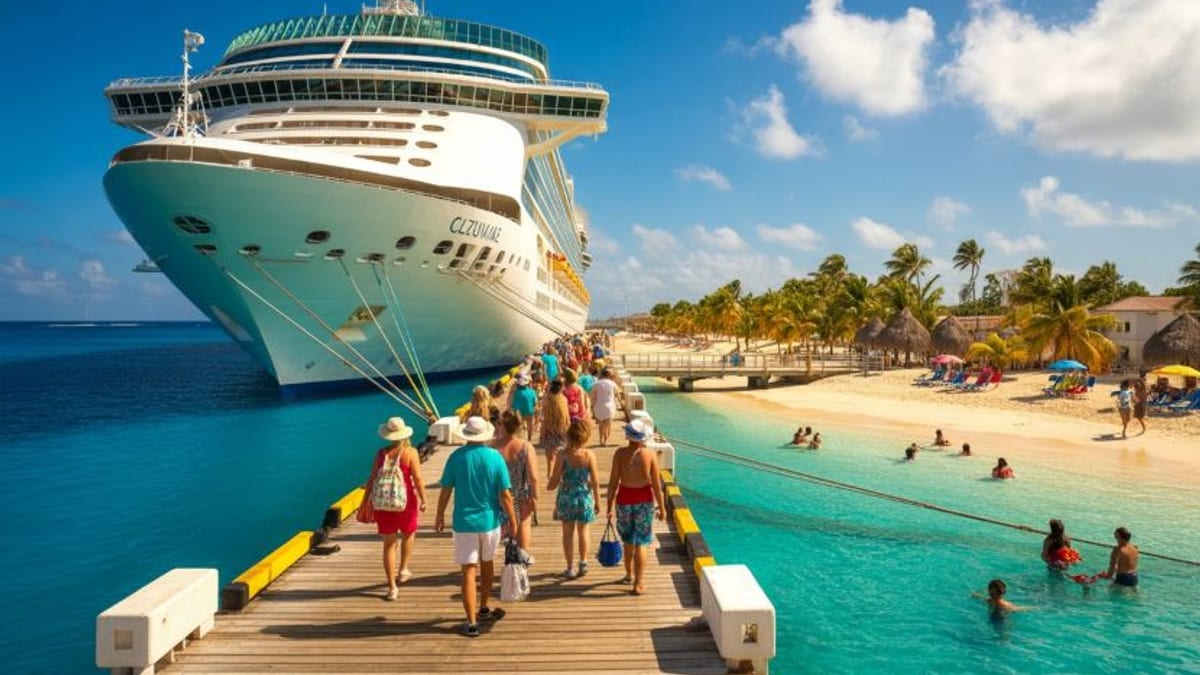
The island is also benefitting from a rebound in cruise tourism, which recorded double-digit growth in passenger calls through mid-2025. Although cruise visitors typically generate lower per-capita spending than stayover guests, the segment provides an additional pipeline of potential repeat travelers from the United States who may later return for longer vacations.
Caribbean Travel Demand from the US Continues to Climb
Grenada’s prospects in 2026 are set against a broader backdrop of surging US demand for Caribbean vacations. Regional tourism analyses from early 2026 report record or near-record visitor numbers across the Caribbean in 2025, with overall stayover arrivals estimated at around 35 million and a growing share of those visitors originating in North America.
Industry research points to several factors sustaining this appetite: expanded airlift from major US carriers, strong household spending on travel even as other discretionary purchases slow, and the Caribbean’s relative proximity and perceived safety compared with longer-haul destinations. The 2026 FIFA World Cup, hosted partly in US cities, is also expected to support additional regional travel as visitors combine tournament attendance with side trips to nearby islands.
Specific islands such as Barbados, the Dominican Republic, Jamaica and the Bahamas have all reported recent periods in which the United States became their top or fastest-growing source market. This pattern indicates that Grenada is competing in an increasingly crowded field for American travelers but is also well positioned to capture spillover demand as more US visitors look beyond the largest resort destinations.
Consultants tracking hotel performance in the Caribbean suggest that room demand has been growing faster than supply, helping lift occupancy and average daily rates across many islands. For Grenada, this dynamic increases the incentive to continue adding quality accommodation while carefully managing costs so that the destination remains competitive for US travelers seeking value.
Airlift and New Capacity Support 2026 Outlook
The strength of Grenada’s US market is closely tied to its air connectivity. Flight schedules compiled by independent aviation platforms show that Grenada’s Maurice Bishop International Airport is currently linked to several major US hubs through services operated by American Airlines, JetBlue and Delta, alongside regional carriers that provide onward connections from other Caribbean gateways.
Nonstop routes from New York, Miami and other East Coast cities are especially important for capturing high-spend US leisure travelers and Grenadian diaspora residents. Published travel data show that airlines have been adjusting capacity in response to strong Caribbean demand, adding frequencies on some routes and deploying larger aircraft during peak seasons.
At the same time, Grenada has pursued a steady pipeline of investment in hotel and resort projects. International financial institutions and national budget documents reference ongoing expansion in tourism accommodation capacity, including new branded properties and upgrades to existing resorts. These projects are expected to support increased stayover volumes over the next few years while broadening the island’s appeal across segments such as luxury, all-inclusive, wellness and eco-tourism.
Infrastructure improvements, including airport enhancements and public realm upgrades in key tourism zones, are being framed as part of a wider strategy to capture a greater share of regional traffic. For US travelers, these developments translate into more choices in flight options, room categories and price points as they plan Caribbean trips for winter 2025 and into 2026.
Competition and Sustainability Shape Grenada’s Next Phase
As Grenada leans more heavily on the US market, officials and industry observers are also weighing questions about competitiveness and sustainability. Caribbean-wide analyses highlight rising concerns about overcrowding, environmental pressure and the need to ensure that tourism revenues translate into broad-based benefits for local communities.
Grenada’s tourism positioning, often centered on smaller-scale resorts, diving, sailing and nature experiences, is seen in regional commentary as relatively well aligned with travelers seeking less congested alternatives to major mass-market destinations. Maintaining that balance as arrivals grow from the United States and elsewhere is likely to remain a core policy consideration.
Reports also underline the importance of diversification within tourism. Beyond traditional beach stays, Grenada is promoting events, culinary experiences, sailing regattas and cultural festivals to deepen visitor engagement and extend average length of stay. For US travelers, this diversification can help differentiate the destination in a marketplace where many Caribbean islands offer similar sun-and-sand propositions.
Looking ahead to the remainder of 2026, Grenada’s tourism fortunes will hinge on how effectively it can align expanded US airlift, new room inventory and a strong Caribbean demand cycle with careful destination management. The most recent data suggest that, despite near-term fluctuations in stopover arrivals, the United States remains central to that effort and is likely to continue leading Grenada’s tourism appeal for the foreseeable future.