


More news on this day
Australia’s aviation watchdog has launched a safety-focused review at Sydney Airport after a Jetstar-linked ground disruption and reported near miss with a Qatar Airways aircraft intensified scrutiny of how congestion and operational pressures are affecting traveller journeys through the country’s busiest gateway.
Get the latest news straight to your inbox!
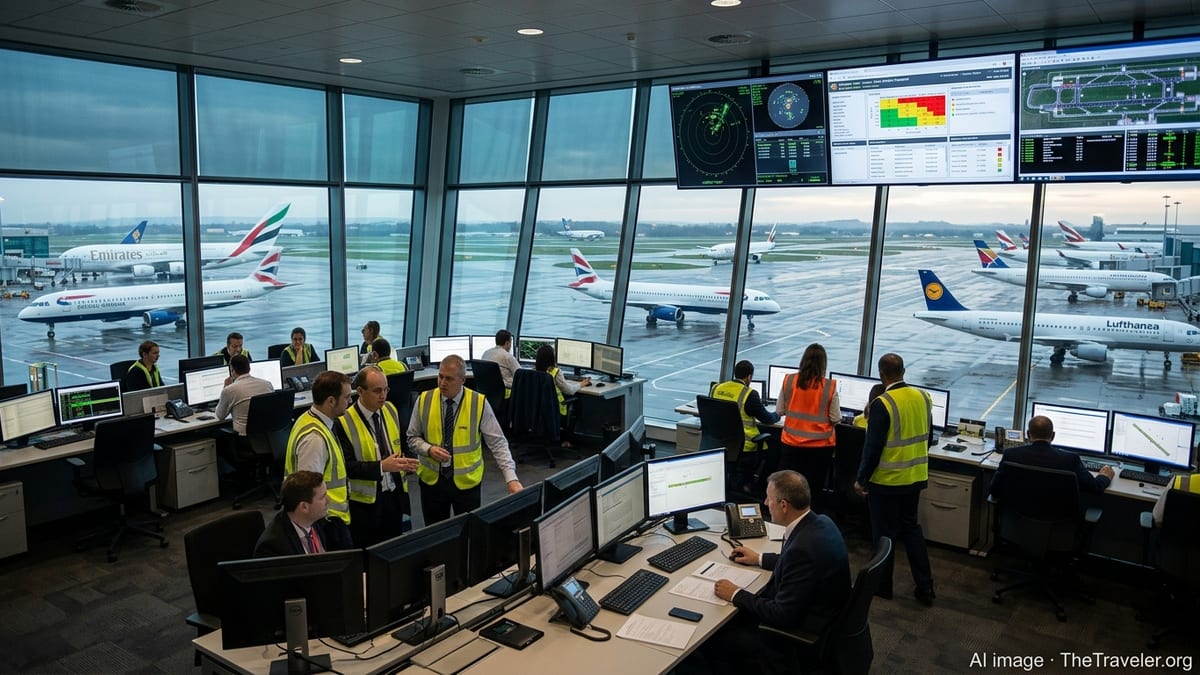
Near-Miss On The Tarmac Prompts Fresh Scrutiny
Recent coverage from Australian broadcasters and local media describes an incident in which a Jetstar aircraft and a Qatar Airways widebody came into close proximity on the tarmac at Sydney Airport, reportedly leaving a ground crew member injured and triggering an emergency response. Early accounts suggest the situation arose while one aircraft was being towed and another was taxiing for departure, with safety margins narrowed enough for the occurrence to be classified as a near miss.
Reports indicate that air traffic services, airport ground operations and airline procedures are all being examined as investigators piece together the sequence of events. The episode has revived wider questions about how Sydney Airport manages aircraft movements during peak periods, as well as how quickly ground staff and flight crews can respond when things do not go to plan.
Publicly available information shows that Australia’s transport safety investigators routinely look at both immediate causes and systemic issues when incidents occur at major hubs. In this case, attention is expected to fall on communication protocols, tow and taxi instructions, and the way multiple operators coordinate when stands, taxiways and holding points are congested.
While the investigation remains at an early stage, the near miss has already prompted calls from industry groups and passenger advocates for a broader review of safety culture at busy airports, especially where low-cost and full-service carriers share limited ramp space.
Regulator Focuses On Tarmac Safety And Traffic Management
According to aviation industry coverage, the Civil Aviation Safety Authority and the Australian Transport Safety Bureau have initiated lines of inquiry that collectively amount to an aviation safety review focused on Sydney Airport’s ground environment. Although formal terms of reference have not yet been publicised in detail, the emphasis is understood to be on ramp safety, vehicle and aircraft movements, and the interaction between airline operating procedures and air traffic control instructions.
Published guidance from Australian regulators highlights long-standing concerns about runway incursions, ground collisions and loading-area congestion at high-density airports. In practice, this means investigators are likely to consider whether staffing levels, training regimes and technology support systems are sufficient for current traffic volumes, particularly at times of disruption when schedules become compressed and aircraft queue for stands and departure slots.
Industry analysts note that Sydney’s complex operating environment, with a long-standing movement cap and a strict curfew, can translate into intense pressure to turn aircraft quickly. When delays cascade, the incentive to recover the schedule can sit uncomfortably alongside conservative safety margins, especially for low-cost carriers that depend on rapid turns and high aircraft utilisation.
Any recommendations that emerge from the review are expected to feed into updated safety action plans at both the airport and airline level, potentially including revised tug operating rules, enhanced marshalling procedures, or more conservative taxi routing when multiple aircraft are being repositioned simultaneously.
Jetstar Disruption Adds To Traveller Frustration
The near miss has landed against a backdrop of broader disruption involving Jetstar services, with recent consumer reports pointing to delays, cancellations and last-minute rescheduling affecting domestic and short-haul international routes. Traveller accounts shared through public forums describe long queues, limited communication at the gate and difficulties rebooking, especially when multiple services are impacted at once.
Australia’s competition regulator has previously documented periods of significant disruption linked to fleet issues and network recovery at Jetstar, noting that weather, air traffic control constraints and airline resourcing can combine to create sharp spikes in delays at major hubs such as Sydney. More recent media coverage of air traffic control staffing challenges has reinforced the perception that passengers are increasingly exposed to knock-on effects from operational stress across the aviation system.
For travellers, the latest Sydney Airport incident reinforces existing anxiety about reliability. When a safety scare unfolds in parallel with chronic timetable disruption, even infrequent flyers become more cautious about tight connections and same-day onward travel, particularly through hubs known for congestion. Travel agents and booking platforms are already advising customers to build extra time into itineraries involving Sydney, especially during morning and late-afternoon peaks.
While low-cost carriers such as Jetstar have helped democratise air travel in Australia, reports of repeated schedule shocks are prompting some passengers to reassess how they balance upfront fare savings against the risk of missed holidays, events or business meetings when operations go wrong.
Implications For Travellers Planning Sydney Journeys
Travel industry observers say the emerging safety review at Sydney Airport is likely to have several short- and medium-term implications for passengers. In the immediate aftermath of a serious incident, airports often adopt a more conservative operating posture, slowing down pushbacks, tows and taxi movements while procedures are reassessed. That can translate into longer waits at the gate or on taxiways, even when weather is fine and aircraft are serviceable.
If investigators recommend structural changes, travellers could see adjustments to gate allocations, altered boarding times or revised cut-offs for check-in and bag drop as airlines and airport management try to create more buffer in the system. These measures are typically framed as inconvenience in the short term in pursuit of a more predictable and safer operation over the longer run.
Publicly available guidance from Australia’s aviation and border agencies continues to stress the importance of arriving early, monitoring flight status closely and remaining alert to airline notifications about gate or schedule changes. For international visitors unfamiliar with Sydney’s layout, it is particularly important to factor in transfer times between terminals and to be prepared for last-minute stand changes when the airport is busy.
For now, travel planners recommend that passengers transiting Sydney on Jetstar or other carriers allow generous connection windows and consider travel insurance that explicitly covers missed connections and extended delays arising from operational or safety-related disruptions.
Broader Debate Over Capacity, Safety And New Infrastructure
The Sydney incident is also feeding into a wider national conversation about aviation capacity and safety as Western Sydney International Airport prepares to ramp up operations. Government papers and industry submissions underline that Sydney’s existing airport handles a large share of Australia’s total passenger movements, making any safety event at the hub a matter of national concern.
Policy documents on slot management and demand control at Sydney point to long-running efforts to balance capacity, noise and safety considerations within a tightly constrained operating envelope. Recent consultations have highlighted airline concerns about how departure and arrival slots are allocated and monitored, and whether current rules encourage robust on-time performance or create perverse incentives that contribute to congestion and operational shortcuts.
As new infrastructure comes online in Western Sydney, analysts expect regulators to take lessons from current reviews at the existing airport and apply them to procedures at the new site. That could influence everything from ground-handling contracts and ramp layout to the technology used for surface movement guidance and conflict detection.
For travellers, the outcome of the Sydney safety review will shape perceptions of Australia’s broader aviation network at a time when demand for domestic and regional travel remains strong. The way airlines and airports manage this moment of scrutiny may prove critical in rebuilding confidence among passengers who have endured years of volatility in their journey plans.