


More news on this day
A freight train derailment in Northeast El Paso has forced the closure of a key neighborhood road, disrupting daily traffic for residents and adding fresh concern over rail safety in a rapidly growing corner of the city.
Get the latest news straight to your inbox!
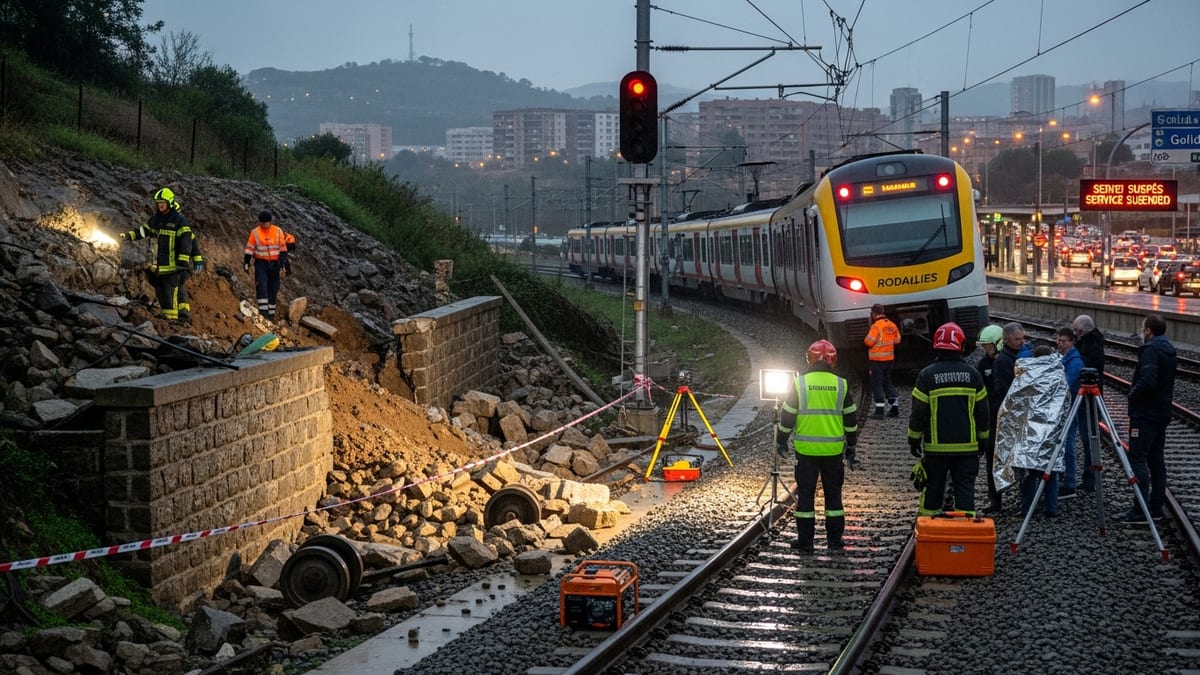
Freight cars leave tracks near residential corridor
Initial reports indicate that several freight cars left the tracks along a rail corridor that runs through Northeast El Paso, coming to rest near a busy surface street that connects housing areas with nearby commercial strips. The derailment damaged track infrastructure and adjacent roadway elements, prompting an immediate shutdown of the affected stretch to vehicle traffic.
Publicly available information from local transportation and emergency channels describes the incident as a low-speed derailment involving a freight consist, with the affected cars remaining largely upright but displaced from the rails. Visuals shared across regional news coverage and social media show railcars angled along the right of way, with heavy equipment and work crews moving into position to stabilize the scene.
The incident unfolded close to established neighborhoods in Northeast El Paso, a part of the city where rail lines run near homes, small businesses, and key commuter routes. The proximity of the tracks to everyday activity has intensified resident interest in how long the closure will last and what long-term safety improvements might follow.
While detailed causes have not yet been formally outlined, the derailment adds to a series of recent rail incidents across the United States that have affected local roads and transit access, reinforcing national attention on freight safety and track maintenance in urban areas.
Road closure snarls commutes and neighborhood access
The derailment has led to the full closure of at least one main neighborhood road in Northeast El Paso, with traffic diverted onto parallel routes that are already busy during morning and evening peaks. Based on mapping of the area around the tracks, the affected corridor functions as an important connector between residential subdivisions, schools, and commercial centers.
Local drivers have reported delays as they navigate side streets not designed to accommodate sustained detours. Delivery services, school-related traffic, and workers heading toward central El Paso or Fort Bliss are all experiencing longer travel times as they adjust routes in real time. Ride-hailing and freight delivery mapping tools are also beginning to flag the area as a congestion point.
According to published coverage of similar derailments in other U.S. cities, it is common for road closures near the tracks to remain in place for at least a full day while inspectors assess track integrity, overhead utilities, and bridge or culvert structures. In more complex cases, lanes may be closed for several days as crews remove derailed cars, repair ballast, and restore damaged pavement or guardrails.
In Northeast El Paso, the immediate priority is clearing the railcars safely and ensuring that no hidden structural issues remain in the roadway or rail bed. Until that work is completed, travelers are being advised through local news and traffic services to avoid the affected corridor and plan for extra time on nearby arterials.
No hazardous materials risk reported
Based on early public information, the train involved is reported to have been carrying standard freight rather than hazardous materials. There have been no widely reported indications of leaks, fires, or air-quality issues in connection with the incident, which has reduced the need for large-scale evacuations or shelter-in-place advisories.
This relatively contained outcome stands in contrast with several recent high-profile derailments elsewhere in the United States, where tank cars carrying ethanol or other flammable cargo led to extended fire suppression efforts and more extensive perimeter closures. In those cases, rail investigations typically examined loading practices, track conditions, and train handling on approaches to urban areas.
In the El Paso case, current attention is focused more on damage to infrastructure and disruption to mobility than on environmental impact. Public officials are expected to review the consist and cargo list as part of standard documentation, but early signals suggest that the incident will primarily be remembered as a transportation and logistics challenge rather than a hazardous materials emergency.
Even so, the derailment is likely to contribute to ongoing regional discussions about routing and scheduling of freight traffic near dense neighborhoods, school zones, and busy intersections, particularly during peak travel periods.
Cleanup, rail repairs, and timeline for reopening
Recovery operations at the scene are centering on re-railing or removing the affected freight cars and inspecting the track structure for hidden damage. Specialized heavy equipment is typically required to lift and move derailed rolling stock, and work can proceed slowly when space is tight near adjacent streets and utility lines.
According to prior derailment responses documented in other cities, rail companies generally work with contracted crews around the clock to reopen key lines, often prioritizing freight corridors that support regional supply chains. In Northeast El Paso, the rail segment involved serves both through freight traffic and local industrial customers, increasing the incentive to restore normal operations as quickly and safely as possible.
Once the railcars are cleared, crews are expected to replace damaged ties, re-tamp ballast, and realign rails to ensure trains can pass the site at regulated speeds. Parallel work on the closed roadway may include resurfacing damaged asphalt, checking for subsurface voids near culverts, and re-installing traffic control devices or safety barriers displaced during the incident.
The timeline for reopening the road will depend on the extent of subsurface damage and the sequencing of rail repairs. In similar incidents where freight cars derail adjacent to local streets without major bridge damage, roads have sometimes reopened within one to three days; more complex repairs can stretch into a week or longer.
Implications for travelers and future rail safety planning
For travelers visiting or passing through Northeast El Paso, the derailment is a reminder that rail corridors are critical pieces of the region’s transportation network, intersecting with key driving routes that residents rely on every day. Visitors staying in the area or using rental cars are being encouraged by local travel advisories to check real-time traffic maps and local news before setting out, especially during peak hours.
Tourism and business travel in El Paso often involve tight connections between the airport, cross-border bridges, and major arterials leading to the Northeast, East, and West Side districts. A localized closure near the tracks can therefore have outsized effects on itineraries, particularly for travelers unfamiliar with the city’s alternative routes and the spacing of its freeway interchanges.
From a planning perspective, the derailment feeds into wider national debates about how best to balance the efficiency of freight rail with the safety and reliability of neighborhood streets. Transportation agencies and city planners frequently look at such incidents when considering grade-separation projects, upgraded warning systems, or new design standards around rail-adjacent roads.
In Northeast El Paso, where residential growth continues to push closer to long-established rail lines, the current closure may spur fresh conversations about long-term investments in safer crossings, better detour planning, and more robust communication tools to reach both residents and travelers when disruptions occur.