


More news on this day
Travelers passing through the Stringtown, Oklahoma area are facing delays after a freight train derailed near the small Atoka County town, prompting the closure of a nearby road and disrupting traffic along one of southeastern Oklahoma’s key travel corridors.
Get the latest news straight to your inbox!
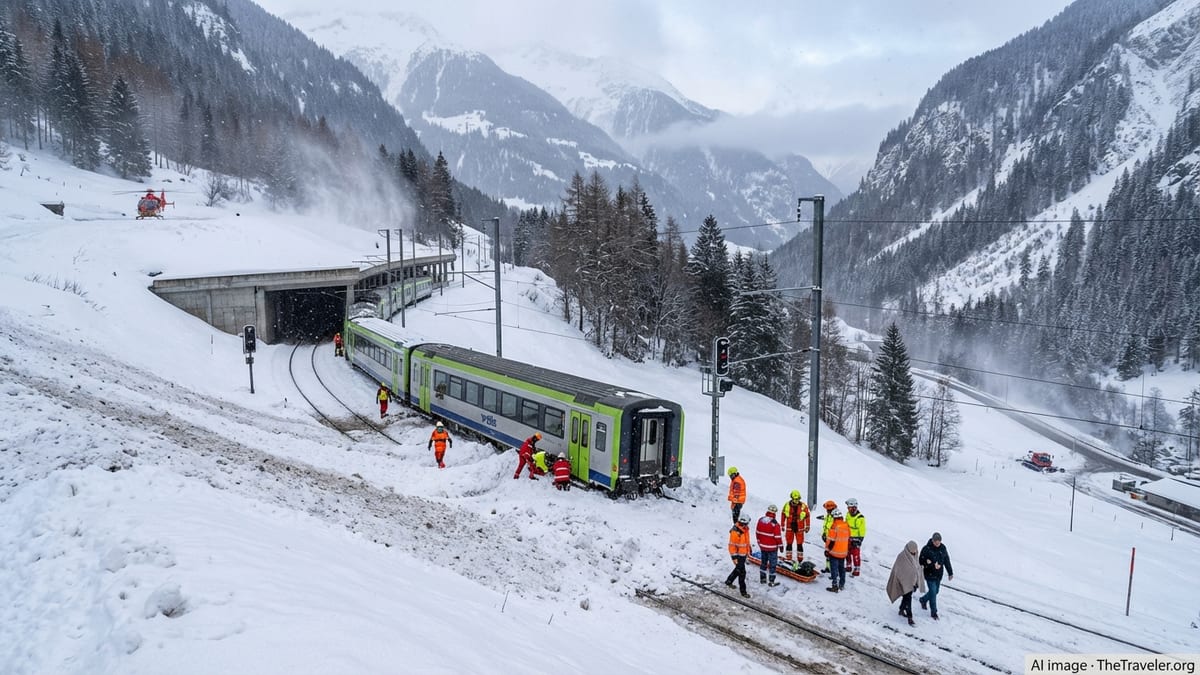
Derailment near rural junction disrupts local traffic
Preliminary reports indicate that the derailment occurred close to a rural junction outside Stringtown, where local roads intersect with the main rail line that parallels U.S. Highway 69. Early information from regional coverage describes several freight cars leaving the track, blocking a crossing and making the route impassable to vehicles.
The immediate impact has been felt most acutely by drivers who rely on the local road network for short commutes between Stringtown and surrounding communities. With the affected road closed, passenger vehicles and local delivery trucks are being routed onto parallel county roads, some of which are narrower and not designed for sustained high traffic volumes.
Published coverage notes that derailments of this type rarely affect the main highway directly but can quickly snarl movement on smaller roads that feed into it. For Stringtown, a town already shaped by the constant flow of highway and freight traffic, even a single blocked crossing can alter daily routines for residents, workers, and visitors.
As rail crews and contractors assess the site, the priority remains clearing the crossing and stabilizing any damaged track infrastructure before normal road access can resume. That process often takes many hours and, in some cases, stretches into multiple days when heavy equipment and track repairs are required.
Road closure and evolving detour options for travelers
Publicly available information indicates that the affected road has been closed to all through traffic while the derailment is addressed. Barricades and signage are typically installed on approaches well before the crossing to prevent drivers from reaching the blocked section and attempting unsafe turnarounds near the tracks.
For travelers heading to and from Stringtown, the most practical option is to remain on U.S. 69 or other state highways wherever possible and avoid relying on smaller shortcuts that might intersect with the incident site. In rural Oklahoma, such closures can add unexpected mileage and time, particularly for those unfamiliar with the local grid of county roads.
Detour routes are usually coordinated between transportation agencies and local law enforcement, then communicated through regional media, social channels, and navigation apps. Drivers planning long-distance trips along the U.S. 69 corridor are being advised in published coverage of similar events to check for updated route information before departure, especially during the peak morning and evening travel windows.
For Stringtown’s tourism-related stops and roadside businesses, the disruption is more about access than safety. Customers approaching from certain directions may find their usual turnoffs barricaded and may need to loop around via alternate county or state routes to reach fuel stations, diners, and lodging.
Context: Stringtown’s role on a busy travel corridor
Stringtown sits in Atoka County, in southeastern Oklahoma, where U.S. Highway 69 serves as a major north–south spine for long-distance motorists and freight traffic. The town’s proximity to that corridor has long made it a familiar waypoint for drivers traveling between the Oklahoma City area, the Red River, and onward to Texas and Arkansas.
Topographic and highway maps of the area show a lattice of rural roads branching off the highway toward ranches, lakes, and wooded recreation areas. Many of these routes cross the rail line at grade, making them vulnerable to extended closures when rail incidents occur. Even when the highway remains open, a blocked crossing can significantly alter how locals move between home, work, and services.
In recent years, transportation planning documents for Atoka County have highlighted the importance of improving both road safety and freight reliability along U.S. 69. The current derailment underscores how closely those priorities are linked in small towns where road and rail infrastructure run side by side, and where a single disruption can ripple through local commerce and regional tourism.
For travelers, the incident is a reminder that rural junctions often serve as key connectors, even if they do not appear on national route maps. When one of those connectors is suddenly taken out of service, options can become limited, particularly for oversized vehicles and recreational trailers that cannot safely navigate smaller backroads.
Rail safety concerns and cleanup timeline
While detailed investigative findings have yet to be released, the Stringtown derailment joins a series of recent freight incidents across the United States that have drawn renewed attention to rail safety, inspection practices, and the condition of aging track segments. National and regional media have reported on similar derailments in rural areas where access challenges can complicate both response and cleanup.
The removal of derailed rolling stock typically follows a well-established sequence: securing the site, evaluating any cargo risks, bringing in cranes or heavy loaders, and then cutting or lifting damaged cars away from the right of way. Only after that work is complete can track crews fully assess the rail bed and begin repairs, which may range from minor tie replacements to more extensive reconstruction.
According to descriptions from previous rural derailments in nearby states, such operations can result in intermittent or prolonged road closures as machinery is delivered, positioned, and removed. Even once the main wreckage is cleared, temporary restrictions sometimes remain in place while crews complete surfacing work, signal checks, and follow-up inspections.
Travelers should anticipate that the Stringtown-area road closure could extend beyond the initial day of the incident, depending on the complexity of the cleanup and the extent of any track damage. Local reports typically provide the earliest indicators of when a crossing is expected to reopen and whether additional constraints on vehicle size or speed will linger afterward.
Implications for regional travel and tourism
The derailment arrives at the height of the summer travel period, when more drivers are on the road visiting lakes, campgrounds, and family gatherings across southeastern Oklahoma. Even a localized closure can influence route choices for visitors unfamiliar with the area who rely heavily on digital navigation tools.
Published coverage of past closures near Stringtown and Atoka notes that interruptions along the U.S. 69 corridor can temporarily shift traffic onto alternate north–south routes, including smaller state highways that pass through other rural communities. Such shifts may slightly lengthen driving times but can also introduce travelers to lesser-known towns and attractions that sit off the main highway.
For now, the Stringtown derailment serves as a timely reminder for road trippers to build flexibility into their itineraries. Checking for incident reports before departure, allowing extra time between stops, and maintaining adequate fuel reserves are simple precautions that can reduce the stress of unexpected detours, particularly in regions where services are spaced farther apart.
As cleanup progresses and the affected crossing is restored, attention in the travel community is likely to turn toward how quickly normal traffic patterns return and whether any permanent changes are made to local routing, signage, or safety infrastructure as a result of the incident.