


More news on this day
The United Kingdom has updated its travel advisory for Oman as part of a wider regional warning, highlighting the risk that further Iranian attacks across the Gulf could occur at short notice and disrupt flights, airspace and shipping routes used by holidaymakers and transit passengers.
Get the latest news straight to your inbox!
UK Travel Advice Flags Heightened Risk Across the Gulf
Recent updates to United Kingdom travel guidance reflect growing concern about the security situation in the Gulf, with Oman specifically referenced alongside other regional states affected by Iranian missile and drone activity. Publicly available information shows that British travel advice for Gulf destinations has increasingly foregrounded the possibility of sudden airspace closures, delayed or cancelled flights and restrictions on movement as tensions with Iran deepen.
The latest language follows a series of Iranian strikes on targets in several Gulf countries, including Oman, as part of the broader conflict that has drawn in regional and Western actors. Published coverage of parliamentary discussions and government briefings indicates that officials in London have already had to facilitate repatriation options for British nationals trapped by previous disruption in the region, including charter flights routed through Omani airports when other hubs faced heavier operational pressure.
In this context, the advisory for Oman is framed less as a reflection of conditions inside the country itself and more as a recognition of its location at the heart of a contested region. The country borders the Strait of Hormuz, a corridor that has seen attacks on commercial shipping and threats of closure, raising the risk that civilian air traffic and cruise or ferry itineraries could be affected with little warning.
Travel industry bulletins circulated to corporate clients in recent months have also referred to heightened regional tension and warned that any escalation could lead to travel disruption and other unanticipated impacts, even in destinations not directly targeted. That language now aligns more closely with the tone of the UK government’s latest advice.
Iranian Attacks and the Strait of Hormuz Under Scrutiny
Reports from international media and analytical organisations describe a significant expansion of Iranian military activity across the Gulf, including coordinated missile and drone attacks on states such as Qatar, Kuwait, Bahrain, Jordan and Oman, as well as repeated strikes on commercial vessels in and around the Strait of Hormuz. Joint statements from European governments have condemned what they characterise as reckless attacks on commercial shipping and on regional partners.
These operations have sharpened concerns about freedom of navigation through one of the world’s most important oil and gas chokepoints. Open-source assessments indicate that Iran has periodically signalled its ability to close or severely restrict traffic through the Strait of Hormuz. Even when traffic continues under escort or via designated corridors, aviation and maritime insurers often respond by raising risk assessments, which can in turn influence airline routing decisions and cruise deployments.
Oman’s coastline straddles the approaches to the strait, and ports such as Duqm and Salalah have previously been mentioned in reporting on the regional conflict. Although the Omani government traditionally positions itself as a neutral mediator, the proximity of key infrastructure to any potential military exchange has made the country more exposed to spillover risk than in calmer periods.
For travellers, the most immediate implication is not necessarily physical danger on the ground in tourist areas, but the possibility that airline schedules, shipping lanes or overflight permissions could change rapidly in response to further incidents. The updated UK advisory reflects that distinction by emphasising unpredictability rather than declaring that all travel is unsafe.
Flight Disruption and Airspace Closures Impact Travelers
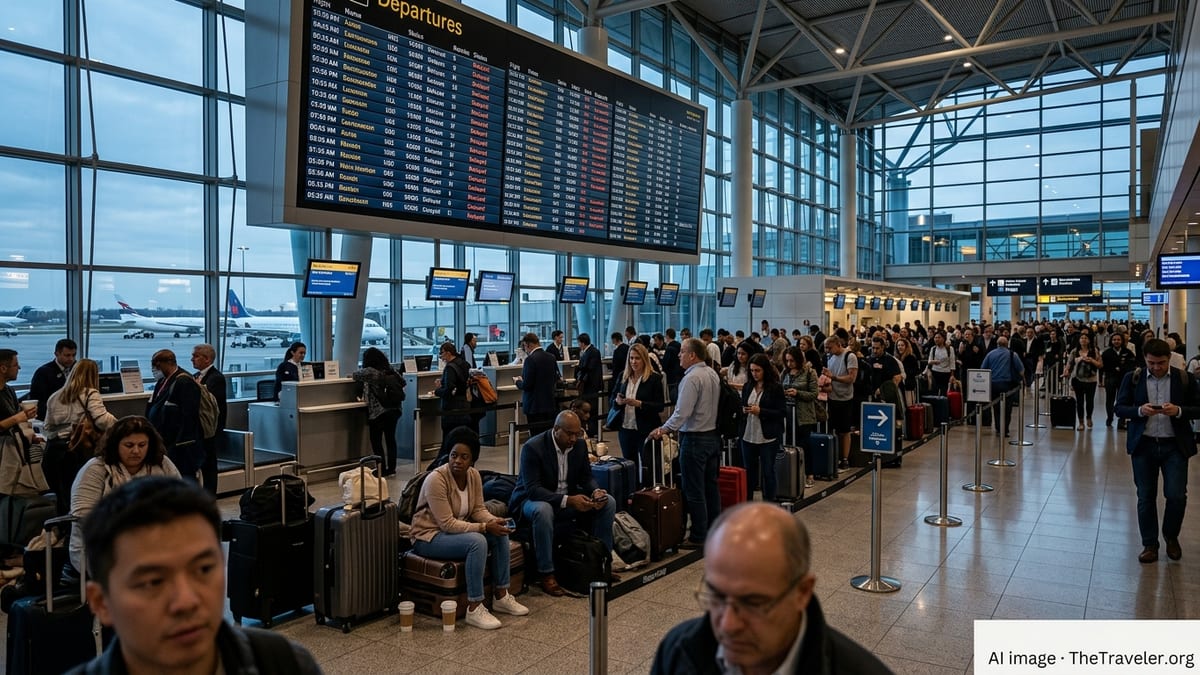
Across the Middle East, the current crisis has already produced episodes of major air travel disruption. Previous waves of strikes and retaliatory action prompted temporary closures or severe restrictions of airspace over multiple states, forcing airlines to divert or cancel flights and leaving travellers stranded at hubs in the United Arab Emirates, Qatar and beyond. Public records of evacuation efforts note that carriers and governments sometimes redirected passengers through Omani airports when other routes became unviable.
Specialist travel risk advisories dated in recent weeks describe airspace in and around Iran as closed or partially closed, with knock-on disruption reported in neighbouring countries, including Oman. While Muscat and Salalah have remained operational for much of the crisis, delays and last-minute schedule changes have become more common as airlines adjust flight paths to avoid higher-risk zones or to accommodate regional congestion.
Airlines typically design contingency routings to bypass affected airspace, but such workarounds can lengthen flight times and require additional fuel, constraints that sometimes lead carriers to trim frequencies or suspend certain services on short notice. This dynamic is particularly relevant for long-haul routes linking Europe, Asia and Australasia that use the Gulf as a transit corridor.
For leisure travellers heading to Oman itself, the main risk highlighted in publicly available travel guidance is that a planned trip might be disrupted even if conditions at Omani resorts and cultural sites remain calm. Travel experts advise that passengers remain in close contact with airlines and tour operators in the days before departure and consider flexible tickets or comprehensive insurance that covers geopolitical disruption.
How the Advisory Affects Holidaymakers and Transit Passengers
The updated UK wording does not amount to a blanket prohibition on travel to Oman, but it signals that visitors should exercise a higher degree of caution and be prepared for sudden changes. In practice, this means monitoring official travel advice feeds, registering contact details with consular services where relevant and having contingency plans in case flights are delayed, rerouted or cancelled.
For travellers using Muscat or Salalah as transit points on journeys between Europe, Asia and Africa, the risk profile is linked more to the stability of regional airspace than to conditions in city centres or beach destinations. If further Iranian attacks occur, aviation authorities could again impose temporary restrictions on overflights or suspend operations at airports viewed as being within range of missile or drone activity, even if those facilities are not directly targeted.
Package holiday providers and cruise lines that feature Oman on wider Gulf itineraries are also reviewing schedules in light of the evolving security picture. Public statements from travel companies in recent crises have shown a pattern of late changes, with port calls dropped or itineraries reversed to keep ships and passengers away from potential flashpoints around the Strait of Hormuz.
Independent travellers are advised by many risk consultants to maintain a higher level of situational awareness, to keep digital copies of key documents, and to budget extra time and funds in case onward travel is disrupted. The UK advisory underscores that in a fast-moving Gulf crisis, official assistance may be constrained, and individuals should not assume that rapid evacuation will be possible from every location.
Practical Guidance for Those Planning an Oman Trip Now
For those with imminent plans to visit Oman, publicly available guidance suggests a measured approach. Prospective visitors are encouraged to review the latest travel advisories from both their home governments and Omani authorities, paying close attention to any references to airspace status, restrictions on maritime activity and the potential for demonstrations or public gatherings related to the wider conflict.
Travel security professionals often recommend building redundancy into itineraries. That can include allowing longer layovers in case of delays, avoiding tight same-day connections through other Gulf hubs and checking whether tickets can be changed without significant penalties if routes are cancelled. Travellers may also wish to confirm that accommodation providers have clear protocols for sheltering in place and maintaining supplies in the event of short-term disruption.
Insurance is another critical consideration. Many standard policies exclude cover for events linked to war or civil unrest, but some specialist products offer limited protection against trip cancellation, curtailment or emergency evacuation caused by geopolitical events. Given the UK’s warning that attacks could occur at short notice, travellers are advised to scrutinise policy wording closely to understand what is and is not covered.
Ultimately, the updated UK advisory positions Oman within a region experiencing an unusually volatile phase of the Iran conflict. While daily life in many Omani cities continues with relative normality, the combination of Iranian attacks, shipping threats in the Strait of Hormuz and the precedent of rapid airspace closures means that anyone planning to travel should remain alert, informed and flexible.