


More news on this day
A freight train traveling through Valencia County, New Mexico, caught fire this week, triggering emergency evacuations, halting rail traffic along a key north–south corridor and renewing scrutiny of how hazardous cargo and critical infrastructure are managed in the fast‑growing region south of Albuquerque.
Get the latest news straight to your inbox!
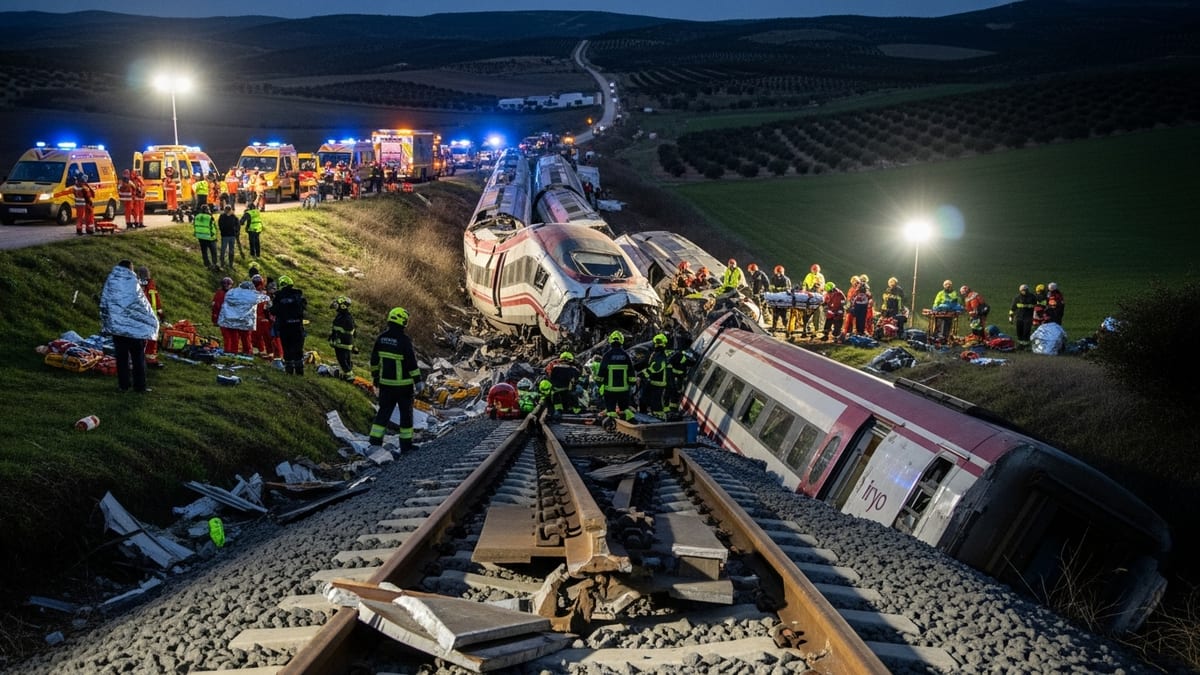
Fire Breaks Out Along Busy Freight Route
Preliminary information from regional news coverage and public incident summaries indicates that the fire broke out on a freight consist moving through Valencia County, a section of central New Mexico that hosts some of the state’s most heavily used rail lines. The affected train was reported to be hauling mixed freight when flames were first observed coming from several cars, prompting the crew to stop the train and request emergency assistance.
Reports from the scene describe thick smoke visible from nearby communities and along adjacent highways as first responders moved to secure the area. Early accounts suggest that the blaze involved at least part of the train’s consist rather than a single isolated component, although the exact point of origin remains under investigation.
As of the latest updates available, local agencies have not confirmed any fatalities. Some individuals were evaluated for smoke exposure and minor injuries, according to public-facing summaries of the response, but there were no immediate reports of life-threatening harm.
The incident unfolded in a corridor where freight and regional passenger services share infrastructure or run in close proximity, raising immediate concerns about potential knock-on effects for commuters and long-distance travelers across New Mexico.
Evacuations, Closures and Disrupted Travel
In the hours after the fire was reported, law enforcement and emergency-management agencies enacted temporary road closures and localized evacuations near the tracks while crews assessed what was burning and whether hazardous materials were at risk. Residents in parts of Valencia County have become increasingly familiar with such alerts as wildfire seasons have intensified, but a burning train added a new layer of uncertainty for households and businesses near the rail corridor.
Travelers on parallel highway routes experienced delays as traffic was diverted around response zones and smoke-affected segments. Publicly available traffic data showed slowdowns in and around rail crossings while officials assessed whether debris, heat damage or firefighting activity might compromise road safety.
Rail passengers also faced disruptions. New Mexico’s regional Rail Runner service and freight operations in the central part of the state have previously been affected by wildfires and derailments elsewhere, and early schedules following the fire indicated delays and potential cancellations while tracks and signaling equipment were inspected.
For visitors driving the busy north–south route between Albuquerque and points south toward Belen and beyond, the fire served as a reminder that New Mexico’s transportation network is tightly interlinked, with rail incidents capable of affecting highway travel across large stretches of the state.
Wildfire Risk, Industrial Hazards and a Growing County
Valencia County has long been identified in public planning documents as an area of elevated wildfire risk, with dry grasslands, bosque vegetation along the Rio Grande and expanding development increasing the potential impact of fire events. Community wildfire protection plans and hazard-mitigation studies emphasize that human activity, including transportation infrastructure, frequently plays a role in ignitions and in complicating response efforts.
The latest train fire underscores how industrial hazards and environmental conditions can intersect. High summer temperatures, gusty winds and low humidity are typical for central New Mexico at this time of year, creating conditions in which any spark can escalate rapidly. When a fire involves a moving train, those risks may extend for miles along the right-of-way, threatening multiple communities and sensitive ecosystems.
Publicly available planning documents for Valencia County already call for coordinated strategies to manage wildfire risk near transportation corridors, including vegetation management, improved access for responders and updated evacuation planning. The train fire is likely to feature in future discussions about how effectively those measures are being implemented along active rail lines.
For travelers, the episode highlights a less visible layer of risk. Rail corridors often run close to popular recreation areas, residential subdivisions and highway rest stops, meaning that a localized industrial incident can quickly become a broader public-safety concern for residents and visitors alike.
Rail Safety Scrutiny and Questions About Cargo
Across North America and Europe, a series of high-profile derailments and train fires in recent years has intensified debate about rail safety standards, inspection practices and the movement of hazardous materials. From crude-oil trains that burned for days to passenger services damaged by wildfires, these events have shifted public expectations about transparency and preparedness along rail routes.
In the Valencia County incident, public information released so far has not detailed the full contents of the affected train, and there is no indication yet of a large-scale hazardous-materials release. Even so, residents and travelers accustomed to seeing long freights of tank cars, covered hoppers and container stacks passing through their communities are likely to ask renewed questions about what moves along these tracks and how risks are managed.
Railroad companies operating in the Southwest routinely highlight investments in new tank-car designs, advanced braking systems and more rigorous track inspections. Federal regulators have also updated certain safety rules for high-hazard flammable trains and crude-by-rail operations. Incidents involving fires, even when contained, tend to test how well those standards perform outside of controlled scenarios.
For tourism-dependent regions, maintaining confidence in rail safety is increasingly important. Scenic train journeys and convenient regional rail links can be a draw for visitors, but only if travelers feel that emergency planning, communication and infrastructure maintenance are keeping pace with rising freight volumes and harsher climate conditions.
What Travelers Should Know When Crossing Rail Country
For people driving through Valencia County in the days following the fire, transportation agencies recommend monitoring regional news outlets, social media feeds of local governments and standard traffic advisories for updates on closures and delays. While most rail incidents are contained to relatively short segments of track, smoke, response vehicles and inspection work can affect nearby interchanges and crossings.
Travelers planning to use regional passenger rail in central New Mexico may encounter schedule adjustments or temporary speed restrictions until inspections are complete. Checking timetables on the day of travel and allowing extra time for transfers is advisable, particularly for those connecting to flights or long-distance bus services in Albuquerque.
Visitors staying in communities along the corridor can also benefit from becoming familiar with local emergency-alert systems and basic evacuation routes. Even when there is no immediate danger, understanding how notifications are issued and where to go in the event of a major industrial or wildfire incident can reduce anxiety and help trips proceed more smoothly.
As investigations into the Valencia County train fire continue, the episode is likely to feed into broader regional conversations about how New Mexico balances its reliance on rail freight with the safety of residents and travelers moving through one of the state’s most critical transportation corridors.