


More news on this day
A passenger train traveling through Bihar’s Simri Bakhtiyarpur area was partially damaged when a fire broke out in two railcars, disrupting services on a key regional route and raising renewed questions about rail safety on busy travel corridors.
Get the latest news straight to your inbox!
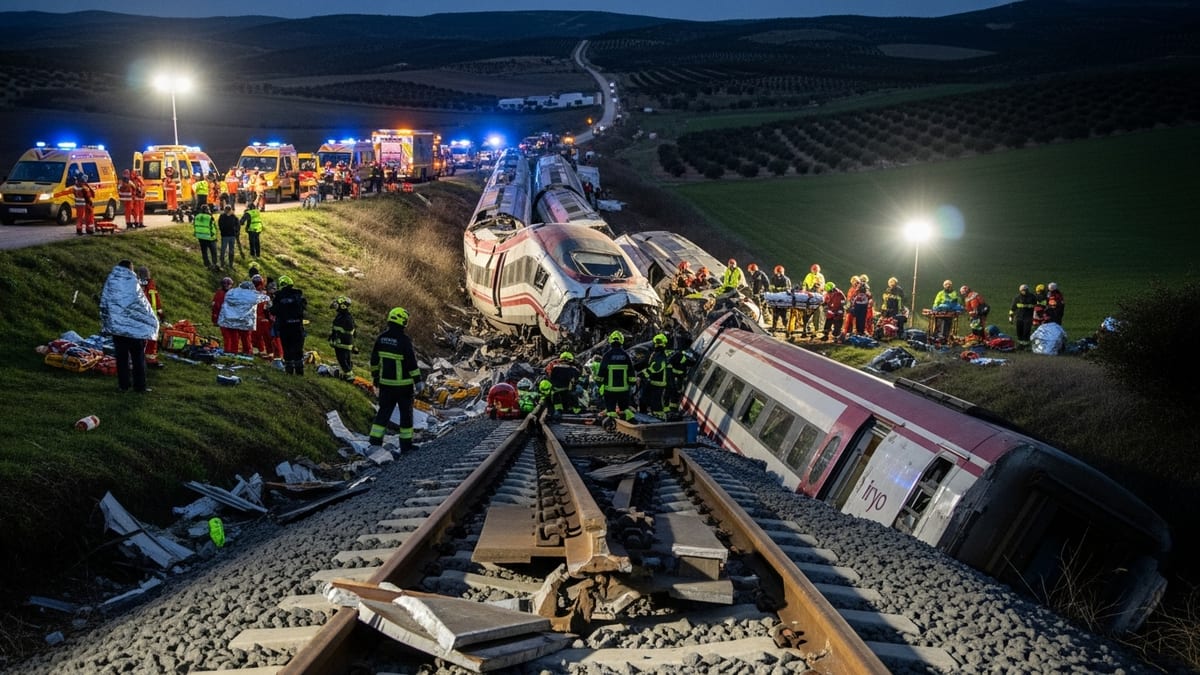
Incident Near Simri Bakhtiyarpur Disrupts Regional Rail Link
Reports indicate that the fire occurred on a passenger service moving through the Simri Bakhtiyarpur section in Bihar, an important junction on routes connecting eastern and northern India. Initial accounts describe flames and smoke emerging from two adjoining railcars shortly after the train departed a nearby station, prompting an abrupt halt on the line.
Passengers were moved away from the affected carriages as rail staff and nearby bystanders responded. Visuals shared across local media platforms show dark plumes of smoke and scorch marks on at least one coach, consistent with damage confined to a limited portion of the train rather than a full-scale blaze across multiple cars.
Publicly available information suggests that the fire was brought under control before it could spread further along the consist, limiting structural damage to the pair of coaches where smoke and flames were first observed. The incident nonetheless led to a full inspection of the train on site, with onward services either rerouted or held back until the section was declared safe for traffic.
Rail operations through Simri Bakhtiyarpur form part of a busy lattice of routes serving travelers headed toward larger hubs in Bihar and beyond, which meant that even a briefly blocked line generated delays for subsequent trains in both directions.
Cause Under Scrutiny as Investigators Examine Damaged Coaches
Following the containment of the blaze, technical teams were reported to have focused on the two damaged railcars, examining wiring, fittings, and on-board fixtures that could have contributed to the outbreak of fire. In similar past incidents on Indian railways, attention has often centered on electrical faults, overheated components, or the unsafe use of flammable items inside coaches.
In this case, early descriptions available in local coverage do not point to a definitive cause, and there is no single factor yet identified as the trigger for ignition. The pattern of smoke damage, however, has drawn attention to the interior of the carriages rather than the locomotive or undercarriage systems, suggesting that any malfunction or unsafe practice likely originated within the passenger area or roof-mounted equipment.
Routine inquiries in such events typically include inspection of lighting systems, fans, charging points, and any recently repaired or modified assemblies in the affected coaches. Investigators also look at whether any unofficial equipment was brought aboard, as well as the handling of luggage and small gas appliances that are sometimes carried despite restrictions.
While the inquiry continues, rail observers note that the incident underscores the vulnerability of older rolling stock to interior fires, even when primary structural components remain intact. Fire in a confined coach can spread rapidly if not detected early, a reality that has kept the focus on detection systems and passenger awareness in India’s wider rail safety debate.
Passenger Experience and Immediate Safety Response
Travel accounts compiled from local reports describe a rapid transition from routine travel to emergency conditions as smoke became visible in the affected railcars. Some passengers are reported to have moved quickly toward neighboring coaches, while others exited onto the trackside area under the supervision of train staff and onlookers responding from nearby.
The prompt halt of the train appears to have played a key role in preventing more serious consequences, giving travelers an opportunity to move away from the source of the smoke and allowing responders to focus directly on the burning coaches. The containment of the fire within two railcars limited the risk to those in other parts of the train and protected critical components such as fuel systems and traction equipment from damage.
Rail safety guidelines emphasize that doors should be opened with caution and that passengers should avoid pushing or rushing during an evacuation. While detailed accounts from this incident remain limited, available descriptions suggest that the evacuation was completed without major secondary injuries resulting from panic or crowding, a concern often noted in crowded Indian rail environments.
For many travelers, the episode has served as a reminder of the importance of staying attentive to safety briefings, awareness of emergency exits, and the location of alarm chains or communication systems that can alert train staff to smoke or unusual smells at an early stage.
Operational Impact on Services Through Simri Bakhtiyarpur
The damaged coaches were eventually separated from the rest of the train, and the line through Simri Bakhtiyarpur was subjected to a series of checks before services could resume. Until the section was cleared, several trains using the corridor experienced delays, with some reportedly held at preceding stations to prevent congestion on the already affected stretch.
Rail planners typically respond to such incidents by prioritizing the clearance of the main line, followed by the staged release of queued services. That pattern appears to have been followed here, with normal operations returning after inspection teams certified that track, overhead equipment, and signaling systems showed no heat-related damage from the fire.
For regional travelers, the disruption added unexpected waiting times and schedule changes, complicating onward connections to other parts of Bihar and neighboring states. In a region where rail remains a primary mode of intercity movement for work, education, and family visits, even short-lived interruptions can ripple through daily routines and business plans.
The incident also coincided with a period of busy seasonal travel, increasing the number of passengers affected by rescheduling and crowding as subsequent trains absorbed some of those delayed or displaced from the affected service.
Renewed Focus on Fire Safety for India’s Rail Travelers
The Simri Bakhtiyarpur train fire has contributed to a growing body of recent cases that have stirred debate about fire safety standards on India’s extensive passenger rail network. Travel analysts note that the combination of aging rolling stock, rising passenger volumes, and varied enforcement of on-board safety rules creates persistent challenges for rail operators across the country.
In response to earlier incidents elsewhere, Indian Railways and associated agencies have highlighted initiatives such as upgrading coach materials to more fire-resistant specifications, expanding the installation of smoke detection and fire suppression systems, and reinforcing passenger education campaigns about banned items and safe behavior on trains.
Events like the coach fire near Simri Bakhtiyarpur are likely to renew public interest in the speed of these upgrades on secondary routes that do not always receive the same level of investment as marquee long-distance services. Travelers and safety advocates frequently emphasize that regional and express trains serving smaller towns carry large numbers of daily commuters and long-distance passengers alike, making consistent standards across all routes essential.
For those planning journeys through Bihar and neighboring states, the episode serves as a prompt to review basic safety practices: traveling with minimal flammable materials, staying mindful of unusual heat or odors in coaches, and alerting train staff promptly if anything appears out of place. While the damage in this case appears to have been limited to two railcars, the potential risks associated with any on-board fire keep the issue at the forefront of India’s rail safety conversation.