


More news on this day
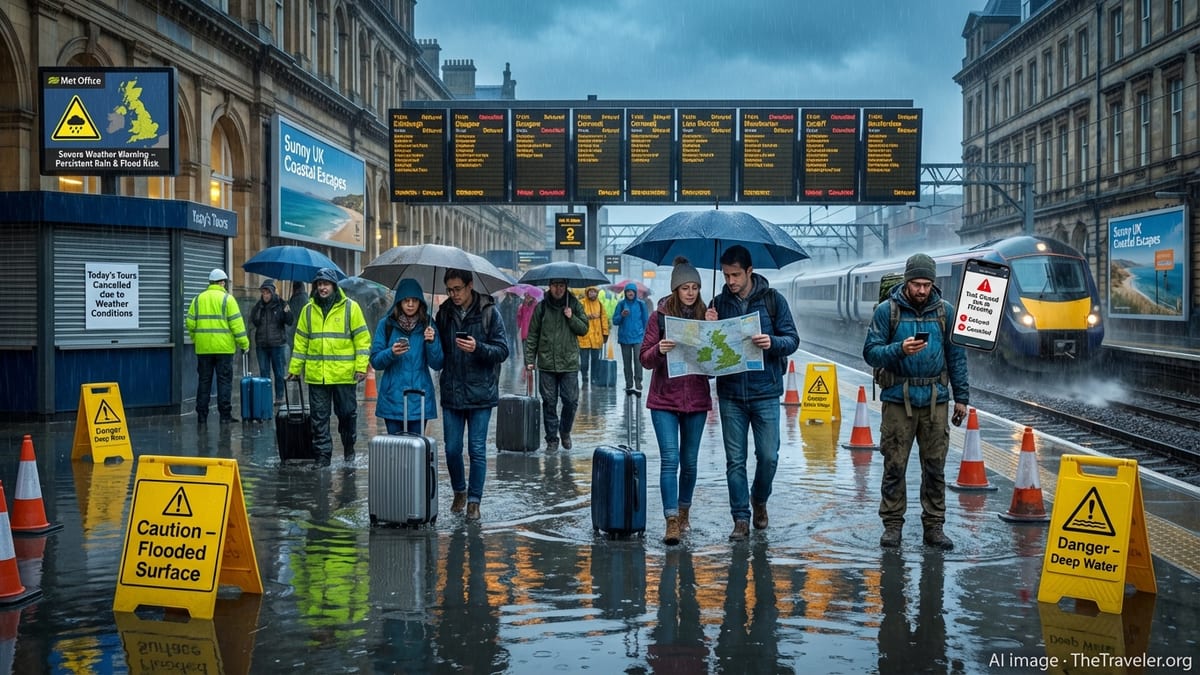
From record-breaking heat to flash flooding and rail disruptions, a series of unrelated crises and construction projects is reshaping how travelers move through key hubs such as Las Vegas, the U.S. East Coast and major international corridors this summer.
Get the latest news straight to your inbox!
Record Heat Alters Peak-Season Travel Patterns
Persistent heat domes across large parts of the United States are forcing travelers to rethink traditional high-summer itineraries. Recent coverage by national broadcasters and weather outlets describes widespread triple-digit temperatures across the central and eastern states in early July 2026, prompting health warnings, event cancellations and changes to outdoor programming at popular tourist attractions. For many destinations, the heat is arriving on top of already above-average seasonal temperatures, raising concerns over traveler safety and comfort.
Analysis from climate and regional climate centers indicates that overnight lows, not just daytime highs, are setting records in several cities, limiting the chance for relief after sunset. This has direct implications for urban tourism, where evening walking tours, open-air concerts and rooftop bar scenes are central to the visitor experience. Travel industry observers report that some operators are shifting tours to early morning slots, shortening route lengths and emphasizing indoor, air-conditioned activities.
Energy and grid assessments for summer 2026 highlight elevated risk to electricity systems during prolonged heat waves, particularly in regions where air-conditioning demand is surging. Any strain on grids can compound the travel impact, with outages disrupting hotel operations, airport terminals and transit systems. For travelers, that raises new questions about trip insurance, flexible booking policies and the resilience of local infrastructure during climate-driven extremes.
At the same time, long-term tourism analyses for Las Vegas point to a recent softening in visitor numbers, even as the city endures increasingly hot summers. Publicly available tourism reports show a decline in overall visitation and downtown hotel occupancy in 2025 compared with the previous year. Industry commentators suggest that escalating summer heat is one of several structural pressures that could push more visitors to travel in shoulder seasons rather than the traditional July and August peak.
Las Vegas Flooding Underscores Desert Vulnerabilities
While Las Vegas is closely associated with heat and clear skies, a series of intense monsoon-season storms and flash flooding events in recent years has underscored how vulnerable the region is to sudden downpours. Local and national coverage of recent flooding episodes has shown water pooling along major arterials, inundating parking structures and disrupting access to both the Strip and downtown districts. For visitors, even short-lived flooding can strand rideshare vehicles, delay airport transfers and close low-lying road segments that connect popular resorts and attractions.
Travel advisories and weather briefings emphasize that the city’s extensive paved surfaces and surrounding desert soil can produce rapid runoff, causing water to rise quickly in underpasses and wash channels. Tourism operators increasingly urge travelers to monitor real-time weather information in summer, particularly during afternoon and evening hours when storms are more likely. Some hotels and attractions have begun highlighting contingency plans that keep guests indoors with alternative entertainment when heavy rain makes local travel unsafe.
In practical terms, flood risk affects not just leisure visitors but also the regional drive market from Southern California, Arizona and Utah. When storms hit the Interstate corridors and state highways feeding Las Vegas, delays can cascade across an entire weekend’s worth of plans. Travel planners say it is becoming standard practice to build extra time into itineraries and to remain flexible about check-in and show times when monsoon season is active.
Urban planners in the Las Vegas Valley have signaled through public documents and project briefs that future downtown and resort-area investments will need to account more explicitly for stormwater management and climate resilience. For travelers, that may eventually mean redesigned streetscapes, upgraded drainage and new public spaces intended to channel water safely away from pedestrian routes and key visitor corridors.
Downtown Las Vegas Projects Aim to Reinvent the Core
Amid environmental pressures, Las Vegas is pursuing an ambitious slate of downtown redevelopment designed to diversify the visitor experience beyond the Strip. Recent city publications describe a request for proposals covering roughly 11 acres in the heart of downtown, with plans that could include mixed-use development, new public spaces and additional cultural amenities. The initiative is part of a broader effort to activate underused parcels near City Hall and major civic facilities and to create a more walkable, year-round urban environment.
Other city documents highlight the opening of a new civic campus and plaza complex, a roughly $190 million investment that consolidates government services with public gathering spaces and large-scale art installations. Located within walking distance of established visitor draws such as the Fremont Street Experience and the Arts District, the project is expected to host festivals, performances and ceremonies across the 2026 to 2027 season. For travelers, these spaces offer additional free or low-cost programming that is less tied to gaming and more focused on culture and community.
The downtown push also extends into historically underserved neighborhoods adjacent to the core. Progress reports on long-range plans for the Historic Westside reference market halls, mixed-income housing and small-business space intended to connect residents and visitors more directly. These projects are framed as ways to preserve local heritage while broadening the city’s tourism portfolio, potentially appealing to travelers seeking more immersive, neighborhood-based experiences beyond the main resort corridor.
Tourism researchers note that such investments arrive at a time when official statistics show softer visitor numbers and higher commercial vacancy rates in parts of the city. By concentrating new development downtown and in nearby districts, Las Vegas is positioning itself to capture travelers who prioritize arts, dining and walkability, and who may be more inclined to visit outside the hottest months if fresh, non-gaming attractions are available year-round.
Train Derailments Disrupt Rail-Linked Travel Corridors
Rail networks on both sides of the Atlantic and Pacific have recently experienced disruptions that reverberate through leisure and business travel. In North America, regional media have detailed how a summer derailment on a commuter line in the Philadelphia area temporarily halted or reduced service on a key corridor used by both daily riders and weekend visitors. Service was restored, but not before delays and cancellations forced travelers to rearrange itineraries, miss connections and in some cases turn to last-minute car rentals or rideshare services.
Elsewhere, corporate statements from a major freight operator in Canada describe a derailment near Repentigny, Quebec, in early July that disrupted freight movements along a busy corridor. While the incident did not involve a scheduled passenger train, any interruption on shared freight and passenger lines can ripple through timetables, affecting intercity services and cargo flows that supply tourism-dependent businesses. Such events highlight the interdependence of freight and passenger operations in many rail markets.
Internationally, rail accidents have had even more severe consequences. Publicly available accounts of the Bekasi train collision in Indonesia in April 2026 note that the crash caused multiple fatalities, significant injuries and prolonged disruptions to commuter and intercity services on a key route east of Jakarta. Travelers using the corridor faced cancelations, diversions and extended journey times while authorities cleared the scene and repaired infrastructure. In regions where rail is the primary mode linking airports, city centers and secondary destinations, such derailments can upend entire holiday plans.
Transportation studies released in recent years point to the growing interest in real-time passenger guidance and dynamic re-routing tools during rail disruptions. For travelers, the practical takeaway is an increased emphasis on flexible, refundable tickets, travel insurance that covers delays and a willingness to pivot between rail, bus and air when an unexpected closure occurs. As climate extremes, maintenance backlogs and network congestion put additional pressure on rail systems, derailments and service interruptions are likely to remain a recurring consideration in trip planning.
Legal and Safety Scrutiny Shapes the Travel Landscape
Alongside the physical impacts of heat, flooding and derailments, legal proceedings and safety investigations are shaping public perceptions of risk associated with travel. Across North America and Europe, recent court cases connected to transport incidents and infrastructure failures have received extensive media attention, often serving as proxies for broader debates over corporate responsibility, public investment and climate adaptation.
Observers note that high-profile trials, including those examining the conduct of individuals or companies in the wake of accidents, can influence traveler confidence in particular modes of transport or specific destinations. When proceedings focus on issues such as safety culture, emergency response or maintenance practices, they feed into a wider conversation about whether existing regulations and oversight are keeping pace with intensifying environmental pressures.
In the Las Vegas region, these themes intersect with ongoing questions about how the city will balance economic dependence on tourism with the need to safeguard visitors from heat, flooding and other climate-related hazards. Planning documents and tourism indicators show that local officials and business leaders are attempting to diversify attractions, upgrade infrastructure and refine emergency communication strategies. For travelers evaluating destinations in 2026 and beyond, the evolving legal and safety context is becoming an increasingly visible part of the decision-making process, alongside traditional considerations such as price, entertainment and accessibility.