


More news on this day
Morning rail commuters faced extensive disruption after an emergency incident blocked a busy train line, triggering cancellations, diversions and delays across the peak travel period.
Get the latest news straight to your inbox!
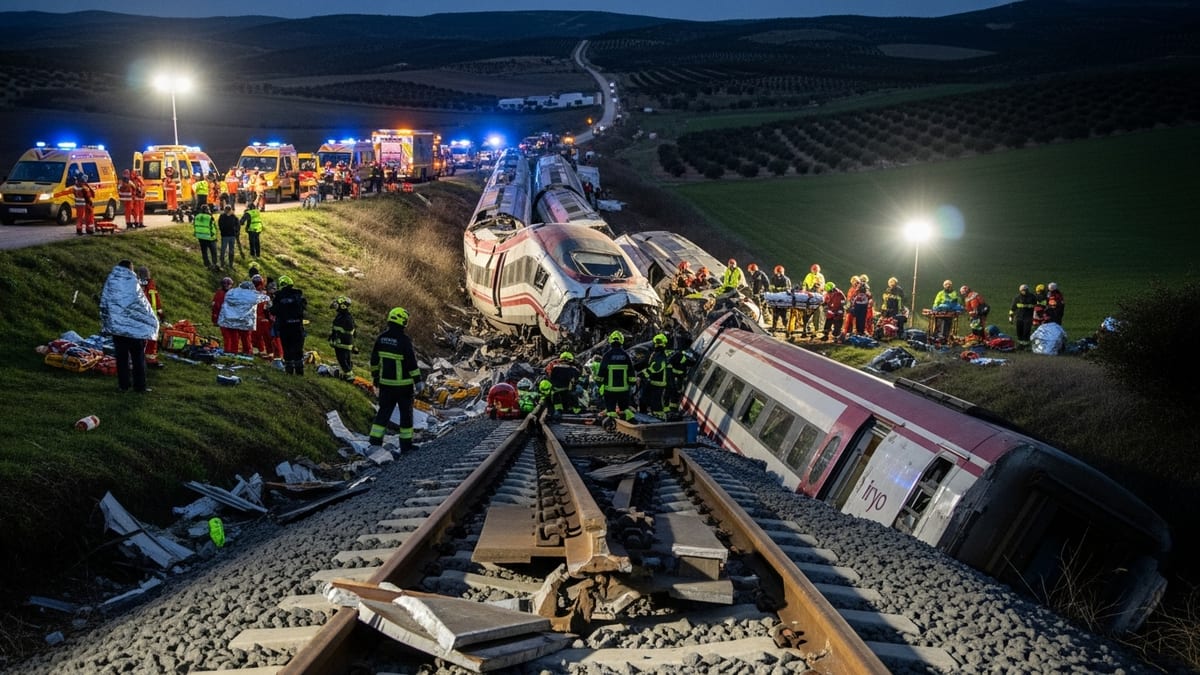
Emergency incident halts services in morning peak
Reports from rail operators and local media indicate that services were brought to a standstill this morning when an emergency incident occurred on a key section of track. The line was described as blocked in both directions, with trains held at signals and some services terminated short of their destinations while responders attended the scene.
Publicly available information shows that the incident prompted an immediate suspension of services through the affected area, with rail control routing trains away from the blocked section where possible. Passengers already on board were kept in place for extended periods while staff awaited clearance for trains to continue.
Initial updates issued during the early part of the morning peak referred to an emergency services response on or near the railway. In line with typical operating procedures, power to certain sections of track was reported to have been switched off to allow responders to access the area safely, preventing any trains from moving through the incident zone.
While full details of the underlying cause had not been confirmed at the time of early reports, the scale of the response and the decision to block the line indicated a serious situation on or adjacent to the tracks.
Knock-on delays and cancellations across wider network
The immediate impact for passengers was a series of significant delays, part-cancellations and altered stopping patterns as operators attempted to keep some services running around the blocked section. Trains scheduled to run through the area were diverted where track layouts allowed, though capacity on alternative routes quickly became constrained.
Congestion soon spread along the wider corridor as trains stacked up behind the blockage. Even routes not directly passing the incident location experienced disruption as rolling stock and crew were displaced from their scheduled diagrams. In some cases, morning services were cancelled outright to allow operators to reset timetables and recover the service pattern later in the day.
Replacement road transport was introduced between selected stations to bridge the gap created by the closure. However, reports from passengers suggested that shuttle buses were heavily loaded and subject to delays of their own due to increased traffic on surrounding roads.
Commuters were advised through rail updates and news coverage to allow extra journey time, to check service information before travel and, where possible, to consider alternative modes of transport until the line could be safely reopened.
Standard safety protocols when a line is blocked
When an emergency incident occurs on or near the tracks, blocking a line to traffic is a standard safety measure used by rail operators and infrastructure managers. Industry guidance indicates that trains are prevented from entering the affected section while responders assess the situation and ensure the area is safe.
In many modern signalling systems, this involves placing signals at danger on both approaches to the incident and, if required, isolating electrical power to overhead lines or third rails. Control rooms then work closely with on-site personnel to determine when it is possible to reopen one or more tracks, often at reduced speed, before full services can resume.
Published operational manuals show that a line can remain blocked for an extended period in more serious incidents, particularly if investigative work or infrastructure repairs are needed. During that time, only tightly controlled train movements, such as recovery or inspection runs, are typically permitted in the vicinity.
For passengers, this means that even after the initial emergency response has concluded, residual delays can continue for several hours as trains and crews return to their correct locations and timetables are gradually brought back into alignment.
Commuter experience: long waits and crowded alternatives
Travelers caught up in this morning’s disruption reported long waits on platforms and on board stationary trains as the incident unfolded. In some cases, passengers were advised to disembark at intermediate stations and transfer to buses or other rail routes, leading to crowded concourses and queues outside stations serving as temporary interchange points.
Those already en route to workplaces, schools and appointments during the early rush were among the worst affected, with some reporting missed connections and journey times that more than doubled. On social and local media, travelers shared images of packed buses and standing-room-only carriages on alternative lines that remained open.
Rail operators issued repeated advisories urging passengers to check live information channels before setting out and to expect short-notice changes to departure boards. Some services that did run were altered to skip quieter stops in an effort to move delayed passengers more quickly through the busiest parts of the network.
The disruption also affected those planning onward travel by air or long-distance rail, as delays on commuter lines in the morning often ripple into tightly timed connections later in the day.
Outlook for service recovery and ongoing impacts
By late morning, rail updates suggested that responders were working to clear the incident and carry out safety checks on the affected section of track. In many similar cases, one line is reopened at reduced speed before the full route is restored, allowing a limited number of trains to pass while staff complete inspections and any necessary repairs.
Even after the physical blockage is removed, passengers are typically advised to expect ongoing disruption as the service recovers. Trains and crews may be out of position, leading to gaps in the timetable, while operators sometimes opt to cancel selected services to create space for heavily delayed trains to move through the network.
Commuters planning to travel later in the day are encouraged to monitor updates from rail operators and local news outlets for confirmation that normal service has resumed. Experience from previous major incidents suggests that evening peak services can still be affected if a significant portion of the morning timetable was disrupted.
Travelers are often reminded that severe incidents on the rail network can have lingering effects on other modes as well, with increased demand on road corridors and local bus routes as passengers seek alternative ways to complete their journeys.