


More news on this day
Irish holidaymakers heading to Europe this summer are being urged to brace for lengthy queues and potential flight disruption after Ryanair highlighted a string of major airports where the rollout of the European Union’s new Entry/Exit System is already causing serious delays.
Get the latest news straight to your inbox!
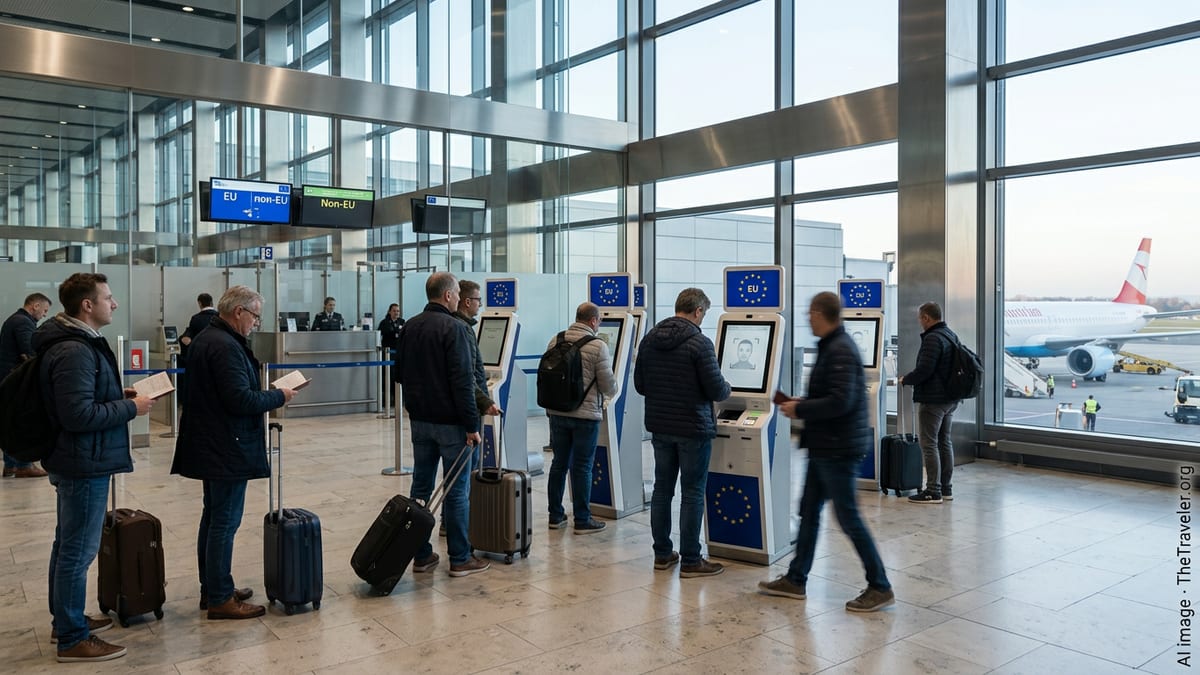
Airports highlighted as bottlenecks for Irish passengers
According to reports in Irish media and recent industry coverage, Ryanair has identified several large hub airports where the EU’s new Entry/Exit System, or EES, is generating some of the worst congestion. The airports most frequently cited include key Schengen gateways in Spain, Italy, France, Germany, and the Netherlands, all of which handle significant volumes of Irish leisure and migrant traffic each summer.
While full lists vary slightly across outlets, aviation reports consistently point to airports such as Madrid, Barcelona, Milan Bergamo, Rome Fiumicino, Paris Beauvais, Frankfurt Hahn and airports serving the Dutch market as particular pinch points. These locations are described as especially vulnerable because they combine dense summer schedules with high numbers of non-Schengen arrivals, including passengers originating in Ireland and the United Kingdom.
Publicly available information shows that delays at these hubs are already cascading across airline networks, with late-arriving aircraft then operating onward flights to Irish airports such as Dublin, Cork, Shannon and Ireland West. The result, travel analysts say, is that Irish passengers may encounter disruption even when departing on time from home, simply because their aircraft or inbound crew have been held up elsewhere in Europe.
Travel commentary in Ireland notes that the situation is particularly sensitive at the start of the July school holidays, when family traffic from the Republic is set to peak. With load factors high, rebooking options on popular sun routes may be limited if delays or missed connections mount at the identified bottleneck airports.
New EU border checks driving queues and missed connections
The Entry/Exit System, which fully came into force at external Schengen borders in April, replaces traditional passport stamping for non-EU nationals with biometric registration. Passengers arriving from non-Schengen countries, including Ireland and the UK, are now required to provide fingerprints and a facial image during border checks when entering the Schengen Area.
Aviation and consumer reports indicate that infrastructure for the new system remains patchy across Europe. Many airports are still ramping up the number of kiosks, biometric stations and trained staff needed to process peak summer flows. In practice, this has led to lengthy queues at passport control, particularly at times when multiple long-haul and short-haul flights land together.
Monitoring by air-travel rights organisations suggests that some passengers have already missed onward connections or faced substantial delays in terminal areas because of EES bottlenecks. Industry coverage notes that the impact is most severe for travellers who must enroll in the system for the first time, a group that includes many Irish families taking their first continental trip since the new rules took effect.
Ryanair has joined other European carriers in publicly warning that the combination of incomplete infrastructure and peak demand could trigger further disruption in July and August. The airline has previously argued in statements that the system should be postponed until after the high season, contending that airports and border agencies are not yet ready to manage school-holiday traffic under the new regime.
Irish routes and airports most at risk this summer
Travel industry analysis indicates that Irish passengers flying between Ireland and popular sun destinations in Spain, Portugal, Italy, France and Greece are among those most exposed to EES-linked disruption. These routes typically involve arrival into busy Schengen leisure airports at peak times of day, precisely when border queues are longest.
Aviation tracking data and recent disruption reports show that flights from Dublin, Cork, Shannon and Knock to Mediterranean hubs can be particularly vulnerable to knock-on delays. If an aircraft operating from Ireland is late due to earlier EES holdups at another airport, subsequent rotations may also depart behind schedule, even if check-in and boarding run smoothly on the Irish side.
Irish holidaymakers connecting onwards within Europe, for example via large hubs in Spain, Germany or Italy, face added risk. Consumer advocates warn that tight connections may be undermined by longer-than-expected passport control times, especially where non-EU travellers must complete full biometric registration on first use of the system.
Reports from European travel watchdogs also highlight the potential for staffing issues and local strikes to worsen the picture at some airports. Recent labour disputes in Belgium and sporadic disruptions at ground-handling and air-traffic control providers have already contributed to delays, illustrating how EES-related queues can interact with other pressures on the network.
What Irish travellers are being advised to do
Public guidance circulating in Ireland and across European consumer platforms urges passengers to allow significantly more time for all flights involving Schengen-border passport control this summer. For non-Schengen arrivals, including Irish visitors entering the Schengen Area, advice commonly recommends arriving at the departure airport earlier than usual and building in a wider buffer for any onward connections.
Travel experts suggest that passengers should pay careful attention to notifications from airlines and airports in the days before departure, as some hubs may introduce temporary measures such as queue management or staggered check-in times. Those travelling with children or elderly relatives are often encouraged to budget extra time for potential bottlenecks when planning transport to and from the airport.
Consumer organisations note that while delays linked to border-control systems may fall outside an airline’s responsibility for compensation, carriers remain obliged under EU rules to provide assistance such as refreshments and overnight accommodation when significant disruption occurs. Travellers are advised to keep receipts and documentation in case they later seek reimbursement for additional costs.
Insurance specialists also stress the importance of checking policy wording for coverage related to missed connections, extended delays and trip curtailment. With EES-related issues expected to remain a feature of European travel throughout the peak summer period, Irish passengers are being urged to understand their rights and protections before arriving at the airport.
Outlook for the peak holiday period
Industry observers say it is too early to judge whether the Entry/Exit System will settle down quickly enough to prevent widespread travel chaos in late July and August. Some airports are reported to be ramping up staffing and equipment, while others are still mired in technical and logistical challenges that could take months to resolve.
Airline and airport trade bodies have repeatedly warned that the combination of strong post-pandemic demand, tight staffing and the new biometric requirements leaves little margin for error. Any additional strain such as local strikes, air-traffic control restrictions or extreme weather could quickly translate into queues and knock-on delays for Irish passengers.
For now, publicly available information suggests that Ryanair and other major carriers are focusing on schedule management, passenger communications and contingency planning, while continuing to press for adjustments to the implementation timetable where problems are most acute. With Irish schools now breaking for the summer holidays, the experience of the coming weeks at key European hubs will be closely watched by airlines, regulators and travellers alike.