


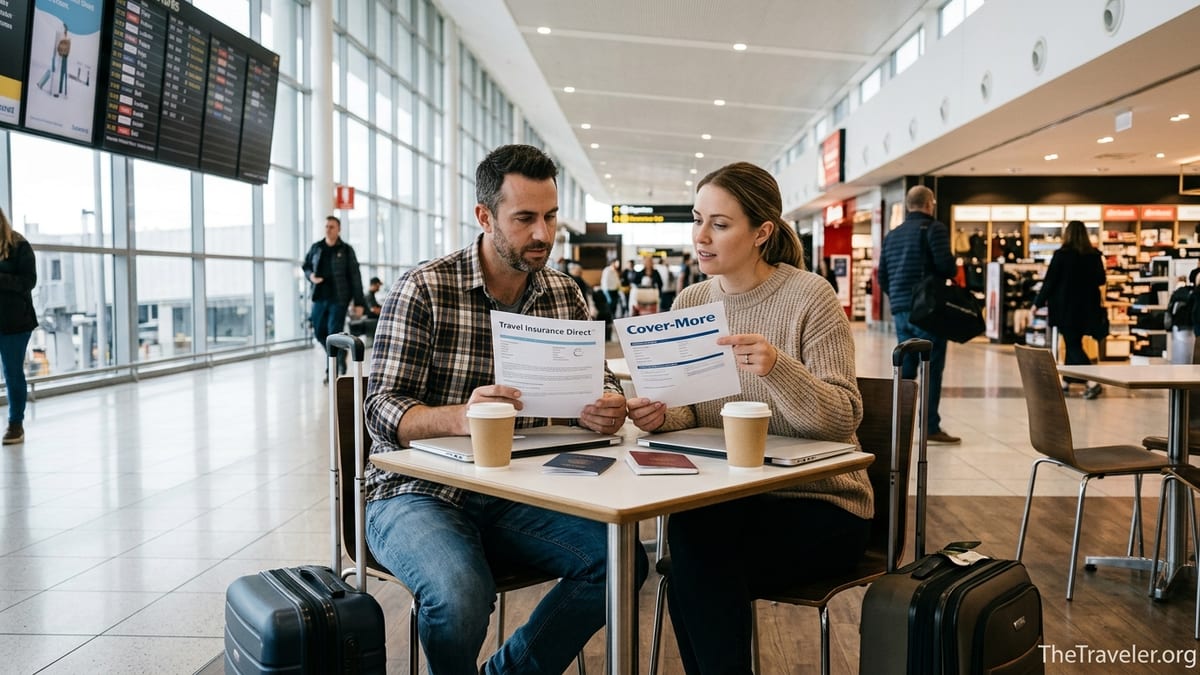
For Australian travellers, two names come up again and again when shopping for cover: Travel Insurance Direct and Cover-More. Both are long-standing brands with strong distribution, broad benefits and plenty of fine print. Yet the experience at claim time can feel very different depending on which policy you chose and how closely it matches your style of travel. This guide walks through how each provider works in practice, where they tend to be strongest, and the kinds of real-world trips where one may suit you better than the other.
Get the latest updates straight to your inbox!
The basics: who are Travel Insurance Direct and Cover-More?
Travel Insurance Direct, often called TID, is an Australian travel insurance specialist that has been selling policies since 2005. It focuses on direct-to-consumer online sales, so most Australians buy a TID policy by going straight to its website, entering their destination and dates, and getting an instant quote. Industry reviews in 2025 and 2026 have consistently placed TID near the top of the market for comprehensive international cover, especially for leisure travellers.
Cover-More is one of the largest travel insurance brands in Australia and New Zealand and is part of Zurich Insurance Group. Rather than focusing mainly on direct online sales, it has deep partnerships with travel agents, airlines, credit card issuers and brokers. If you have ever been offered insurance while booking a flight through a major Australian airline or told that your bank card comes with complimentary travel insurance, there is a reasonable chance the underlying insurer is Cover-More.
Because of these different distribution models, travellers often encounter the brands in different ways. A Sydney couple booking a European summer holiday through a traditional travel agent might be offered a Cover-More policy at the end of the booking process. Meanwhile, a solo backpacker planning a last-minute trip to Vietnam may search online and buy a policy directly from Travel Insurance Direct in under 10 minutes.
Understanding this context explains some of the differences in product design and pricing. Direct brands like TID typically compete heavily on online pricing, while a partner-focused brand like Cover-More often builds in commissions for agents and card issuers and can put more emphasis on bundled extras and service at claim time.
Core cover: medical, cancellation and luggage compared
At a headline level, both Travel Insurance Direct and Cover-More offer what most travellers expect from a comprehensive international policy: overseas medical expenses, evacuation, trip cancellation or curtailment, some cover for lost or delayed baggage, and personal liability. The headline limits can look impressive, with many policies advertising unlimited overseas medical cover and cancellation limits that can be tailored to the cost of your trip.
Where differences start to appear is in how those limits and sub-limits are structured. For example, Travel Insurance Direct’s flagship comprehensive plan has been noted by comparison sites for its strong medical and Covid-19 cover, along with relatively generous baggage limits that can be increased for high-value items by paying extra. A Melbourne family heading to Los Angeles for three weeks might be drawn to TID because of the combination of unlimited medical cover and the ability to specify extra cover for items like laptops and cameras that exceed standard sub-limits.
Cover-More’s comprehensive products, especially those sold through travel agents or banks, often emphasise cancellation and travel disruption benefits. For instance, a traveller booking a complex multi-stop trip through Europe might be offered a Cover-More policy that highlights extensive cover for missed connections, travel delays and additional accommodation if flights are cancelled. For someone with a tight schedule of rail passes and non-refundable hotel bookings, that disruption cover may prove as valuable as medical protection.
One subtle but important difference is how pre-existing medical conditions are treated. Both brands ask detailed health questions during the quote process and may charge higher premiums or exclude certain conditions. However, Cover-More is known for underwriting a wide range of pre-existing conditions on a case-by-case basis, which can appeal to older travellers or those with complex health histories. In contrast, some travellers with straightforward histories may find Travel Insurance Direct’s simpler online assessment faster and sufficient for their needs.
Pricing in practice: what real travellers tend to pay
Premiums change frequently and vary by age, destination and trip length, so there is no single “cheaper” provider in all situations. However, recent quote comparisons by consumer sites in 2026 suggest some patterns. For short leisure trips for relatively healthy travellers under 60, Travel Insurance Direct often appears among the more competitively priced comprehensive options when purchased directly online, especially if you take advantage of occasional discount codes or email promotions.
For example, a 35-year-old traveller from Brisbane booking a two-week trip to Thailand in September might see an indicative comprehensive premium from Travel Insurance Direct somewhere in the low hundreds of dollars, depending on options chosen. For the same trip, a Cover-More comprehensive policy offered via a travel agent could cost a little more, particularly once agency commissions and any optional add-ons are included. That said, Cover-More promotions distributed via partners can narrow or even reverse that gap in some cases.
Cover-More’s pricing can be particularly competitive when built into other products. A common scenario is a major Australian bank credit card that offers complimentary international travel insurance underwritten by Cover-More, activated once you pay a minimum spend on flights or other travel costs with that card. In that situation, you might effectively be getting a Cover-More policy without paying a separate upfront premium, although you are still paying the card’s annual fee and need to meet strict activation conditions.
Annual multi-trip policies offer another angle. Both brands provide options for frequent travellers who expect to take several international trips in a year. A consultant flying between Sydney and Singapore multiple times might run a comparison and find that an annual multi-trip plan from Travel Insurance Direct costs less than buying several single-trip policies. Meanwhile, a small business with staff travelling frequently may be offered a corporate package from Cover-More through a broker that bundles multi-trip cover for multiple employees at negotiated rates.
Covid-19 and disruption cover in the real world
Since the pandemic, Covid-19 related cover has become a key deciding factor. Travel Insurance Direct has been singled out by several Australian comparison sites for relatively robust Covid-19 benefits on its comprehensive plan, including cover for medical expenses if you catch Covid-19 overseas and some cancellation or rearrangement costs if you, a close relative or a travelling companion test positive before or during your trip.
Imagine a Perth couple heading to Japan for cherry blossom season. A week before departure, one partner tests positive and is required to isolate. Under many TID policies issued in 2025 and 2026, they would typically have some cover for non-refundable prepaid costs such as accommodation or tours, subject to policy limits and documentation. They may not recover everything, but the presence of explicit Covid-19 cancellation benefits can significantly soften the financial hit.
Cover-More also offers Covid-19 related cover, although exact inclusions vary between products and partners. For instance, a Cover-More policy sold through a major airline might highlight cover for additional accommodation and meals if you test positive while already overseas and must isolate, while a bank-branded version might place greater emphasis on cancellation benefits for you or certain relatives. As always, the precise wording in the Product Disclosure Statement determines what is actually covered, and there can be subtle differences even between Cover-More branded products.
Where travellers can come unstuck is assuming that “Covid cover included” means every possible pandemic-related scenario is covered. Neither Travel Insurance Direct nor Cover-More typically cover fear of travel, border closures imposed after you booked, or government advisories that make your trip inconvenient but do not directly affect you or a covered person falling ill. Learning from the experiences of travellers caught by earlier waves of restrictions, the safest approach is to read the Covid-19 sections of each policy closely and, if necessary, call the insurer before purchase to check how your specific scenario would be treated.
Adventure sport, cruises and other special-case trips
Not all travel is a straightforward city break or beach holiday. Many Australians take trips built around skiing, diving, hiking or cruises, and these involve very different risk profiles. Travel Insurance Direct explicitly advertises cover for a long list of sports and activities on its main comprehensive policy, with some more extreme pursuits requiring an additional premium. A traveller planning a week of skiing in Niseko or snowboarding in Queenstown can usually obtain cover by declaring the activity and, where required, paying the relevant snow sports surcharge.
Consider a 28-year-old from Melbourne planning a three-week backpacking trip through Vietnam and Laos that includes motorbike hire, hiking and basic scuba diving. Travel Insurance Direct’s online quote form will generally ask about these kinds of activities, and the policy documents will set clear limits on engine size for motorbikes, licensing requirements and whether you must wear a helmet. Travellers who comply with these conditions usually find it straightforward to secure cover for such activities with TID, provided they understand the rules.
Cover-More also covers a wide range of activities, often structured as optional upgrades or specific packages. Cruise cover is a prominent example. A retired couple from Adelaide booking a two-week South Pacific cruise through a travel agent might be offered a Cover-More policy that includes a dedicated cruise pack. This can add benefits for missed ports, onboard medical treatment and shipboard confinement due to illness. While the premium may be higher than a basic land-only policy, the tailored benefits can prove valuable if something goes wrong at sea.
The key takeaway is that both brands can be suitable for active or niche trips, but the path to getting the right cover differs. With Travel Insurance Direct you are more likely to self-declare and configure your cover online. With Cover-More, you may be guided by a travel agent, broker or airline booking path that prompts you to add specific packs. In both cases, failure to declare higher-risk activities or to buy the appropriate upgrade can lead to painful surprises at claim time.
Claims experience, support and peace of mind
Many travellers focus on price at the buying stage and only think about service when they need to make a claim. Yet the claims experience is where differences between Travel Insurance Direct and Cover-More often feel most tangible. Both providers offer 24-hour emergency assistance lines and claim lodgement portals, but how supported you feel can depend on your expectations and how you purchased the policy.
Travel Insurance Direct is built as a digital-first insurer, so many claims are lodged online, with supporting documents uploaded through a portal. For straightforward cases, such as a stolen phone with a police report or delayed baggage with airline documentation, this can be efficient. Some policyholders have reported quick outcomes for simple claims, particularly when receipts and reports are clear. However, travellers who prefer speaking to a human from the outset may find the online-first approach a little impersonal until they escalate a matter or call the assistance line.
Cover-More’s scale and partner relationships can make a difference in more complex situations. For example, a traveller injured in a traffic accident in the United States might find hospital administrators are already familiar with Cover-More or Zurich via their global networks, which can help in arranging direct billing rather than the traveller paying a large bill upfront. Additionally, those who bought a Cover-More policy through a travel agent or broker may receive help from that intermediary in assembling documents and liaising with the insurer, although this support varies significantly between agents.
In both cases, the strongest indicator of claim success is not the brand name alone but whether your situation clearly fits within the policy wording, whether you disclosed relevant facts when you bought the cover, and how promptly and thoroughly you provide evidence. Reading recent customer reviews can provide colour on trends, but they should be weighed alongside the specifics of your own trip and risk tolerance.
Which travellers may suit Travel Insurance Direct vs Cover-More?
Although no single insurer is best for everyone, certain patterns emerge when you look at who each brand tends to suit. Travel Insurance Direct often appeals to independent travellers who are comfortable buying and managing everything online. Think of a 30-year-old remote worker from Sydney booking flights to Lisbon, arranging accommodation through home-sharing platforms and buying a Travel Insurance Direct policy after comparing several options on their laptop. For this kind of traveller, the mix of competitive pricing, strong medical and Covid-19 benefits and flexible add-ons for electronics and adventure sports can be compelling.
Cover-More can be a strong fit for travellers who value integrated service or already have access to its products through other relationships. A family booking a complex five-stop itinerary through a full-service travel agency might appreciate having their flights, hotels, tours and Cover-More insurance all managed by one agent, with a single point of contact if something goes wrong. Similarly, a frequent flyer who holds a premium credit card with complimentary Cover-More-underwritten insurance might reasonably decide that activating that benefit and reading the conditions carefully is more cost-effective than buying a separate standalone policy.
Older travellers and those with complex health conditions often find Cover-More’s structured medical assessment and willingness to underwrite a wide variety of pre-existing conditions attractive, although premiums can increase accordingly. Meanwhile, younger travellers on tighter budgets may lean toward Travel Insurance Direct, provided their health history is straightforward and the policy’s exclusions and limits line up with their plans.
Ultimately the best choice is not a race to the lowest premium but a comparison of how well each policy’s strengths align with the specifics of your trip: destination, activities, non-refundable costs, health status and appetite for risk.
The Takeaway
Both Travel Insurance Direct and Cover-More are serious, established players in the Australian travel insurance market, and each can provide excellent protection when matched properly to a traveller’s needs. Travel Insurance Direct shines for independent buyers who want strong medical and Covid-19 benefits, transparent online quotes and the ability to tweak options such as adventure sports and high-value belongings with minimal friction.
Cover-More offers breadth and depth through its extensive network of travel agents, airlines, banks and brokers, plus solid disruption and cruise options and a structured approach to pre-existing medical conditions. For some travellers, particularly those already paying for a premium bank card or booking through a full-service agency, Cover-More may represent both convenience and value.
The most practical approach is to sketch out your trip and then run genuine like-for-like quotes from both brands on the same day, carefully reading each Product Disclosure Statement rather than assuming two comprehensive policies are equivalent. Look beyond headline limits to sub-limits, exclusions, sports and activity rules and Covid-19 wording. By anchoring your decision in how each policy responds to concrete scenarios you might realistically face, you maximise your chances of enjoying the trip and minimise unpleasant surprises if you need to claim.
FAQ
Q1. Is Travel Insurance Direct usually cheaper than Cover-More?
Pricing varies by age, destination and trip length, but for simple leisure trips bought online, Travel Insurance Direct often appears competitively priced compared with many agent-sold Cover-More policies. However, Cover-More can be cost-effective when included as complimentary cover with certain credit cards or negotiated through a broker, so it is worth running quotes from both on the same day.
Q2. Which is better for Covid-19 related cover?
Both brands include some Covid-19 benefits on many policies, typically covering overseas medical expenses if you catch Covid-19 and limited cancellation or rearrangement costs. Travel Insurance Direct is often highlighted by comparison sites for particularly comprehensive Covid-19 wording on its main plan, while Cover-More’s benefits vary more depending on whether you buy via an airline, bank or agent. Always read the Covid-19 section of the specific Product Disclosure Statement for your policy.
Q3. Who is better for older travellers or people with pre-existing conditions?
Cover-More has a reputation for assessing a wide range of pre-existing medical conditions, often with tailored premiums or conditions, which can appeal to older travellers or those with complex health histories. Travel Insurance Direct also covers many travellers with pre-existing conditions, but the online assessment is more streamlined and some conditions may be automatically excluded. Travellers over a certain age should pay close attention to age limits and medical assessment questions for both brands.
Q4. Are credit card policies underwritten by Cover-More as good as buying direct?
Many Australian bank credit cards include complimentary travel insurance underwritten by Cover-More, but the cover can differ from standalone policies. Activation requirements, maximum trip length, excesses and benefit limits are determined by the bank’s policy, not by Cover-More’s direct retail products. If you rely on card cover, read the card’s insurance booklet carefully and compare its limits and exclusions with a paid policy before deciding it is sufficient.
Q5. Which is better for adventure sports like skiing or diving?
Both Travel Insurance Direct and Cover-More cover a range of sports, sometimes automatically and sometimes with an extra premium. Travel Insurance Direct clearly lists many common sports on its comprehensive policy and lets you add snow sports or more extreme activities online. Cover-More may package adventure or snow cover into optional upgrades or specific products, often explained by a travel agent. In either case, you must check whether your exact activity, such as off-piste skiing or motorbike riding above a certain engine size, is included.
Q6. How do claims experiences compare between the two?
Experiences vary widely and depend on the complexity of the claim and how well it fits the policy wording. Travel Insurance Direct is digital-first, so many claims are submitted and processed online, which can be efficient for straightforward cases. Cover-More’s global networks and relationships with agents, airlines and hospitals can be helpful for complex medical emergencies or disruption-heavy trips. Ultimately, clear documentation and honest disclosure matter more than brand alone.
Q7. Do both providers cover cruises?
Yes, but usually under specific conditions. Cover-More places strong emphasis on cruise cover, often offering dedicated cruise packs through travel agents that add benefits such as missed port cover and onboard medical benefits. Travel Insurance Direct can also cover cruises, typically when you select the appropriate destination and, if required, any cruise-related options. If a cruise is a major part of your trip, it is important to confirm that your policy specifically recognises and covers it.
Q8. Can I buy cover after I have already started my trip?
Both Travel Insurance Direct and Cover-More generally expect you to buy cover before you leave Australia, and some policies explicitly exclude trips that have already started. There are limited exceptions in the market for travellers extending existing cover while overseas, but you should not assume you can buy a new policy once something has already gone wrong. The safest approach is always to arrange cover at the time you book or before you depart.
Q9. How important is reading the Product Disclosure Statement?
It is critical. Two policies can both be described as comprehensive yet handle the same situation very differently. For example, one might cover travel delays only after a minimum number of hours, or exclude certain high-value electronics beyond a sub-limit unless you specify them. Whether you choose Travel Insurance Direct or Cover-More, reading the Product Disclosure Statement and asking questions before purchase is the single best way to avoid surprises later.
Q10. Should I choose based mostly on price or on benefits?
Price matters, especially for families or long trips, but focusing only on the cheapest option can be costly if you later discover gaps in cover. It is usually wiser to shortlist a few policies from reputable brands like Travel Insurance Direct and Cover-More that meet your essential benefit requirements, then compare premiums, excesses and any extras. Choosing a slightly more expensive policy that clearly matches your trip can provide better value than saving a small amount upfront and facing problems at claim time.