


More news on this day
President Donald Trump returned to the White House a day earlier than planned from Camp David as the U.S. government renewed broad security messaging for Americans in the Middle East, urging heightened vigilance and warning of possible travel disruptions across the region.
Get the latest news straight to your inbox!
Camp David Schedule Change Comes Amid Escalating Regional Headlines
Published coverage on Saturday, September 19, 2026 described Trump departing the presidential retreat at Camp David in Maryland earlier than expected and traveling back to Washington, D.C. The White House had not publicly offered a detailed explanation in the immediate reporting window, while the timing coincided with a wave of U.S. security alerts related to the Middle East.
The developments followed reports of an attempted strike on Saudi Arabia’s capital, Riyadh, tied to Iran-aligned Houthi forces in Yemen. Regional tensions have remained volatile in 2026, with repeated warnings from U.S. agencies about the potential for rapid escalation and knock-on impacts for civilian aviation, border procedures, and local security environments.
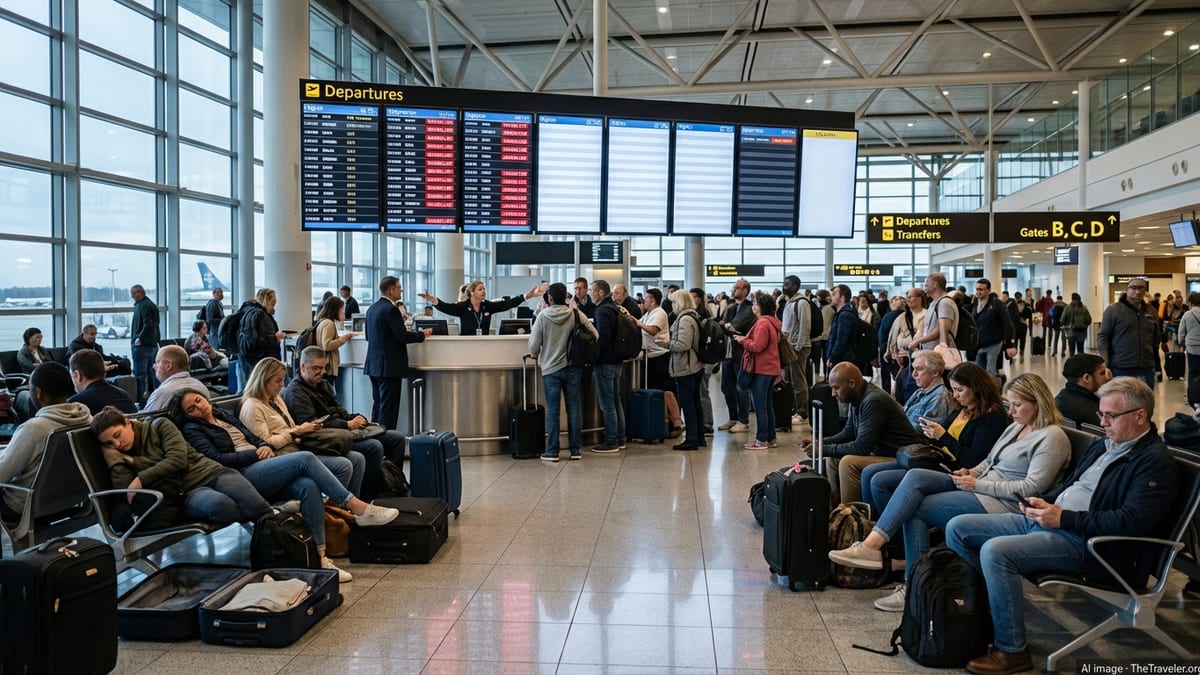
For travelers, the practical implication is not the political optics of a shortened presidential weekend, but the reality that official U.S. messaging has again shifted toward “expect disruption” planning, including sudden airspace closures, flight cancellations, and heightened security postures at transportation hubs.
What the New US Travel Alerts Say and What They Mean for Tourists
On September 19, the State Department renewed a region-wide alert for Americans in or traveling to the Middle East, with language warning that the conflict with Iran has the potential to escalate rapidly. The advisory framework emphasizes heightened vigilance and preparedness for transportation interruptions, including periodic airspace closures and flight cancellations.
Separately, the Department of State’s global “Worldwide Caution” page, last updated July 22, 2026, continues to advise that Americans in the Middle East be prepared for flight cancellations, periodic airspace closures, and potential travel disruptions, while Americans outside the region reconsider travel through it. The notice also underscores that U.S. diplomatic facilities, including those outside the Middle East, have been targeted in the past and that Iran and aligned groups may target U.S.-associated interests.
In practical travel terms, these alerts do not automatically close borders or halt commercial travel. Instead, they are a signal to expect quick changes such as re-routes around restricted airspace, longer security screening lines, sudden changes to airport access rules, and limited flexibility if your trip relies on tight connections through regional hubs.
Country-Level Advisories: A Patchwork of Risk Levels Across the Region
Alongside broad regional alerts, country-by-country advisories remain the most actionable tool for travelers because they spell out specific risks and restrictions. For example, the U.S. Travel Advisory for Saudi Arabia was reissued September 15, 2026 at Level 3, “Reconsider Travel,” citing risks that include armed conflict, terrorism, and the threat of missile and drone attacks, as well as aviation safety notices referenced through Federal Aviation Administration warnings.
Saudi Arabia’s advisory also highlights additional non-obvious travel considerations that can matter to visitors and residents alike, including the possibility of exit bans and strict enforcement related to social media activity. The advisory describes restrictions for U.S. government employees in certain areas, which can be an indirect indicator of where conditions are considered more sensitive.
By contrast, Iraq remains at Level 4, “Do Not Travel,” with the advisory emphasizing terrorism, kidnapping, armed conflict, and the limited ability of the U.S. government to provide emergency services. The travel advisory also points to risks at locations perceived as associated with the United States, including airports, hotels, and infrastructure sites, which can affect everything from ground transportation planning to hotel choice.
This mix of advisory levels matters because many leisure itineraries combine multiple stops in the Gulf and Levant. A trip that feels straightforward on paper can become complicated if one leg involves a Level 4 destination, or if a transit routing requires passing through airports impacted by airspace restrictions and cancellations.
Air Travel Reality Check: Connections, Airspace, and Last-Minute Disruptions
When U.S. alerts highlight potential airspace closures and flight cancellations, the most immediate impact tends to fall on passengers connecting through major hubs. Even travelers whose final destination is outside the Middle East can be affected if their ticket includes a connection through Gulf airports or overflight routings that are commonly used between Europe, Asia, and Africa.
The State Department’s messaging urges travelers to monitor airline operations closely and to contact carriers directly if flights are affected. In the current environment, it is also prudent for travelers to build slack into itineraries: avoid same-day tight connections, consider longer layovers, and treat “last flight of the day” segments as higher risk because rebooking options can narrow quickly after evening departures.
For travelers already in the region, disruption planning should be practical rather than alarmist: keep travel documents accessible, carry essential medications and chargers in hand luggage, and maintain a buffer of funds and time in case a return flight is rescheduled multiple times. Travelers using multi-city tickets should also check whether a reroute could change visa or entry requirements for an unplanned stop.
What Travelers Should Do Now: Monitoring Alerts Without Overreacting
Publicly available guidance continues to emphasize monitoring official updates, including U.S. embassy and consular security alerts, and enrolling in the Smart Traveler Enrollment Program (STEP) for destination-specific messages. That matters most for Americans living, studying, or working in the region, but it can also be valuable for short-term visitors who want near-real-time notifications.
For travelers in the U.S. considering upcoming trips, the key step is to review the current advisory level for each destination and for any transit points, then compare that guidance with your itinerary’s reliance on connections through regional airspace. If your route is heavily dependent on a single hub, consider whether alternatives exist that avoid potential chokepoints.
Finally, travelers should recognize that broad alerts often reflect uncertainty as much as specific imminent threats. The most durable advice is also the most practical: keep your plans flexible, confirm flight status frequently in the days leading up to departure, and be prepared to adjust routing quickly if airlines consolidate schedules or if airspace restrictions change with little notice.